
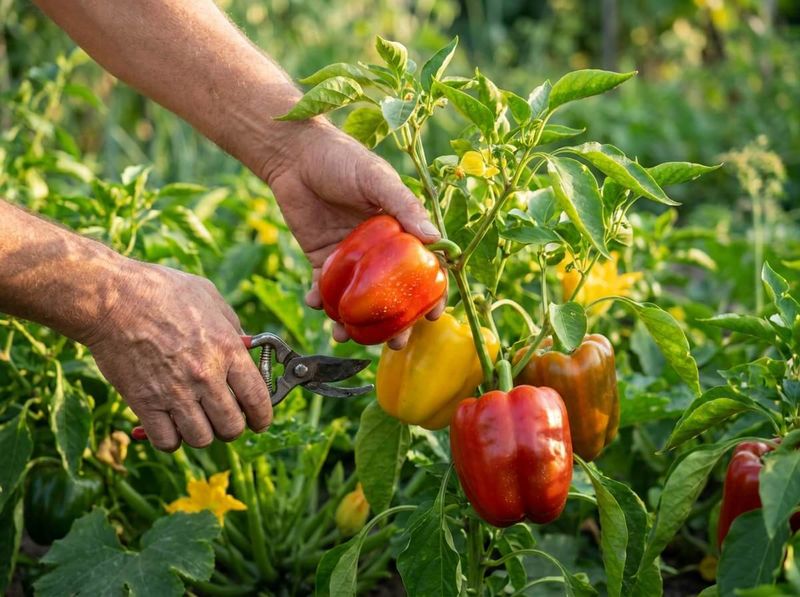
Bell peppers turning red right on the plant can feel alarming, especially when the skin starts to wrinkle before you even get a chance to pick them. Most of the time, red color is simply what a mature bell pepper looks like, and it has nothing to do with disease or spoilage.
The real question is whether the pepper is still firm and smooth or whether it is starting to lose quality from sunscald, moisture stress, or delayed harvest. Knowing the difference can save your harvest and help you grow better peppers next season.
Red color marks maturity—not automatically a problem
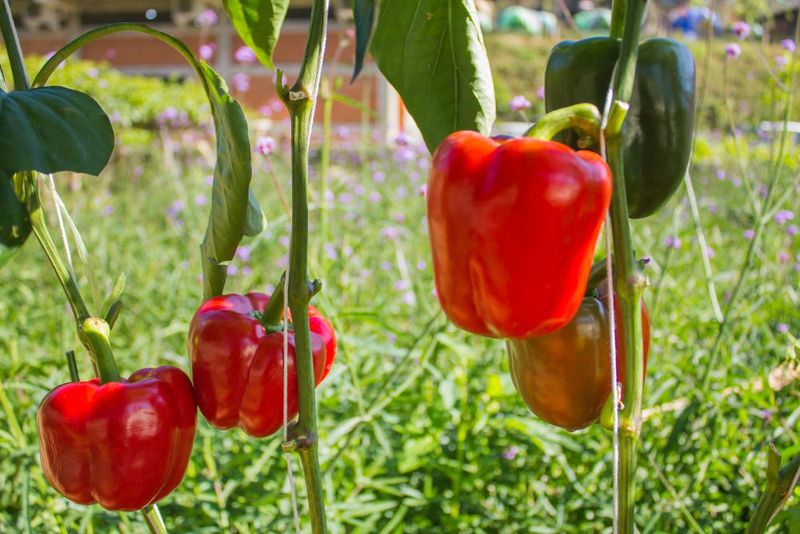
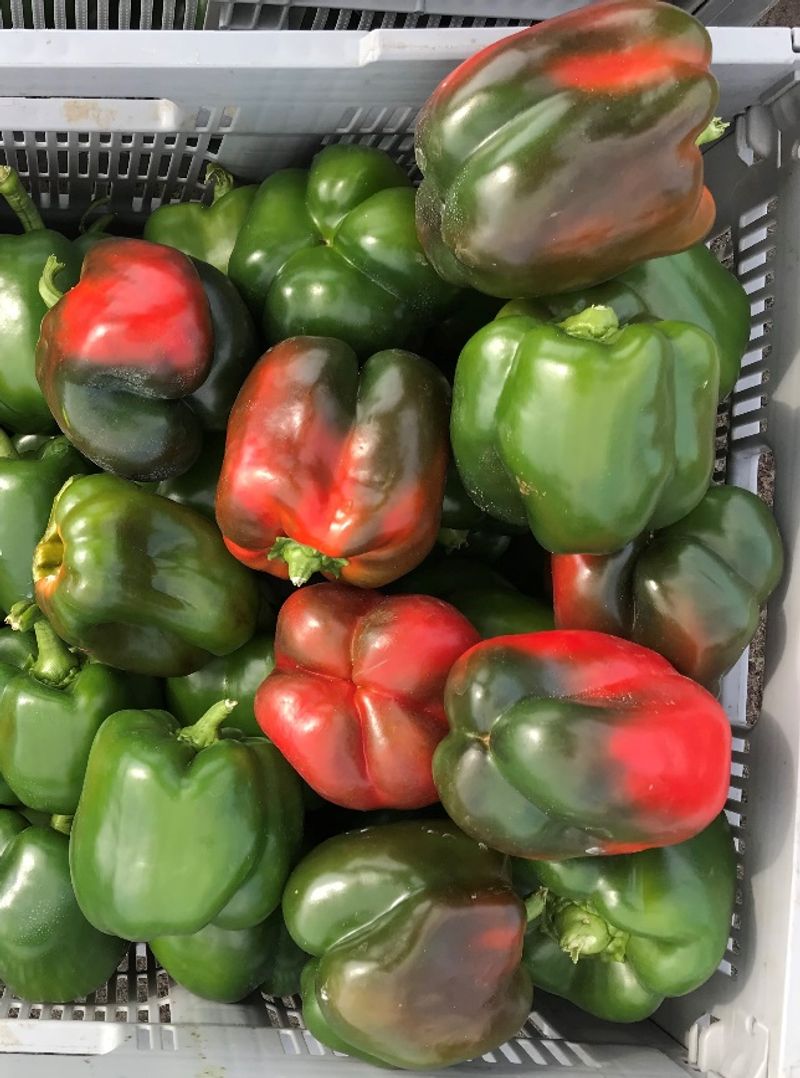
Bell peppers do not start out red. Depending on the variety you planted, a bell pepper may ripen from green to red, yellow, orange, purple, or brown.
That color shift is the plant’s natural finishing process, and red is simply the end stage for varieties bred to mature that way. UF/IFAS guidance on growing peppers confirms that color change is a normal part of maturity, not a warning sign.
Gardeners do not have to wait for full color before picking. Peppers can be harvested once they reach mature size, even while still green, and they will be perfectly good to eat.
Leaving them on the plant longer allows the color to develop fully and generally produces a sweeter flavor, but that choice comes with a tradeoff: the longer a pepper stays on the plant, the more exposure it has to heat, sun, and moisture fluctuation.
The central lesson here is that red color alone tells you about maturity, not about quality or safety. University of Maryland Extension’s pepper guide and UGA’s guide on common bell pepper defects both point to texture and surface condition, not color, as the real indicators of whether a pepper is still worth picking.
A red pepper that is firm, plump, and smooth-skinned is ready to harvest. A red pepper that is wrinkled, sunken, or soft is telling you something else is going on.
A ripe pepper should stay firm and smooth
Picture a red bell pepper at its best: the walls feel solid and thick when you squeeze it gently, the skin is tight and glossy, and the whole fruit looks plump and full. That is the quality standard to aim for at harvest.
USDA pepper inspection standards describe firmness, bright color, and smooth skin as the hallmarks of a well-developed bell pepper, while limpness, shriveling, and surface breaks are markers of declining quality.
When a pepper starts to wrinkle, the skin loses that tight appearance and may begin to feel papery or leathery. Soft spots can form, the walls may feel thin, and the fruit can look sunken in places.
Utah State University Extension notes that wrinkling and limpness point to quality loss rather than a desirable ripening stage.
Generalized wrinkling across the whole fruit can result from several different things: moisture escaping from the pepper faster than the plant replaces it, overmaturity from sitting on the vine too long, delayed harvest during a heat wave, or early deterioration. Peer-reviewed postharvest research shows that water loss is a primary driver of pepper shrivel during and after harvest.
Because multiple causes can produce similar-looking symptoms, the wrinkles alone cannot tell you exactly what went wrong, but they do reliably signal that quality is slipping and it is time to act.
Sunscald usually starts on the exposed side
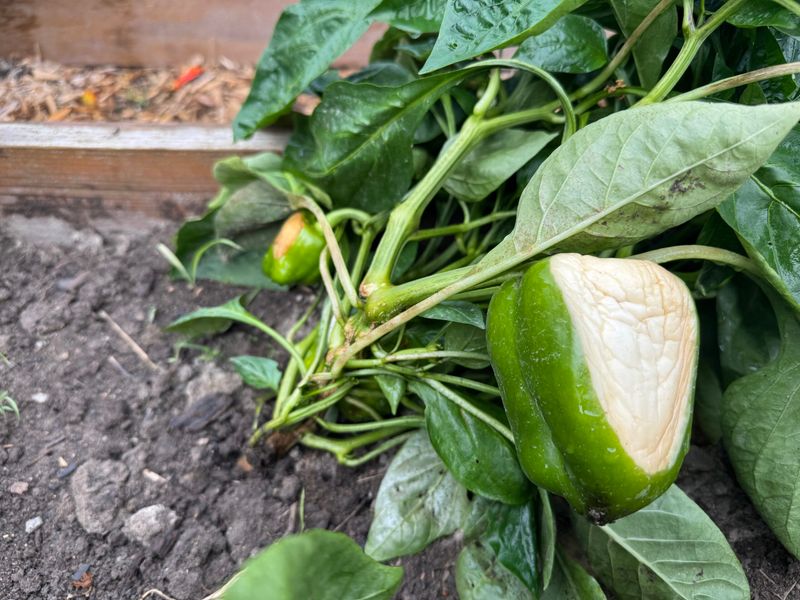
Sunscald is the most common non-disease reason a pepper develops localized surface damage while still on the plant. It happens when fruit tissue overheats after being suddenly exposed to intense, direct sunlight, especially during the hottest parts of a Southern summer.
University of Maryland Extension’s sunscald resource explains that the damage is not simply about receiving a lot of sun; it is about overheated tissue, particularly when the fruit has lost the leaf cover that normally moderates temperature.
Leaves can disappear faster than many gardeners expect. Insect feeding, fungal or bacterial leaf diseases, hard pruning, a broken branch, or severe wilting during drought can all strip away the canopy that shields developing fruit.
Once peppers are exposed, the side facing the afternoon sun takes the brunt of the heat. UC IPM guidance on sunburn in peppers and eggplants describes the initial damage as a pale, bleached, tan, or white patch that appears specifically on the sun-facing side of the fruit.
As the damage progresses, that patch can become soft, sunken, wrinkled, dry, or papery. University of Illinois Extension’s plant disease fact sheet on pepper and the University of Minnesota’s pepper fruit problem diagnostic tool both note that the location of the damage is the key clue.
Sunscald is localized to one side of the fruit. If the wrinkles or discoloration wrap uniformly around the whole pepper rather than concentrating on the exposed face, sunscald is a less likely explanation, and moisture loss, overmaturity, or disease deserves more consideration.
New Mexico State University Extension also reinforces that distinguishing side-specific damage from all-over shriveling is an important first diagnostic step.
When should you suspect disease instead?
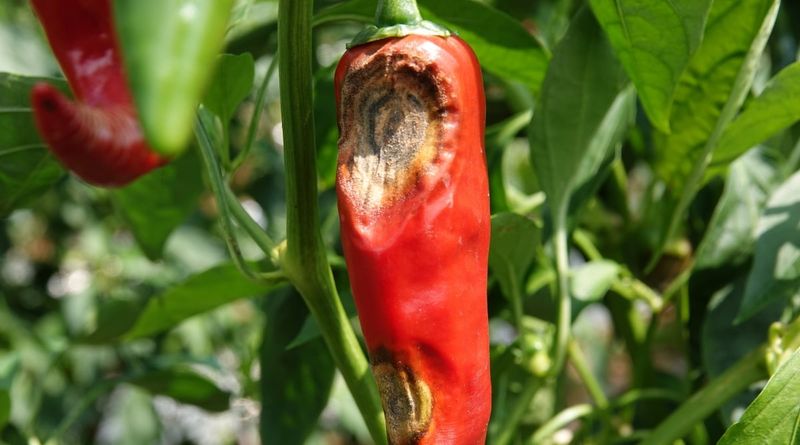
Wrinkling confined to the sun-facing side of an otherwise healthy-looking pepper plant points toward sunscald. But when damage spreads in ways that do not match that pattern, disease deserves a closer look.
Several pepper diseases can produce symptoms that overlap with sunscald or moisture stress, and some can enter fruit that has already been weakened by sun damage.
Anthracnose is one disease that becomes more common as peppers ripen and overripen. NC State Extension’s guide to anthracnose of pepper describes the characteristic symptoms as depressed, circular lesions on the fruit surface that may develop pink or salmon-colored spore masses as the infection advances.
Those distinct circular spots with colored growth are not a feature of sunscald or simple moisture loss.
Phytophthora fruit rot is especially relevant for gardeners in Florida and other warm, wet parts of the South. UF/IFAS information on Phytophthora in pepper describes dark, water-soaked areas that may develop white-gray fungal growth, followed by fruit that dries, shrinks, wrinkles, and stays attached to the plant even as it deteriorates.
Bacterial spot is another concern worth knowing. UF/IFAS on bacterial spot of pepper and the associated management guide note that bacterial spot causes raised, scab-like lesions on fruit and leaf spotting that can lead to defoliation, which then indirectly raises sunscald risk by stripping the protective canopy.
Blossom-end rot is a separate condition that gardeners sometimes confuse with other fruit problems. It begins at the blossom end of the pepper, not on the sun-facing side, and is linked to inconsistent water availability that disrupts calcium movement into developing fruit.
UGA Extension’s blossom-end rot resource and University of Illinois Extension both caution that adding calcium alone is not a reliable fix if uneven soil moisture is the underlying problem. When symptoms are severe, spreading, or affecting multiple plants, a local extension office or plant diagnostic lab can provide a more definitive answer than visual assessment alone.
Protect the canopy and keep moisture consistent
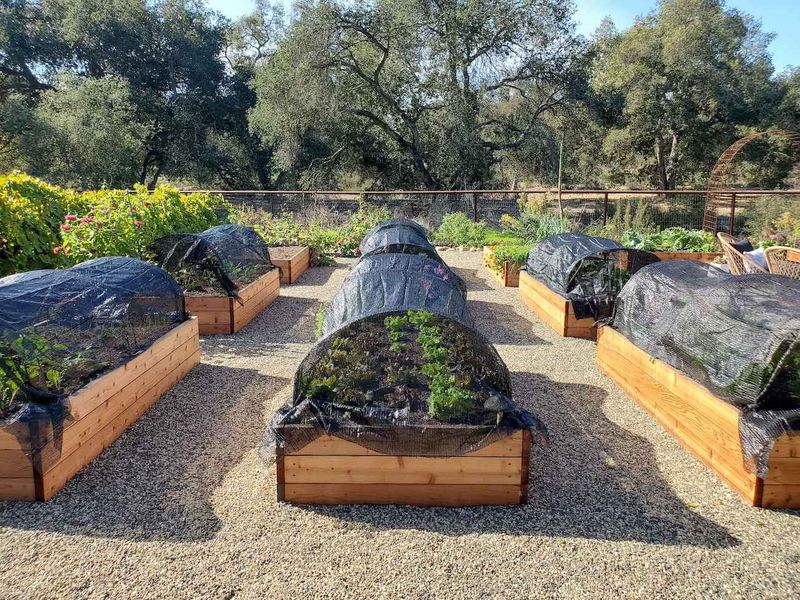
Most sunscald prevention comes down to one straightforward priority: keep the leaves on the plant. The canopy does more than feed the pepper through photosynthesis.
It shields the fruit from direct overhead and afternoon sun, moderates fruit surface temperature, and reduces the rapid moisture loss that stresses both the plant and the developing peppers. University of Maryland Extension specifically recommends protecting the leaf canopy as a primary strategy for reducing sunscald risk.
Keeping leaves healthy means managing the pests and diseases that remove them. Insects that skeletonize foliage, fungal diseases that cause leaf drop, and bacterial infections that trigger defoliation all increase exposure risk.
UF/IFAS integrated pest management guidance emphasizes early intervention with leaf diseases and insect problems before defoliation progresses. Avoid unnecessary pruning or accidental branch breakage, since removing healthy growth reduces the natural shade the plant provides its own fruit.
Consistent soil moisture matters just as much. Uneven watering stresses the plant, weakens the canopy, and can contribute to fruit disorders including blossom-end rot.
Rather than following a rigid daily schedule, adjust irrigation based on soil type, rainfall, drainage, container size, mulch coverage, temperature, and plant age. UF/IFAS irrigation guidance and UConn Extension’s resource on vegetable crops in drought and heat both recommend checking soil moisture regularly rather than relying on a fixed schedule.
A layer of mulch around the base of the plant helps retain moisture and moderate soil temperature, which is especially useful in hot Florida and Texas summers. In cases where fruit is repeatedly exposed despite a healthy canopy, UF/IFAS research on shade structures and related shade production work show that open or temporary shade can help during extreme summer heat, though peppers still require strong light and complete shade will reduce growth and yield.
Harvest the red pepper before quality slips
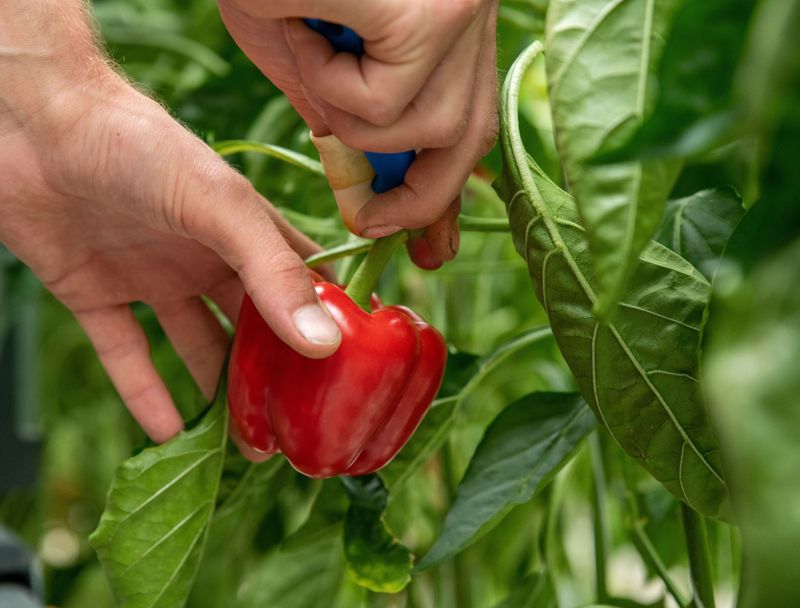
A fully red pepper that is still firm, plump, and smooth-skinned is at peak quality and ready to come off the plant. Waiting longer in hopes it will get even better usually works against you.
Every additional day in the summer heat adds more opportunity for sunscald, moisture loss, and surface deterioration. Utah State University’s harvest and handling guide for peppers recommends picking fully colored peppers while they remain firm rather than allowing them to soften or wrinkle on the vine.
How you remove the pepper matters too. Cut the stem with clean garden shears or a sharp knife rather than twisting or pulling hard on the branch.
Forcing the fruit off can snap branches, damage the plant, and reduce future yields. University of Minnesota Extension advises cutting rather than pulling to protect the plant.
UGA Forsyth County Extension also notes that harvesting in the morning can reduce handling stress because plants are cooler and better hydrated at that time of day.
Once you have the pepper in hand, assess the damage honestly. A firm pepper with a small, superficial blemish on the skin may be fine after trimming and thorough washing.
University of Wisconsin Extension’s guidance on imperfect garden produce and UConn Extension’s food safety advice both support using firm produce with minor surface injury, while recommending that any fruit with mold, soft rot, extensive decay, or tissue breakdown be discarded. USDA FSIS guidance on washing fresh produce covers proper cleaning steps before eating any garden vegetable.
Use the red-and-firm test at harvest time
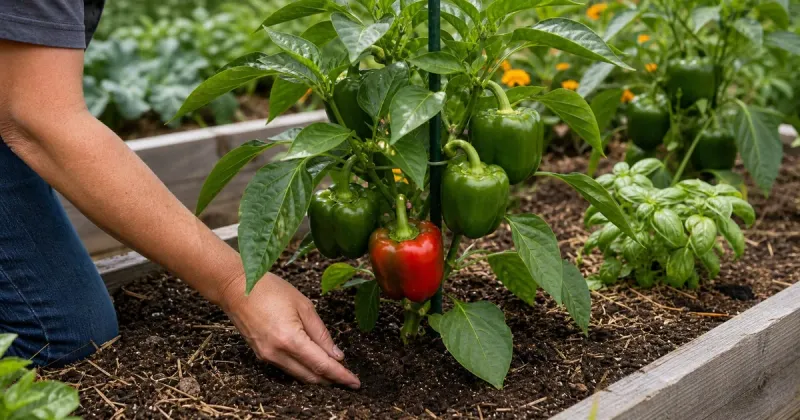
A simple two-part check can guide most harvest decisions in the garden. Red color tells you the pepper has reached normal maturity for its variety, as Utah State University Extension confirms.
Firm, smooth skin tells you quality is still intact. When both are true, pick it.
If the skin is wrinkled or sunken on one side only, and that side faces the afternoon sun, sunscald is the most likely explanation, especially if nearby leaves are missing or damaged. Wrinkles distributed across the whole fruit more often reflect moisture loss, aging, or overmaturity.
Depressed lesions, colored spore growth, soft rot, water-soaked patches, or symptoms spreading across multiple plants shift the concern toward disease, and a local extension service can help confirm what you are seeing. University of Maryland Extension and the Texas A&M Plant Disease Handbook both support using symptom location and pattern rather than a single feature to guide diagnosis.
Protecting the leaf canopy and harvesting promptly while the pepper is still firm are the two most reliable habits for keeping your harvest off this diagnostic chart altogether. A red pepper is a good pepper until the texture says otherwise.