
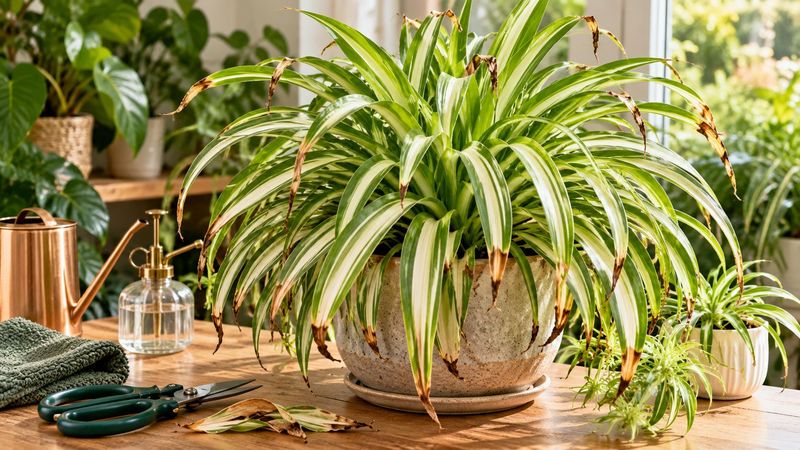
Those crispy brown tips on your spider plant can make a healthy green plant look tired fast. The tips are a signal, but they do not point to just one problem.
Watering is a good place to start, and so are a few other simple checks. Here is a calm, step-by-step way to find out what your plant is reacting to.
Brown tips point to stress, not one certain cause
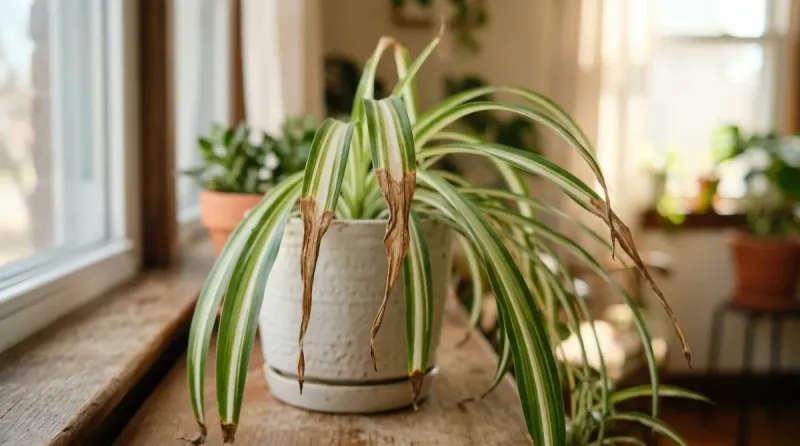
Crispy brown tips are a symptom, not a verdict. Extension guidance, including University of Wisconsin Extension’s spider plant profile, lists several possible triggers, so the tips alone cannot tell you whether the plant is too wet or too dry.
Plausible contributors include watering stress, fluoride or chlorine in the water, mineral or fertilizer salts building up in the mix, low indoor humidity, and too much direct sun. Iowa State Extension describes similar causes for houseplants in general.
Any one of them might fit your plant, or a mix might.
A practical plan is to check watering and water quality first. Change one thing at a time so you can tell what helped.
If you switch the watering, the water source, the light, and the feeding all in one week, you will never know which change mattered.
Let the soil—not the calendar—guide watering
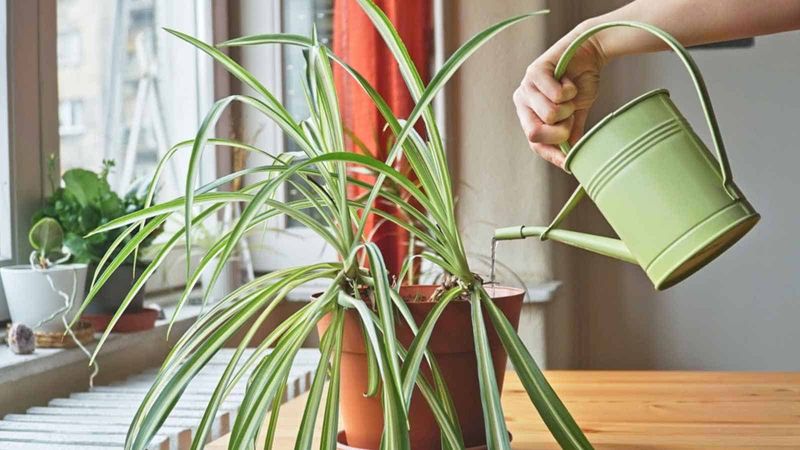
Push a finger about an inch into the potting mix before you reach for the watering can. For spider plants, UF/IFAS advises letting the upper inch dry briefly between waterings.
If that layer is still damp, wait a day or two and check again.
When it is time, wet the whole mix thoroughly and let the extra water run out of the bottom. Then empty the saucer so the pot is not sitting in runoff.
Virginia Tech Extension points out that overwatering is mostly about watering too often, not about giving a large drink at once.
A fixed weekly schedule ignores pot size, light, and indoor temperature, which all change how fast the mix dries. Aim for neither extreme.
Soil that stays soggy can lead to root rot, and soil that stays bone dry for long stretches is also hard on the plant, as noted in Wisconsin’s guidance.
Check water quality and salt buildup separately
Sometimes the water itself is part of the story. UF/IFAS notes that spider plants can be sensitive to fluoride, and chlorine or built-up fertilizer and mineral salts can also play a role.
None of that means the plant is overwatered.
Tap water is not harmful to every plant. Utah State Extension says tap or well water is usually fine for houseplants, but it warns against softened water.
If you suspect your water, try rainwater or distilled water on this plant for a while and watch the new leaves. Skip sodium-softened water.
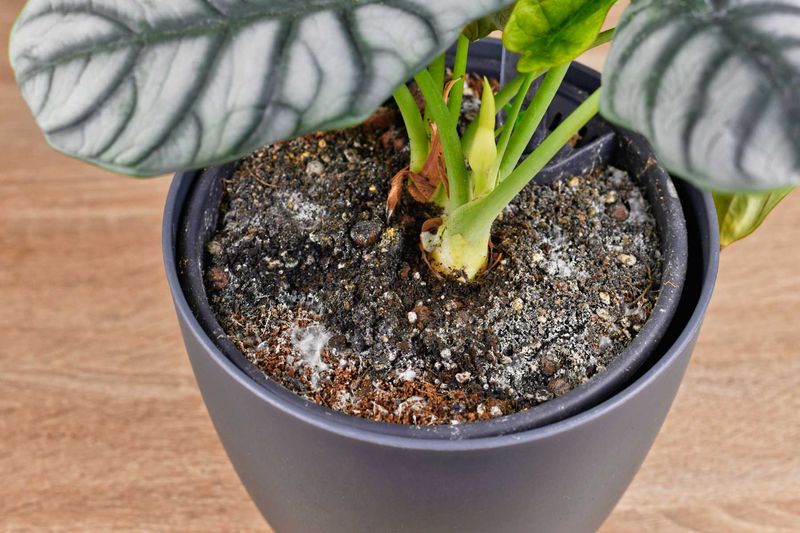
A white crust on the soil or pot rim is a clue to salt buildup, but not proof. If the pot drains freely and you suspect salts, you can flush the mix with plenty of water and let it drain completely, as described by Colorado State’s PlantTalk.
If the pot does not drain well, fix that first.
Assess other growing conditions
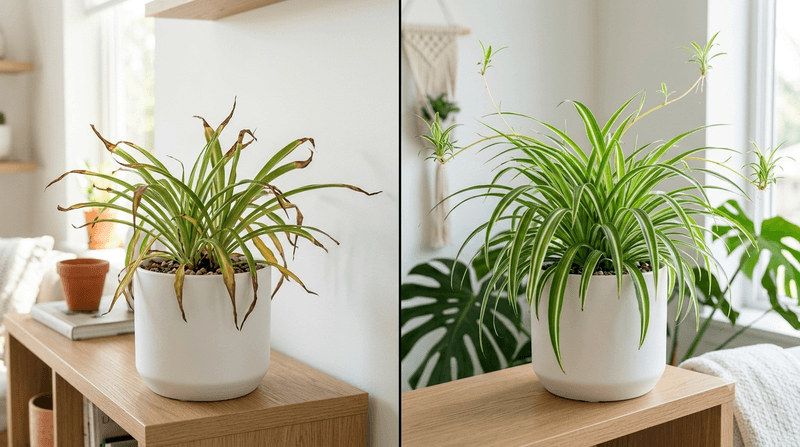
If the soil, drainage, and water all seem fine, look around the room. Air conditioning in a hot Southern summer, or heating in winter, can leave indoor air very dry.
Low humidity is one of the causes Iowa State Extension lists for brown leaf tips.
Light is another clue. A spider plant that sits in strong direct sun by a west window may scorch, so bright, indirect light is usually gentler.
Fertilizer matters too, since extra feeding can leave salts in the mix. UF/IFAS covers indoor care for this plant.
Treat each of these as a possibility to compare with your plant’s real conditions, not a diagnosis you can read from the tips. Keep your focus on indoor care, since spider plant is no longer recommended by UF/IFAS for Florida landscapes.
Choose a targeted correction, not a drastic reset
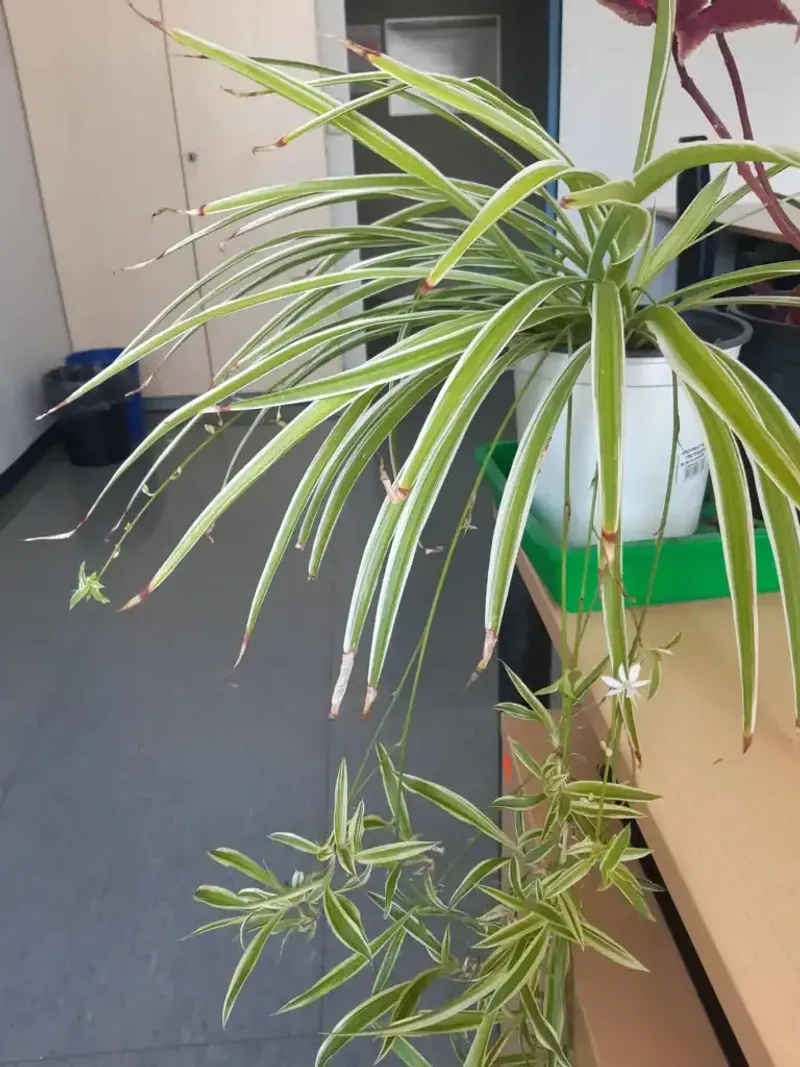
Match the fix to what you found. If the mix stays wet, adjust how often you water and make sure the pot drains.
If you suspect your water, run a trial with rainwater or distilled water. If you saw salt crust, flush a freely draining pot.
Resist the urge to do everything at once. A universal weekly schedule, drying the plant out on purpose, repotting every plant with brown tips, and using only distilled water for everyone are all blanket remedies.
Virginia Tech Extension and Utah State Extension both point toward checking conditions instead.
Fresh mix or repotting makes sense when you see signs of salt buildup, crowded roots, or a soil or drainage problem. Skip fungicide unless a fungal problem has been diagnosed, since University of Maryland Extension cautions that misuse can injure the plant.
Trim the damage and watch new growth
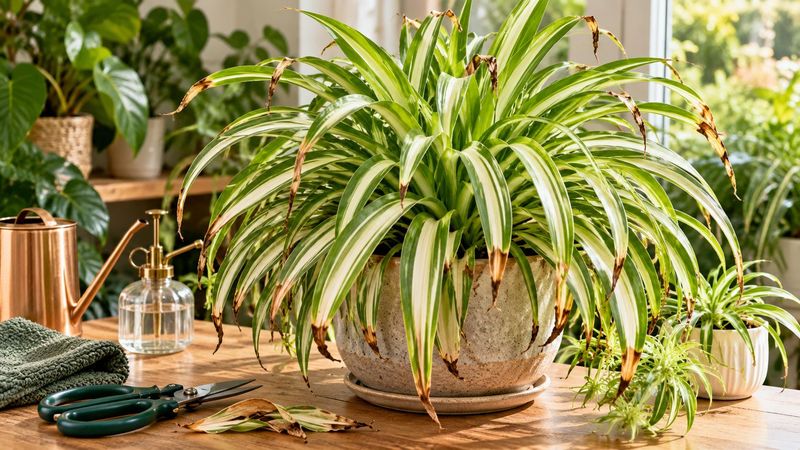
Brown tissue will not turn green again. As Iowa State Extension explains, you can snip off the damaged parts with clean scissors to make the plant look better.
Trimming only helps appearance. It does not fix the cause, so browning can return if the cause is still there.
Cut just the brown part, and leave a thin edge of it so you do not injure healthy tissue.
The real report card is new growth. Watch the fresh leaves over the next several weeks.
Clean green tips are a good sign, though no plan can promise a cure. Old leaves keep their scars, and new ones tell the story.