
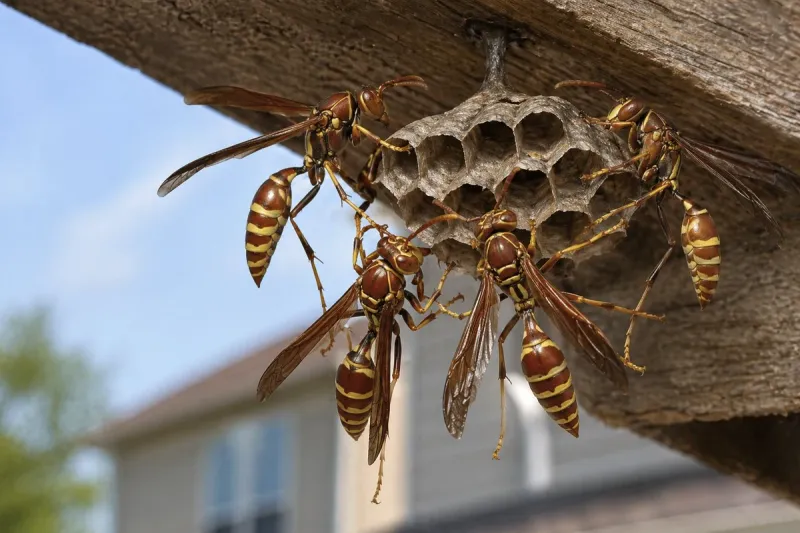
Spot a wasp tucked under your porch eave in late fall, and it is easy to assume trouble is brewing for spring. The truth is more modest.
Some of those wasps may be mated females looking for a sheltered place to ride out winter. A few simple habits can help you keep nests away from your front door without harming wasps you do not need to bother.
An eave visitor may be seeking shelter, not reserving a nest site
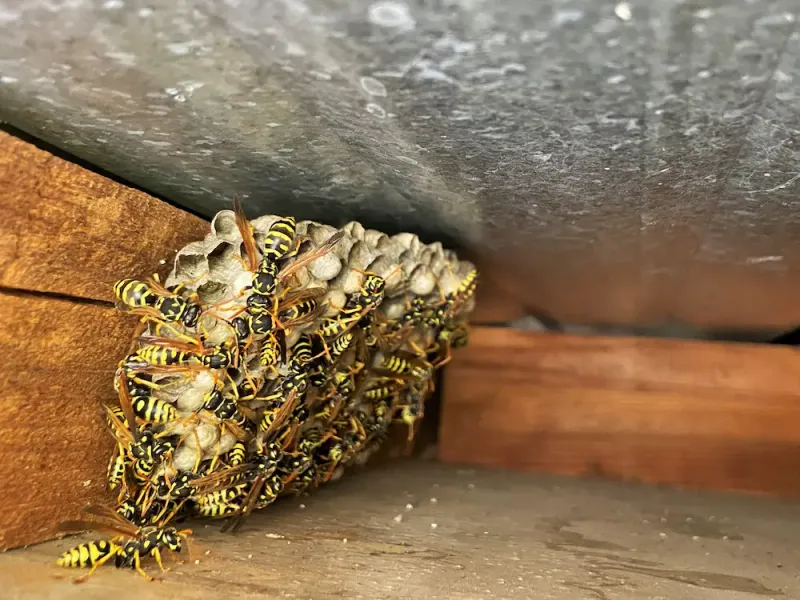
Here is the plain correction to the popular claim: a wasp resting in your eave in late fall has not necessarily picked where it will nest in spring. In fall, mated female paper wasps leave their old colony and look for sheltered places to wait out the cold.
Texas A&M AgriLife Extension notes that these overwintering females may gather in groups and use elevated structures, including buildings.
That makes an eave, porch corner, or gap near a light fixture a reasonable winter hideout. Shelter is the goal at this point, not real estate shopping.
New nests are started in spring, after the wasps emerge and begin their work.
You also cannot tell much about a wasp just from where it is sitting. A single wasp at an eave is not automatically a queen, and queens and workers can look alike, as Texas A&M’s paper wasp page describes.
Its winter resting spot also does not tell you where it will build months from now.
So treat eave visitors as possible overwintering wasps. They are a reminder to look at your porch with spring in mind, not proof of what is coming.
The rest of this article covers what you can do about it, calmly and safely.
What a paper wasp nest looks like
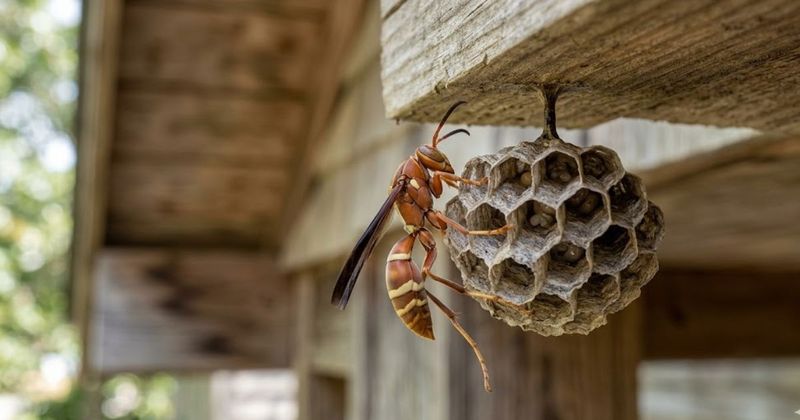
Identify the nest, not the individual wasp. A paper wasp nest is an open, single-layer comb of papery cells, often shaped like a small umbrella or showerhead, and it hangs from a short stalk.
As Texas A&M explains, nests are commonly attached beneath eaves, and you can usually see the cells from below.
A wasp sitting nearby is not the same as a nest. Winter visitors may rest quietly with no comb in sight.
If you see no papery structure, you are probably looking at a wasp that is simply sheltering.
Mix-ups are common. Texas A&M’s insect resource and NC State Extension both point out that paper wasps are often confused with yellowjackets and mud daubers.
Yellowjackets typically build enclosed paper nests, and mud daubers build mud tubes, so the nest itself is a strong clue.
Getting this right matters before you act. Each insect nests differently and calls for different handling.
If you are unsure what you are looking at, take a photo from a safe distance and compare it with an Extension guide before touching anything.
Use winter to note last year’s nest locations
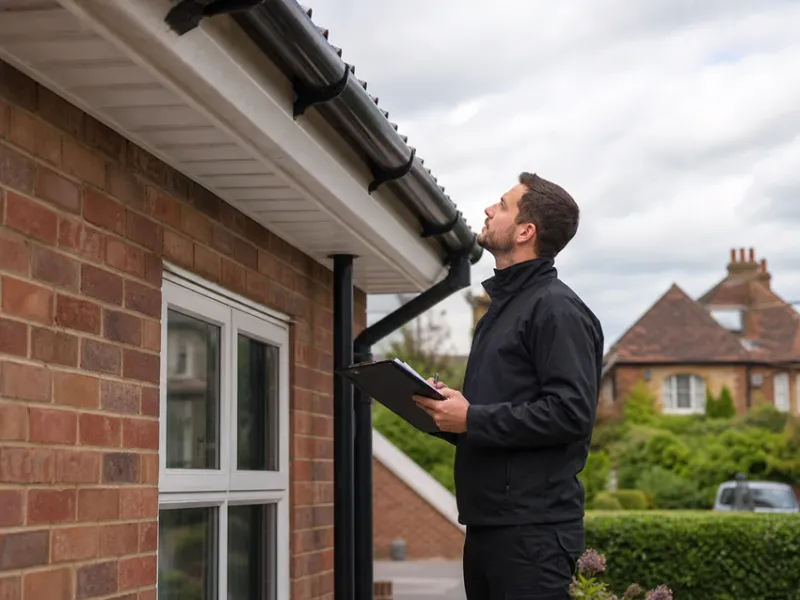
Winter is a calm time for a walk-around. Grab a notepad or your phone and record where nests showed up last year: porch corners, eaves, light fixtures, gutters, and the underside of railings.
Write down each spot so you are not relying on memory in March.
Look from the ground first. Old attachment areas can show up as small gray or brown stubs or smudges on the wood.
Keep your distance from any gap or corner where wasps are resting, and do not assume a structure is empty just because it looks quiet.
These notes are for monitoring, not prediction. Texas A&M Extension says new nests are often built in the same general location as earlier ones.
That makes past spots smart places to check, but it does not mean a queen has chosen one.
The checklist you build now pairs with early spring checks, which Texas A&M’s school IPM plan recommends. A winter inspection alone will not keep wasps away.
Its job is to give you a short list of places to watch.
Check for new nests in spring and act early when appropriate
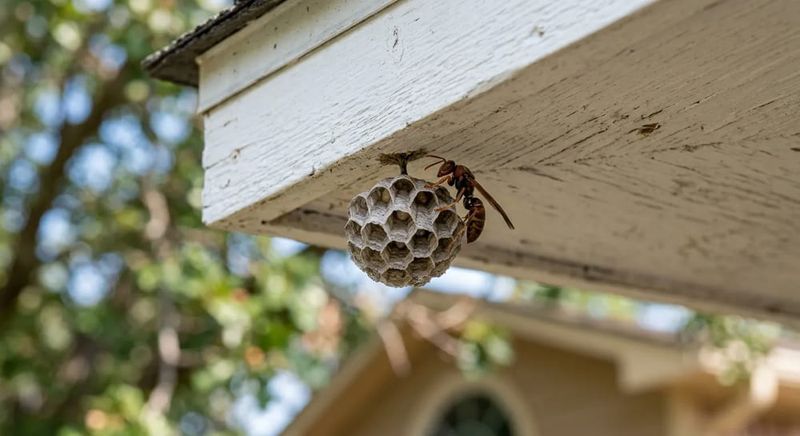
Spring is when the real work begins. Queens that survived winter start new nests, and the first ones are tiny, sometimes just a few cells on a short stalk.
Check the spots on your list every week or so.
For small start-up nests, Texas A&M’s school IPM guidance recommends removing them early. After removal, cleaning the attachment area may reduce the chance of another nest at that exact spot.
Stay cautious, work from a stable position, and do not climb or reach into a spot where you cannot see.
Choosing a nearby site is different from reusing an old nest. Texas A&M says new nests are often built in the same general area, but abandoned nests are not reused.
There is one species caveat. Virginia Tech Extension notes that European paper wasps may reuse old nests, unlike native Polistes species, so avoid assuming one pattern fits every wasp.
Treat a former nest site as a place to watch, not a guaranteed target. Early action can deal with a specific nest, but wasps may still build in the same general area or somewhere else.
Seal only confirmed inactive access gaps
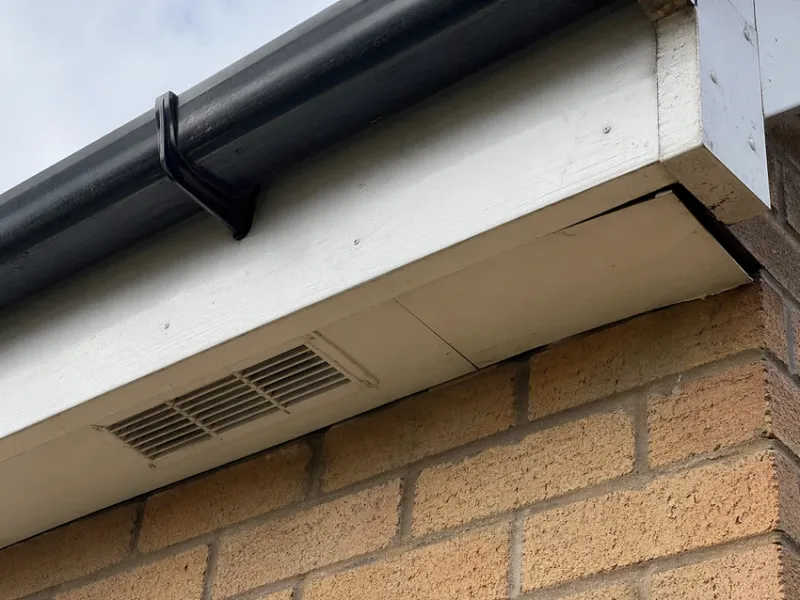
Sealing gaps sounds like a simple fix, but timing matters. Repair genuine openings into an attic or wall only after you have confirmed the space is inactive.
A Cornell wasp and bee management guide warns against sealing an active nest from outside, because trapped wasps may find a path indoors.
Watch the opening for a while on a mild day. If you see wasps coming and going, treat it as active and leave it alone.
A quiet gap is not proof of an empty cavity, so be honest about what you can confirm.
Ventilation needs care too. Texas A&M Extension supports keeping required vents open and using appropriate screening rather than caulking them shut.
Blocking airflow can create moisture problems in your attic.
If you cannot safely confirm the cavity is inactive, or the opening is high or hard to reach, call a professional. Texas A&M’s IPM plan advises hiring help when safe control is uncertain.
Let location and risk guide what you do
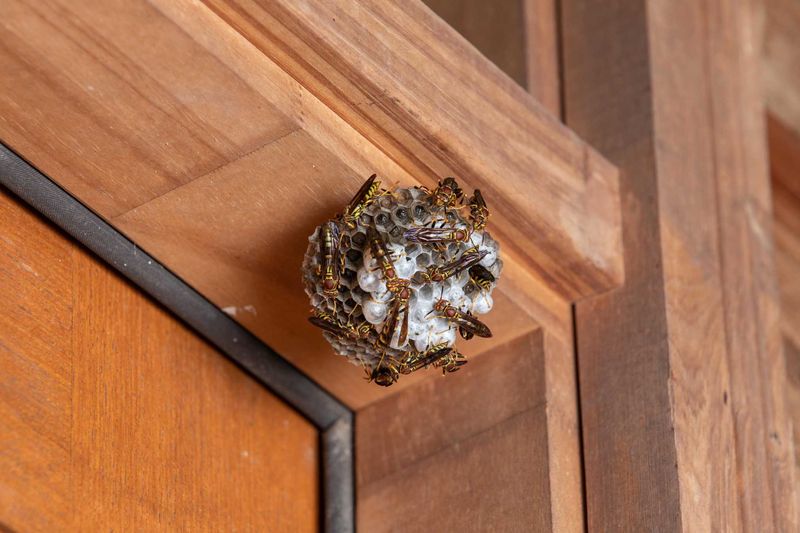
Not every nest is a problem. Virginia Tech Extension notes that paper wasps prey on caterpillars and other insects, which can be a plus for gardeners.
A nest tucked away from doors, paths, and play areas may be fine to leave alone.
Location changes the answer. A nest above your front door, near a walkway, or by a play set is a conflict.
Texas A&M recommends reducing encounters rather than trying to wipe out wasps from an area, so focus on the busy spots only.
Skip the paper-bag decoys. Iowa State Extension says artificial nests have not been shown to work, so they are not worth counting on.
Some situations call for a professional: a large nest, one out of safe reach, or anyone in the household with a sting allergy. Texas A&M notes that stings can cause severe allergic reactions.
Do not disturb a big nest or climb to treat one yourself.
A winter check can prepare you, but it cannot guarantee an empty porch
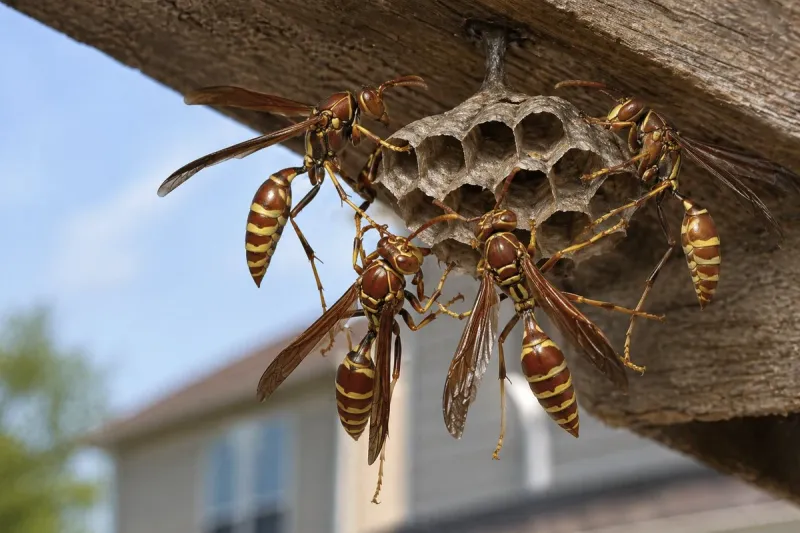
Think of fall eave visitors as possible overwintering wasps, not confirmed nest builders. Note where nests appeared before, then look at those spots again in spring, when Texas A&M’s IPM plan says small nests are easiest to handle.
Cleaning and repairs can fix specific conditions, but Texas A&M Extension says wasps may still build in the same general area. A good porch plan is really a habit of looking up.