
Your Hass avocados can hang on the tree for months looking hard and green, and that leaves many California growers guessing. Here is the surprise: a firm fruit on the branch may already be mature enough to pick.
The trick is knowing which clues matter and which ones only point in a direction. A single clipped fruit on your kitchen counter can tell you more than any squeeze at the tree.
Mature fruit can still be firm on the tree
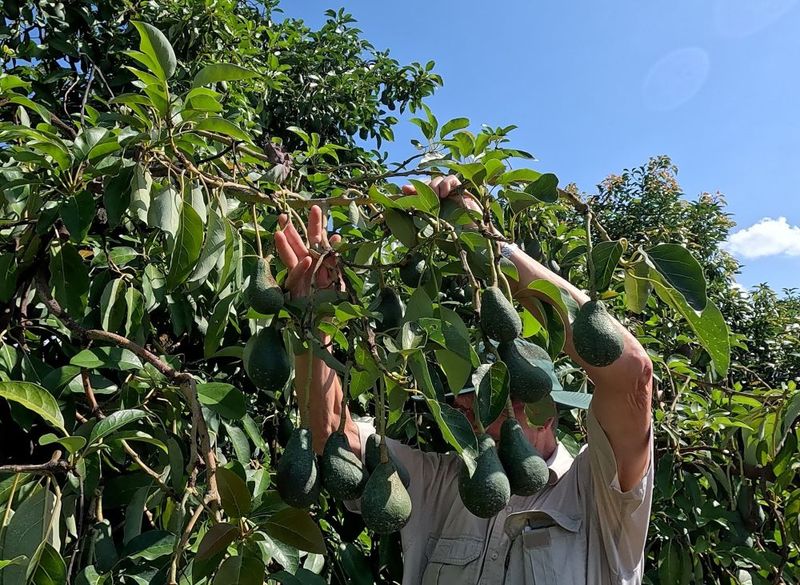
Here is the idea that trips up many backyard growers: Hass avocados normally stay firm while they are still attached to the tree, even when they are mature enough to harvest. According to UC Davis postharvest specialists, the softening happens after the fruit is picked.
So a hard avocado on the branch is not automatically an unready one.
That is why firmness alone cannot tell you whether to pick. A rock-solid fruit might be immature, or it might be fully mature and simply waiting for you to clip it.
Looking at it or poking it will not settle the question.
It helps to separate two ideas. Harvest maturity means the fruit has developed enough that it can soften and taste good after it comes off the tree.
Eating readiness means the fruit is soft and creamy on your counter. A mature Hass does not need to be soft on the branch, it only needs to be able to soften later.
You may hear that avocados never soften on the tree, and that is a little too absolute. Fruit left hanging too long can overmature, develop poor flavor, or even decay, as UC Agriculture and Natural Resources explains.
Leaving avocados up there forever does not keep them in perfect shape.
So the goal is not to wait for softness on the branch. The goal is to pick fruit that is mature, then let it soften at home.
The next sections show the clues to watch and the simple test that gives you a real answer.
Skin color offers a clue, not a verdict
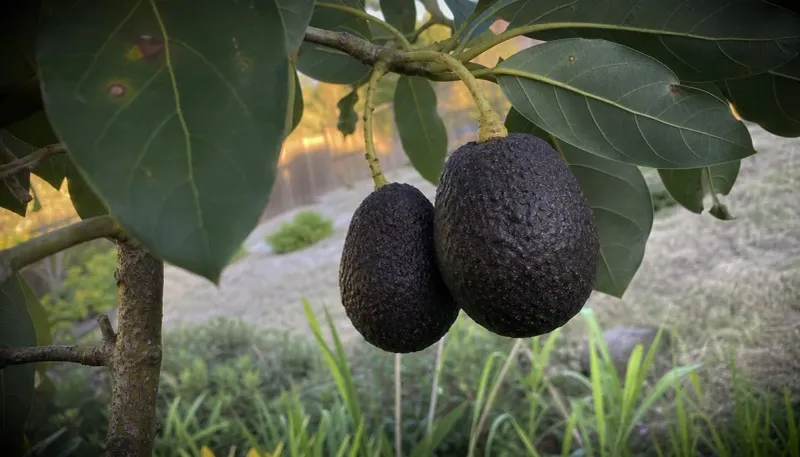
Skin can give you a hint about where a fruit stands. According to UC Integrated Pest Management, black-skinned varieties such as Hass may change from green toward dark as they mature.
Some growers also notice that the shiny, waxy surface bloom fades and the skin looks a bit duller.
Treat these changes as clues, not proof. Fruit on the same tree can look different because of sun exposure, bloom time, and crop load.
A dark avocado could still be short of maturity, and a green-looking one could be fine.
There is another clue inside the fruit. UC Cooperative Extension in Ventura County notes changes such as a darker seed coat.
A brown, papery seed coat can point toward maturity, but you have to cut open a fruit to see it. That makes it a handy check on a test fruit, not something you can read across the whole tree.
It also helps to keep two kinds of color change straight. After harvest, UC Davis lists skin color change as a ripening index for Hass, meaning a sign that a picked fruit is softening.
On the tree, color is only a loose hint about maturity.
In practice, use color to decide when it is time to run a test, such as when more fruit on the tree is darkening and losing its shine. Then let a clipped fruit give you the real answer.
The stem helps you pick carefully, not judge maturity
You may have heard that stem color or the little button where the stem meets the fruit can reveal whether an attached avocado is mature. The guidance from University of California sources does not establish either one as a reliable maturity test for Hass.
A green stem or a tight button on the tree tells you very little.
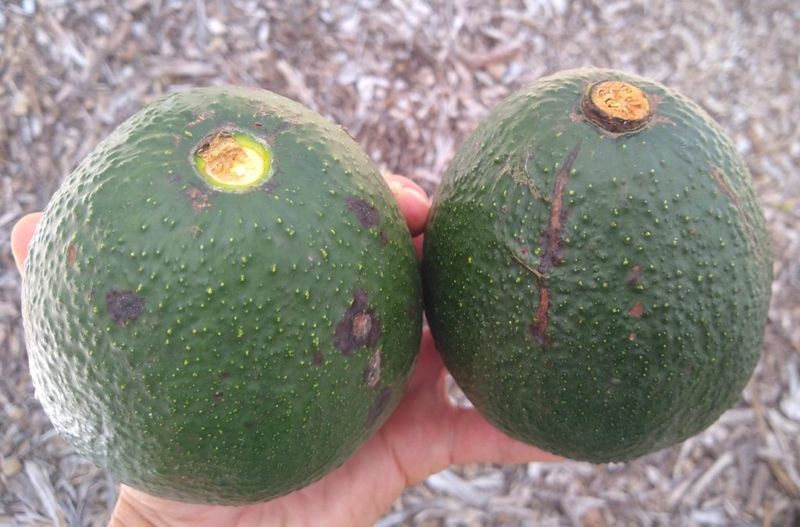
The stem button does come up in one useful way. UC Cooperative Extension in Ventura County discusses removing the button on a harvested fruit to peek at the stem area and judge whether it is already soft enough to eat.
That is a check for eating readiness on your counter, not a way to decide whether to pick from the tree.
Where the stem really matters is in how you pick. Clip the fruit with pruners or clippers instead of pulling it, and leave a little stem attached.
UC Integrated Pest Management points out that pulling can hasten decay.
Keep in mind that a bit of stem is a gentle harvest habit, not a signal that the fruit is mature. Plenty of immature fruit has a stem too.
A practical routine: carry a small pair of clippers, snip the stem just above the fruit, and set the avocado in a basket rather than tossing it in a bucket. Careful handling now protects the test result and the fruit you plan to eat later.
A picked test fruit gives the clearest home-grower answer
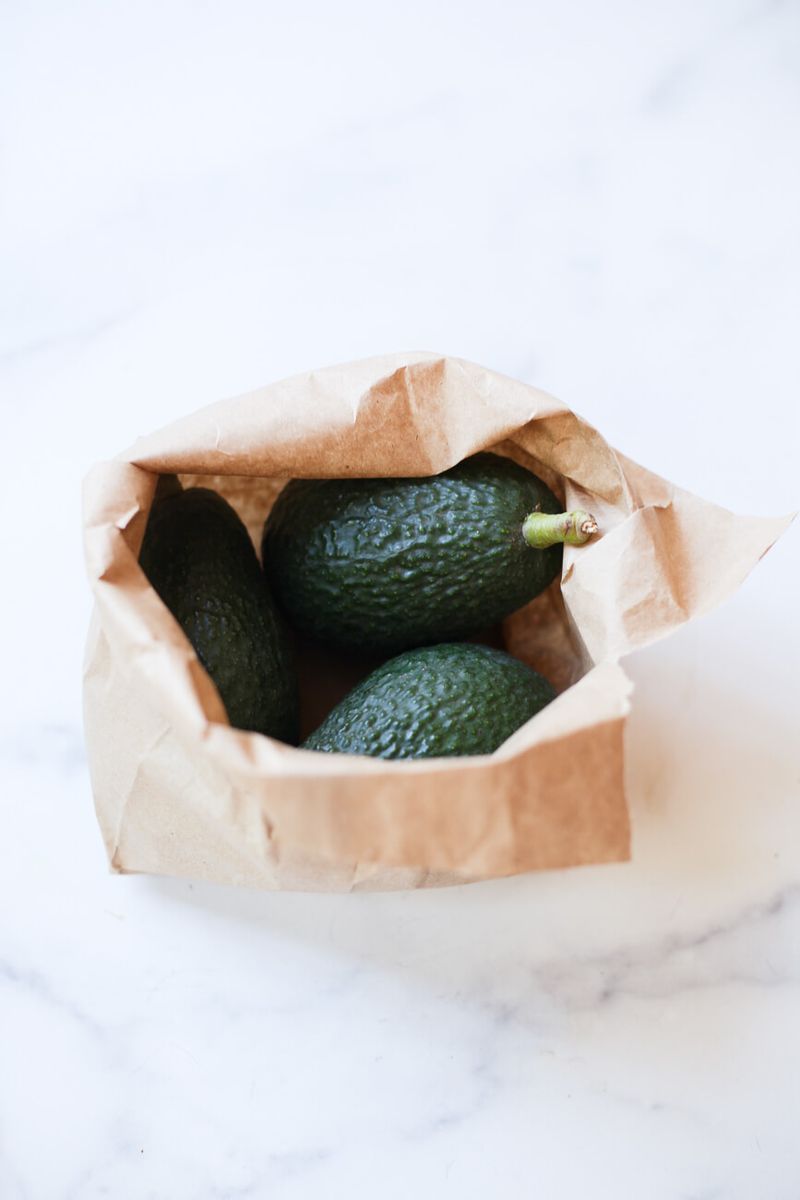
When the clues are fuzzy, let the fruit speak. The most useful check for a home grower is to pick one of the larger avocados and see how it behaves off the tree.
UC Cooperative Extension in Ventura County recommends this simple approach.
Choose a larger fruit, since bigger ones are usually the first to be ready. Clip it carefully with a little stem attached, as UC Integrated Pest Management advises, and bring it inside.
Set the avocado on a counter at room temperature, out of direct sun. Skip the fridge for now, because cold slows softening and would muddy the test.
A paper bag can be handy later, but plain countertop conditions are enough to see what happens.
Remember what this test is measuring. It does not tell you whether an attached fruit should feel soft.
It shows whether a mature-enough fruit can soften and eat well after harvest, which is the real goal.
One test fruit gives you a useful signal, not permission to strip the tree. Think of it as a sample from a big batch.
If it goes well, you have good reason to pick more as you need them. If it does not, the rest of the crop is still safely hanging while you wait and try again.
Write the pick date on a sticky note by the bowl. That way you can look back and see how the fruit behaved, without turning it into a rigid deadline.
Judge the test by how the fruit softens
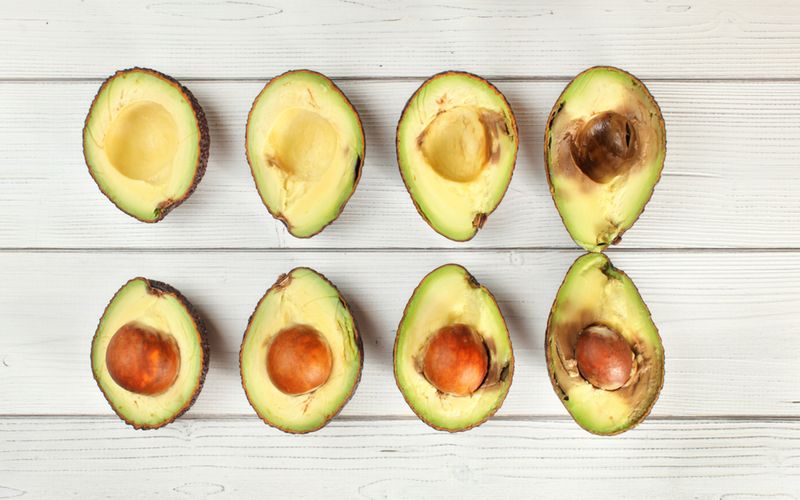
Once your test fruit is on the counter, watch how it changes. UC Cooperative Extension in Ventura County describes the good signs: the fruit softens evenly and tastes good when you cut it open.
Those are promising signs that the rest of the crop is ready to start coming off.
Poor results look different. A fruit that shrivels, or stays tough, leathery, or rubbery instead of turning creamy, suggests the crop needs more time.
Do not panic. Simply wait a while and test another fruit later.
Timing varies. Softening can take a few days to about two weeks, depending on maturity, temperature, and variety.
A warm kitchen speeds things up, and a cool one slows them down.
Because of that range, skip the fixed deadline and judge the condition of the fruit instead. Is it softening steadily, or is the skin wrinkling while the flesh stays firm?
The first is encouraging, the second is a warning.
Resist the urge to press the fruit over and over. Thumb pressure can bruise the flesh, and squeezing is not a substitute for the test.
A gentle palm cradle once a day is plenty.
When it feels slightly yielding, cut it open and taste. Flavor is the final word on your test.
Dry matter measures maturity, but it is not a taste guarantee
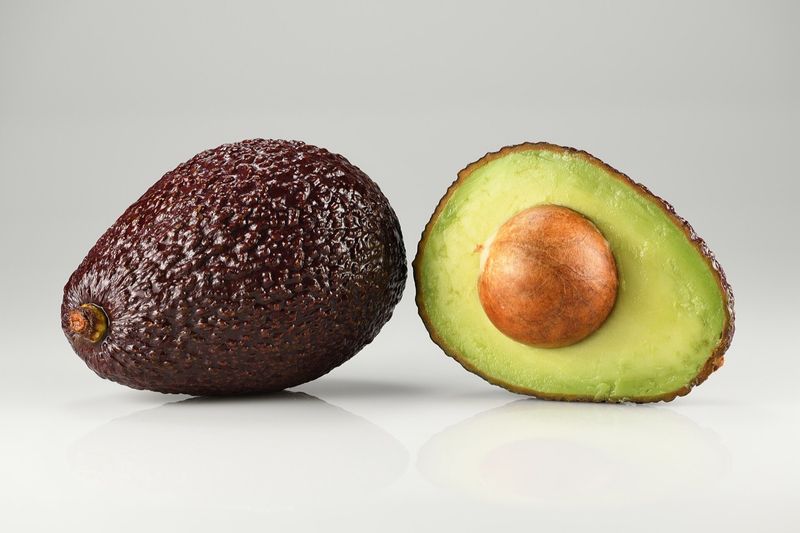
Behind all of this is something growers and packers measure: oil and dry matter. As the fruit matures, its oil content rises and its water content falls, which is why maturity is tied to dry matter.
UC Davis notes that California uses dry matter as a maturity index.
For Hass, the listed California minimum is 20.8 percent, written into state maturity regulations. That number is a regulatory standard, not a promise of ideal eating quality.
An industry article in Better Growing argued the minimum may be too low to guarantee good ripe fruit, though the listed standard remains in place.
If you like measuring things, the University of California, Riverside offers a home-scale method using a kitchen scale and a microwave. You weigh a sample of fruit flesh, dry it in the microwave, and weigh it again to see how much water was lost.
It is more technical than looking at the fruit, and it involves cutting open an avocado. For most backyard growers, that extra work is optional.
The picked-fruit test remains the main recommendation. It checks what you actually care about: whether the fruit softens and tastes good on your counter.
Harvest in stages instead of following one statewide date
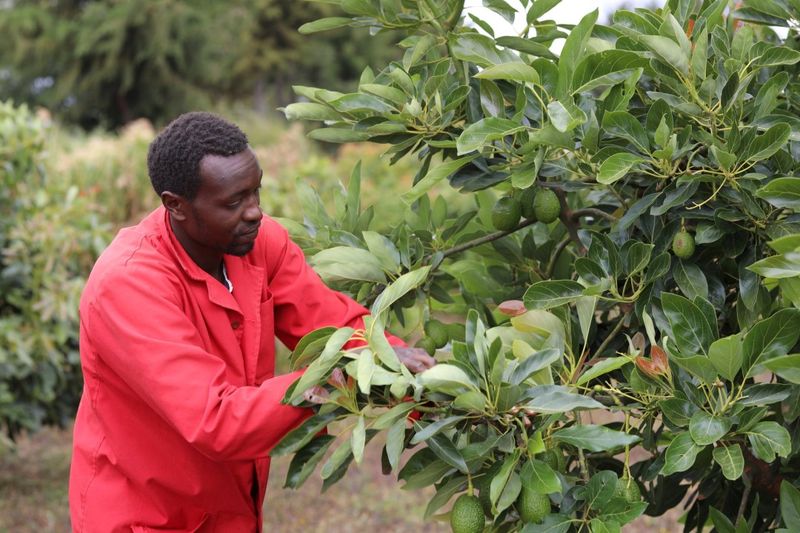
After a good test result, resist the urge to clear the whole tree. Pick what you can use over the next week or two, and leave the rest hanging.
Hass holds well on the tree for a time, which gives you a handy living pantry.
If a test turns out poor, put the tree on hold and try another fruit in a couple of weeks. That repeat test costs you one avocado and keeps the rest of the crop safe.
You will not find one reliable statewide picking month, and that is no accident. California is a patchwork of coastal, inland, and foothill microclimates, so harvest timing varies by region and conditions.
UC Agriculture and Natural Resources cautions that seasonal dates are approximate, and Ventura County extension points growers to testing rather than the calendar.
Your neighbor’s schedule may not match yours, even a few miles away. Their tree could be on a warmer slope or a different rootstock.
Staged picking also guards against waiting too long. Fruit left on the tree past its prime can overmature, develop poor flavor, or decay, as UC ANR’s avocado FAQ explains.
A simple habit helps: check the tree every couple of weeks, pick a few of the larger fruit as needed, and watch for any with spots, shriveling, or drop.
Let the test fruit—not the tree’s firmness—make the call
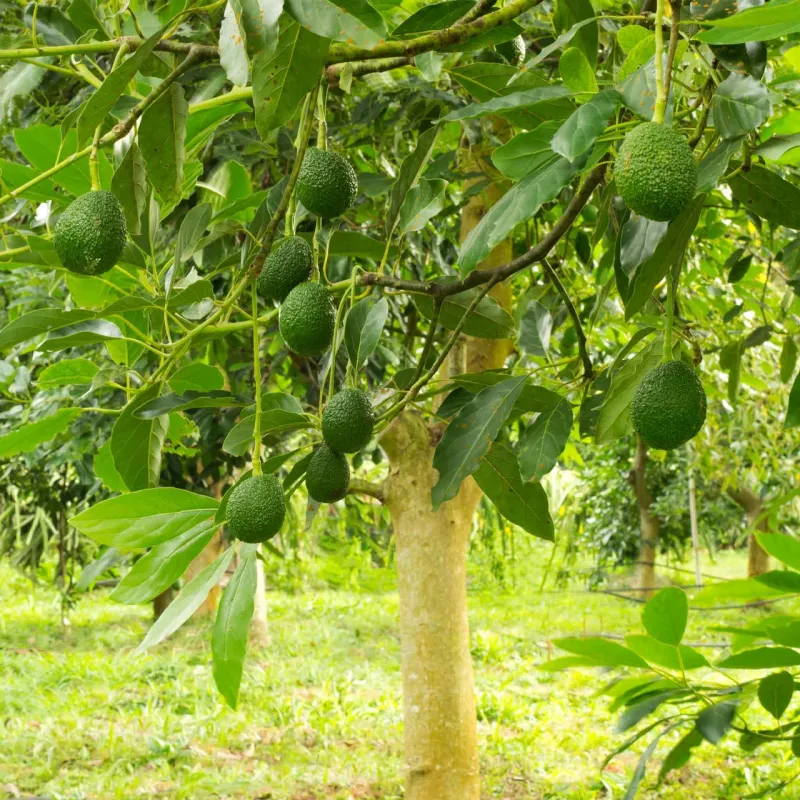
Start by noticing the skin and surface as clues. Then clip one larger fruit with a bit of stem, let it soften at room temperature, and see how it feels and tastes, following the UC Cooperative Extension guidance.
A good result says pick more as needed, and a poor one says wait.
No fruit promises to behave exactly like its neighbor. Still, a tree that stays firm is not a tree that is failing you.