
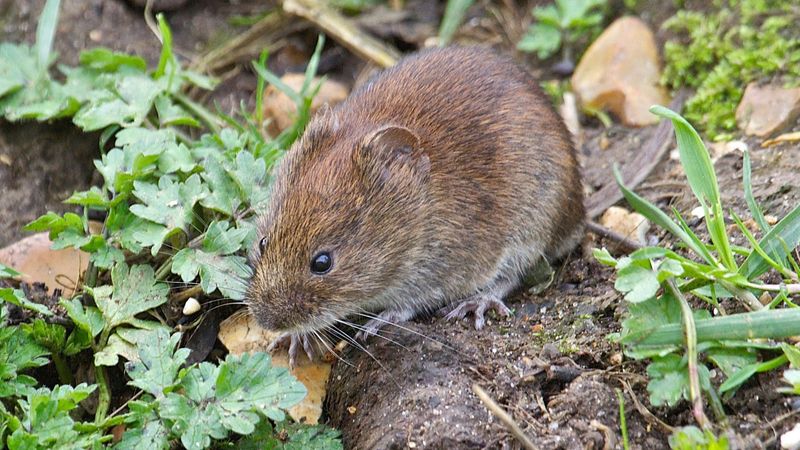
Finding a tunnel beneath your mulch bed can make you wonder what is living down there and whether your plants are in trouble. In North Carolina, small mammals including pine voles can feed on roots and root crowns where you cannot easily see them, but a tunnel alone does not tell you who made it or whether any plant has been harmed.
Knowing what to look for, how to check your plants, and when to act can save you from overreacting to a harmless tunnel or missing real root damage before a shrub starts to fail.
A mulch tunnel needs a diagnosis, not a guess
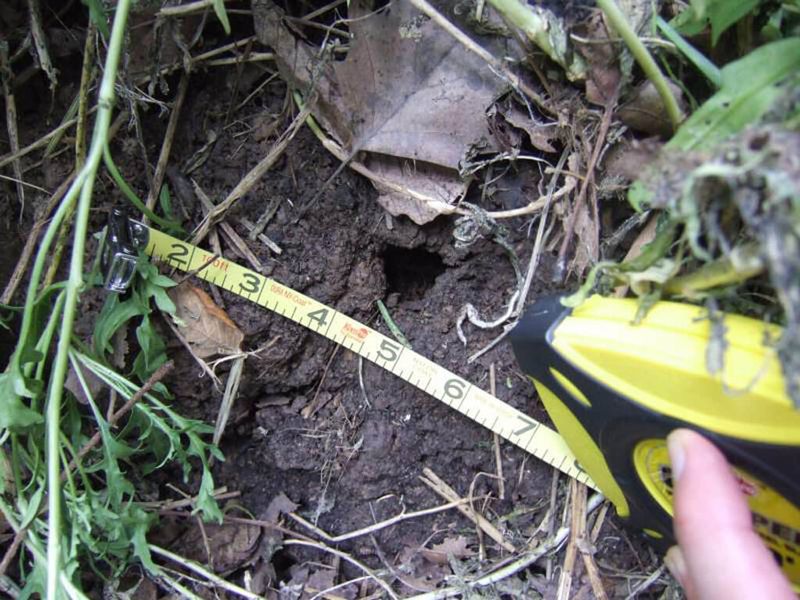
Spotting a tunnel beneath your mulch does not automatically mean voles have moved in. Several small mammals, including moles, can create or expand underground passages, and the tunnel itself cannot tell you which animal made it or whether any plant feeding has occurred.
A calm, methodical look at the surrounding area will give you far more useful information than the tunnel alone.
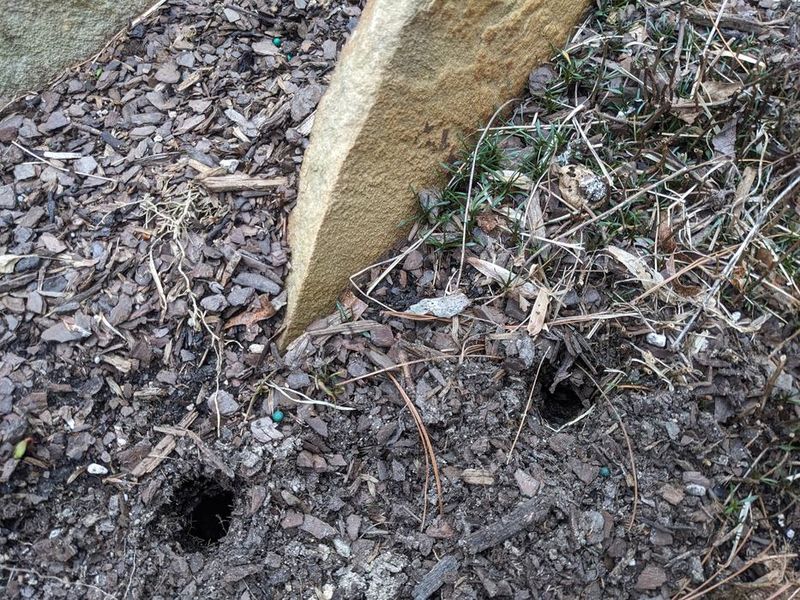
Start by checking for signs that point specifically toward plant-feeding animals. Penn State Extension’s vole guidance describes a combination of clues that, taken together, support a vole diagnosis: narrow surface runways roughly one and a half to two inches wide clipped through grass or ground cover, small burrow openings at or near the soil surface, rice-grain-sized droppings, and irregular gnaw marks on stems or roots near the soil line.
Finding one of these signs is suggestive; finding several together makes the case much stronger.
Raised earth ridges and small conical molehills point more toward moles, which are insectivores that feed primarily on earthworms and grubs rather than roots. Penn State’s mole resource makes clear that moles do not eat plant roots, though their tunnels can loosen soil around roots and create sheltered travel routes that voles or other small mammals may use.
If you see classic mole ridges but no clipped vegetation, gnaw marks, or plant decline, the tunnel may have a different occupant than you assumed.
Also check for plant decline consistent with root feeding, such as wilting, off-color foliage, or a shrub that feels loose when you gently push it. Confirm several matching signs before you change the bed or apply any control measure.
Pine voles can damage plants where you cannot see them
Among the vole species found in North Carolina, the pine vole is the one most associated with hidden below-ground damage. The NC Wildlife Resources Commission identifies pine voles and meadow voles as the species most likely to damage turf and ornamental plants in the state, while the southern rock vole is a Species of Special Concern limited mainly to higher-elevation western counties and is not the typical residential landscape concern.
Pine voles spend most of their lives underground, which is precisely what makes them difficult to detect. They feed on roots, root crowns, bulbs, and the bases of shrubs, ornamentals, and young trees.
Because their activity stays beneath the surface, NC State Extension’s orchard and nursery guidance notes that the first sign of a problem is often a plant that looks stressed for no obvious reason, or one that pulls loose from the soil because its roots have been compromised.
Meadow voles behave quite differently. They spend more time above ground and tend to leave visible surface runways through grass, along with gnaw marks at the base of trees or shrubs near the soil line.
If you are seeing narrow, clipped pathways and bark damage at ground level, meadow voles are a more likely candidate than pine voles. NC State’s turf guidance describes both species and their distinct patterns of activity.
When pine voles do cause damage, the consequences can include root girdling, weakened anchorage, and, in serious cases, a shrub or young tree that becomes unstable. That said, not every plant near a tunnel will fail.
The risk depends on how many voles are present, what food sources are available, and how vulnerable the specific plant is.
Plant symptoms tell you when to open the soil
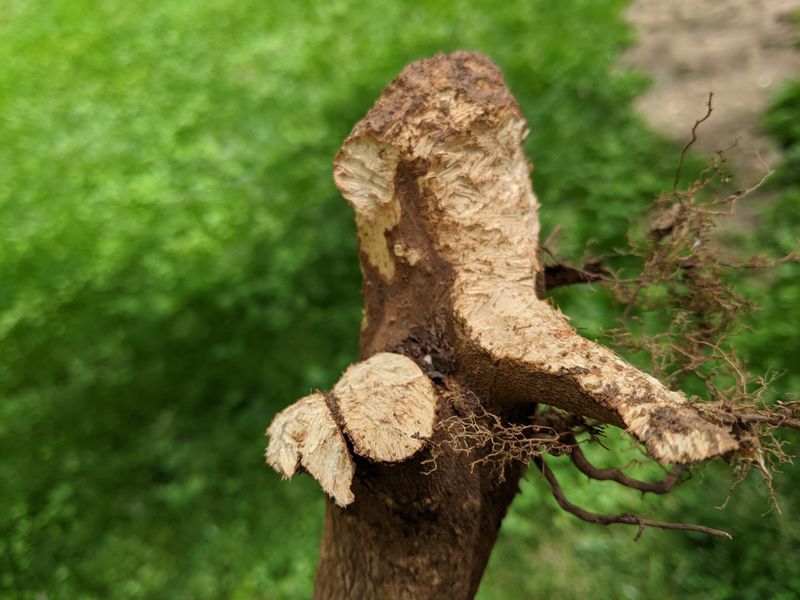
When a shrub starts wilting, growing slowly, turning off-color, or feeling loose in the ground without any clear aboveground reason, the root zone deserves a closer look. These symptoms are real warning signs, but they are not specific to voles.
Drought, poor drainage, root disease, planting too deeply, and girdling roots can all produce the same picture, so the goal of an inspection is to figure out what is actually happening rather than to confirm a suspicion.
Pull back the mulch around the base of the struggling plant and examine the soil line, the root crown, and the first few inches of root just below the surface. Penn State Extension describes irregular, small gnaw marks around a stem or root crown as more consistent with vole feeding than the larger, cleaner cuts that rabbits leave.
If you find damaged or severed roots alongside other vole signs, such as nearby tunnels, droppings, runways, or small burrow openings, that combination supports a vole diagnosis more strongly than any single symptom on its own.
A plant that pulls easily from the soil is another telling clue. NC State’s commercial orchard guidance notes that root feeding can sever enough of the root system that a shrub lifts out with little resistance.
Finding chewed root stubs at the same time confirms that the looseness has a feeding cause rather than a drainage or disease explanation.
If the roots look intact and healthy and no gnaw marks or vole signs appear, shift your attention to soil moisture, drainage, and planting depth before deciding on a pest-control response. The NC State Extension Gardener Handbook’s woody ornamentals chapter covers the range of non-pest causes of plant decline that should be ruled out alongside any wildlife investigation.
Keep useful mulch, but remove the cover voles use
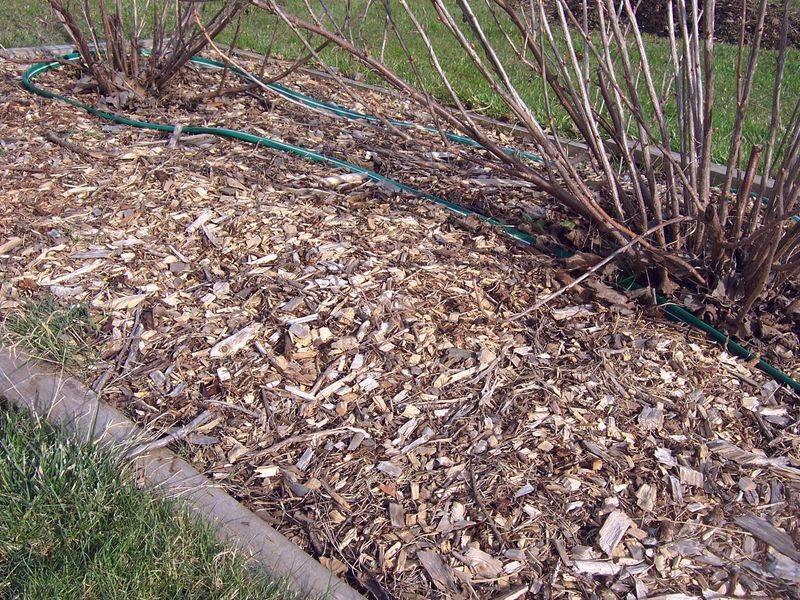
Mulch is not the enemy. Applied correctly, it conserves soil moisture, suppresses weeds, and moderates soil temperature through hot summers and cold snaps.
The problem is not mulch itself but the specific conditions that make a mulch bed more inviting to small mammals: excessive depth, direct contact with trunks or crowns, and the addition of weeds, grass, pruning debris, and dense unmanaged ground cover layered on top.
NC State Extension’s woody ornamentals guidance recommends roughly two to three inches of mulch around trees and shrubs, kept at least six inches away from the trunk or crown. That spacing matters for two reasons: direct contact can create moisture and disease problems at the base of the plant, and thick mulch piled against a trunk gives small mammals warm, sheltered access to the very tissue they feed on.
NC State’s planting guidance reinforces that the area immediately around the trunk or crown should stay clear.
Beyond correcting mulch depth, mow or remove tall grass and weeds near vulnerable plants, and clear any accumulated leaf litter, prunings, or dense ground cover immediately around trunks. NC State’s turf vole resource identifies reducing dense cover as a first-line habitat management step because it removes shelter and limits the protected travel routes voles prefer.
For a tree where active vole damage has already been confirmed, Penn State Extension recommends a more intensive response: remove all accumulated mulch, litter, and weeds within at least two feet of the trunk to create a vegetation-free zone. This is a targeted measure for documented damage, not a universal rule for every ornamental bed.
Reducing cover lowers the shelter voles depend on, but it may not eliminate an established population on its own.
Hardware cloth creates a physical barrier around vulnerable plants
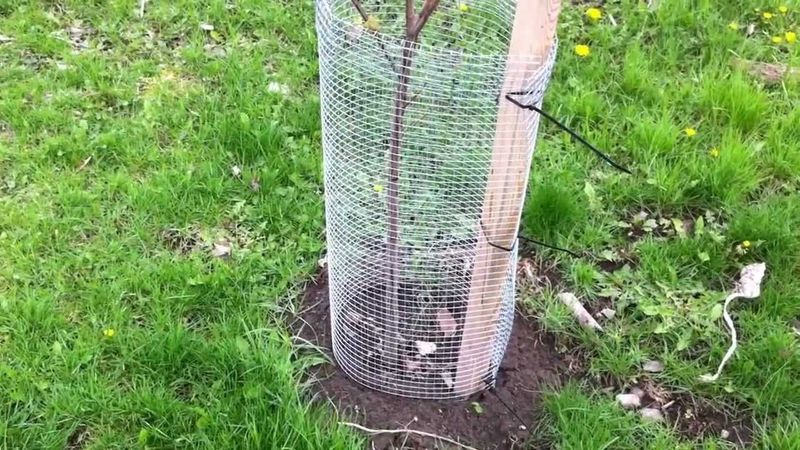
Physical barriers work where habitat changes alone may not be enough. For young trees, newly planted shrubs, and high-value ornamentals, a cylinder of one-quarter-inch hardware cloth placed around the base of the plant gives the most direct protection against repeat vole feeding at the root crown and lower trunk.
The guard needs to be tall enough to block access above ground and buried deep enough to stop voles from tunneling underneath. Penn State Extension suggests burying the hardware cloth four to six inches, while NC Wildlife Resources Commission guidance recommends six to eight inches.
Aiming for six inches or more gives a practical margin that satisfies both sources and accounts for soil variation across different parts of a yard.
Fit matters as much as depth. The cylinder should sit loosely around the trunk so it does not constrict the plant as it grows over time.
Check the fit each season, especially on young trees that put on girth quickly. The mesh also should not trap mulch or debris against the trunk or crown, which would recreate the moist, sheltered contact you are trying to eliminate.
Think of hardware cloth as targeted protection for specific plants rather than a solution you run across an entire ornamental bed. A newly planted dogwood or a prized camellia that sits in a high-activity area is a good candidate.
A well-established mature shrub with a thick root system and no signs of feeding may not need one at all. Barriers protect living tissue going forward; they cannot undo root damage that has already occurred, so pair them with an honest assessment of whether the affected plant can recover.
Use trapping or bait only within North Carolina rules
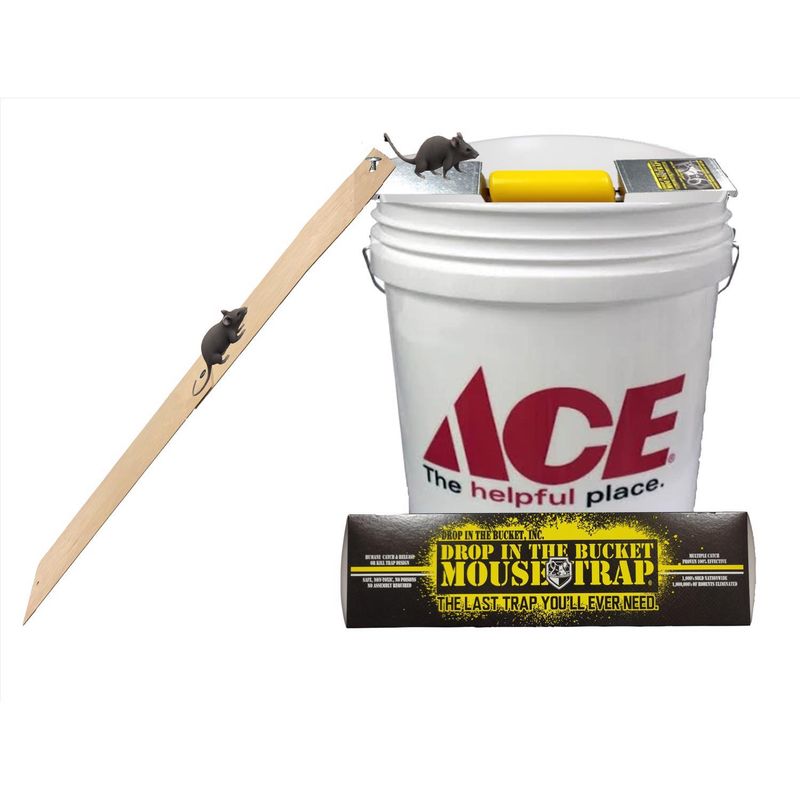
After confirming vole activity, correcting habitat conditions, and installing physical barriers on priority plants, some situations call for direct population control. Snap traps sized for mice can be effective on a small home site when set correctly, but North Carolina homeowners face a regulatory step that many people do not expect.
The NC Wildlife Resources Commission states that a depredation permit is required for trapping voles in North Carolina. That is a meaningful difference from simply setting a mousetrap, and it means you should contact NC Wildlife or a licensed wildlife-damage-control professional to verify current requirements before placing any traps.
Regulations and permit conditions can change, so checking at the time you need to act is more reliable than relying on older secondhand information.
If you work with a professional or obtain the appropriate authorization, Penn State Extension describes placing mouse-sized snap traps in active runways or near burrow openings, covered with a board or box to protect children, pets, and birds from accidental contact. Check traps frequently and dispose of caught animals promptly.
Rodenticides are a cautious last resort for a family yard, not a default first step. Any product used must be registered specifically for the intended pest, site, and method of application.
EPA guidance on safely using rodent bait products advises consumers to use only ready-to-use bait stations, follow the label exactly, keep products away from children, pets, and nontarget wildlife, and remove any carcasses promptly to reduce the risk of secondary poisoning. EPA restrictions on rodenticide products make clear that outdoor baiting carries additional exposure risks that generic mouse poison sold for indoor use is not designed to address.
Never substitute an unregistered product, and never assume that a product labeled for mice indoors is appropriate for voles in a garden bed.
Repellents, ultrasonic devices, and scare tactics do not have reliable support for eliminating an established vole population and should not replace the methods above. Relocation is not a straightforward alternative either, as NC guidance addresses permit requirements and landowner permission at the receiving site.
The durable fix protects roots without stripping the whole bed
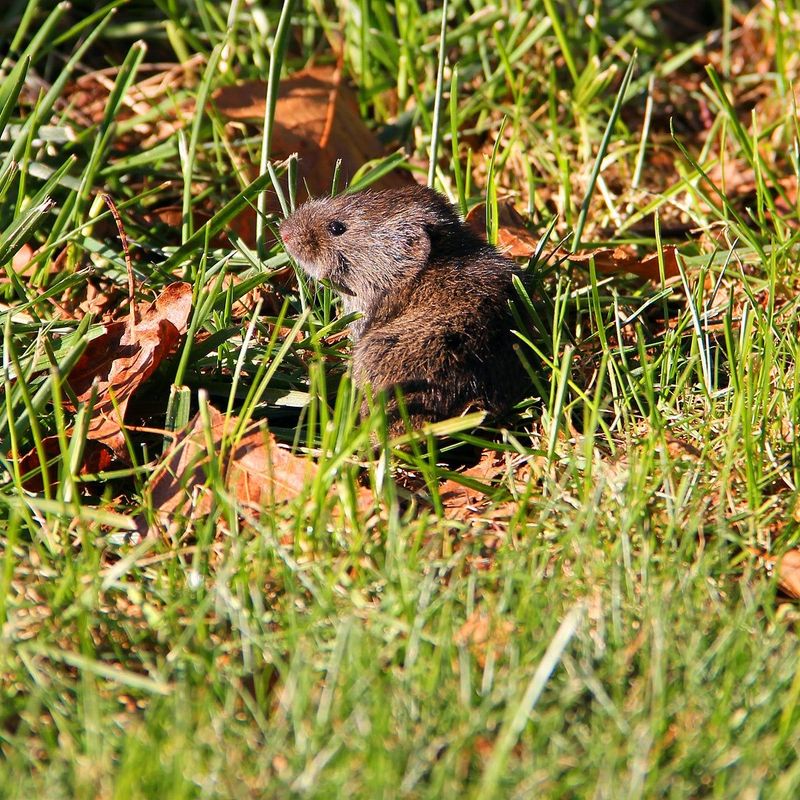
The practical path forward is straightforward: confirm feeding signs before acting, inspect affected roots and crowns directly, reduce excessive cover and clear debris from around trunks, and keep healthy mulch at the right depth with enough spacing from stems to avoid creating problems. Guard your most vulnerable plants with buried hardware cloth, and escalate to trapping or registered pesticides only through legal channels and with strict label compliance.
NC State Extension and NC Wildlife Resources Commission guidance both frame the goal as stopping active damage and reducing conditions that favor voles, not eradicating every animal in the yard or pulling mulch from every bed. When plant symptoms do not line up with vole evidence, follow the NC State woody ornamentals guidance and investigate other causes before committing to pest control.
A healthy, properly mulched bed that keeps trunks clear and cover managed is already doing most of the work.