
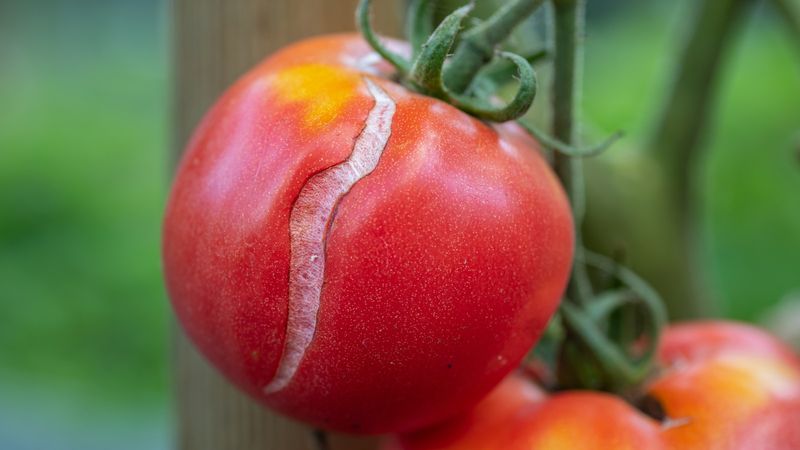
Pulling a ripe tomato off the vine only to find it split open is one of the more frustrating moments in a summer garden. September in the South brings its own mix of blazing heat, sudden afternoon storms, and erratic soil moisture – exactly the kind of conditions that push tomatoes to crack.
The good news is that a split tomato is not automatically ruined, but figuring out whether it is still safe to eat takes a careful look. Understanding what causes the damage and how to judge what you are holding can save a lot of perfectly usable fruit.
Heat is a contributor, but water swings usually split the fruit
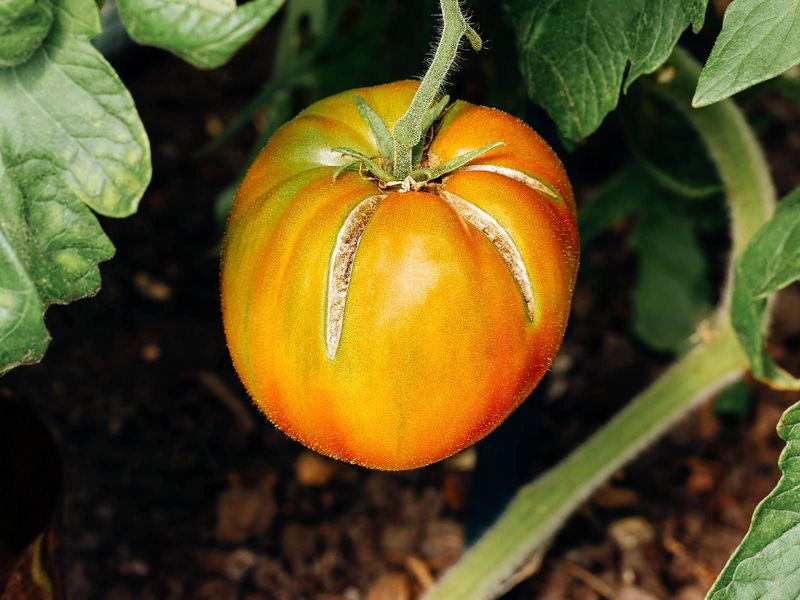
Picking up a tomato and finding a crack running from the stem scar outward can feel alarming, but the cause is almost always mechanical rather than mysterious. Penn State Extension’s guide to tomato cracking explains that the skin splits when the inside of the fruit expands faster than the outer layer can stretch, and the most common trigger is a sudden shift from dry soil to abundant water – whether from heavy rain after a dry spell or a large irrigation event hitting parched roots.
High temperatures, intense sunlight, and the natural softening that comes with ripening can all weaken the skin’s ability to keep pace with that rapid interior growth. Cultivar genetics also matter: some varieties simply produce thinner or less elastic skins that give out more easily under pressure.
Heat is genuinely a contributing condition, but calling it the sole cause overstates its role.
University of Minnesota Extension’s tomato disorder resource and UF/IFAS Extension’s cracking overview both note that cracks tend to appear near the stem scar because that zone is especially vulnerable during expansion. Two distinct patterns show up in gardens: radial cracks that shoot outward from the stem like spokes on a wheel, and concentric cracks that form rings around the top of the fruit.
Recognizing which type you have is the first step toward diagnosing what is really going on.
Identify the damage before deciding what to do
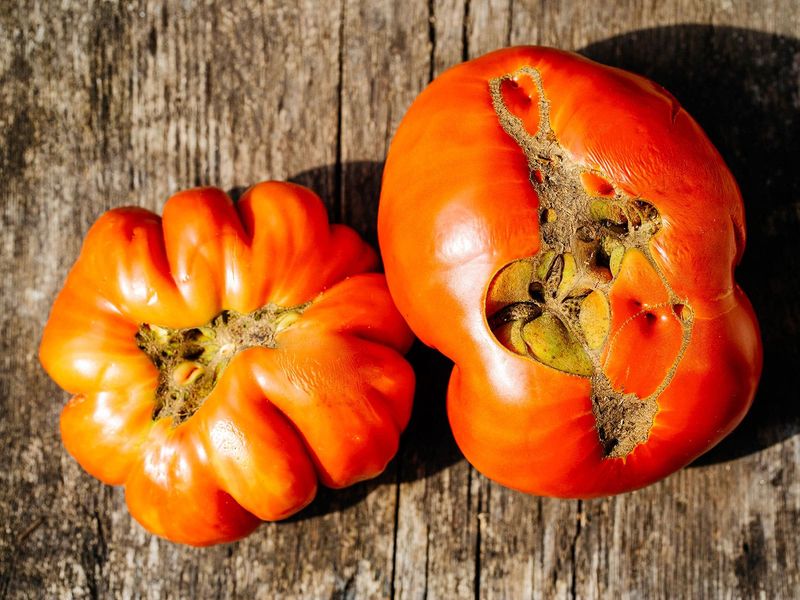
Not every mark on a tomato comes from the same problem, and treating them all as watering issues leads to wrong decisions in the kitchen and the garden. University of Minnesota Extension’s tomato fruit crack diagnosis page helps distinguish radial and concentric growth cracks from several other common disorders that look similar at a glance.
Rain check produces tiny, rough, corky cracks across the shoulder after a rain event – often shallower and more numerous than a true growth crack. Sunscald shows up as a pale, papery, or bleached patch on the side of the fruit that faced the sun directly, usually after leaves were removed or shifted.
Catfacing creates puckered, scarred tissue at the blossom end, the result of cold or abnormal conditions during early flower development. Blossom-end rot is a dark, sunken, leathery lesion at the very bottom of the fruit, linked to calcium transport problems during moisture stress – not a crack at all, and a separate disorder with a different fix.
UF/IFAS’s tomato disorders reference offers a useful visual guide to these conditions for Florida growers. When a fruit shows a visible disease lesion, internal browning, mold, or obvious rot, the decision becomes more conservative regardless of what caused the mark.
Regarding late blight specifically, Penn State Extension’s late-blight preservation guidance addresses canning and preservation rather than establishing a blanket fresh-eating prohibition for every fruit from an affected plant – but a fruit showing lesions, browning, or rot should not be handled like a clean growth crack.
A firm, clean crack may be usable for fresh eating
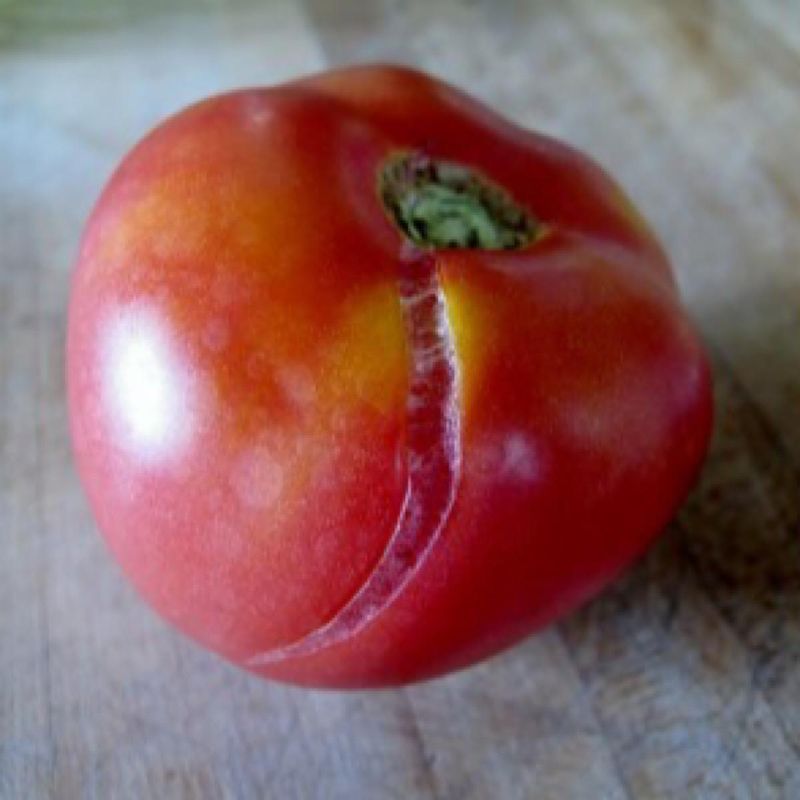
Standing at the kitchen counter with a split tomato in hand, the practical question is whether to use it or toss it. A tomato that is still firm to the touch, smells like a normal ripe tomato, and shows a crack that looks dry, clean, and consistent with ordinary growth damage is a reasonable candidate for cautious fresh use.
UF/IFAS Extension’s cracking guide notes that cracked tomatoes can generally be eaten when they are otherwise sound – the crack is a quality and contamination concern, not automatic proof that the tomato is toxic.
That said, rinsing and trimming are practical steps that reduce surface contamination, not sterilizing treatments. Pathogens that have entered a crack, especially one that sat in rain, touched soil, or attracted insects, cannot be washed away by running water.
The tomato’s condition at the moment of inspection – firmness, odor, appearance of the crack – is your actual guide, not the act of rinsing itself.
When the crack looks deep, actively wet, dirty, or hard to characterize, the more conservative call is to discard rather than salvage. USDA FSIS guidance on mold and food safety and FoodSafety.gov’s produce safety recommendations both treat tomatoes as soft, high-moisture produce where contamination risks are handled by discarding rather than by trimming or washing alone.
A tomato that passes a careful visual and smell check is worth cautious use; one that raises any real doubt is not worth the risk.
Discard moldy, slimy, rotten, or diseased fruit
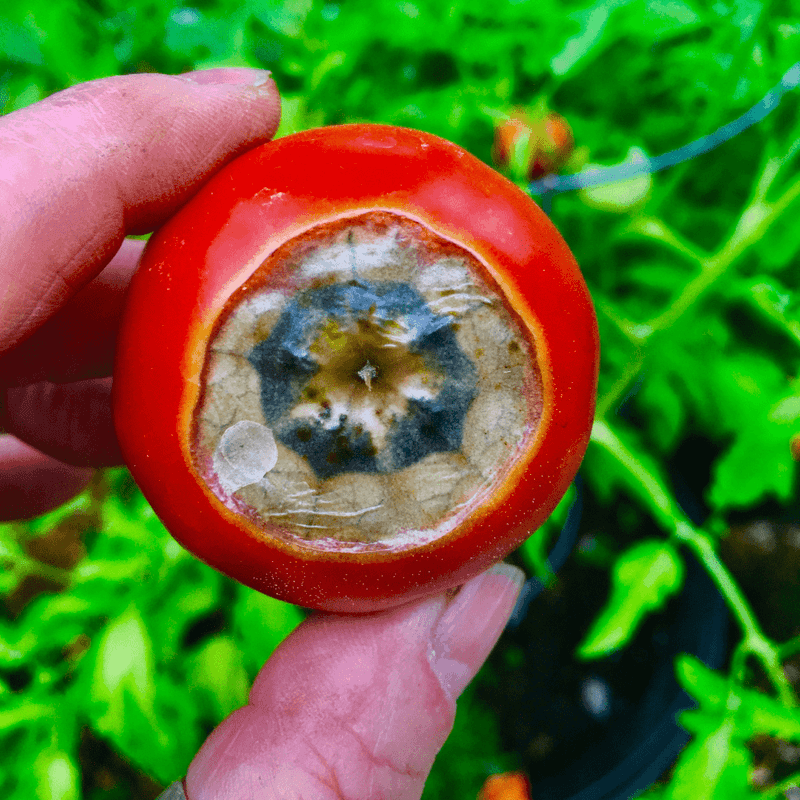
Some split tomatoes are clearly not salvageable, and the signs are not subtle once you know what to look for. Discard any tomato that shows mold inside or around the crack, has a slimy surface, gives off a sour or fermented odor, feels extensively soft when pressed, shows visible rot spreading into the flesh, or has a lesion that looks like a disease symptom rather than a mechanical injury.
USDA FSIS guidance on molds in food classifies tomatoes as soft, high-moisture produce, which means mold contamination can penetrate below the visible surface. Cutting away the moldy area and eating the rest is not a safe approach for tomatoes – the contamination you cannot see may already extend into the surrounding flesh.
USDA’s guidance on moldy fruit in a container reinforces that soft fruits showing mold should be discarded rather than trimmed.
A separate but related question involves fruit from plants with diseased foliage. Foliage disease does not automatically determine whether every individual fruit is unsafe to eat fresh – but a fruit that itself shows lesions, internal browning, mold, or rot should not be treated as an ordinary clean growth crack.
Penn State Extension’s late-blight canning guide specifically addresses preservation of fruit from blight-affected plants rather than making a blanket fresh-eating call, but visibly affected fruit with any of the discard signs above belongs in the compost, not on the cutting board.
Rinse and trim cautiously, then use the tomato promptly
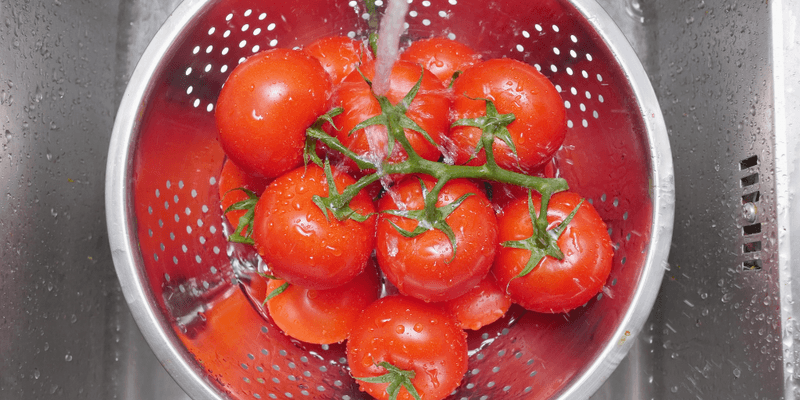
Once a tomato passes your inspection – firm, clean-smelling, crack looking dry and ordinary – preparation follows a straightforward sequence. Wash your hands thoroughly before handling the fruit, and make sure your cutting board and knife are clean.
FoodSafety.gov’s produce safety guidance recommends rinsing produce under cool running water and specifically advises against using soap, bleach, vinegar, or commercial produce disinfectants on fresh fruits and vegetables – these substances are not approved for direct food use and do not make the tomato safer.
Running water reduces surface contamination but does not sterilize the fruit. After rinsing, cut away the cracked area plus any surrounding tissue that looks soft, discolored, or questionable.
Be generous with the trim rather than conservative – the goal is to remove the damaged zone cleanly, not to save every usable millimeter. What remains should look and smell like normal tomato flesh.
Use the trimmed tomato the same day when possible. The damaged area may spoil faster than intact flesh, so prompt use is a sensible quality practice rather than a strict rule with a guaranteed deadline.
If you have cut leftovers, USDA FSIS food-handling guidance supports refrigerating cut produce within two hours of preparation – or within one hour if the tomato or your kitchen has been exposed to temperatures above 90 degrees F. A cracked tomato that passed inspection and was handled carefully is a usable ingredient; one that sat out too long after cutting is a different concern entirely.
Keep soil moisture as even as practical
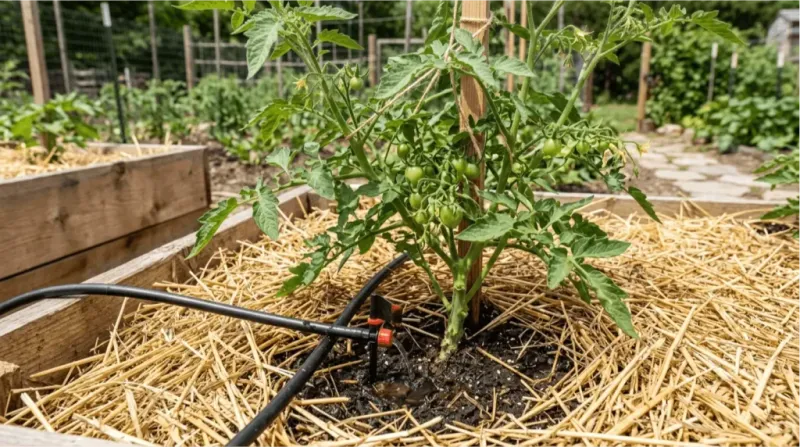
The most effective thing a Southern gardener can do to reduce tomato cracking is to keep soil moisture as steady as possible throughout the growing season. Drip irrigation or a soaker hose delivers water directly to the root zone slowly and evenly, which is far less likely to trigger the rapid expansion that splits skins than a sudden flood of water after a dry period.
Laying two to three inches of mulch over the soil surface slows evaporation, moderates soil temperature, and buffers the dry-to-wet swings that drive most cracking events.
Penn State Extension’s cracking prevention guidance and UF/IFAS Extension’s cracking overview both emphasize consistent root-zone moisture as a primary management tool. Rather than following a fixed daily watering schedule, check the moisture level in the root zone – several inches down, not just at the surface – and adjust based on actual soil conditions, recent rainfall, container size, and current heat.
Texas A&M AgriLife Extension’s water-use guidance notes that fruiting tomatoes can need substantially more frequent irrigation during hot, dry weather, while cooler or wetter periods call for less. When the soil is already saturated from rain, adding more water compounds the problem rather than solving it.
One of the more damaging patterns in Southern gardens is withholding water as tomatoes ripen and then compensating with heavy irrigation – that exact cycle of drought and flood is what sets up the rapid expansion that cracks fruit.
Reduce heat and ripening stress without expecting perfect fruit
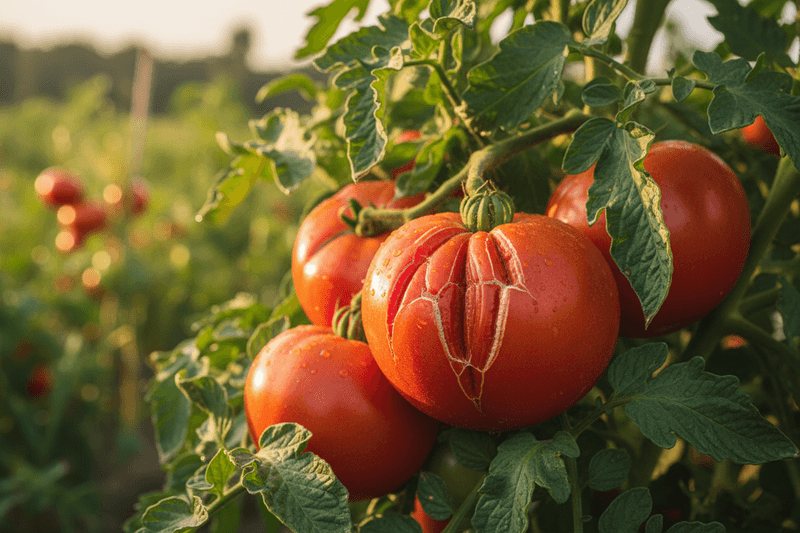
Beyond moisture management, a few targeted steps can lower the odds of cracking without eliminating the risk entirely. One of the most overlooked is maintaining healthy leaf cover.
Excessive pruning that strips foliage away from developing fruit exposes tomatoes to direct, intense sunlight, which heats the skin, accelerates ripening unevenly, and can cause sunscald alongside cracking. Penn State Extension’s cracking guidance recommends keeping enough canopy to moderate fruit temperature rather than aggressively suckering or defoliating during hot weather.
When cracking becomes frequent on a particular variety, harvesting fruit at the breaker or early-color stage – when the tomato has just begun to turn from green to pink or orange – allows it to finish ripening indoors away from rain, heat, and irrigation swings. UMass Extension’s tomato cracking fact sheet supports early harvest as a practical management option for susceptible cultivars.
Flavor and texture are generally preserved when fruit is picked at the breaker stage rather than fully green.
Cultivar selection also shapes your baseline risk. Large-fruited varieties and many heirlooms tend to crack more readily than smaller or hybrid types.
UF/IFAS Nassau County Extension’s concentric cracking Q&A notes that crack-resistant varieties are less susceptible, not immune – no variety stays crack-free during severe weather swings. Remove badly split fruit from the plant promptly, because open wounds attract insects, collect rainwater, and give rot organisms an entry point that can spread to adjacent fruit and stem tissue.
UF/IFAS’s tomato disorders reference reinforces that split fruit left on the plant often deteriorates quickly and can complicate overall plant health.
Use only sound produce for home preservation
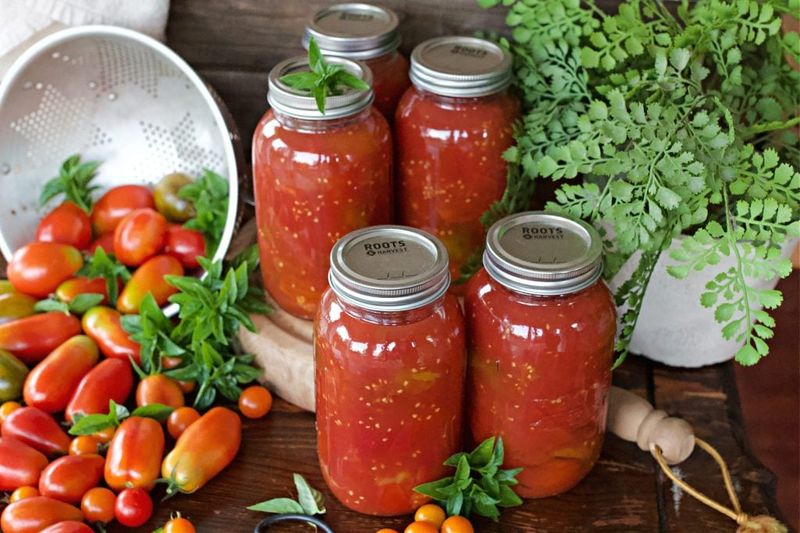
Fresh eating and home preservation are not the same decision, and a tomato that is acceptable for same-day use on a salad does not automatically qualify for a jar on the pantry shelf. Canning and pickling are processes where produce quality at the start directly affects safety and stability through months of storage.
Visibly moldy, rotting, diseased, extensively damaged, or otherwise unsound tomatoes should not enter a home-preservation batch under any circumstances.
University of Minnesota Extension’s pickling guide and Penn State Extension’s tomato preservation guide both call for sound, high-quality produce and tested recipes. Using damaged fruit introduces variables that tested preservation methods were not designed to account for, and the consequences of a compromised batch are more serious than a spoiled fresh tomato.
Regarding late blight specifically, Penn State Extension’s late-blight canning resource advises against canning or preserving fruit from plants with suspected late-blight infection, citing the risk that the pathogen alters the acidity and internal chemistry of the fruit in ways that affect preservation safety. That caution applies to preservation specifically.
As for minor, healed growth cracks on otherwise firm and sound fruit, the cited sources establish a sound-produce standard rather than a universal prohibition covering every crack type and every preservation method. If you choose to avoid all cracked tomatoes for canning as a conservative policy, that is a reasonable precaution – just recognize it as a cautious editorial choice rather than a requirement every source has explicitly mandated.
Make the decision conservatively
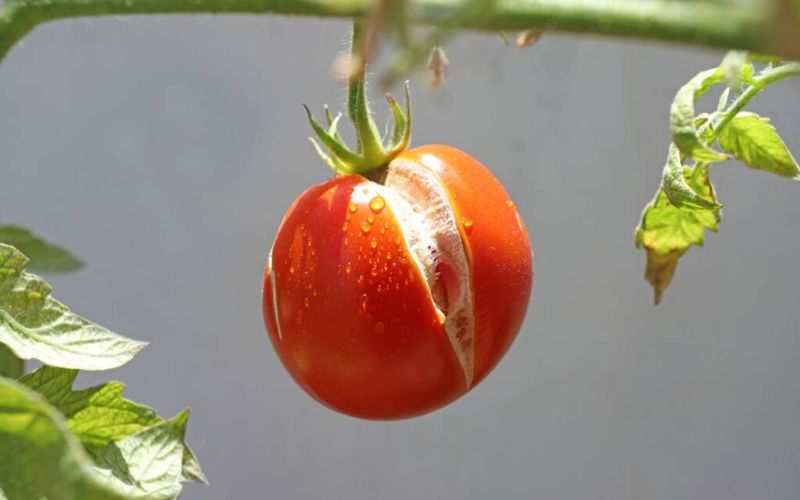
Working through the decision does not have to be complicated. Start with a clear-eyed look at what you are holding: check firmness, smell the stem end and crack, and look for any mold, slime, rot, or lesion.
A tomato that is firm, smells right, and shows a clean, dry crack consistent with ordinary growth damage is a reasonable candidate for cautious prompt fresh use – rinse it under running water, trim the cracked area and any soft surrounding tissue generously, and use it the same day. Refrigerate any cut leftovers within two hours, or within one hour above 90 degrees F, as USDA FSIS food-safety guidance advises.
Discard without hesitation when you find mold, slime, a foul odor, extensive softness, visible rot, a disease lesion, or a crack that looks deep, wet, dirty, or otherwise uncertain. Rinsing and trimming reduce surface risk – they do not guarantee safety.
On the prevention side, Penn State Extension’s cracking prevention advice and Penn State’s tomato preservation guide both point back to steady moisture, appropriate canopy cover, and suitable cultivar selection as the most reliable tools available. No combination of those steps guarantees crack-free fruit when alternating heat, drought, and sudden rain are the conditions your garden faces – but they stack the odds in your favor, and that is the best any gardener can do in a Southern September.