
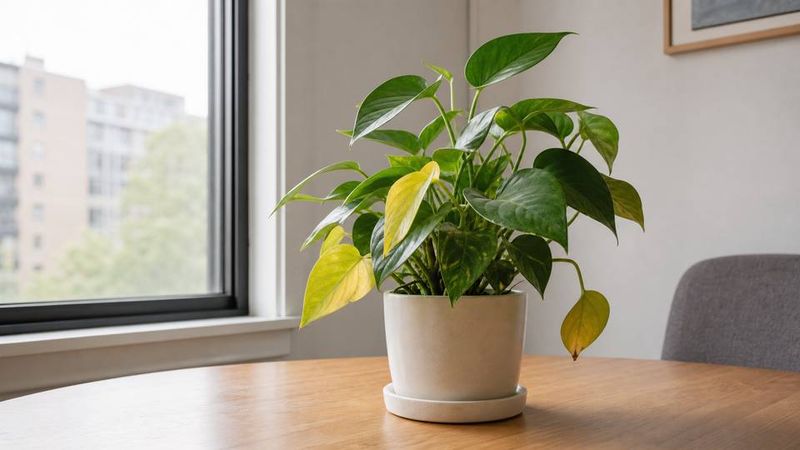
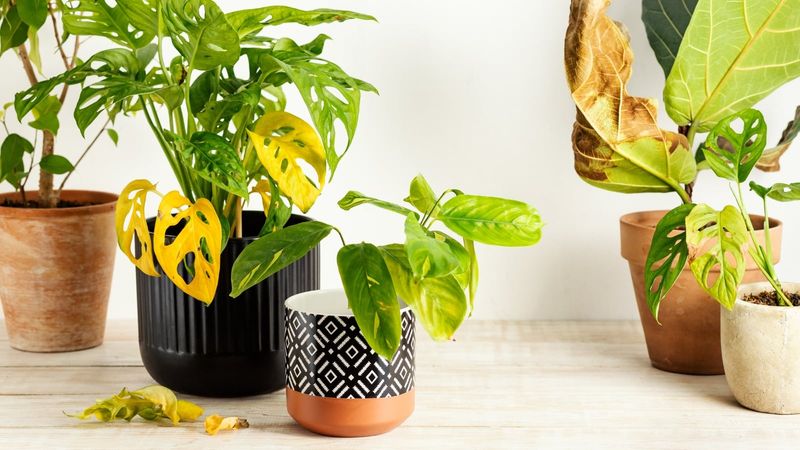
Spotting yellow leaves on your houseplant right as summer winds down can feel alarming, but it does not automatically mean you have done something terribly wrong. One common culprit is continuing the same watering schedule after indoor conditions have quietly shifted, though yellowing can come from several different causes.
Figuring out which one applies to your plant is the first step toward getting it back on track.
The summer schedule can leave fall soil too wet
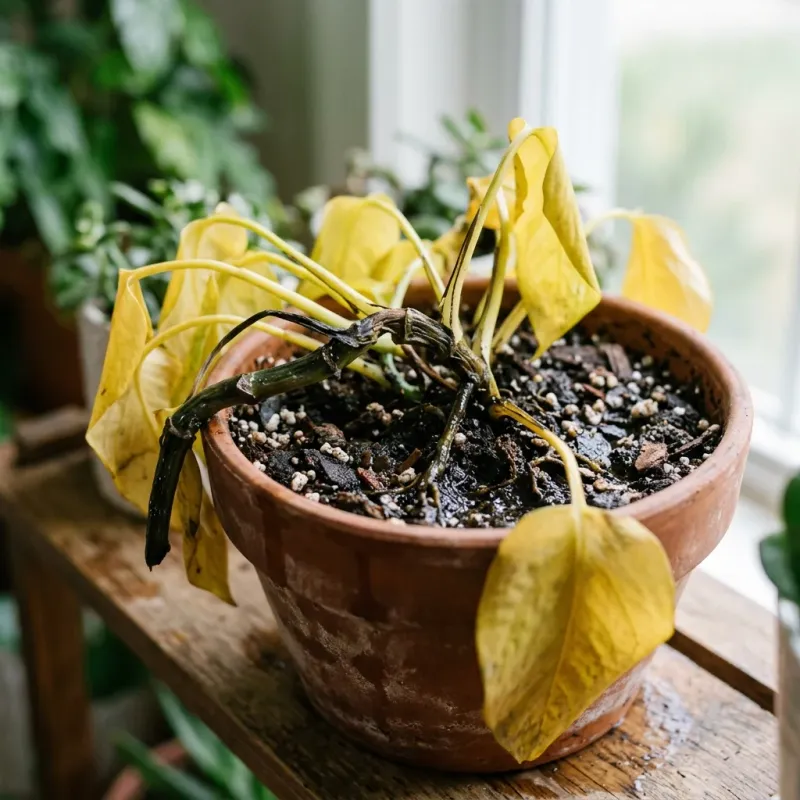
When summer shifts toward fall, several things change at once inside your home, even if the thermostat barely moves. Days get shorter, the sun drops lower in the sky, indoor light intensity decreases, and many plants slow their growth rate.
All of those changes can reduce how quickly a plant pulls water from its potting mix, meaning the soil stays wet far longer than it did just a few weeks ago.
Continuing the same watering interval that worked in July can become a problem by September or October. Iowa State University Extension guidance on seasonal plant care identifies shorter days, lower sun angle and intensity, shifting humidity, changing temperatures, and slower growth as factors that can alter how often houseplants need water.
When the schedule does not adjust alongside those changes, potting mix can stay saturated longer than the roots can handle.
Persistently wet soil contains less oxygen around the root zone. Missouri Extension’s houseplant care guide connects waterlogged conditions with yellow leaves, reduced nutrient uptake, and root decline.
That said, continuing a summer watering schedule is one common contributor to post-summer yellowing, not the guaranteed cause of every yellow leaf you see. The goal here is to investigate, not to assume.
Yellow leaves are a clue, not a verdict
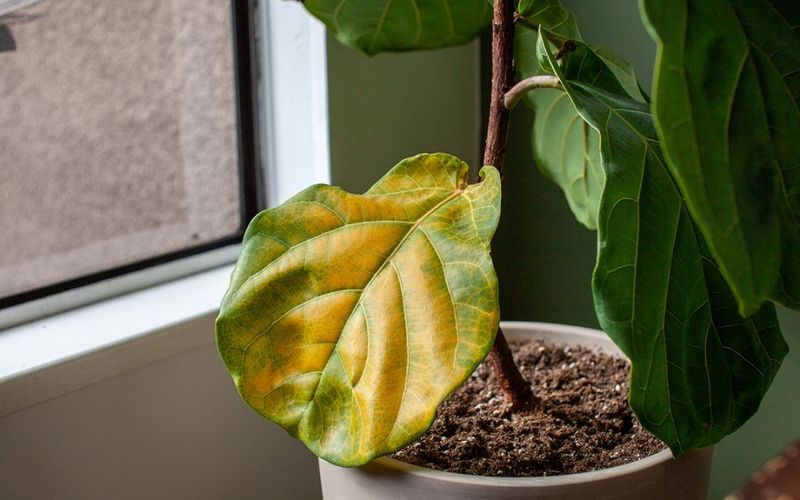
A yellow leaf tells you something is off, but it does not tell you what. Before adjusting your watering, take a moment to look at the bigger picture.
Penn State Extension’s plant health diagnostic resource lists a wide range of possible causes for yellowing, including underwatering, low or excessive light, cold temperatures, drafts, pests, nutrient deficiencies, root binding, and disease.
One older lower leaf yellowing and dropping on its own can be completely normal. RHS guidance on houseplant leaf damage notes that occasional aging leaves may yellow and fall as part of the plant’s natural cycle.
What deserves real attention is yellowing that is widespread, spreading quickly, or happening repeatedly across multiple parts of the plant.
Plants that spent summer outdoors and recently came inside face a particular challenge. University of Minnesota Extension’s guide on bringing houseplants in for winter explains that a sudden shift from bright outdoor light to much dimmer indoor conditions can trigger yellowing and leaf drop even when watering is perfectly appropriate.
Before changing anything about how you water, compare what you are seeing with recent events: Did the plant move? Did temperatures drop near a window or vent?
Has the soil felt consistently wet, or has it dried out faster than usual?
Check the root zone before you water again
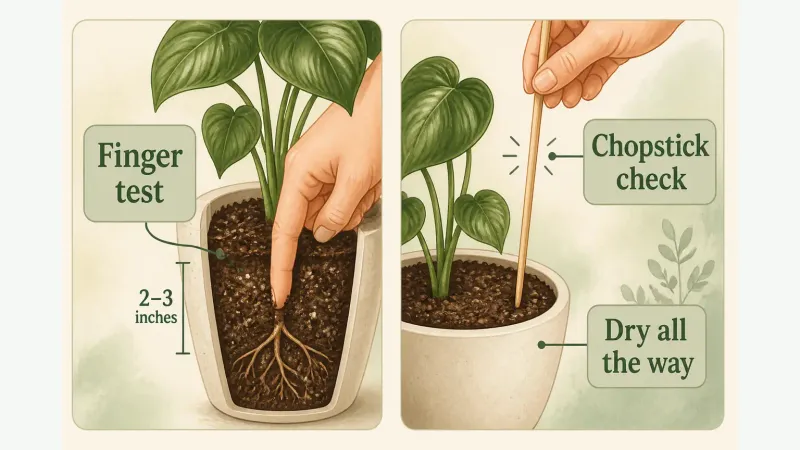
Watering on a fixed schedule is one of the most common mistakes houseplant owners make, and fall is when that habit tends to cause the most trouble. The surface of the potting mix can feel dry while the lower root zone is still quite wet, especially in larger pots, dense mixes, or containers with limited drainage.
Trusting only the surface can lead to watering a plant that already has more moisture than it needs.
Illinois Extension’s houseplant watering guidance recommends checking moisture about 2 inches below the surface rather than relying on the calendar or a quick surface touch. For larger containers, checking roughly one-third of the pot’s soil depth gives a more accurate picture of what the roots are actually sitting in.
If that deeper layer still feels cool and damp, the plant does not need water yet.
The right answer also depends on what you are growing. University of Arizona Cooperative Extension’s indoor plant care resource points out that species, pot size, potting mix type, drainage quality, light level, temperature, and humidity all influence how quickly soil dries.
Cacti and succulents can tolerate longer dry periods, while plants that prefer consistently moist soil should not be pushed to dry out completely between waterings. The moisture test, not the date on the calendar, should be driving the decision.
Water less often, not necessarily less thoroughly
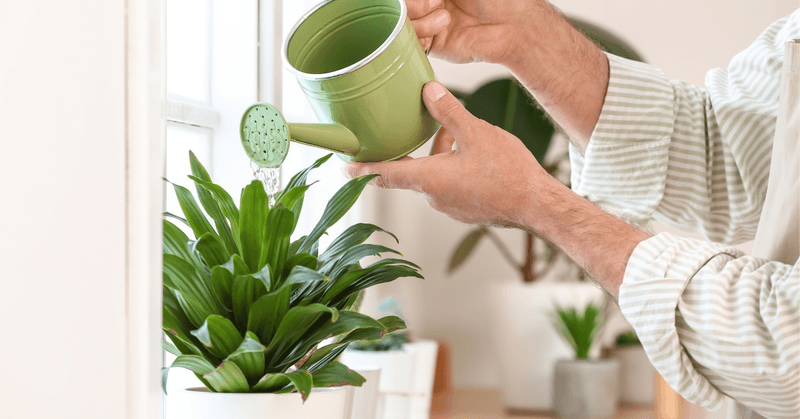
Once the moisture test confirms that your plant’s potting mix is staying wet longer than it used to, the right correction is to stretch out the time between waterings, not to pour a smaller amount each time you water. Giving a little water every few days can actually keep the lower root zone perpetually damp without ever drying out enough to let oxygen back in.
That pattern can be harder on roots than waiting for the right moment and then watering well.
When the root zone is genuinely ready for water, wet the potting mix thoroughly until water drains freely from the bottom of the pot. Illinois Extension’s guide on moving houseplants indoors explains that thorough watering wets the entire root ball evenly and helps prevent salt accumulation from building up in the mix over time.
After watering, empty the saucer or cachepot so the pot is not sitting in standing water.
One thing to avoid: if you notice yellow leaves and wonder whether flushing the pot with extra water might help, skip that step until you have checked soil moisture and drainage first. Adding more water to a root zone that is already saturated can make the problem worse, not better.
The goal is to water thoroughly at the right interval, not to flood a struggling plant in hopes of rinsing the issue away.
Drainage and roots can expose the real problem
Sometimes a plant keeps showing yellow leaves even after you have adjusted how often you water. When that happens, the issue may not be the schedule at all but what is happening to water after it enters the pot.
Blocked drainage holes, decorative cachepots, foil gift wrappers, and saucers left full of water can all trap moisture around the roots even when you think drainage is working. University of Arizona Cooperative Extension’s guide on indoor plant care recommends confirming that pots have functional drainage holes and that nothing is preventing water from escaping freely.
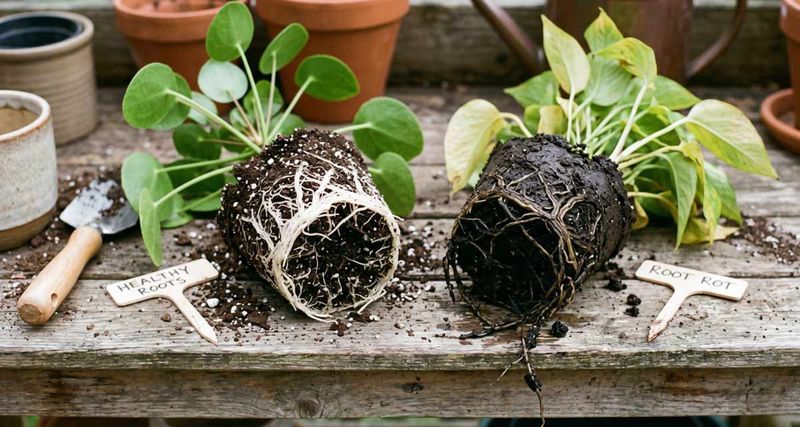
If soil stays wet despite good drainage, inspecting the roots can provide useful information. Illinois Extension’s houseplant tips describe healthy roots as generally firm and light-colored, while dark, soft, or decaying roots support the possibility of an excess-moisture or root-health concern.
Root color and texture are useful clues rather than absolute proof, since disease, age, salt injury, and plant species can complicate the picture.
Saturated soil does more than push out oxygen. Missouri Extension connects waterlogged conditions with reduced nutrient uptake and root decline, which helps explain why a plant sitting in poorly draining mix can look nutrient-deficient even when fertilizer has been applied.
Fixing the drainage problem first is more productive than adding fertilizer to a root system that cannot absorb it properly.
Indoor conditions matter more than the calendar in Florida and Texas
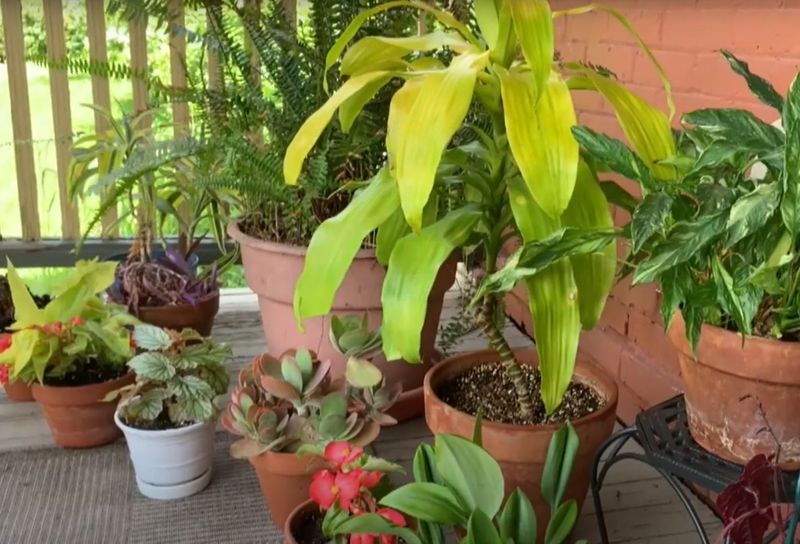
Living in Florida or Texas means your home environment does not follow the same seasonal script that gardening advice written for northern climates assumes. Central air conditioning may keep indoor temperatures steady well into November.
A plant sitting in a south- or west-facing window may still receive strong afternoon light and dry out just as quickly in October as it did in August. Applying a blanket rule to water less in fall can leave those plants genuinely thirsty.
University of Georgia Cooperative Extension’s guide on growing indoor plants emphasizes that humidity, temperature, airflow, and light all interact to determine how quickly a plant uses water. None of those factors are tied directly to the calendar date.
A plant under a grow light in a warm room may need water just as often in fall as it did in summer, while a plant moved from a bright patio into a dim interior hallway may need far less.
Plants that spent summer outdoors deserve extra attention when they come back inside. Illinois Extension’s tips on moving houseplants indoors advise inspecting returning plants carefully for pests before bringing them in and acclimating them gradually to lower light rather than moving them abruptly.
University of Minnesota Extension also notes that temporary yellowing and leaf drop after a location change does not automatically point to a watering error. Keep plants away from cold drafts near windows and from heating or air-conditioning vents, which can dry leaves or stress the plant without any change in soil moisture.
Use the plant’s response to set the next watering check
Each time you water, treat it as a data point rather than a task completed. After watering thoroughly and emptying the saucer, note roughly how many days it takes for the root zone to reach the right dryness for that plant.
That interval, not a fixed weekly or biweekly schedule, becomes your new watering guide for as long as current light, temperature, and growth conditions hold.
Illinois Extension and Missouri Extension both reinforce that the goal is matching frequency to actual drying conditions, not applying a permanent fall rule. If yellowing spreads, soil stays persistently wet after several days, or roots show soft decay when inspected, those are signals to reassess drainage, root health, and light before reaching for fertilizer or adding more water.
A plant that gets the right amount of moisture at the right time, based on what it is actually experiencing indoors, is far better positioned to recover than one managed by the month on the calendar. Paying attention to how each plant responds is, in the end, the most reliable watering tool you have.