
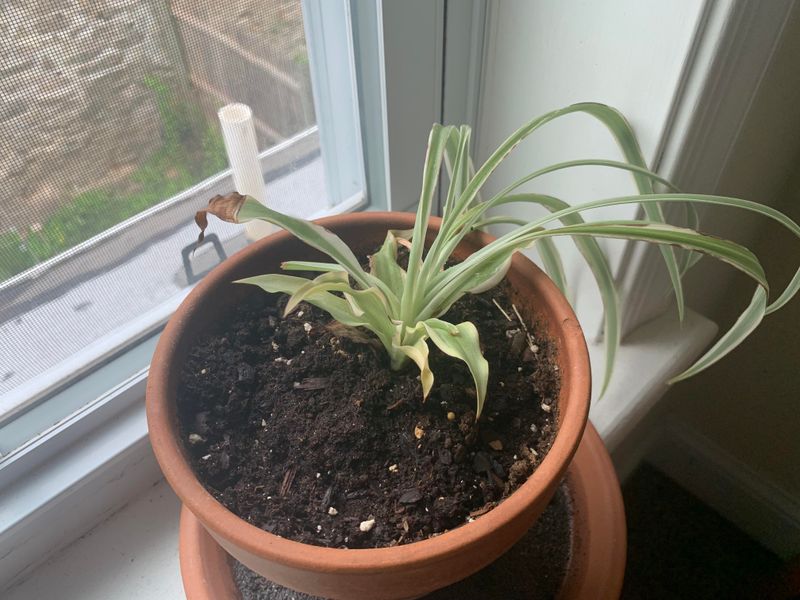
Spider plants are among the easiest houseplants to keep alive, so when yours starts looking washed-out and barely growing, it can feel genuinely puzzling. Watering habits are often part of the problem, but they are not always the whole story.
Before you change anything, a quick check of the soil, roots, and light can tell you far more than the leaves alone.
First ask whether watering is actually the problem
Watering can absolutely play a role when a spider plant turns pale and stops putting out new growth, but it is one possible cause among several. RHS growing guidance for spider plants lists low light, excessive light, nutrient problems, root crowding, salt buildup, tap-water chemistry, and pests as additional explanations for pale or dull foliage and slow growth.
Blaming the watering routine before checking those other factors can send you down the wrong path entirely.
The most common watering mistake is treating it like a calendar appointment, watering every Sunday regardless of what the mix actually feels like, or giving the pot a small splash every couple of days rather than a thorough soak. Both approaches can leave the plant in a persistently uneven state: sometimes too dry at the root ball, sometimes too wet at the surface, rarely just right.
The goal is moisture without prolonged saturation, and getting there requires reading the soil rather than the calendar.
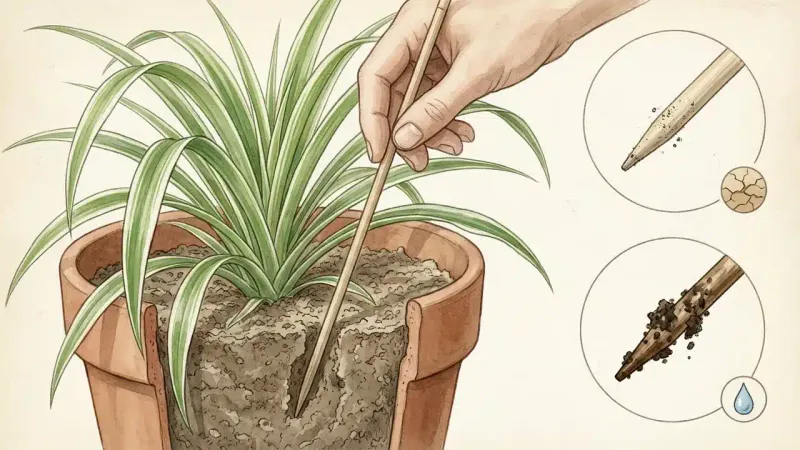
Start by pressing a finger about an inch or two into the potting mix. University of Wisconsin Extension houseplant guidance recommends checking soil moisture before watering rather than following a fixed schedule.
If the mix still feels damp, hold off and revisit the light and drainage situation before adding more water.
Use the soil to separate dry stress from wet roots
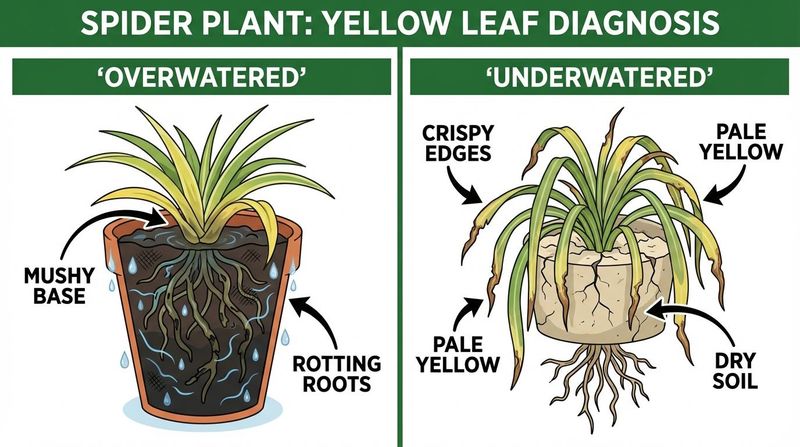
Pale leaves alone cannot tell you whether the plant is thirsty or drowning. The symptom looks deceptively similar in both situations, which is exactly why the soil is the more reliable starting point.
Press your fingers into the top one to two inches of the potting mix and pay attention to what you find before reaching for the watering can.
Dry, crumbling soil paired with dull or slightly wilted foliage and slow growth supports a drought-stress picture. The RHS specifically notes that pale, dull spider plant leaves can indicate a need for more water, while also cautioning that overwatering creates its own set of problems.
When the mix feels dry well below the surface and the plant looks limp, a thorough watering is a reasonable next step.
Persistently wet or soggy soil tells a completely different story. If the mix has stayed damp for a long time and the plant is still yellowing, wilting, or barely growing, the issue is more likely saturation, poor drainage, or root damage.
Wisconsin Extension’s root rot guidance explains that waterlogged soil reduces the oxygen available to roots, which can stall growth and set off a decline that more water will only worsen. In that case, Illinois Extension recommends inspecting the roots rather than watering again.
Replace small drinks with a complete watering
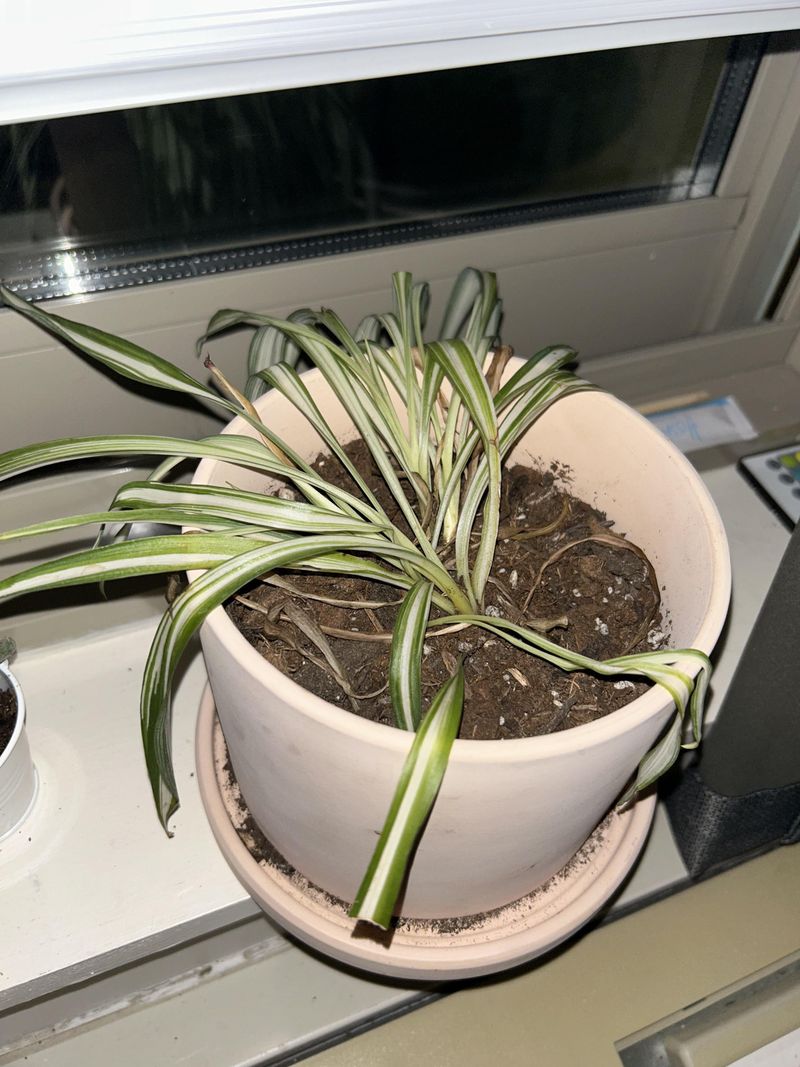
Giving a spider plant a small splash every few days might feel attentive, but it often leaves the deeper root zone bone dry while keeping the top inch of mix perpetually damp. Penn State Extension’s watering myths resource points out that frequent small applications can fail to wet the full root ball, and when repeated before the mix has had time to dry appropriately, they may contribute to uneven or persistently wet conditions in the pot.
That is not a problem in every container or mix, but it is a common pattern worth breaking.
The corrected approach is straightforward. Wait until the top one to two inches of potting mix have dried somewhat, then water slowly and thoroughly until water flows freely from the drainage hole at the bottom of the pot.
Wisconsin Extension houseplant care guidance recommends soaking the root ball fully and then letting the pot drain completely before returning it to its saucer or decorative cachepot. Empty that saucer or cachepot after the pot has drained so the roots are not sitting in standing water.
Switching to thorough waterings corrects the small-drink habit, but it will not fix poor drainage, low light, root rot, pests, or nutrient problems on its own. Think of it as restoring one variable to a healthier state while you continue checking the others.
Make the container and mix drain freely
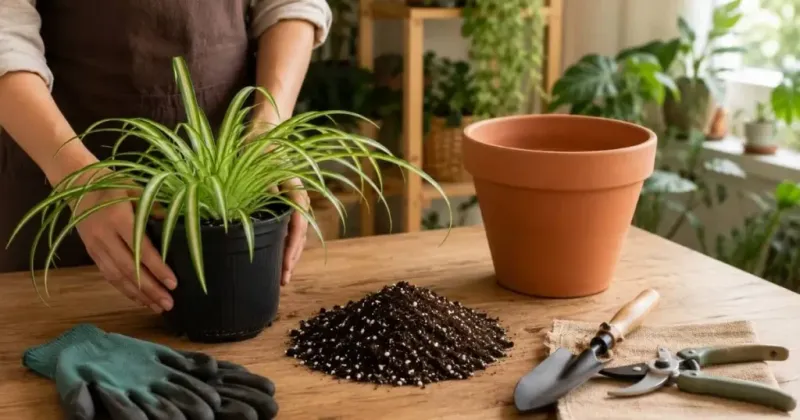
Even a careful watering routine can create root trouble if the container and potting mix are not set up to drain properly. A pot without a drainage hole traps water at the bottom regardless of how carefully you pour, and the roots sitting in that zone eventually lose access to oxygen.
Wisconsin Extension houseplant care guidance calls for a container with a drainage hole and a well-draining houseplant potting mix as baseline requirements.
A common workaround, placing a layer of gravel or rocks at the bottom of a pot before adding soil, does not reliably improve drainage. Wisconsin Extension’s root rot resource explains that this practice can actually inhibit drainage rather than help it, because water tends to pool just above the gravel layer rather than moving through it.
If your pot lacks a drainage hole, repotting into a proper draining container is a more reliable fix than layering rocks.
Prolonged saturation, not a single thorough watering, is what reduces root oxygen and sets off rot. When roots stay wet for extended periods because of a sealed pot, heavy mix, or a saucer that never gets emptied, the conditions for decline are in place.
Empty the saucer after each watering and make sure the pot itself allows water to exit freely every time.
Inspect the roots when wet soil meets pale foliage
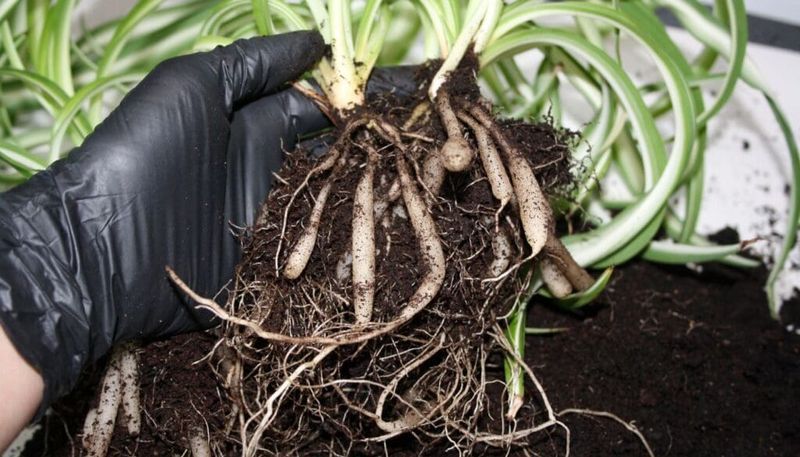
A plant that stays pale while its potting mix remains consistently wet is sending a clearer signal than its leaves alone can explain. At that point, the most useful next step is to take the plant out of its pot and look at the roots directly.
Healthy spider plant roots are generally light-colored and firm to the touch, with a fresh or neutral smell.
Dark, soft, or mushy roots that smell foul are consistent with rot, and Illinois Extension recommends removing badly damaged roots, replacing the problematic potting mix, and correcting the drainage and moisture conditions before returning the plant to its pot. Use clean scissors or pruners and cut back to firm, healthy tissue.
Do not replant into the same soggy mix or the same drainage-poor container, or the cycle will repeat.
Be realistic about recovery. Wisconsin Extension notes that severe root rot may not be recoverable, and leaves that are already pale or damaged are unlikely to regain their original color even after conditions improve.
Fertilizer is not a helpful first response here. Wisconsin Extension’s spider plant profile cautions that heavily fertilizing stressed plants can cause further damage, and feeding roots that are already compromised or sitting in saturated soil is more likely to harm than help.
Check light, pests, and leaf-tip clues
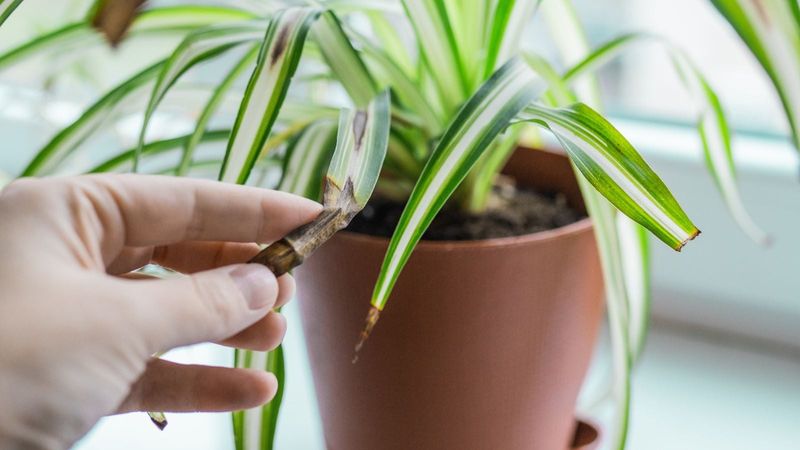
Watering is an easy target when a spider plant looks off, but light is just as likely to be the culprit and much easier to fix. The RHS growing guide explains that spider plants prefer bright, indirect or medium light: low light can slow growth and cause variegated leaves to lose their crisp patterning, while strong direct sun can yellow or scorch the foliage.
A plant stuck in a dim corner will not respond to better watering alone.
Brown tips on otherwise green leaves are a separate symptom from an overall pale or yellowing plant, and the two should not be diagnosed the same way. Wisconsin Extension’s spider plant profile links tip browning to dry soil, low humidity, salt or fertilizer buildup, and minerals in tap water.
NC State Extension’s spider plant entry notes that tap-water sensitivity is mainly relevant to leaf-tip damage, not necessarily to an entire plant going pale. If tip browning is your primary concern, check soil moisture and fertilizer levels before assuming the water source is the problem.
Fine stippling across the leaf surface, a grayish or bronze cast, or faint webbing between leaves points toward spider mites rather than a watering error. University of Minnesota Extension’s guide to insects on indoor plants describes these as classic mite signs.
Misting does not reliably fix pale leaves, low light, or root trouble, and persistently damp foliage can encourage disease. Fertilizer is also not a universal fix: correct the moisture and light situation first, then reassess.
Adjust the check as Southern conditions change
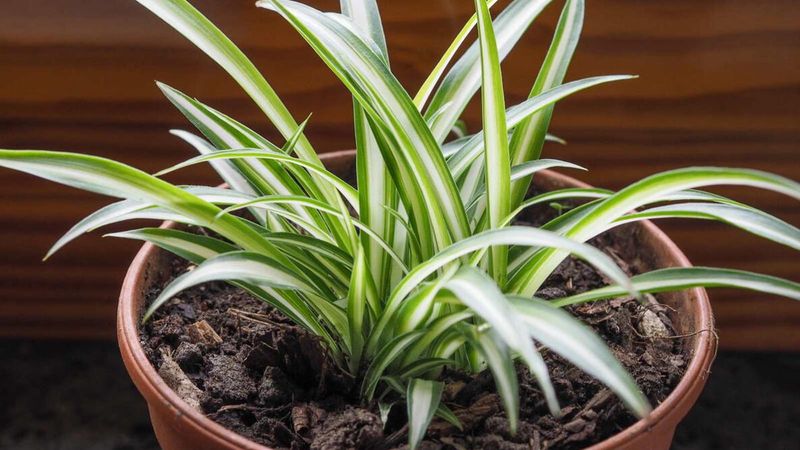
Southern homes, especially in Florida and Texas, can shift a spider plant’s water needs faster than most gardeners expect. Moving a plant outdoors for the summer is a popular way to encourage growth, but heat, wind, and brighter light all speed up how quickly the potting mix dries out.
University of Minnesota Extension’s guidance on taking houseplants outside recommends filtered shade or bright indirect light and a gradual transition rather than moving a plant directly into hot, full sun. Abrupt exposure to intense Southern summer sun can scorch or yellow leaves quickly, which looks a lot like a watering problem but is actually light damage.
Outdoors in summer, the soil check matters more, not less. The mix may need attention far more often than it did indoors, but the correct approach is still to feel the soil rather than water on a set schedule.
RHS guidance is consistent on this point: conditions vary too much between settings, seasons, and containers for any fixed interval to be reliable.
Winter or other slow-growth periods work in the opposite direction. Reduced light and cooler indoor temperatures lower the plant’s water demand noticeably, and the mix will stay moist longer between checks.
University of Minnesota Extension’s winter houseplant tips recommend reducing watering during low-light months while continuing to check the soil regularly rather than stopping entirely.
Repot only when the roots show the need
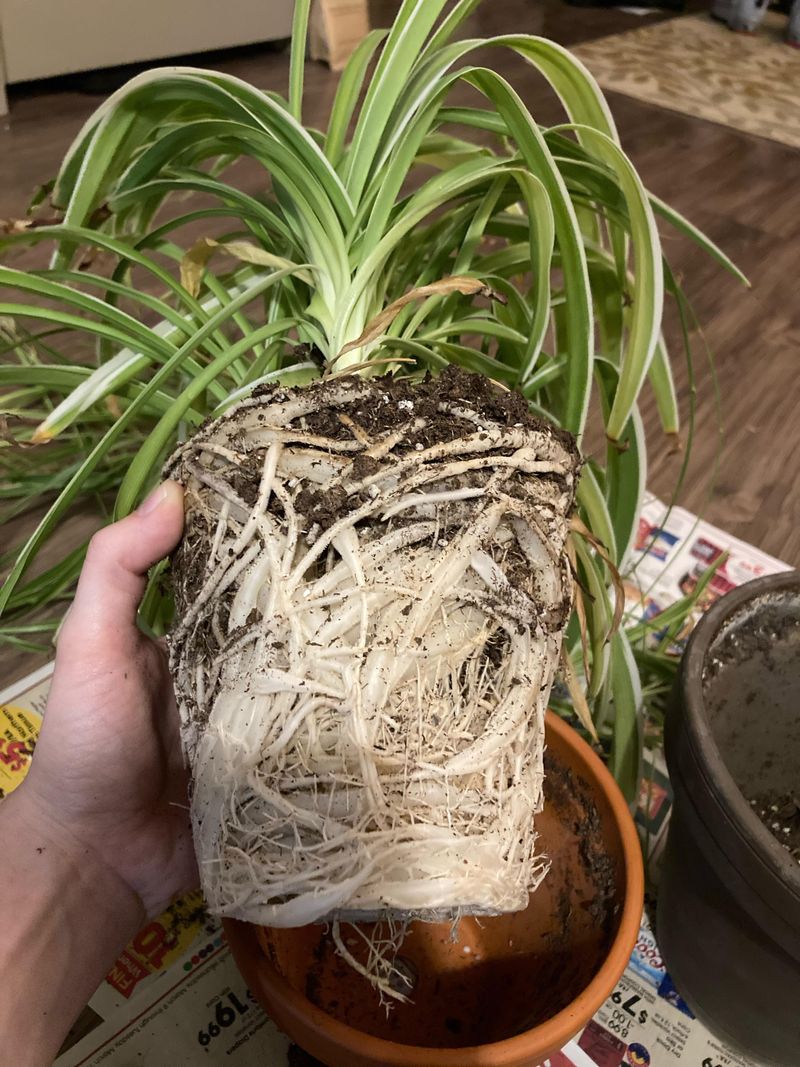
Root crowding can limit how well a spider plant absorbs water and nutrients, but it is not automatically a problem that needs fixing. Wisconsin Extension’s spider plant profile notes that spider plants develop thick, fleshy roots and grow quickly enough to need periodic repotting, but they can also tolerate being somewhat pot-bound and still perform well.
The decision to repot should be based on what you observe, not on a set timetable.
Look for roots circling tightly inside the pot, roots pushing out through the drainage holes, water running straight through the pot without being absorbed, soil drying out unusually fast after a thorough watering, or persistent stunted growth that does not respond to corrected moisture and light. Any combination of those signs is a reasonable prompt to investigate.
Wisconsin Extension houseplant care guidance recommends moving up only one pot size at a time. An oversized container holds more moisture than the roots can use, which raises the risk of prolonged saturation and root rot even when your watering technique is correct.
Before changing your fertilizer routine or adjusting how often you water, run through the full checklist: soil moisture, drainage setup, root condition, light level, and any pest or brown-tip symptoms. Repotting into a slightly larger, well-draining container with fresh mix can reset several variables at once, but it works best as a targeted fix for a crowding or mix problem, not as a general rescue move when the real cause is still unknown.