
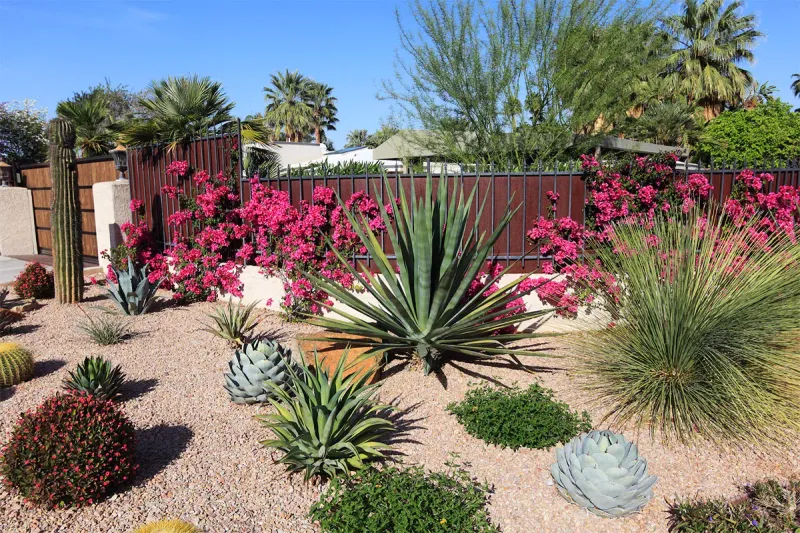
South-facing walls and concrete driveways in California soak up sunlight all day and then throw that heat right back at your plants. Many gardeners plant something pretty in that spot, watch it fry within weeks, and assume they killed it.
The truth is most plants just cannot handle that much reflected heat and dry soil. The good news is that a handful of tough, water-wise plants love these baking hot corners, and picking the right ones means less watering, less guesswork, and a spot that finally looks alive.
1. Agave ‘Blue Glow’
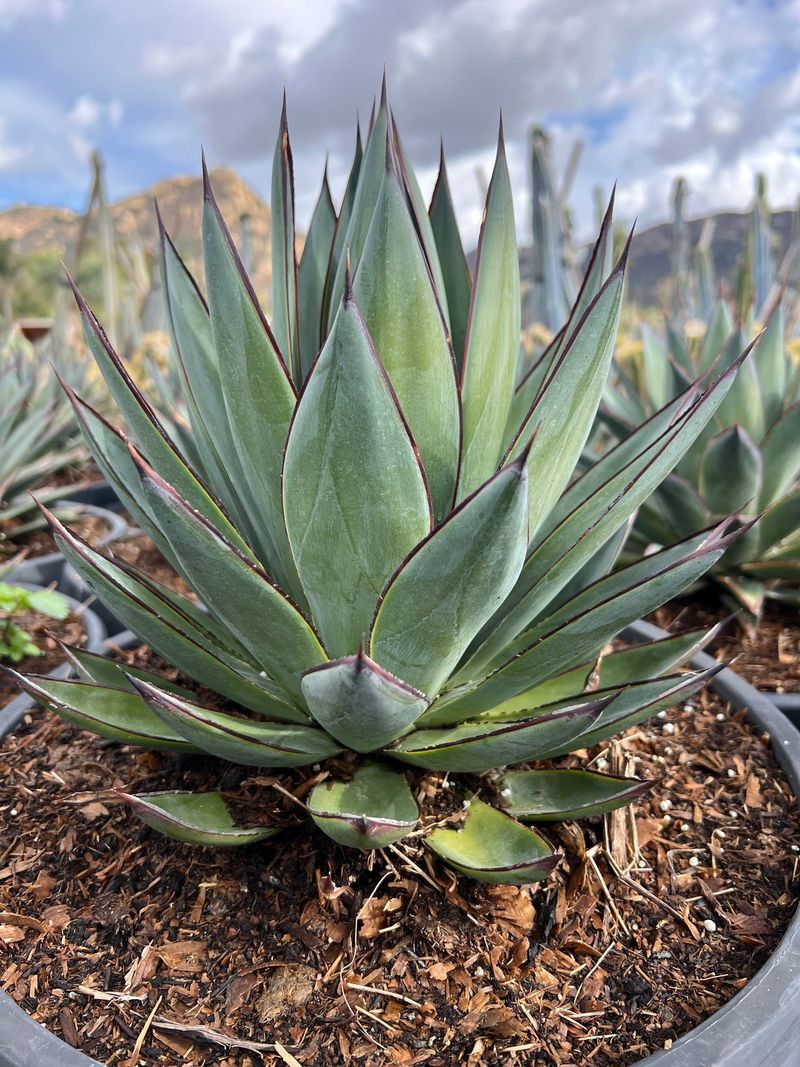
Picture a plant so calm in scorching heat that it practically glows while everything around it wilts. Agave ‘Blue Glow’ does exactly that, holding its tidy rosette of blue-green leaves edged in fiery red-gold no matter how hot the wall behind it gets.
What sets it apart from other agaves is its manageable size and slow, sculptural growth. It stays around one to two feet wide, so it fits tight beds beside a driveway without swallowing the space.
Reflected heat and lean, fast-draining soil are exactly what it wants. Once established, it can go weeks without water during a California dry summer, making it a strong pick for water-restricted yards.
Fun fact: unlike some larger agaves, ‘Blue Glow’ has softer spines, so it is a little friendlier to brush past on a narrow walkway.
2. Bougainvillea
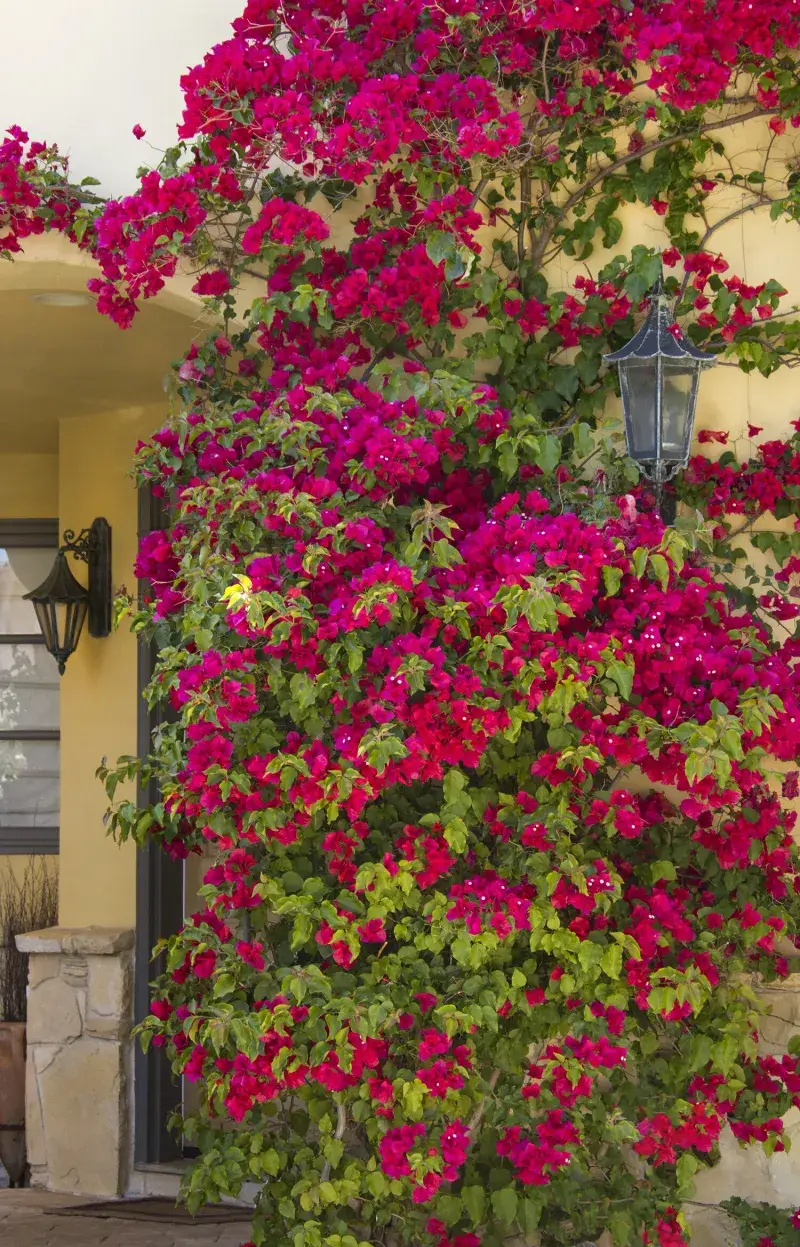
Few plants turn a hot, boring wall into a wall of color like bougainvillea. Give it a blazing south-facing exposure and reflected heat off the driveway, and it rewards you with waves of magenta, orange, or purple bracts for months.
Heat is not a problem for this vine, it is the whole point. The more sun and warmth it gets, the more it blooms, and it actually flowers poorly in cool, shady corners.
Watering can even work against you here. Bougainvillea blooms best when kept on the dry side, which fits perfectly with California water-wise goals.
Give it something to climb, be patient the first season while roots settle in, and then mostly leave it alone. Just wear gloves when pruning, since the stems carry thorns hidden under all that color.
3. Rosemary
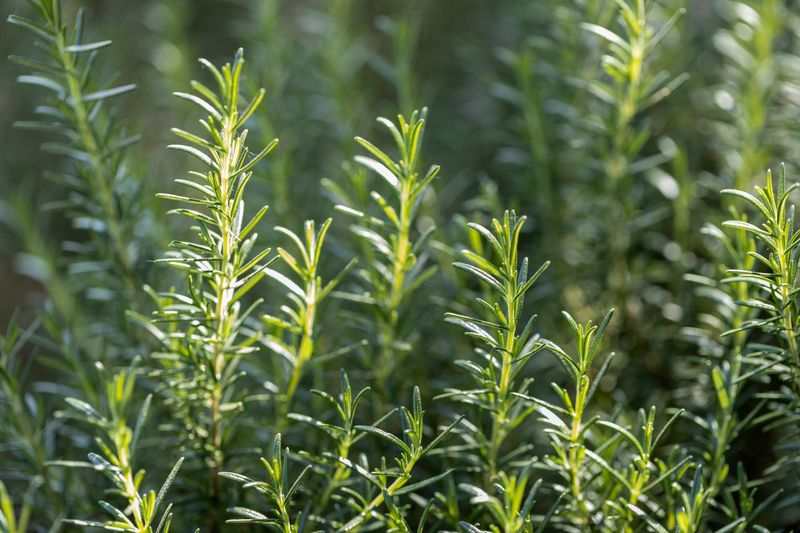
Brush past a rosemary bush on a hot afternoon and the whole area smells like a Mediterranean hillside. That scent is a clue about where this herb comes from and why it shrugs off reflected driveway heat.
Native to dry, sunny coastal regions, rosemary is built for exactly the conditions that fry softer plants. Its needle-like leaves lose very little water, so a baking hot strip along the pavement suits it fine.
You get double duty from it too. Upright varieties make a fragrant low hedge, while trailing types spill beautifully over a hot retaining wall or driveway edge.
Small blue flowers show up in cooler months and pull in bees, so it quietly supports pollinators in a spot most gardeners write off. Snip sprigs for cooking any time, and it just keeps going with almost no fuss.
4. Lantana
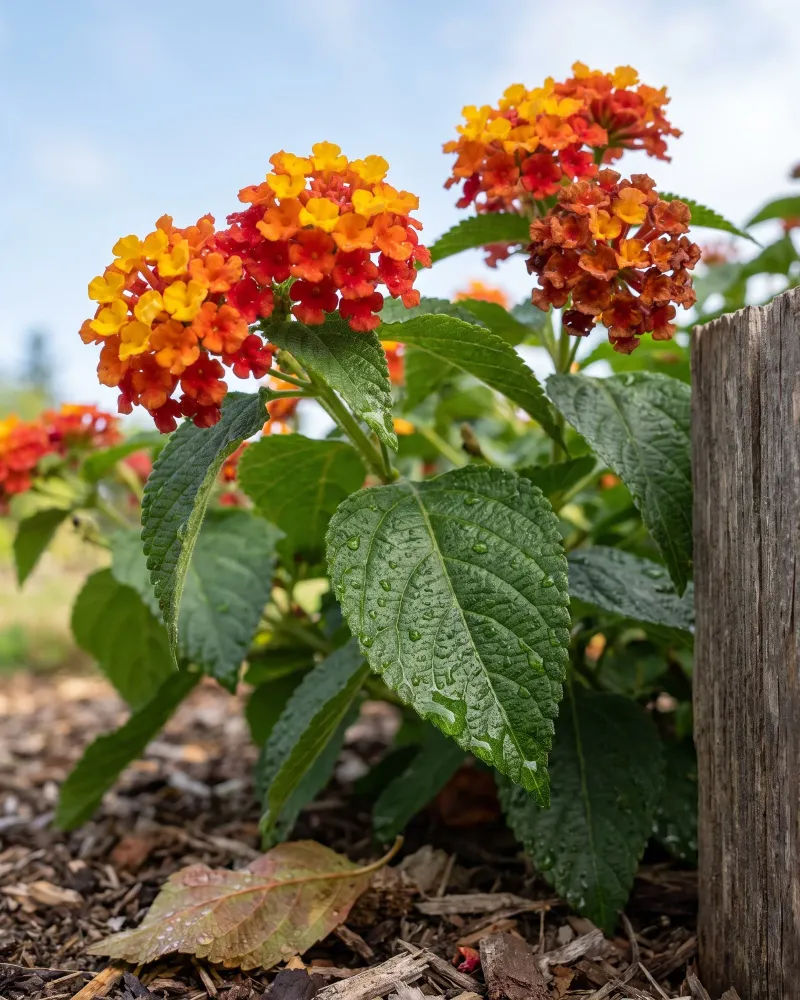
If you want butterflies dancing over a spot that used to be a heat trap, lantana delivers. Its little flower clusters bloom in bold blends of orange, pink, yellow, and red right through the hottest stretch of a California summer.
Heat and reflected glare only push it to flower harder. While tender annuals collapse against a south wall, lantana keeps pumping out color and nectar week after week.
Pollinators are the real bonus here. Butterflies and native bees flock to it, turning a lifeless hot corner into a busy little habitat patch.
Choose sterile or well-behaved varieties, since some lantana can spread where it is not wanted. Planted thoughtfully, it stays put and asks for little more than sun and occasional water.
5. California Fuchsia (Epilobium canum)
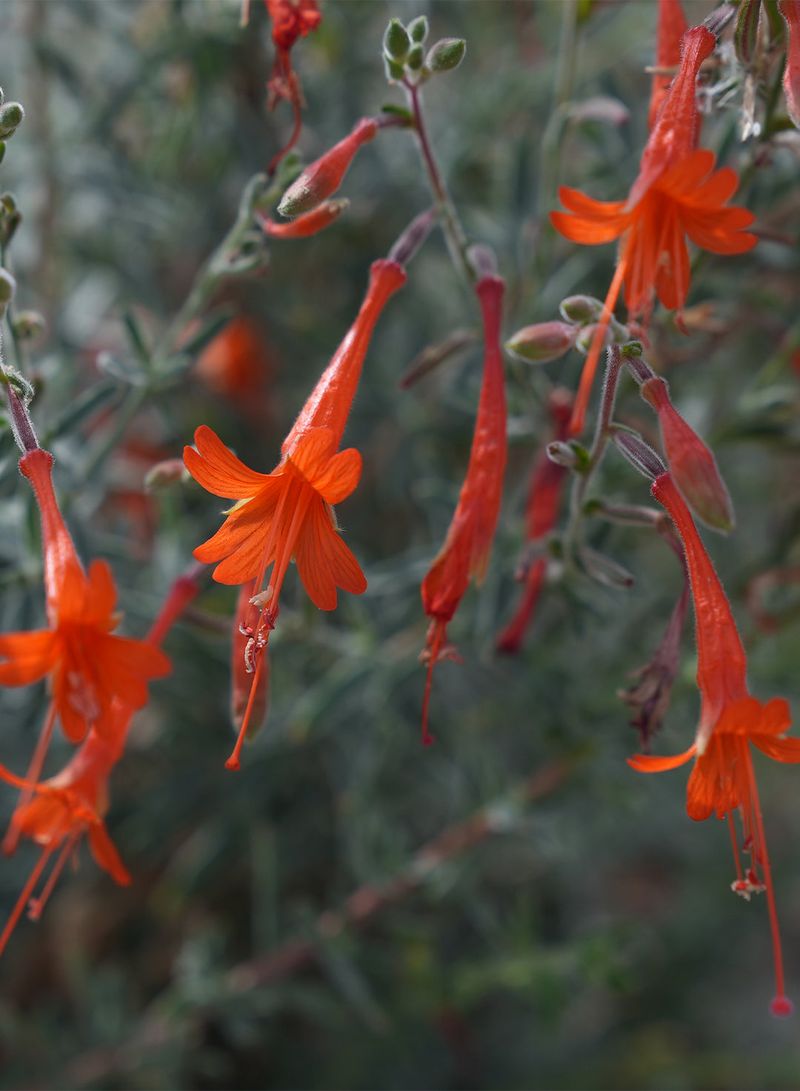
Come late summer, when much of the garden looks tired, California fuchsia lights up with fiery red-orange tubular flowers. As a California native, it belongs in local yards and thrives in the very heat that stresses imported ornamentals.
Hummingbirds are the headline act. Those tubular blooms are practically made for them, and a patch against a hot wall becomes a favorite feeding stop right when they need late-season nectar.
Its silvery-green foliage handles reflected driveway heat without sulking, and it wants little summer water once roots are deep. That makes it a genuine water-wise, wildlife-friendly choice rather than a thirsty stand-in.
Cut it back in winter and it returns fuller each year, quietly earning its place as a native that both cools your conscience and feeds local hummingbirds.
6. Trailing Lantana Blue Plumbago
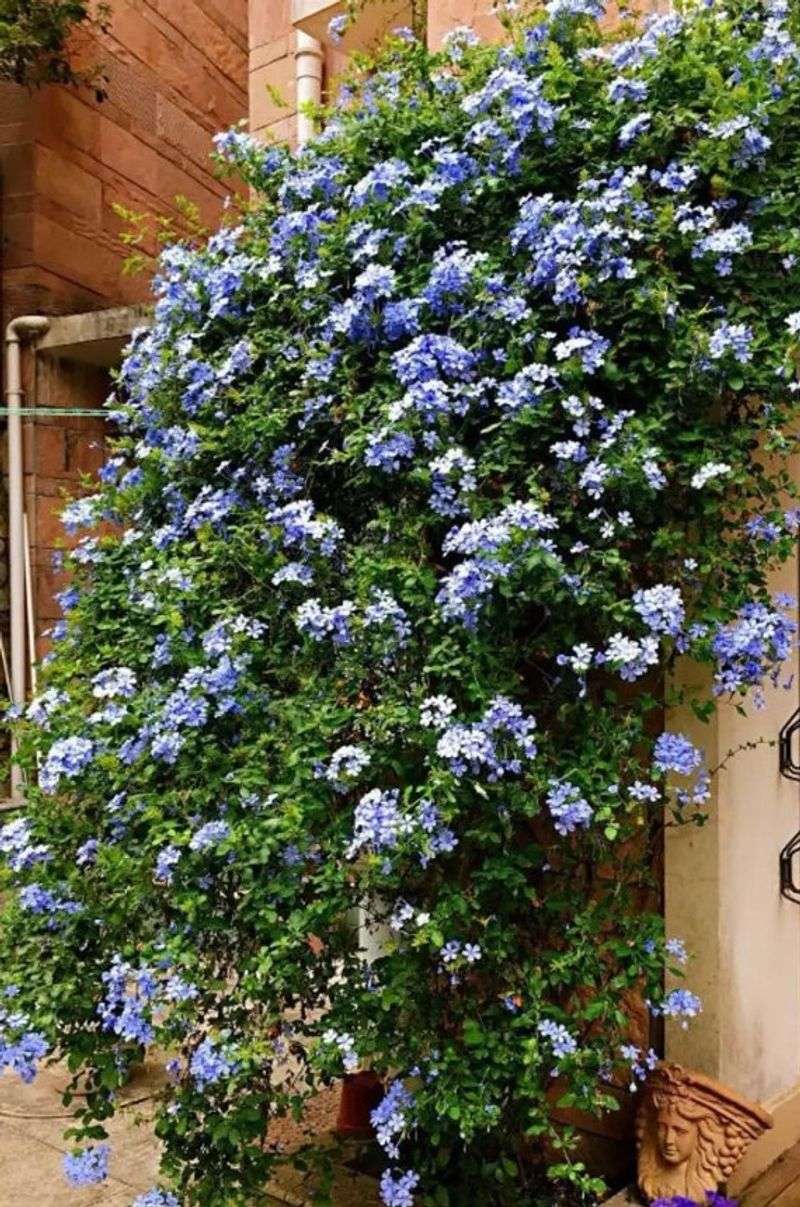
Cool blue flowers against a scorching wall feels like a nice trick, and plumbago pulls it off all summer long. Its soft sky-blue clusters bloom from spring deep into fall, even where heat bounces off pavement.
Toughness hides behind that delicate look. Plumbago handles inland valley heat and dry spells with ease, spreading into a mounding, sprawling shrub that can drape over a hot retaining wall.
Butterflies find it irresistible, so it adds gentle movement and life to a formerly baked corner. It also fills space fast, which helps if you want to soften a large sunny expanse quickly.
Give it a light trim to shape it and keep it in bounds. Beyond that, plumbago is content to soak up the very heat that would scorch fussier bloomers.
7. Aloe (Aloe vera and Aloe arborescens)
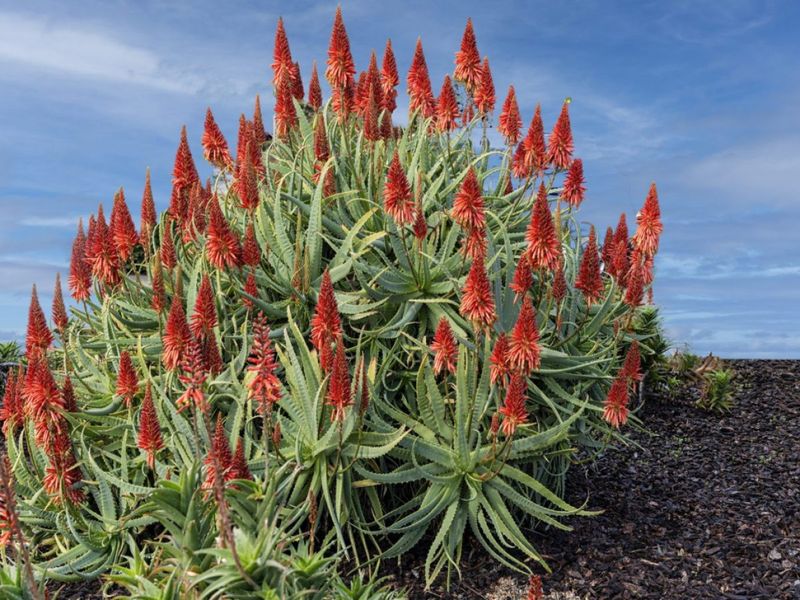
Thick, water-storing leaves make aloe one of the most heat-proof choices for a brutal south-facing bed. It sits happily in reflected driveway heat, quietly banking moisture inside those juicy leaves for the long dry season.
Beyond the familiar aloe vera, torch aloe (Aloe arborescens) grows into a bold shrub-sized plant. In winter it sends up tall orange-red flower spikes that hummingbirds adore, adding surprise color in the off-season.
Care could hardly be simpler. Fast-draining soil, full sun, and very little water keep it thriving, and overwatering is the main way people fail with it.
You also get a practical plant that soothes minor sunburns from a leaf snapped open. Tough, useful, and wildlife-friendly, aloe turns a punishing corner into an easy win.
8. Salvia ‘Hot Lips’
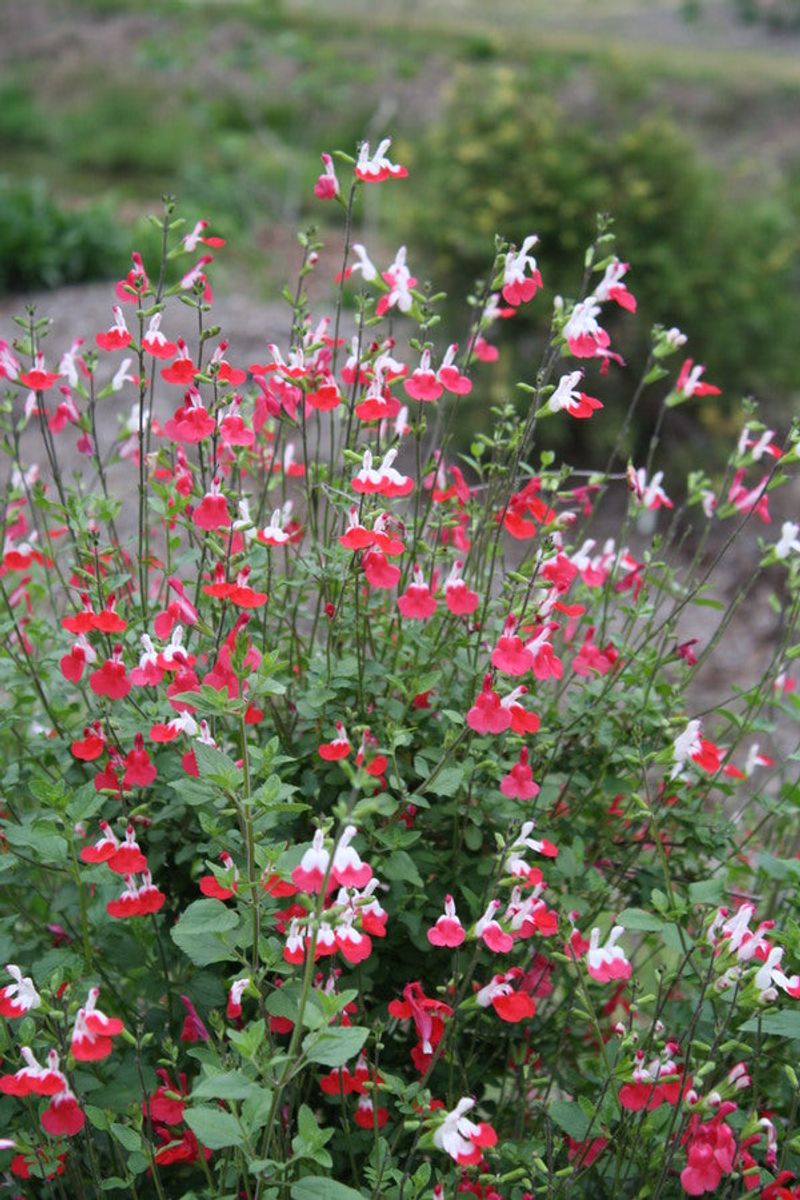
The playful red-and-white blooms on Salvia ‘Hot Lips’ actually shift color with the heat, sometimes going nearly all red on the hottest days. That quirk makes it a conversation piece in a spot most people ignore.
Sun and warmth suit this shrubby sage perfectly. It blooms from spring through fall against a hot wall, staying tidy at around three feet without much attention.
Hummingbirds and bees work its flowers constantly, so it keeps a baking corner buzzing with life. Its aromatic leaves also tend to be left alone by browsing deer, a plus for hillside gardens.
Water it lightly once established and give it an occasional shear to keep it fresh. In return it offers months of bloom and steady pollinator traffic in a low-water package.
9. Blue Fescue and Deer Grass
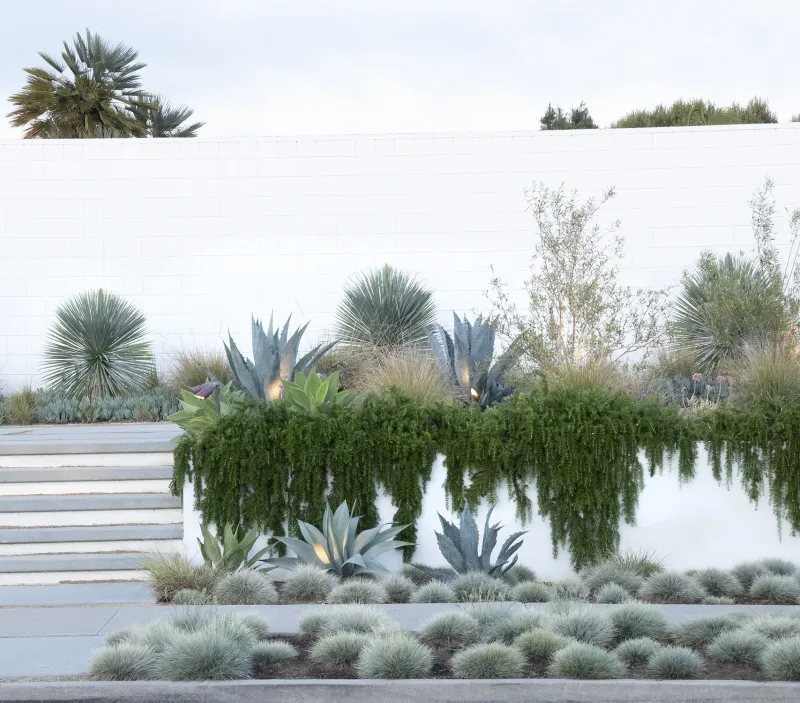
Movement changes everything in a hot, still corner, and ornamental grasses bring it. Blue fescue forms neat silver-blue tufts, while deer grass (Muhlenbergia rigens), a California native, grows into graceful arching mounds that sway in the slightest breeze.
Both take full sun and reflected heat in stride. Deer grass in particular is a water-wise native that fits fire-conscious, low-maintenance landscaping once it is settled in.
Texture is their real gift. Planted along a driveway edge, they soften hard pavement lines and pair beautifully with agaves, salvias, and succulents for a layered look.
Maintenance stays minimal: a yearly cutback keeps them tidy and they need very little summer irrigation. For a lawn alternative that handles harsh exposure, grasses are a smart, easy trade.
10. Prickly Pear Cactus (Opuntia)
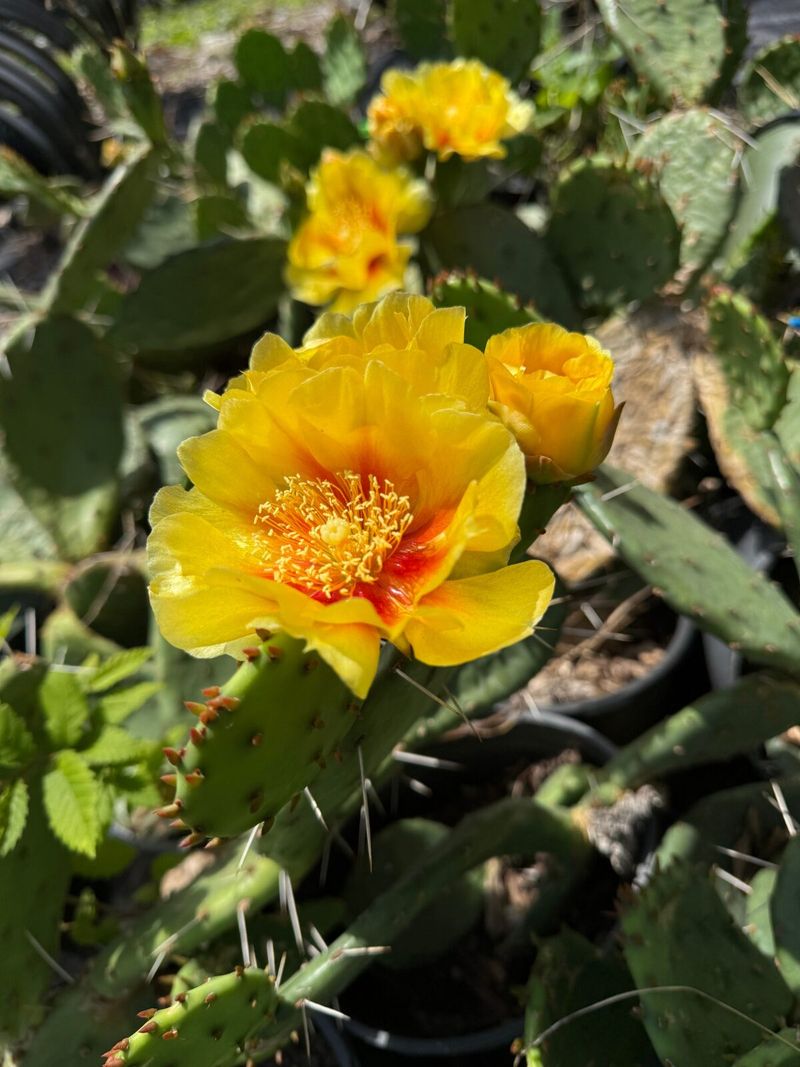
For the meanest, hottest, driest corner on your property, prickly pear laughs off conditions that kill nearly everything else. Its flat green pads store water like built-in canteens, so blazing walls and cooked driveway soil barely register.
Spring brings a payoff of bright yellow or orange flowers, followed by the reddish-purple fruit that gives the plant its name. Native pollinators visit the blooms, and birds go after the fruit later on.
Some Opuntia are native to California and the broader Southwest, making them a genuinely regional, water-wise choice rather than a novelty. They ask for essentially no supplemental water once rooted.
Handle with respect and gloves, since even the spineless-looking types carry tiny irritating glochids. Placed where nothing else will grow, prickly pear turns a hopeless hot spot into a striking, tough-as-nails feature.