
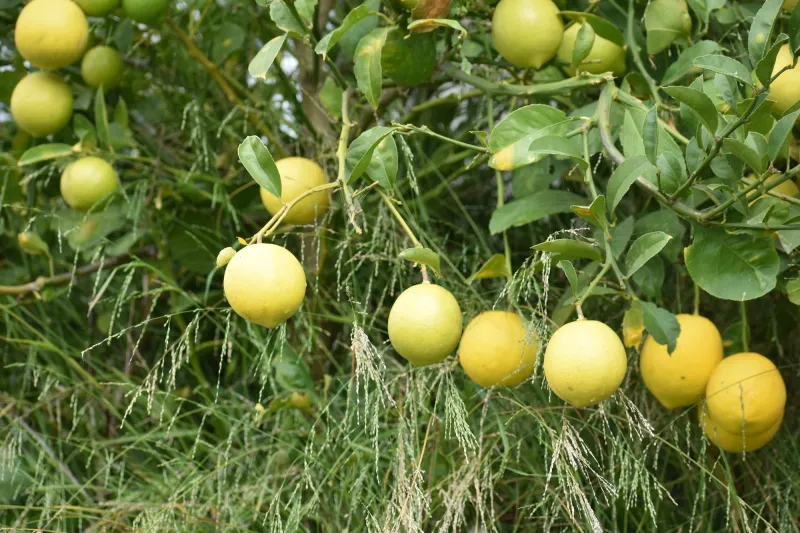
Meyer lemon trees are one of California’s most popular backyard fruit trees, but they have a habit of keeping their fruit stubbornly green long after gardeners expect a wash of yellow. The frustrating part is that green does not automatically mean unripe, and yellow does not automatically mean perfect.
Understanding what is actually happening on your tree can save you from picking too early, waiting too long, or worrying about a problem that does not exist.
One Meyer lemon tree can run several ripening clocks at once
Most fruit trees follow a tidy seasonal script: flowers arrive, fruit swells, everything ripens together, and you harvest. Meyer lemon trees did not get that memo.
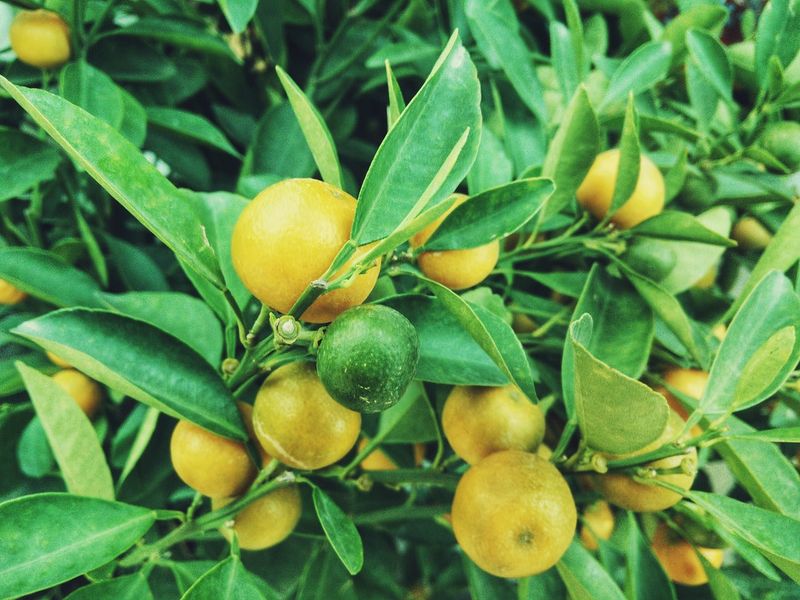
A single tree growing in a California yard can carry open blossoms, tiny newly set green fruit, larger fruit still developing, and lemons just beginning to color, all at the same time on the same branches. UC Master Gardener guidance on Meyer lemon harvest timing confirms that Meyer lemons can flower and fruit repeatedly, which means there is no single tree-wide ripening date to wait for.
Because each flush of flowers produces its own crop, fruit from an earlier bloom cycle may be approaching full color while fruit from a more recent bloom is still the size of a large marble. Both groups are developing normally.
The green lemons sitting next to yellow ones are not failing to ripen; they are simply younger, and they need more time on the branch before they reach the same stage.
California gardeners often see the heaviest harvest in late winter and spring, but fruit can set and mature at other points in the year depending on local temperatures and when each flowering flush occurred. A tree growing in the Bay Area fog belt may follow a slightly different calendar than one in a warmer Sacramento Valley yard.
The practical takeaway is that you cannot walk up to your tree, look at the overall color mix, and declare the whole tree ripe or not ripe. Each lemon belongs to its own developmental timeline, and that timeline started the day its flower opened.
Recognizing this overlapping cycle is the first step toward making smarter harvest decisions. Once you accept that different fruit on the same tree may be weeks or even months apart in development, the green-yellow patchwork stops looking like a failure and starts looking like a normal, productive Meyer lemon tree doing exactly what it was built to do.
Why mild California weather can hold the yellow back
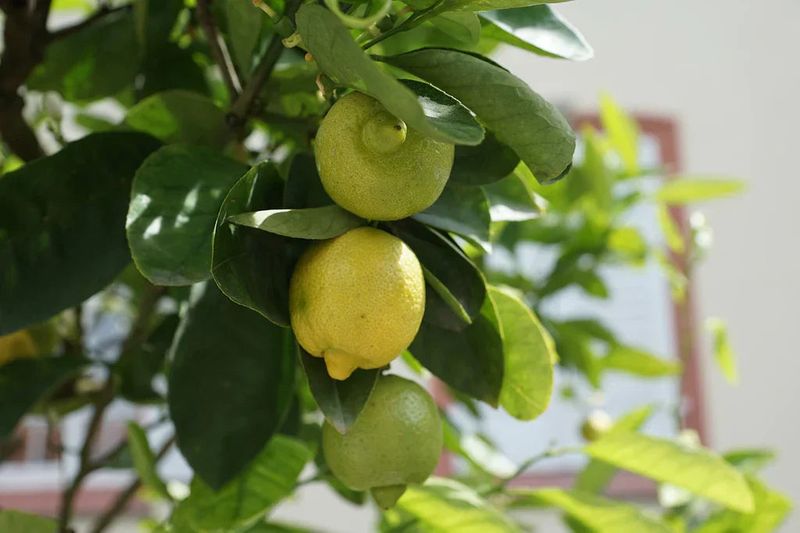
Color change in citrus peel is not simply about the fruit getting older. The green-to-yellow shift depends on two processes happening in the outer skin: chlorophyll breaking down and carotenoid pigments developing to replace it.
What controls the pace of those processes is largely temperature. Research on low-temperature effects on citrus peel degreening shows that cooler conditions promote chlorophyll breakdown and visible color change, while warmer ambient temperatures can slow the process even when the fruit inside is maturing normally.
For California gardeners, that finding has a very direct consequence. In coastal zones, inland valleys with mild winters, or during an unusually warm stretch in late fall, a Meyer lemon can reach full internal maturity and still display a green or greenish-yellow peel simply because the temperatures were not cool enough to trigger rapid color development.
The fruit is not stuck; the peel is just responding to local weather the way citrus peel is designed to respond.
A detail worth separating clearly: cooler weather speeds color development, but color does not determine sweetness. UC guidance specific to Meyer lemons notes that while cold can accelerate the shift toward yellow, the peel’s color is not a reliable measure of how the juice will taste.
A fruit that yellowed quickly after a cold snap is not automatically sweeter or more flavorful than one that stayed green longer in mild conditions.
This matters because it reframes the whole problem. A green Meyer lemon in January on a fog-belt tree is not evidence that the tree is struggling or that the fruit needs more time to become edible.
It may be evidence that mild temperatures are simply doing what mild temperatures do to citrus peel. Before reaching for a solution, consider whether weather is the more likely explanation than a tree-care failure.
Use the fruit, not the color alone, to decide when to pick
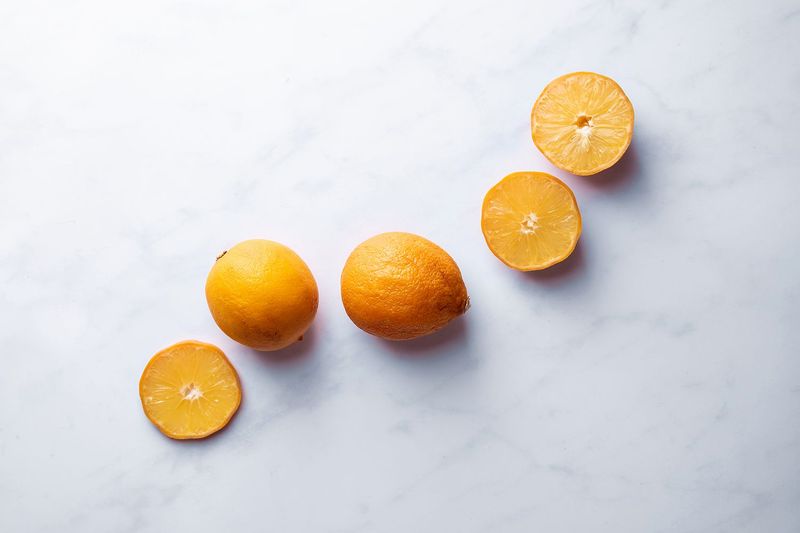
Peel color is the most visible signal, but it is also the least complete one. A more reliable harvest check uses several physical clues together: size, firmness, fragrance, and a quick taste.
Taken together, those four factors give a much clearer picture of where a particular fruit sits in its development than color alone ever could.
Start with size. A Meyer lemon that has reached its full mature diameter, roughly two to three inches across for most fruit, has completed the bulk of its growth.
A lemon that is still noticeably small is simply not ready yet, regardless of its color. Once the fruit looks full-sized, move on to texture.
A mature Meyer lemon should feel firm when you press it gently but should not feel like a hard rubber ball. A slight give under finger pressure, without the peel feeling loose or puffy, is a good sign that the interior has developed properly.
Fragrance is the next check. Hold the fruit close and give it a gentle rub.
A mature Meyer lemon releases a distinct, sweet citrus scent even through the peel. Fruit that smells faintly or not at all is likely still building its essential oils.
UC Meyer lemon harvest guidance specifically names deep yellow to orange color, fragrance, and slight give as the markers of the mildest, most developed flavor, which means fragrance is not optional in that assessment.
After checking size, firmness, and scent, the most direct test is tasting. UC Marin Master Gardener citrus guidance recommends a taste test precisely because ripening times vary so much.
Cut one fruit from a group that appears to be at the same developmental stage and taste the juice. If it is acceptably balanced, bright but not harsh, and carries that characteristic mild Meyer quality, the rest of that group is likely in a similar range.
UC Santa Clara Master Gardener citrus guidance echoes this approach: individual evaluation beats a calendar date every time. One taste test informs your decision about similar fruit from the same flush, but it does not mean every lemon on the tree is ready at the same moment.
Yellowing after harvest is not the same as full Meyer flavor
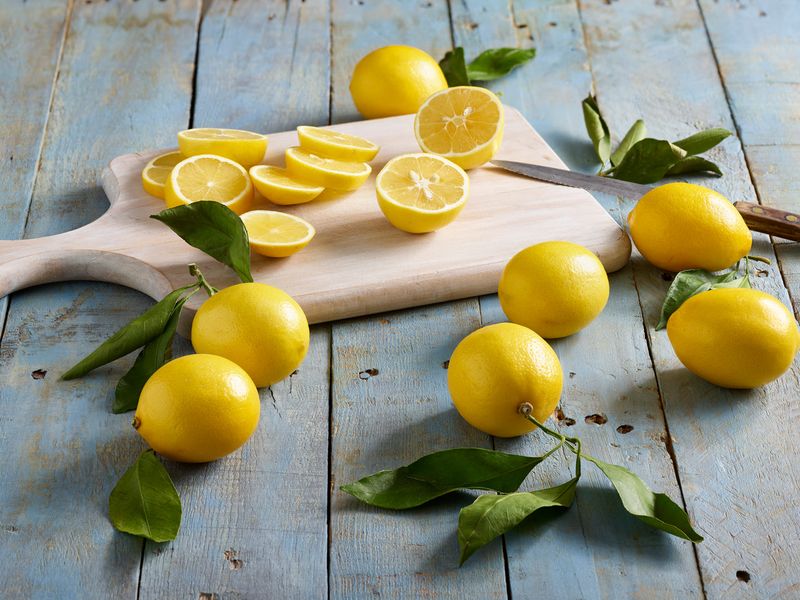
Picking a green lemon and setting it on the counter is not the same as letting it finish on the tree. The two paths lead to different results, and understanding that difference helps gardeners make better choices about when to harvest.
Commercial lemon growers have long used a practice sometimes called curing: mature green lemons are harvested and held at room temperature, where the peel gradually yellows, the skin smooths out, and the juice volume increases. UF/IFAS lemon growing guidance describes this process in the context of standard lemon varieties, noting that green-harvested fruit can develop color and gain juice after picking.
That is accurate as far as it goes.
Meyer lemons are a different story. UC guidance specific to Meyer lemons indicates that fruit picked while dark green may be more acidic than fruit left to mature on the tree, and that Meyer lemons do not continue developing their preferred mild, fragrant flavor after harvest.
The peel can yellow indoors, and the juice volume may increase, but the characteristic mildness that makes Meyer lemons worth growing does not keep building once the fruit is off the tree.
The practical choice comes down to your immediate need. If you need a lemon today and the tree has a mature-size fruit that passes the size, firmness, and fragrance checks, picking it while it still carries some green is a reasonable call.
You will get usable juice, likely with a bit more acidity than a fully colored fruit would deliver. If you are waiting for the gentlest, most fragrant Meyer flavor, the better move is to leave the fruit on the tree and let it finish coloring naturally, as long as frost and other risks are under control.
Postharvest yellowing is a real process, but it is not a shortcut to the flavor that on-tree maturity provides.
Support fruit development without trying to force yellowing
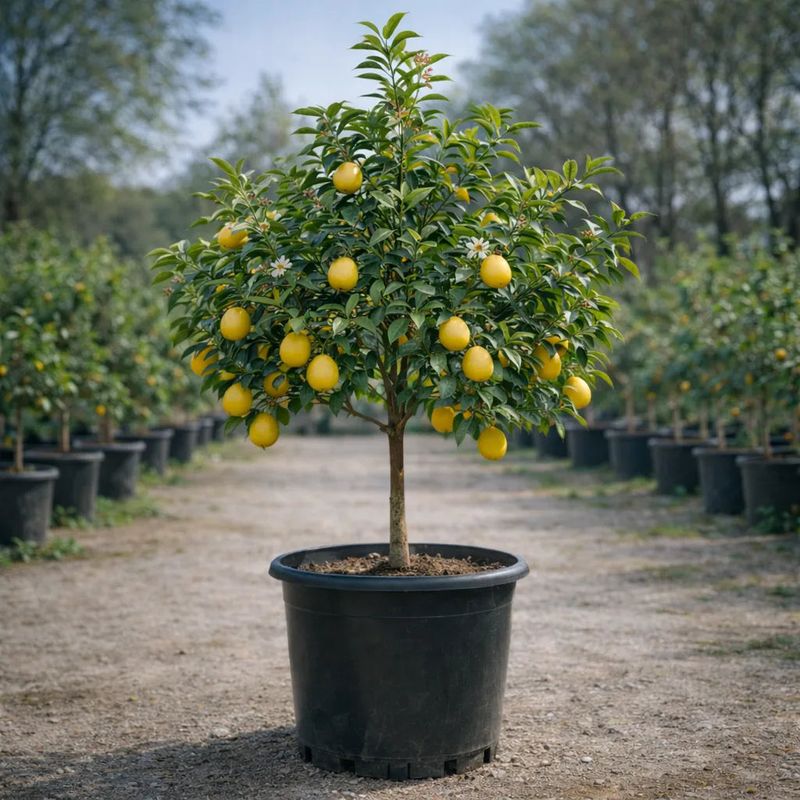
When fruit stays green longer than expected, the tempting response is to do something, add fertilizer, change the watering schedule, or try a new spray. Most of those interventions do not address the actual cause and some can make things worse.
The smarter approach is to remove the obstacles to normal development rather than try to accelerate color.
Fertilizer is worth addressing directly because the idea that extra nitrogen will push lemons toward yellow is a persistent myth. UC Master Gardener guidance on growing healthy Meyer lemon trees does not support fertilizer as a color-change treatment.
Excess nitrogen, especially applied late in the season, tends to push the tree toward rapid vegetative growth instead, which can attract pests and create its own set of problems. Feed your tree on a sensible schedule for its overall health, not as a response to green fruit.
Water management is where consistent effort pays off. UC Alameda County Master Gardener guidance on watering during drought notes that California citrus needs water year-round, and that water stress during flowering or rapid fruit development can increase flower and fruit drop while reducing fruit size.
Chronic overwatering creates its own risks, particularly root problems. The goal is consistent moisture without saturation.
For container-grown Meyer lemons, the soil dries out faster than it does in the ground, so check those trees more often and water when the top inch or two of soil has dried out.
Frost protection deserves attention, especially for gardeners waiting to harvest late-season fruit. Meyer lemons are more cold-tolerant than some citrus varieties, but they are not frost-proof.
UC Sacramento Master Gardener frost guidance identifies approximately 22 degrees Fahrenheit as a temperature at which Meyer lemon damage can occur. A hard freeze can ruin developing fruit and injure the tree itself.
Cover container trees and move them to a sheltered spot when freezing temperatures are forecast, and protect in-ground trees with frost cloth when a significant cold event is approaching. Keeping the tree healthy and the fruit safe through winter is the foundation of a good harvest, not a shortcut to faster yellowing.
When green fruit points beyond an ordinary delay
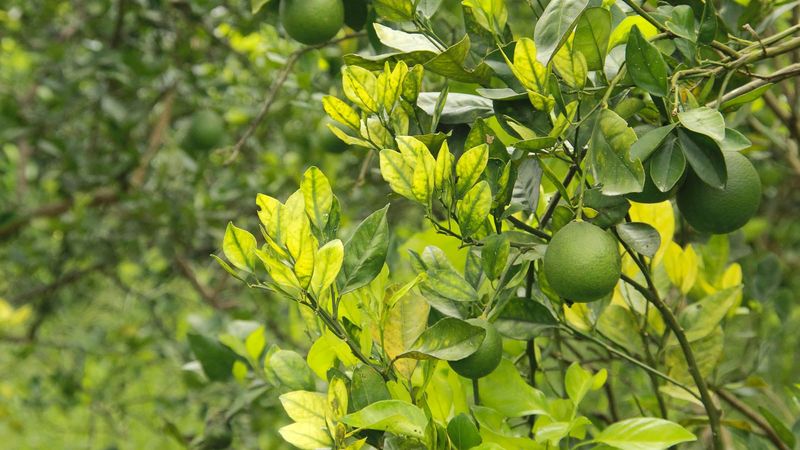
A tree carrying fruit at multiple stages of development, some green and some yellow, is behaving normally. That picture by itself is not a warning sign.
The situation changes when green fruit shows up alongside a cluster of other symptoms that do not fit the ordinary overlapping-cycle explanation.
Pay attention to the fruit itself first. Normal developmental variation produces lemons that differ in color and size because they set at different times, but those lemons should still be roughly symmetrical and full-sized for their stage.
Small, noticeably lopsided, or misshapen fruit that does not grow to normal size is a different situation. Add bitter juice that persists even in fruit that appears mature, and the combination becomes worth investigating.
Abnormal color patterns, where the peel shows blotchy areas or the color seems inverted compared to what you would expect, are another flag.
On the leaves, the key distinction is between general yellowing and asymmetrical mottling. Yellow leaves alone can result from water stress, nutrient issues, root problems, or seasonal changes.
UC IPM’s guide to citrus leaf and twig diseases documents how many different causes can produce yellow foliage. What raises concern is yellowing that follows an asymmetrical pattern on individual leaves, with one side of the leaf a different shade than the other, combined with the fruit symptoms described above.
Huanglongbing, commonly called HLB or citrus greening, is a bacterial disease spread by the Asian citrus psyllid. UC IPM’s HLB resource describes the characteristic symptom combination: small, lopsided fruit with bitter juice, abnormal color inversion in the peel, asymmetrical leaf mottling, premature fruit drop, and general tree decline.
HLB is a regional concern in California rather than a diagnosis for every slow-coloring lemon. CDFA’s current ACP and HLB quarantine information identifies affected areas primarily in parts of Southern California, and other counties remain outside those zones.
Citrus stubborn disease is a separate possibility when a tree shows off-season flowering, persistently uneven fruit maturity, small or misshapen fruit, bitter flavor, or abnormal coloration that does not resolve. CDFA’s citrus stubborn disease profile clarifies that this disease is not the ordinary explanation for a healthy tree whose normal-size fruit is simply slow to turn yellow.
If a concerning combination of symptoms appears, contact CDFA or your county agricultural commissioner for guidance rather than treating the tree on your own.
A short harvest routine answers the question fruit by fruit
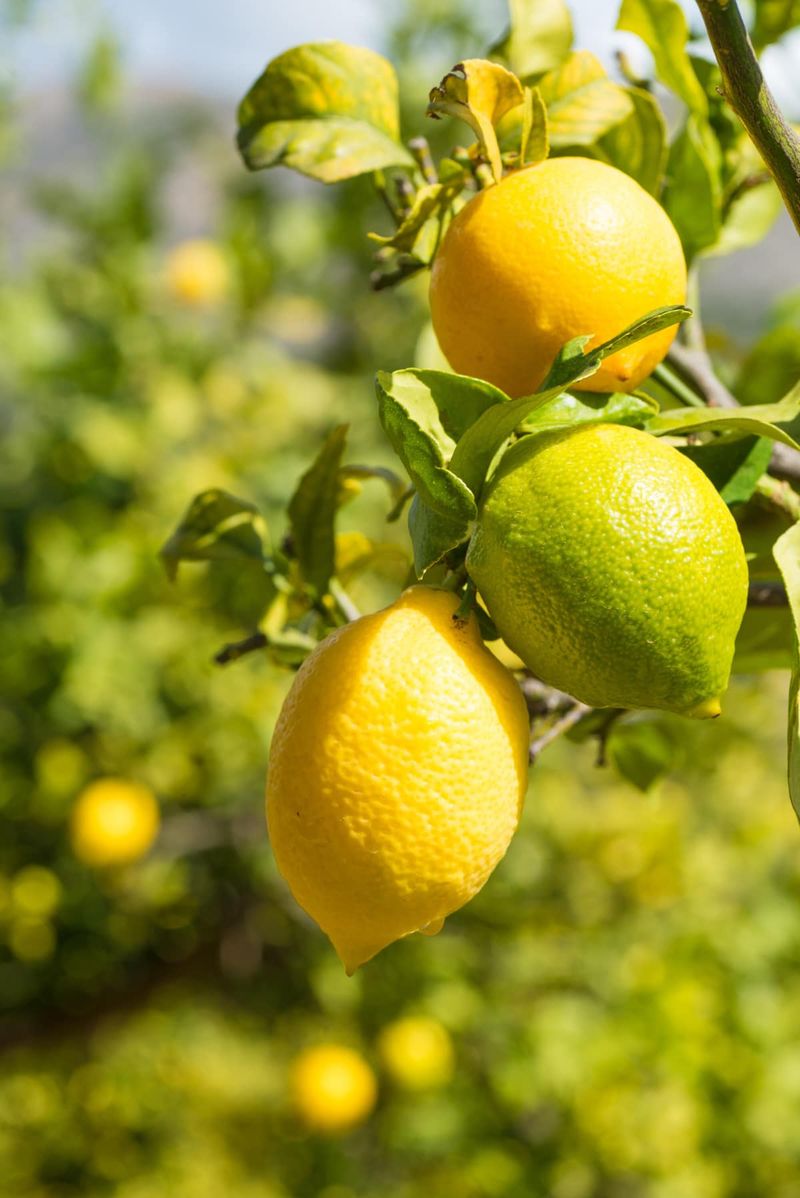
Rather than staring at the whole tree and wondering whether it is ready, work through a quick sequence for each fruit you are considering. Start by thinking about when that particular flush of flowers appeared.
Fruit that set two or three months ago is in a very different place than fruit that set last month, even if both look the same shade of green from a distance.
Next, check the physical clues: full mature size, a firm texture with slight give, and a noticeable citrus scent when you rub the peel. If those three line up, cut one fruit from the group and taste it.
UC Marin Master Gardener citrus guidance recommends exactly this kind of individual taste test because ripening times vary too much for a calendar rule to work reliably. A flavor that reads as acceptably balanced is your green light for similar fruit from the same flush.
A flavor that reads as harsh or thin means that group needs more time.
Two safeguards apply while you wait. Do not reach for fertilizer to push color along; it will not work and can create new problems.
And keep an eye on overnight temperatures: UC Sacramento frost guidance puts Meyer lemon damage risk at around 22 degrees Fahrenheit, so protect the tree before a hard freeze rather than after.
UC harvest guidance for Meyer lemons frames the core lesson well: color is a clue, not a verdict. A green Meyer lemon is telling you something about its age, its recent weather, and where it sits in its own timeline.
Fruit age, texture, aroma, taste, and the broader picture of tree health will always give you a more accurate answer than peel color alone. A tree full of green lemons is usually a tree full of lemons at different points in their story, and most of them will get there.