
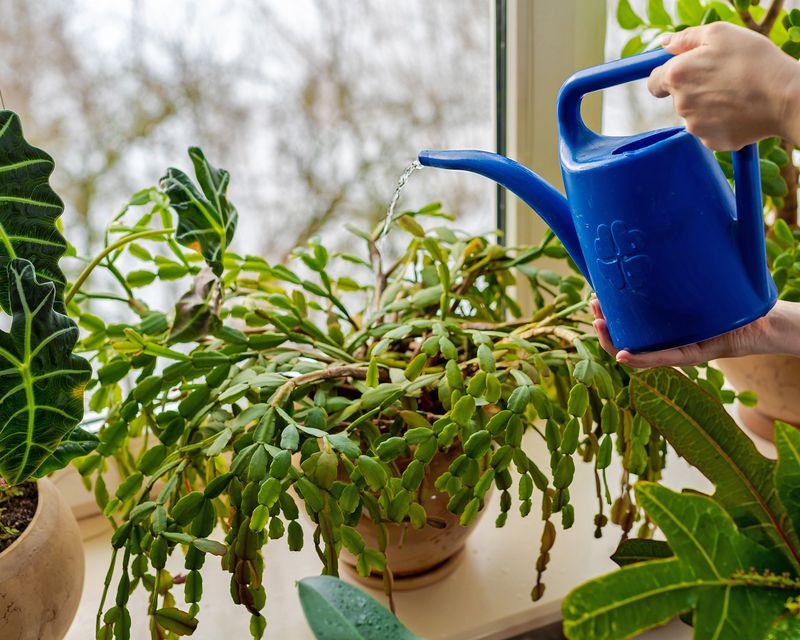
You bring your budding Christmas cactus to the front room for the holidays, and a few days later tiny buds litter the floor. It feels like you did something wrong.
A move can play a part in bud drop, but light is rarely the whole story. Knowing what else changes when a plant relocates can help you protect those buds.
A move can change more than the light
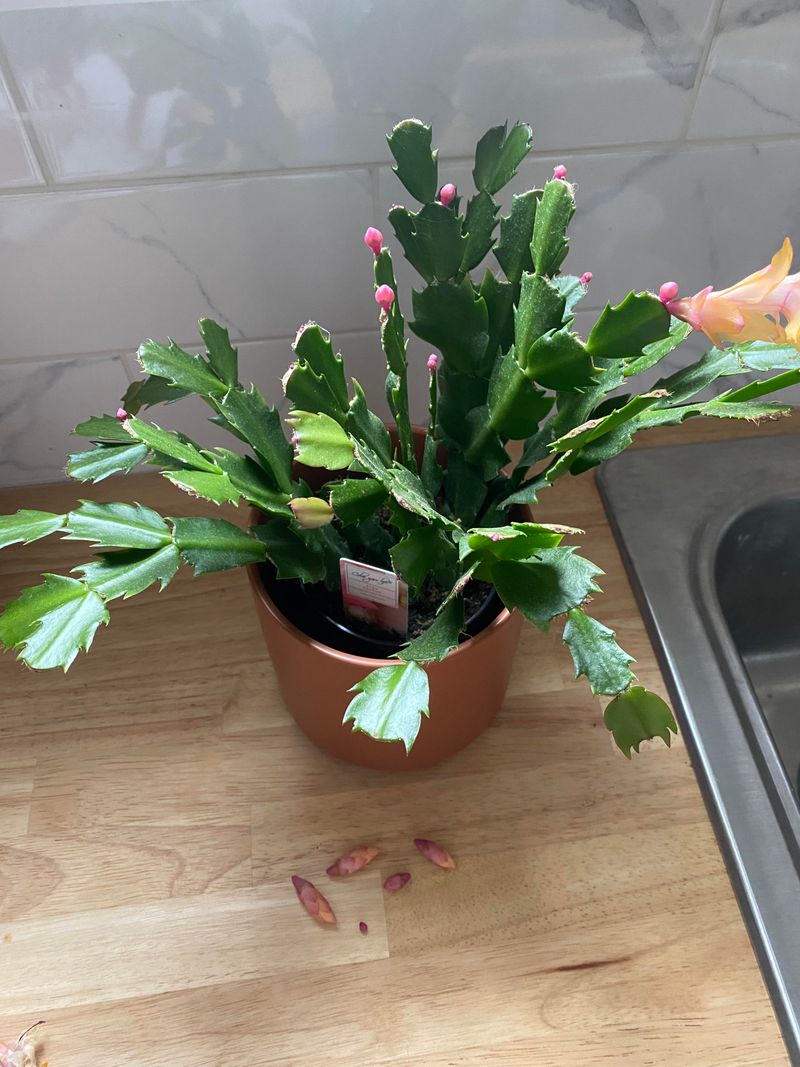
Finding fallen buds after moving a plant is upsetting, but a move does not always cause bud loss. Light can be one factor, though not the only one.
UF/IFAS Extension also points to environmental change, high temperatures, drafts, and improper watering as reasons buds may drop.
Think about what else shifted when you carried the pot across the house. The new spot may be warmer or cooler, closer to an air conditioning vent or a heater, or drier than the old one.
Your watering habits may have changed too, since a plant in a new room can get forgotten or fussed over.
Guidance on moving is not identical everywhere. Iowa State Extension suggests waiting to move the plant until flowers begin opening, while University of Minnesota Extension discusses moving it when buds appear if it needs to adjust to a warmer room.
So rather than blaming one light shift, look at the whole environment. Buds can also drop on plants that never moved.
Flowering cues are not a bud-drop cure
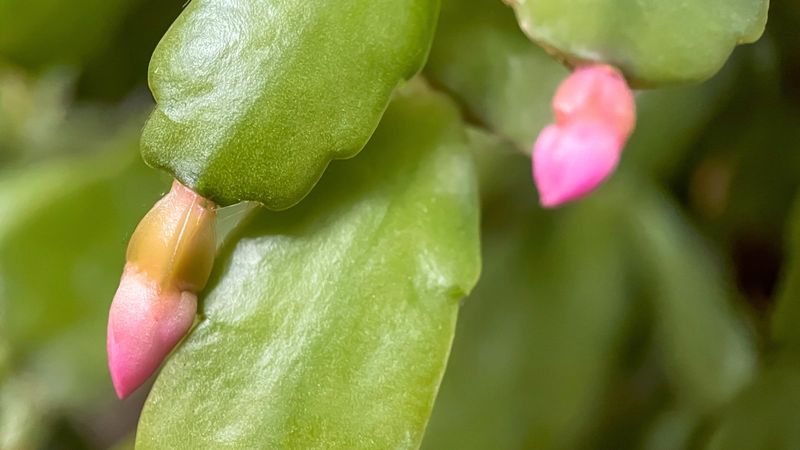
Getting a holiday cactus to set buds and getting it to keep them are two different jobs. Long, uninterrupted nights and cooler temperatures help trigger flowering, and sources such as the UConn Home and Garden Education Center describe several weeks of long nights as a common cue.
Exact needs vary with the plant and its conditions.
Once buds are visible, that trigger has done its work. Shutting a plant in a dark closet at this stage is not a recommended fix for dropping buds, and the sources reviewed do not support it.
A lab study on temperature and flower bud growth in Schlumbergera truncata shows that temperature and day length work together in flowering. It does not show that a household light change alone makes buds fall.
Also, the plant labeled Christmas cactus at your store may be a Thanksgiving cactus or a hybrid, as Iowa State points out. Bloom timing can differ, so in Florida and Texas, watch your own plant and its conditions rather than a fixed calendar date.
Keep conditions steady while buds develop
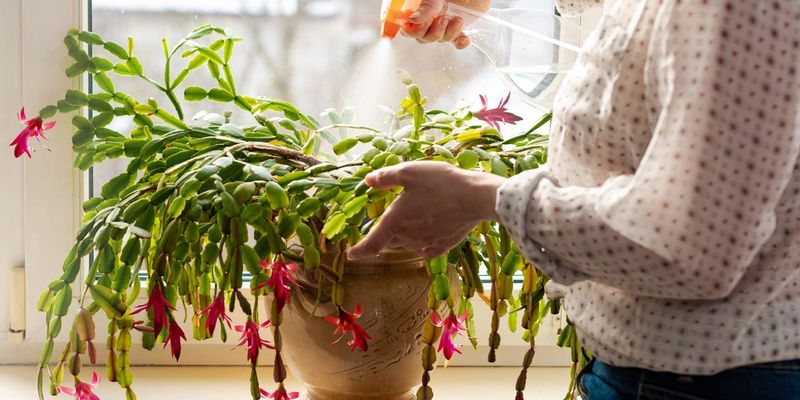
Steady care is the goal while buds swell. Give the plant bright, indirect daytime light, the kind you get near an east window or a few feet back from a sunny one.
Southern afternoon sun through glass can be harsh, so a sheer curtain may help.
Keep it away from heater vents, air conditioning drafts, and doors that open often. Sudden swings in temperature are among the stresses UF/IFAS lists with bud drop.
For water, skip the rigid schedule. Poke a finger into the potting mix and check it.
Iowa State Extension and University of Minnesota Extension both stress avoiding extremes, so water when the top of the mix has dried a bit and let the excess drain out of the pot.
You do not need a new routine. Simply keep what already works going, and the plant has fewer reasons to let go of its buds, though no step can promise every bud will stay.
When should you move the cactus?
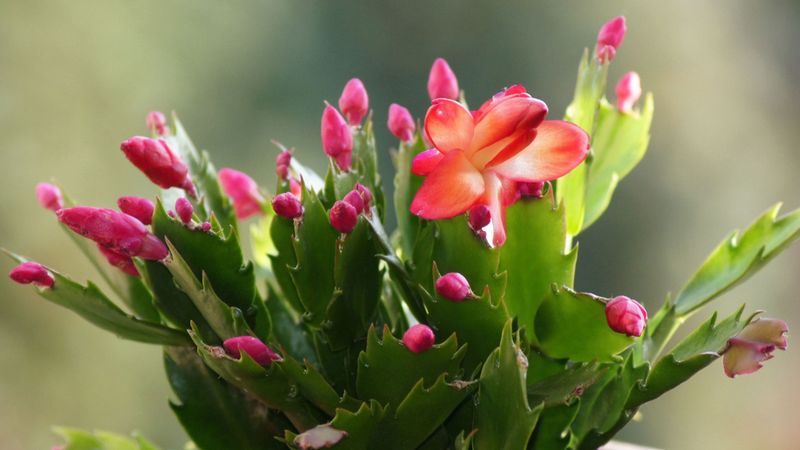
Extension advice on timing is not unanimous, so treat it as situation-dependent. Iowa State recommends waiting until flowers begin opening before you move the plant for display.
That is the cautious route, since it keeps the plant in one place during the most delicate stage.
The University of Minnesota takes a different view. It says to move the plant when buds appear if it needs to adjust to a warmer room.
The idea is that the plant may settle in better if the change happens early rather than late.
Neither rule fits every house. A Florida lanai and a cool Texas hallway are very different places, and the bigger the gap in temperature and light between old and new spots, the more a move may matter.
If the two rooms are similar, a move may be low risk. If they differ a lot, weigh which rule suits your situation.
Either way, pick one destination and avoid shuffling the pot around, since repeated moves add repeated changes.
Check the whole environment if buds are falling
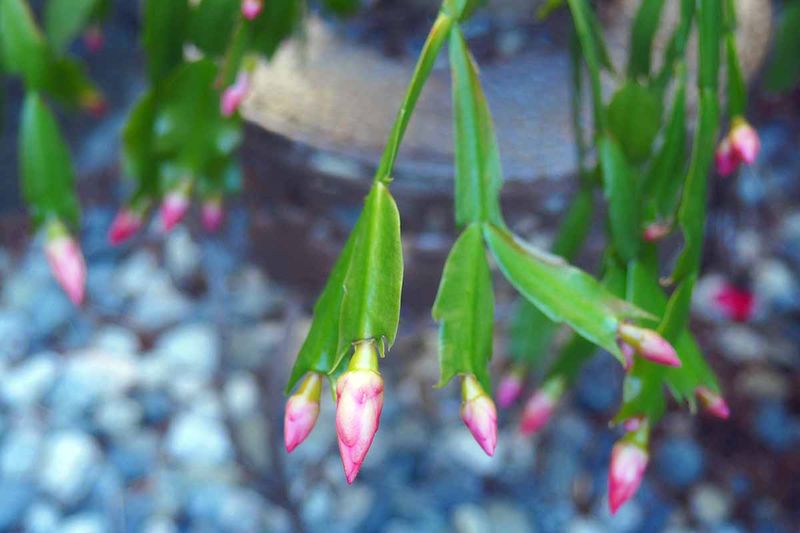
If buds are already dropping, resist the urge to change everything at once. Start with a short review of what changed in the last week or two.
Ask about light, room temperature, drafts from vents or doors, dry air, and any shift in watering.
Next, check the pot. Feel the mix a couple of inches down and look at the drainage hole.
UF/IFAS names improper watering as one possible cause, and a Texas expert response on Ask Extension discusses both dry stress and too much water.
Soggy mix calls for letting it drain and dry slightly. Bone-dry mix calls for a measured drink, not a big rescue soak, which could add trouble if roots are struggling.
Then hold the plant steady. Skip further moves, and do not put it in the dark, since long nights are a flowering trigger rather than a fix, as noted by Iowa State.
A few lost buds may happen even with good care.
Plan a display with fewer sudden changes
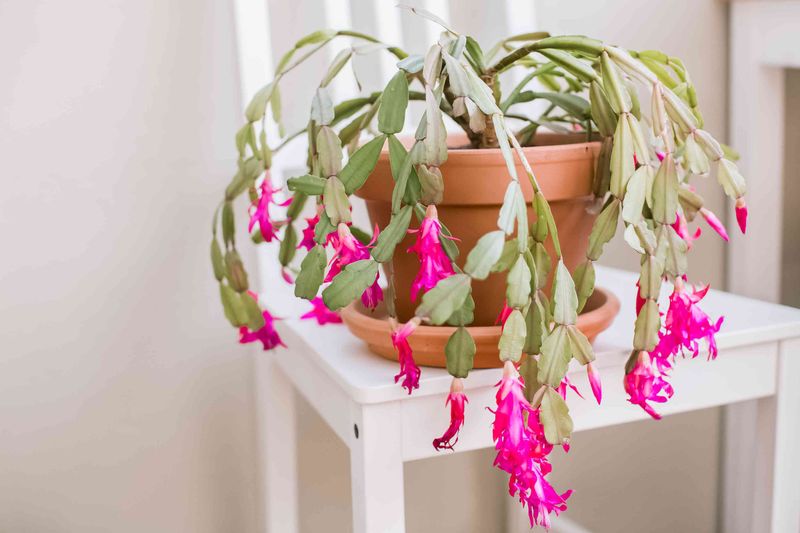
A good display plan starts weeks before the holidays. Pick the spot where the cactus will do well, and ideally let it develop buds there.
If that spot is not showy, you can still bring the plant out for a special occasion once flowers are opening, which matches the Iowa State advice.
If the showcase room is warmer than where the plant lives, the University of Minnesota approach of moving earlier so it can adjust may make sense. Compare light, temperature, and nearby vents before you choose.
Whichever route you take, move it once, keep the pot upright, and avoid turning it often once buds are forming.
These steps can reduce avoidable stress, but they cannot guarantee that every bud stays. A cactus that holds most of its buds and opens a good show has done its job.