
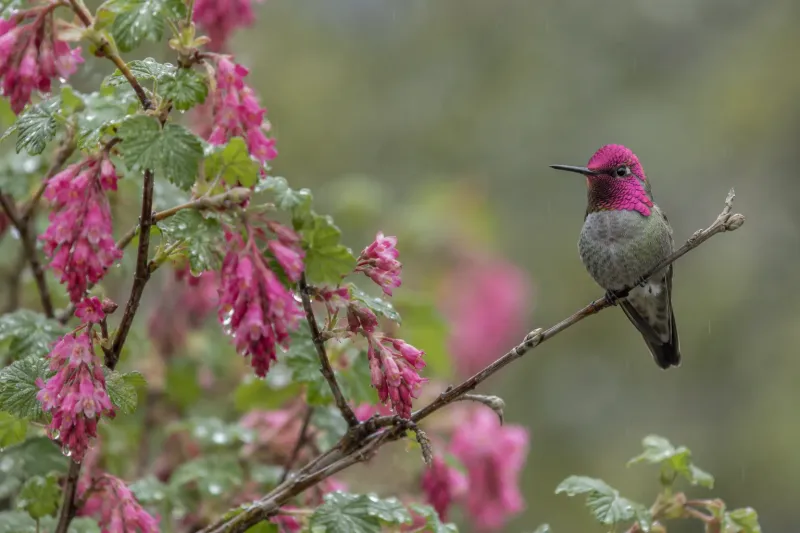
Walk outside on a chilly January morning in California and you might hear a sharp chirp from a shrub. That could be an Anna’s hummingbird, one of the few hummingbirds that sticks around when the weather cools.
Your yard can offer food, cover, and water during the leanest months. Here is how to set it up so it is more useful to these tiny birds, even though no yard can promise a visit.
Anna’s hummingbirds can winter in California without staying in one yard
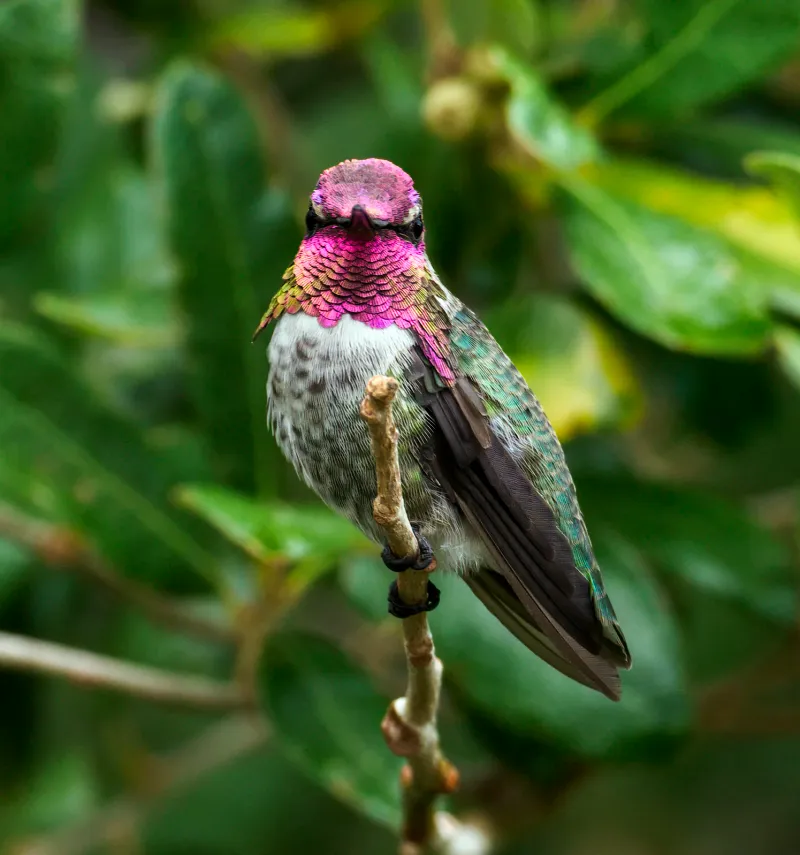
Many people picture hummingbirds as summer visitors that flee south when it gets cold. Anna’s hummingbirds break that pattern.
Cornell Lab’s All About Birds describes the species as largely nonmigratory along the Pacific Coast, which is why you can see them in California neighborhoods in December and January.
That is a statement about the species, though, not about one bird in one yard. The National Park Service says it is unclear whether some birds winter where they bred or arrived from elsewhere.
So the hummingbird at your feeder this week may or may not be the one that nested nearby last spring.
Why does that matter? Because it changes what you are aiming for.
You are not trying to lock a bird into your property. You are trying to make your yard a useful stop in a bird’s daily route, with food, cover, and water close together.
Hummingbirds move around to find nectar and insects, and their movements can differ from one place and one bird to the next. Coastal gardens, inland valleys, and foothill neighborhoods all have different winters.
Treat what follows as a toolkit you can adjust to your own conditions.
The good news is that small changes can add up. A few well-chosen plants, a leafy shrub or two, and a clean water source can give a hungry bird a reason to stop by.
Whether one does is up to the bird, and NPS notes that territory defense varies with how much food is available nearby.
Choose winter flowers for your part of California
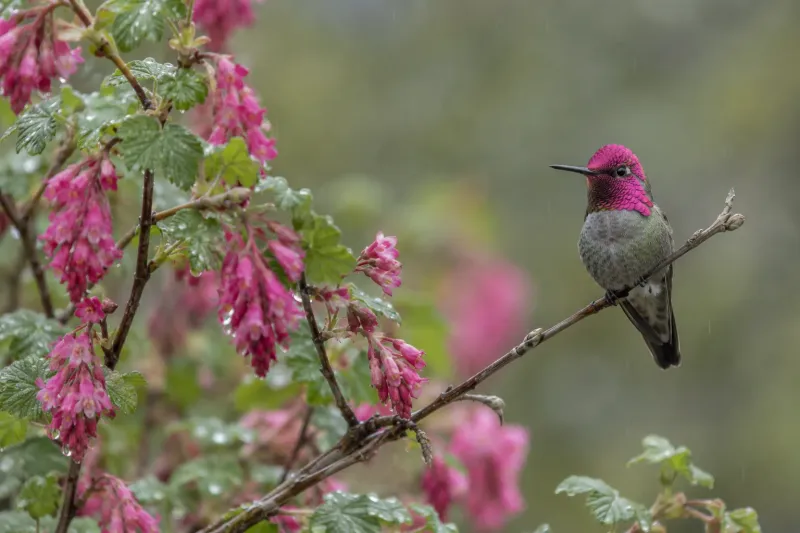
California is huge, and a plant that blooms in January in Half Moon Bay may wait until March in the Sierra foothills. Start by looking at your own yard: how much sun it gets, how cold it gets, how well the soil drains, and how much water you can spare during dry summers.
For the coastal Bay Area, UC Master Gardeners of San Mateo and San Francisco Counties list manzanitas, chaparral currant, and fuchsia-flowered gooseberry as winter choices. Think of that as a regional example, not a statewide shopping list.
Inland and southern gardeners should check with a local native plant nursery or their county extension office.
These natives also fit a water-wise yard. Once established, many need little summer irrigation, which suits California’s long dry season.
It is easy to assume hummingbirds only want red, tubular flowers. They do visit those, but the National Park Service notes Anna’s feed on a range of flowers, especially currants and gooseberries, and manzanita blooms are a winter food source too.
Plenty of flowers that are pink, white, or other colors can do the job.
Plant in groups rather than one lonely shrub, and put them where you can watch from a window. No plant guarantees a visit, but a yard with real winter food gives birds more reason to check it out.
A mix of bloom times can extend the winter food window
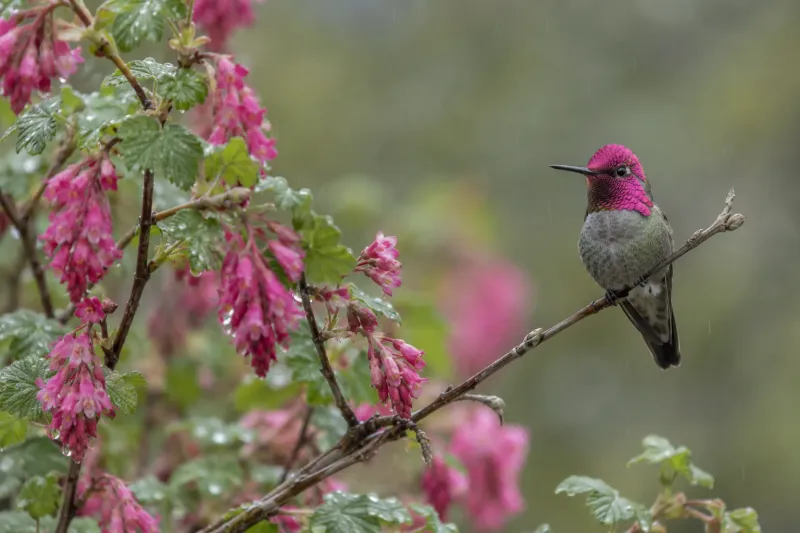
One shrub in full bloom is lovely, but it only feeds birds for as long as its flowers last. When it finishes, the buffet closes.
Planting several kinds that open at different times can stretch nectar availability across more weeks.
Manzanitas show how much timing can vary. The California Native Plant Society notes that different manzanitas flower anywhere from late autumn through winter or early spring, depending on the species and cultivar.
Two plants with the same common name can bloom weeks apart.
That is why a quick check before buying pays off. Ask the nursery when a specific plant blooms in your area, and look at what neighbors or local native gardens have growing.
UC ANR’s winter-blooming native plants guide is a helpful place to browse ideas.
Try keeping a simple notebook for a year. Jot down the date each plant starts and stops blooming, and you will spot gaps you can fill next season.
Even a well-planned sequence has limits. Weather, drought, and plant age can shift bloom dates, and hummingbirds may still pass your yard by.
The goal is a longer window of food, not a promise of nonstop flowers or constant visitors.
Pair flowers with shelter and other habitat
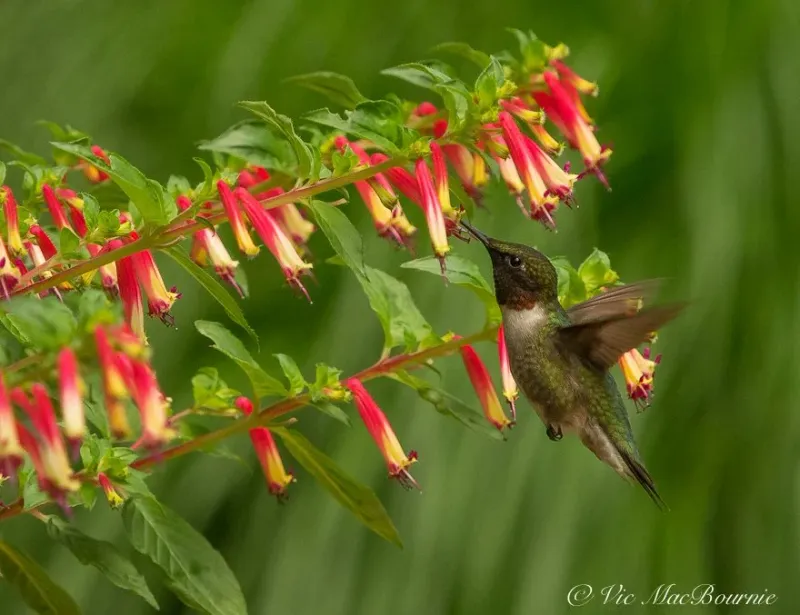
Nectar is only part of a hummingbird’s day. Birds also need places to rest, hide from wind and hawks, and sometimes build nests.
Dense shrubs and small trees offer cover and potential nesting sites, according to the National Park Service.
Leave a few bare, slender branches in place as perches. Anna’s often sit on exposed twigs to watch for rivals and food.
When you prune, you can keep a couple of good perching spots instead of clearing every stick.
Water helps too. A shallow fountain or a fine mist from a hose lets hummingbirds bathe and drink.
Keep it gentle and shallow, and refresh it often so it stays clean. In a state with water limits, a small recirculating fountain or a brief mist is plenty.
Then there is food that is not nectar. Hummingbirds eat small insects and spiders, and nestlings rely heavily on these arthropods for protein.
Cutting back on pesticides leaves more of that natural food around. Audubon’s hummingbird-friendly yard advice also points toward reducing pesticide use.
A practical next step: walk your yard and look for a spot where a shrub, a perch, and a water source sit close to your winter blooms. That cluster is what makes a yard feel useful.
Use a feeder only as a supplement
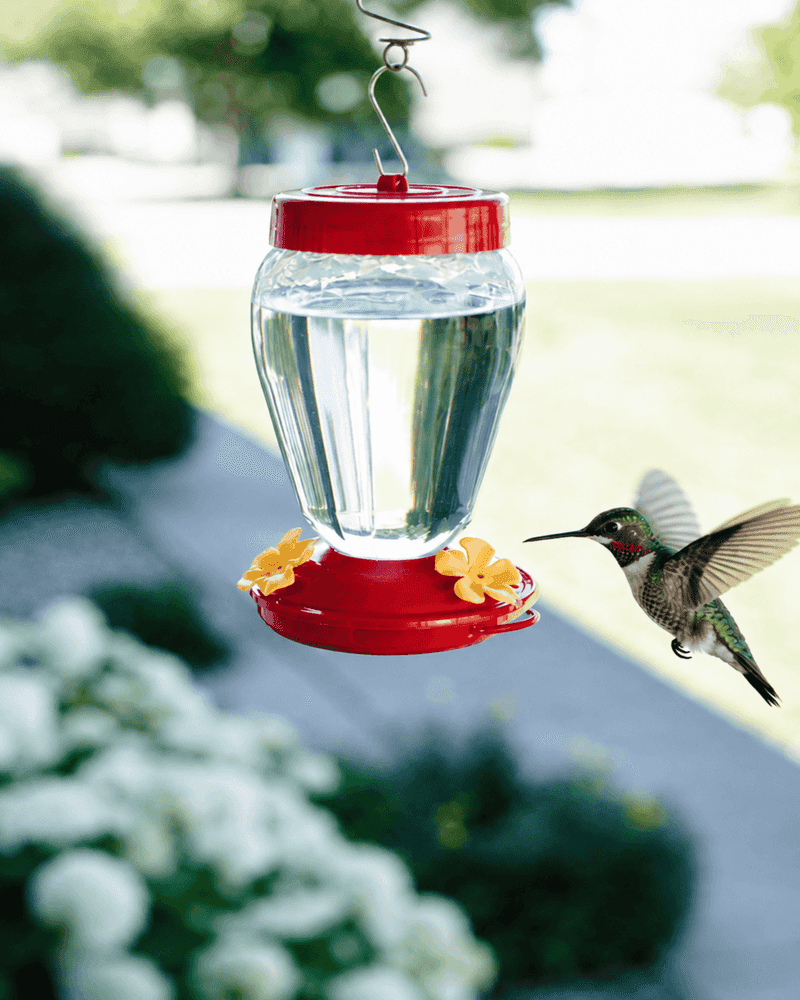
Feeders can be handy on cold or lean days, but flowers and habitat should come first. Think of a feeder as a side dish.
It adds sugar, while plants also supply nectar along with the insects and cover birds use.
If you put one out, mix one part refined white sugar with four parts water. Skip honey, artificial sweeteners, and red dye.
Audubon’s feeding FAQs advise against those additives, and plain sugar water is all a hummingbird needs.
Cleaning matters as much as the recipe. Wash the feeder every two to three days, and daily when it is particularly hot.
If the nectar looks cloudy or you see mold, clean it right away. Cool winter weather does not mean you can skip this.
Use a bottle brush and hot water, and rinse well. All About Birds notes that Anna’s will use feeders, so a clean one in a sheltered spot near plants may get noticed.
Only fill it with what the birds will drink in a few days. A small amount of fresh nectar is better than a full feeder that goes bad.
Keep the habitat useful during breeding season
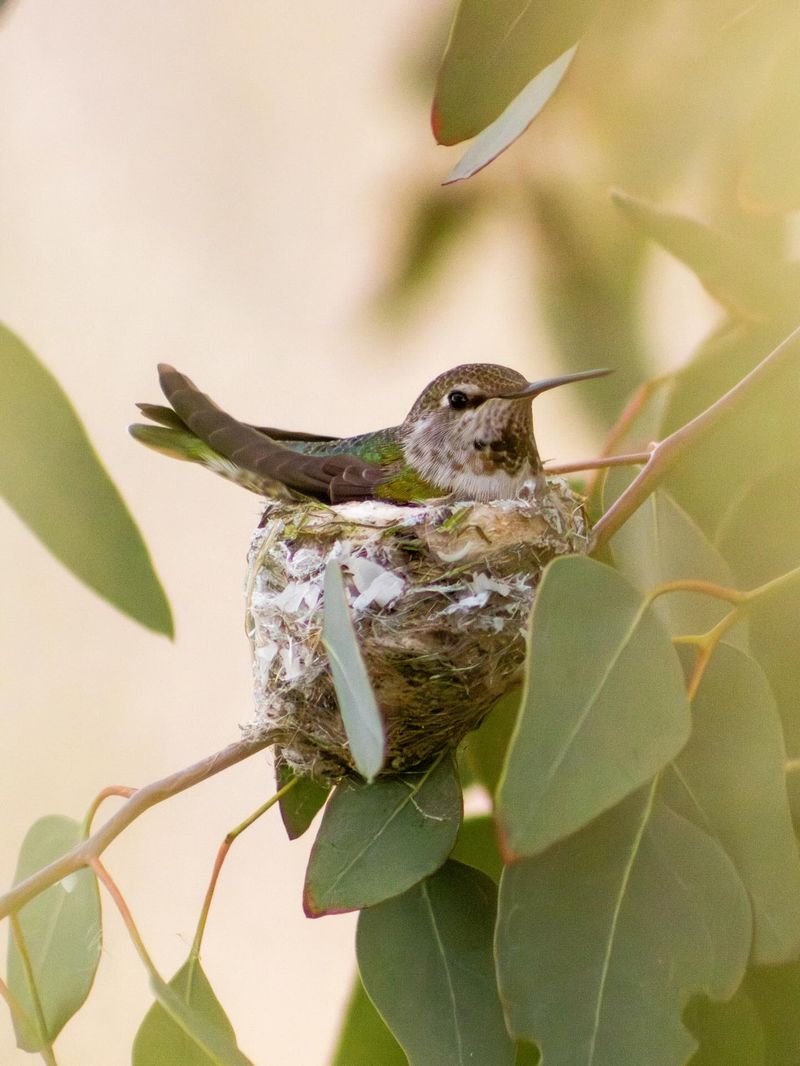
Winter is not a quiet season for Anna’s hummingbirds. According to the National Park Service, they typically breed from December through May, so a nest the size of a walnut could be tucked into a shrub while you are still wearing a jacket.
That is a good reason to keep protective shrubs and trees rather than trimming everything tidy in January. If you suspect a nest, hold off on heavy pruning nearby and give it some space.
You do not have to stop gardening, just avoid unnecessary disturbance close to that spot.
Everything in this article works together: flowers suited to your region, bloom times that overlap, cover, perches, water, and a clean feeder if you choose one. Each can help a yard serve hummingbirds, but none can make a bird visit or stay all winter.
Sometimes the best reward is a flash of magenta in the shrubs on a gray morning.