
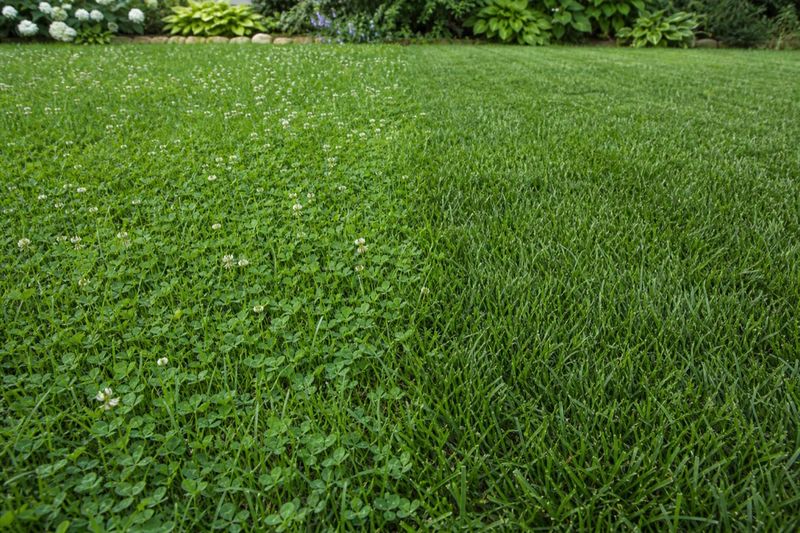
You pull the clover, spray it, and a few months later the same green patches are back. It can feel like your lawn is playing a joke on you.
Clover may be a clue about what is going on in your yard, but it is not a full answer by itself. Here is a sensible order of action for Florida, Texas, and other Southern lawns.
Is clover proof your soil is low in nitrogen?
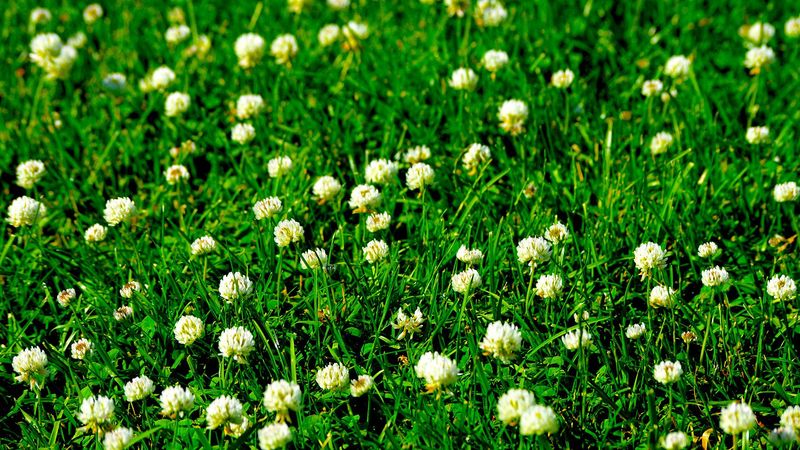
Clover is often found where nitrogen is low, but that does not make it a soil test. UF/IFAS lists clovers among weeds common in low-nitrogen soils, and it also cautions that many weeds tolerate a wide range of fertility levels.
One useful clue is color. UC IPM describes yellowing grass growing beside green clover as a sign that nitrogen fertility may be low.
If your grass looks pale while the clover looks lush, that pattern is worth noting.
Here is the twist. Clover is a legume, and legumes can pull nitrogen from the air with help from bacteria on their roots, as UF/IFAS nitrogen guidance explains.
So the clover is not asking for a nitrogen boost, and its presence does not show what your soil lacks.
Think of clover as a hint to investigate, not a diagnosis. Thin turf, shade, mowing habits, and watering can all play a part, and the next sections walk through them in order.
Thin grass gives clover room to return
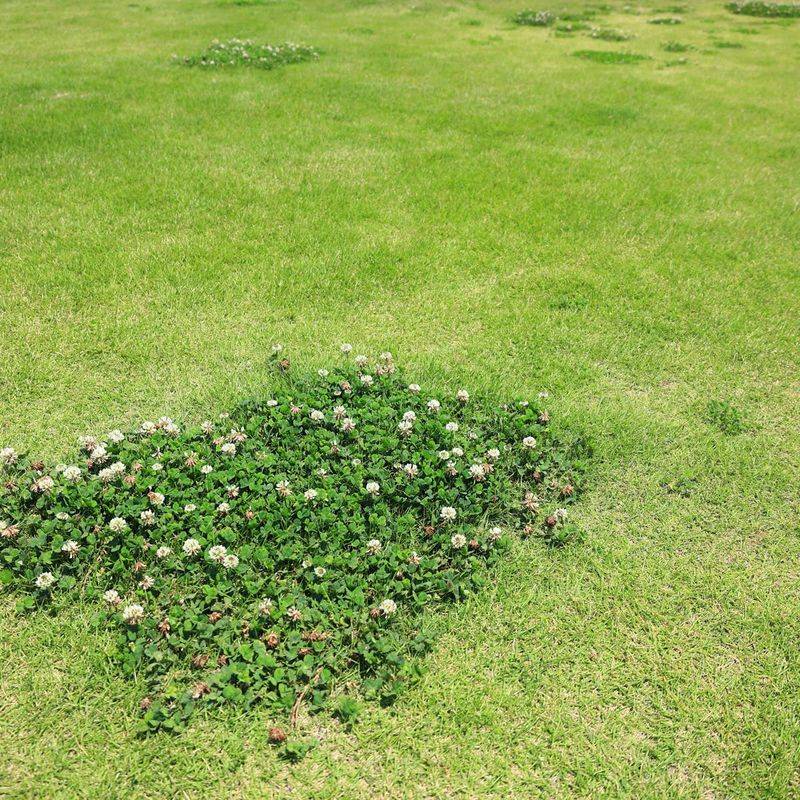
Weeds move into open space, and a thin lawn has plenty of it. UF/IFAS weed management guidance says weed encroachment often follows weak turf, open spots, or improper mowing, watering, and fertilizing.
Walk your yard and look at where the clover grows. Patches under trees may point to shade, which can weaken turf and make it more open to weeds, as noted in UF/IFAS research on weeds as indicators.
Patches along a sunny, compacted edge may tell a different story.
This is why pulling clover alone often disappoints. You remove the visible plants, but the bare or thin spot is still there, ready for the next seedling.
Recurring patches usually mean the conditions that favor them are still in place.
Treat the clover as a map of weak spots. Those spots tell you where to focus your effort first.
Start with a soil test, not a fertilizer guess
Before you buy a bag of fertilizer, find out what kind of grass you have. Bermudagrass, St. Augustinegrass, zoysia, centipedegrass, and others each have different needs.
Your county extension office can help you identify it.
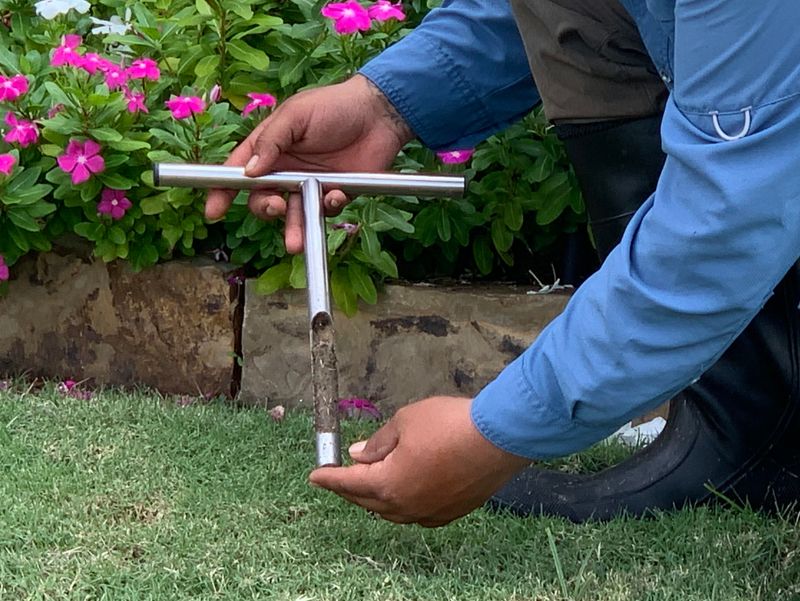
Next, send in a soil sample. UF/IFAS explains that routine soil tests help guide phosphorus and other nutrients, but most labs do not directly test nitrogen because it changes so quickly in soil.
Nitrogen recommendations come from research on how turf responds.
So the goal is not to test for nitrogen and add more because you saw clover. Use the full report and your local turf recommendations.
Texas A&M AgriLife Extension also recommends testing to determine nutrient needs.
Your soil lab or county extension office can explain the results. Clover alone should not decide what goes on your lawn.
Help grass fill the gaps
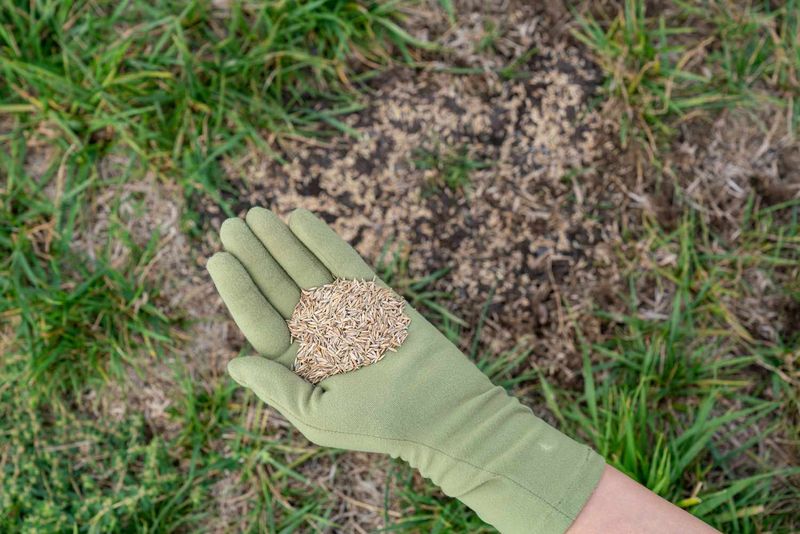
Once you know the grass and have a soil test underway, shift to everyday turf care. Dense grass leaves less room for clover seedlings, so the aim is to help your lawn thicken up.
Look at mowing first. Cutting too short is a common way to weaken turf, and UF/IFAS lists improper mowing among the practices that invite weeds.
Keep blades sharp and cut at a height that suits your grass.
Then check watering. Light, frequent sprinkling tends to give shallow roots, while deeper, less frequent watering when the lawn shows stress may support stronger turf.
Watch for dry spots caused by broken sprinkler heads.
Finally, ask whether the grass fits the site. In heavy shade, a sun-loving grass may keep struggling, and UF/IFAS notes that shade can leave turf more vulnerable to weeds.
A shade-tolerant grass, a groundcover, or mulch under trees may be more realistic than forcing turf to grow there.
Fertilizer and mowing must fit your grass and region
There is no single clover-fix fertilizer dose for Southern lawns. Rates and timing change with the turf species, your region, and how intensively you manage the yard.
Texas A&M’s warm-season recommendations vary quite a bit by grass type and management level. In Florida, UF/IFAS home lawn practices likewise vary by grass and Florida region.
A Houston schedule should not be copied in Pensacola, or the other way around.
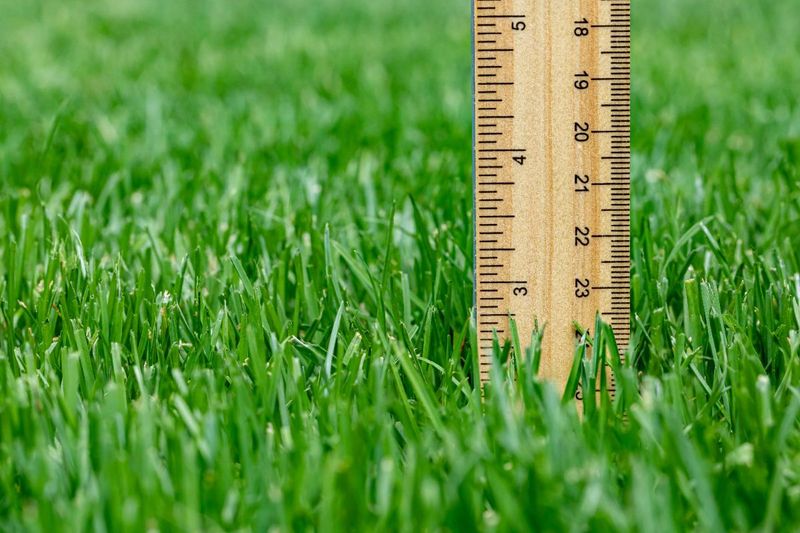
Mowing works the same way. As Florida-specific examples, UF/IFAS suggests mowing at the highest height suited to the grass, from about 1 to 2 inches for bermudagrass up to 3.5 to 4 inches for standard St. Augustinegrass.
Those are not universal settings, so check your own state’s guidance.
Protect water when you fertilize. Skip application ahead of heavy rain, sweep any granules off driveways and sidewalks back onto the grass, and keep product away from ditches, ponds, and canals.
Excess nutrients can reach waterways through runoff or leaching.
Why do clover patches return after pulling or spraying?
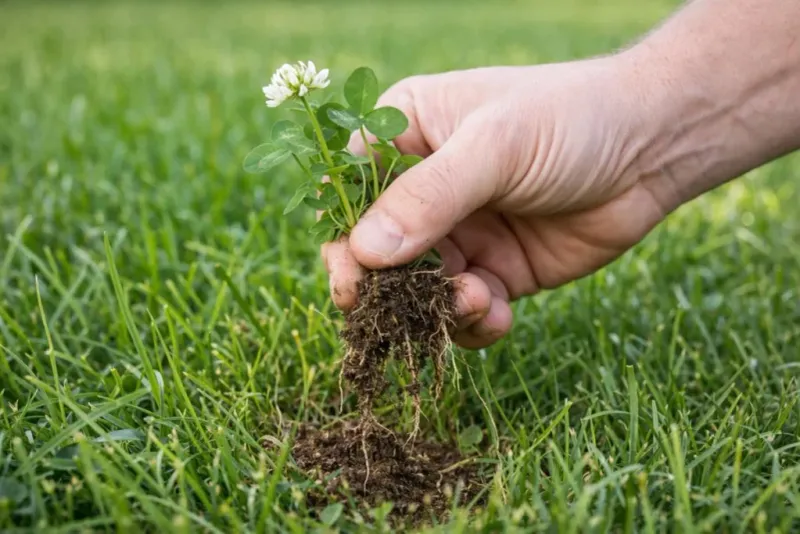
Pulling or spraying takes care of the clover you can see. It does not change the thin spot, shade, or mowing habit that let clover settle in, and seeds or runners may still be waiting in the soil.
Set expectations accordingly. UF/IFAS describes weed management as a systematic approach that can take multiple years, and repeat herbicide applications may be needed when the label calls for them.
No single pull, mow, or spray is likely to settle the matter for good.
If you choose a herbicide, read the current label before buying. Confirm it covers clover and also lists your specific lawn grass, since the wrong product can injure turf.
Follow the directions exactly, because mistakes can also harm nearby ornamentals.
Pair removal with the turf care from earlier sections. Removal clears space, and thicker grass is what may help keep it from refilling.
Some homeowners may choose to keep the clover
A yard does not have to be pure grass to be a good one. Leaving some clover is a valid choice, and a few patches do not automatically mean your lawn has failed.
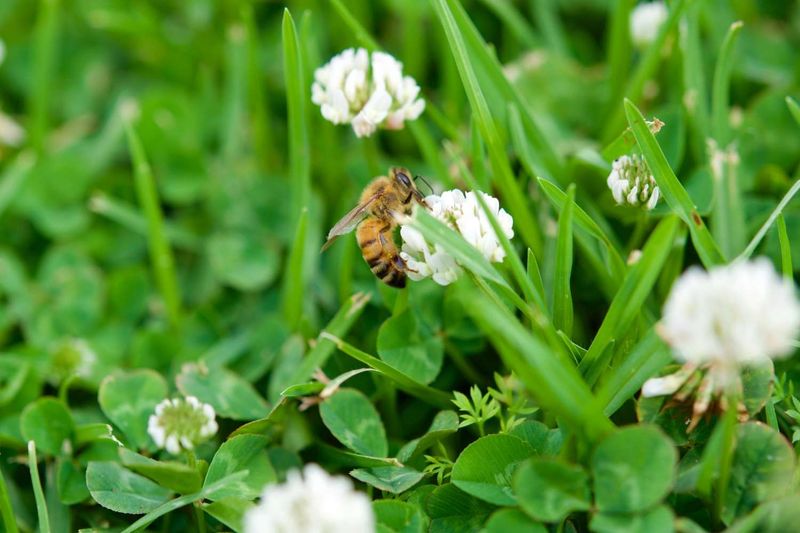
Clover flowers attract pollinators, and UF/IFAS Extension in St. Johns County notes this benefit. Removing every patch trades that resource away.
If you like the bees, you might leave clover in a back corner and keep the front lawn tidy.
Be careful with advice from cooler climates. In Florida, white clover often behaves as a cool-season annual and may die back in heat, so a lush clover lawn up north is not a Florida guarantee.
Expect it to look different through a long Southern summer.
Clover is a clue, and what you do with it is up to you.