
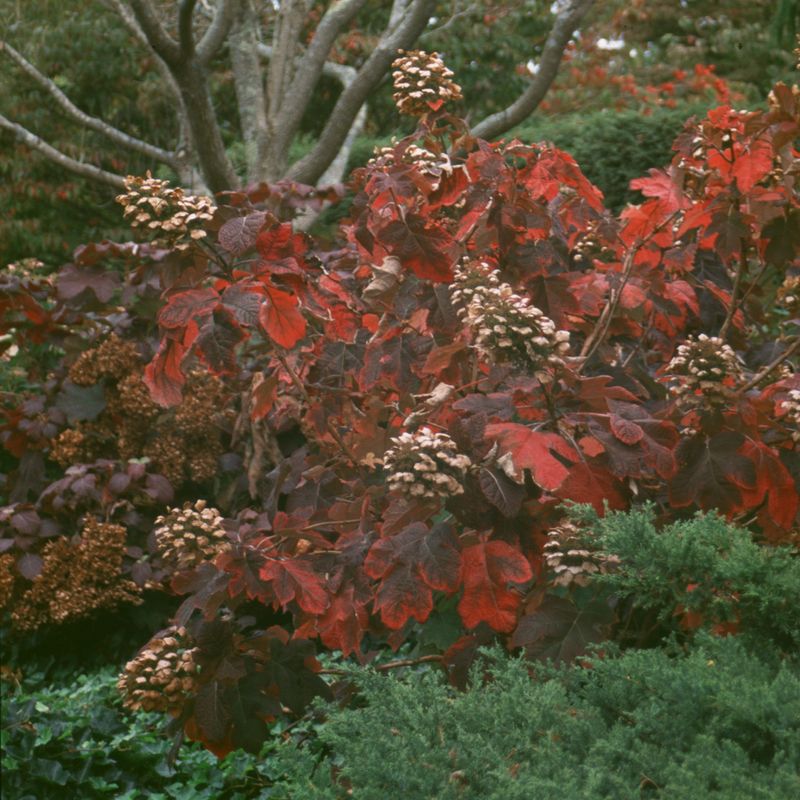
Your oakleaf hydrangea is already planning next summer’s flowers, even as its leaves turn wine red this fall. The buds that will open into those big cone-shaped blooms are sitting on the stems right now.
One simple fall habit can protect those buds through a North Carolina winter. Get it right, and next June your shrub can put on its biggest show yet.
1. Put Away the Pruners and Leave the Old Stems Standing
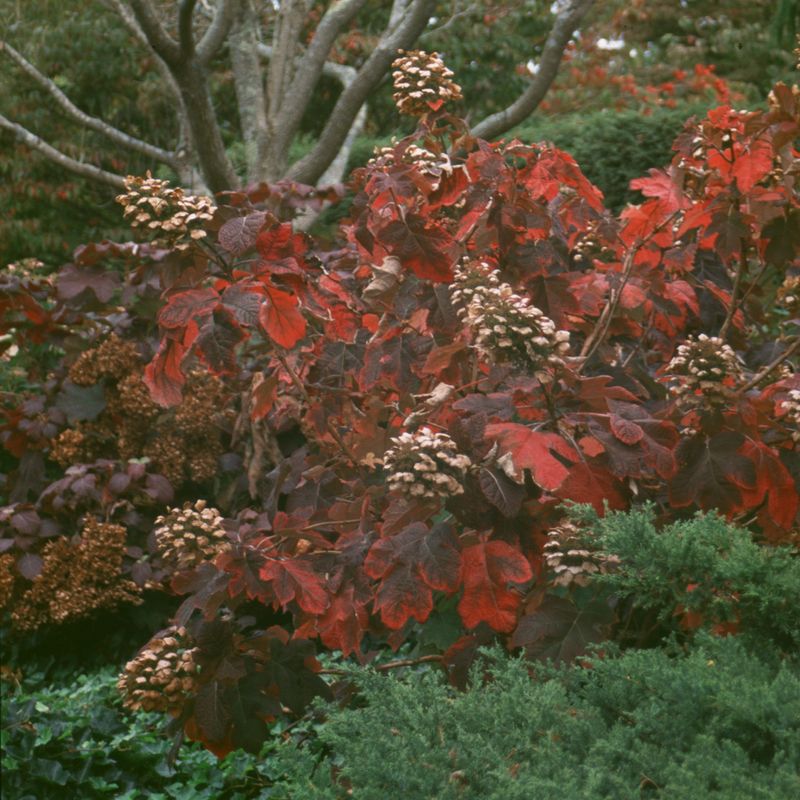
Every November, a well-meaning gardener somewhere in Raleigh grabs the loppers and gives an oakleaf hydrangea a neat haircut. Come June, that same shrub is all leaves and no flowers.
The culprit was not the weather or the soil, it was the timing of that cut.
Oakleaf hydrangea, a true Southeastern native that grows wild along NC stream banks, blooms on old wood. That means the flower buds for next summer form on this year’s stems in late summer and early fall.
Prune now, and you are snipping off next year’s blooms before they ever get a chance.
So the one thing your shrub needs before winter is simple: leave it alone. Let the stems, buds, and even the papery dried flower heads stay put.
Those old blooms can add winter interest, and the peeling cinnamon bark looks great against bare winter beds.
A couple of light extras may help the buds come through healthy. Spread 2 to 3 inches of pine straw or shredded leaves over the root zone, keeping it a few inches off the stems.
If fall turns dry, a deep soak every week or two can reduce stress going into cold weather, especially in sandy coastal plain soils.
Mountain gardeners facing harder freezes might wrap young plants loosely with burlap during cold snaps. Need to shape the shrub?
Wait until right after it finishes blooming next summer, then trim only what you must. Bonus: leaving stems standing may also give overwintering native insects and birds a bit of shelter, which is a nice win for your backyard wildlife.