
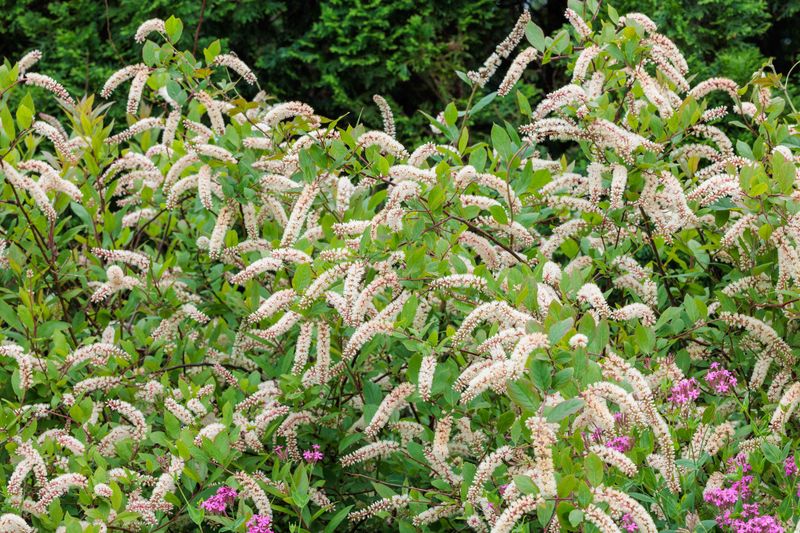
Every yard has a spot you wish nobody could see, like the humming AC unit or the row of trash cans by the driveway. In North Carolina, you can cover those eyesores with native shrubs that grow thick, handle our heat and humidity, and come back year after year.
Many of them also feed birds, bees, and butterflies, so your fix for an ugly corner becomes a small wildlife haven. Here are nine tough, local shrubs that do the hiding for you once they settle in.
1. Wax Myrtle
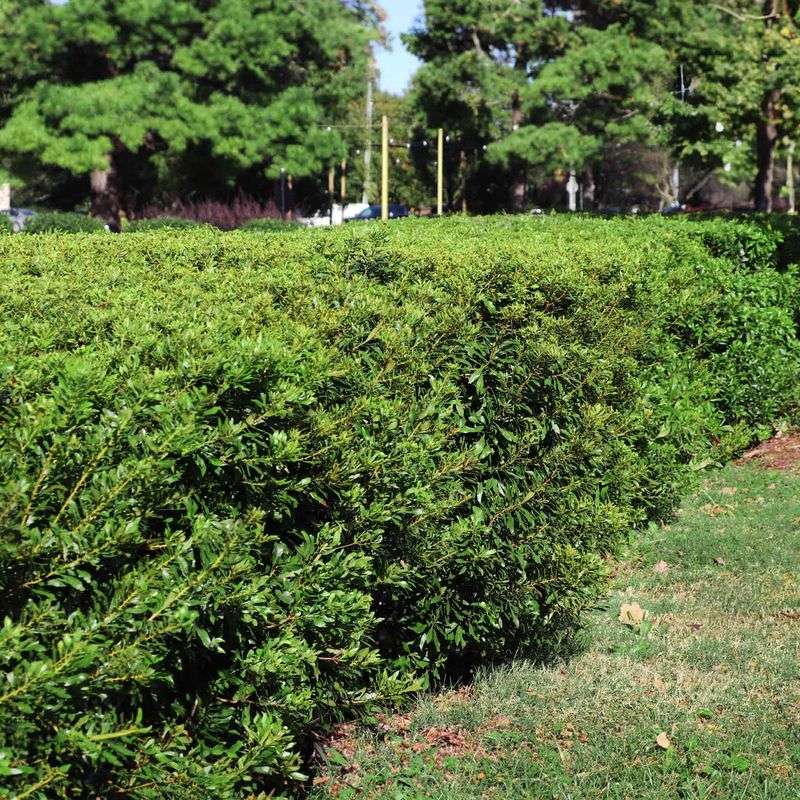
Coastal homeowners have leaned on wax myrtle for generations, and for good reason. It grows fast, stays green all winter, and shrugs off sandy soil, salt spray, and Piedmont clay alike.
Plant a few about 4 to 5 feet apart and give them a season or two. You will likely end up with a soft, leafy wall that blocks the view of your condenser without choking its airflow, as long as you leave a couple of feet of open space around the unit.
Female plants produce waxy gray berries that yellow-rumped warblers and bluebirds may eat through winter. The crushed leaves also have a spicy scent, and some gardeners believe it can help discourage bugs near patios, though it is no replacement for repellent.
2. Inkberry Holly
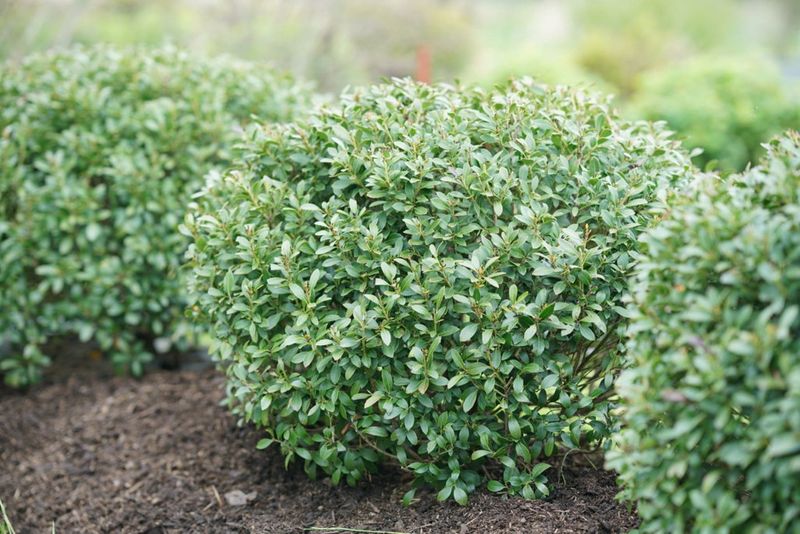
Think of inkberry as the tidy cousin of the boxwood, minus the disease headaches. Its small, glossy leaves stay dark green all year, which makes it a natural fit for blocking trash bins along a side path.
Inkberry handles wet spots better than most shrubs, so that soggy corner by the downspout is fair game. Compact types like Shamrock stay around 3 to 4 feet, which is often just right for hiding rolling carts.
Bees work the tiny spring flowers hard, and the black berries can feed birds in late winter. Swapping out a sickly row of imported boxwoods for inkberry is one of the easiest native upgrades you can make this year.
3. Yaupon Holly
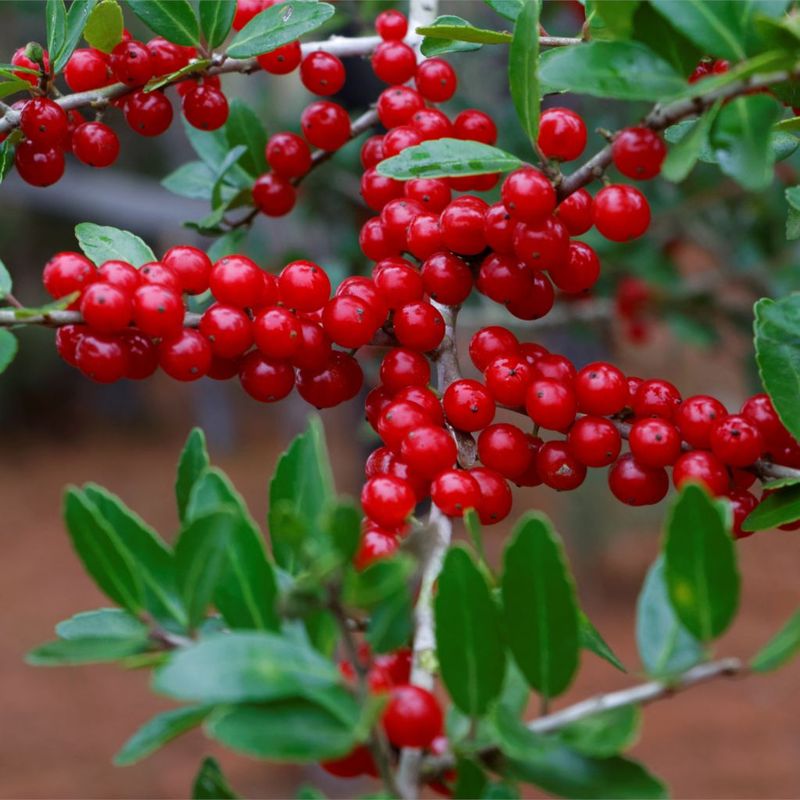
Here is a shrub so tough it grows wild on Outer Banks dunes. Yaupon holly takes drought, heat, salt, and poor soil, then keeps right on growing.
Its tiny evergreen leaves pack together densely, especially if you give it a light shearing once a year. Upright forms can make a tall screen, while dwarf types stay low and rounded.
Fun fact: yaupon is the only native North American plant with caffeine, and Indigenous people brewed a tea from it long before coffee arrived. Female plants also hold bright red berries that cedar waxwings and mockingbirds may feast on.
4. Virginia Sweetspire
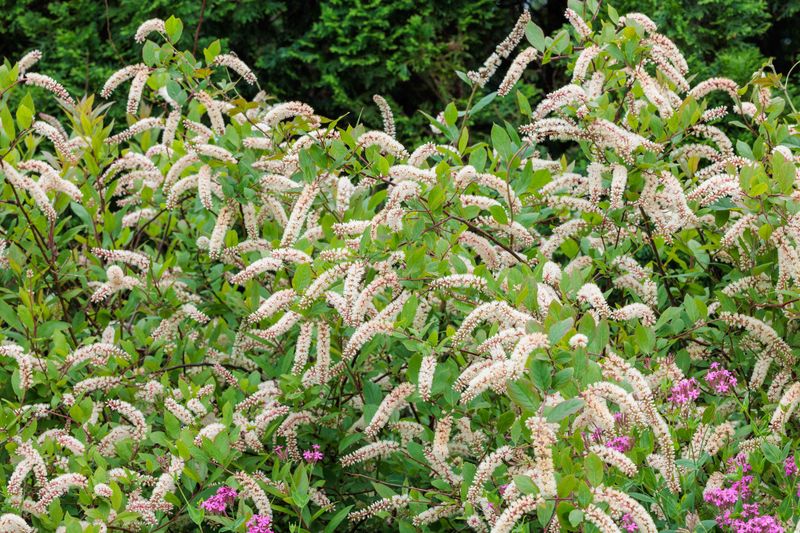
Picture white flower tassels dangling over your AC unit in late spring, buzzing with bees. That is what Virginia sweetspire delivers, and in fall the leaves turn ruby red.
It spreads slowly by suckers, filling in gaps on its own over time. That habit makes it a good pick for a low, informal mass around utilities rather than a clipped hedge.
Sweetspire is semi-evergreen in warmer parts of the state, so expect some leaf drop in mountain winters. It loves moist soil and handles part shade, making it handy for the north side of the house.
5. Southern Bayberry Dwarf Form
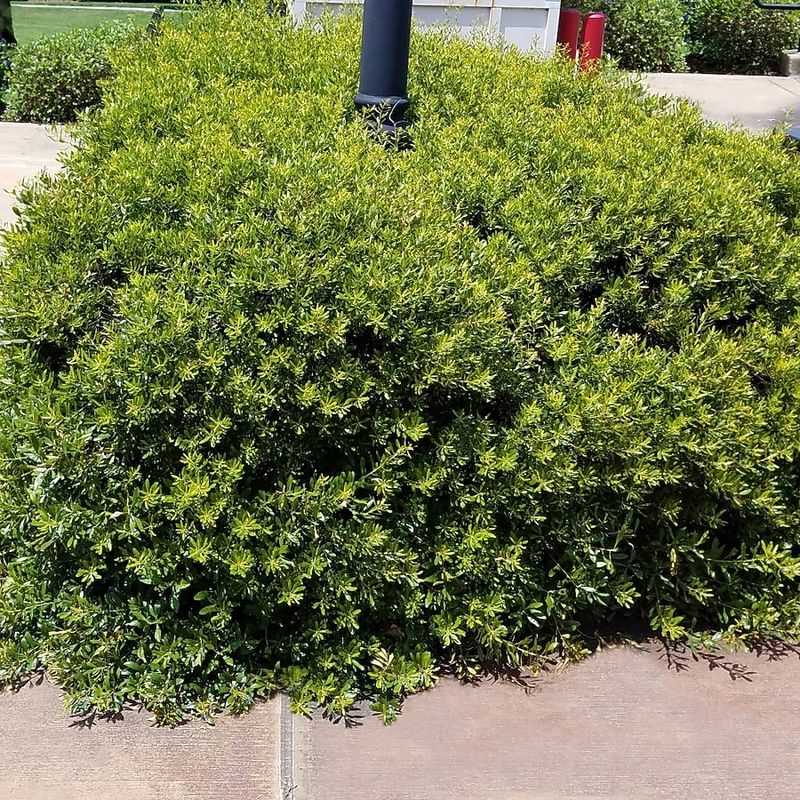
Not every eyesore needs a tall wall. Sometimes you just need something knee-high and thick to soften a heat pump pad or a recycling bin.
Dwarf wax myrtle, sold as Myrica cerifera var. pumila, stays around 2 to 4 feet and spreads into a neat mound. It keeps the same leafy scent and evergreen color as its big sibling without overpowering a small bed.
Plant it in full sun and water it the first summer. After that, rain usually covers it across most of North Carolina, which keeps this a set-it-and-leave-it choice.
6. Oakleaf Hydrangea
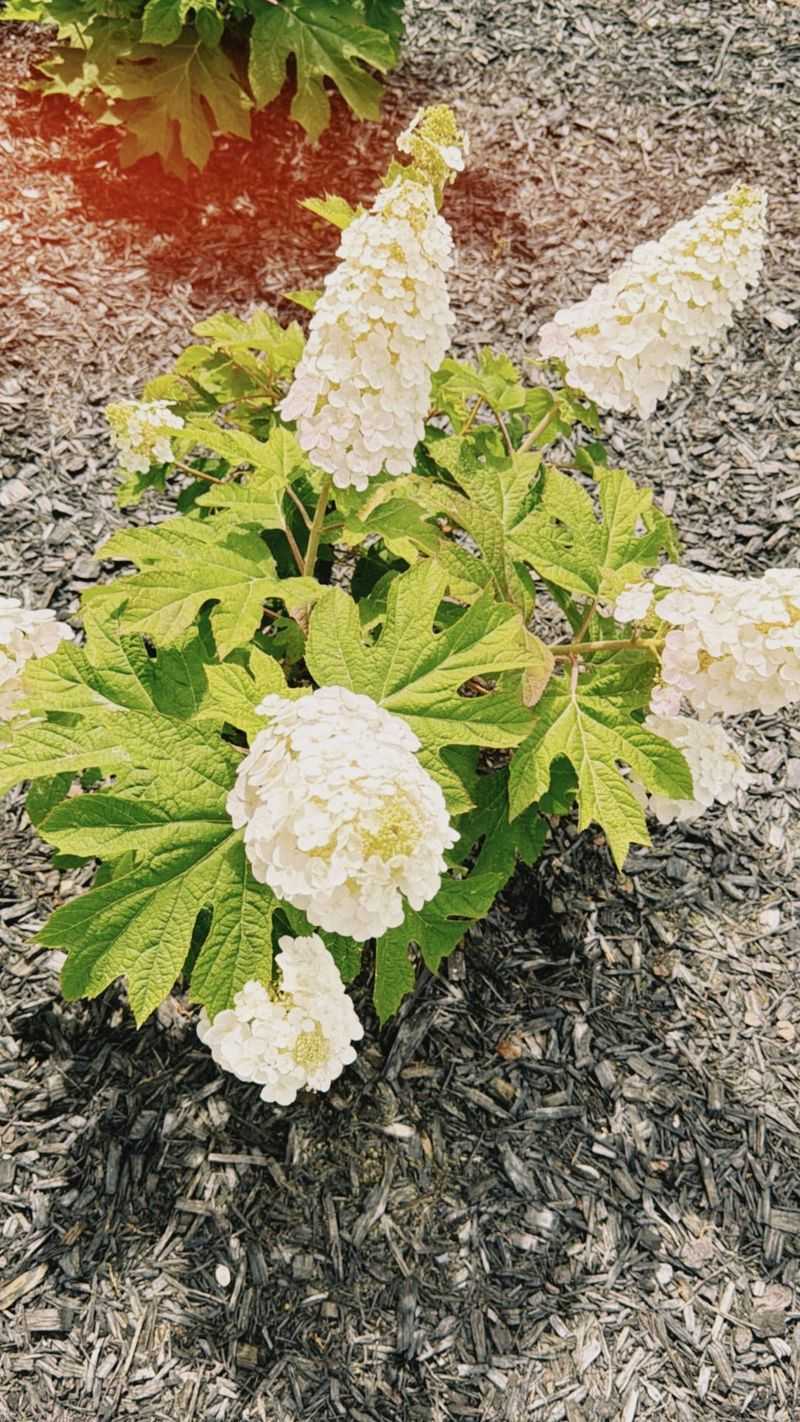
Shady side yards are where trash cans tend to live, and oakleaf hydrangea thrives right there. Big, oak-shaped leaves form a bold screen from spring to fall.
Huge cone-shaped white blooms appear in early summer and age to pink. In autumn the foliage turns burgundy, and peeling cinnamon bark adds winter interest after the leaves drop.
Because it is deciduous, it works best where summer screening matters most, which is when cans smell and you are outside the most. Pollinators visit the flowers, and the shrub is a true Southeastern native.
7. Florida Anise
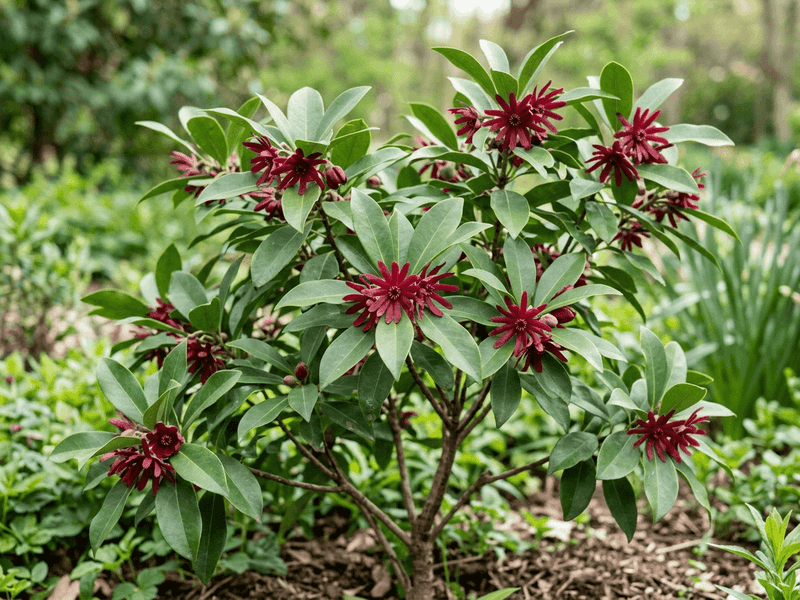
Deer tend to walk right past Florida anise, and that alone wins fans in rural Carolina neighborhoods. The leathery leaves smell like licorice when bruised, which may be why browsers avoid them.
Native to the Gulf Coast and hardy in much of eastern and central North Carolina, it can reach 6 to 10 feet with a full, rounded shape. That size is ideal for hiding a whole utility corner or a pair of large bins.
Give it shade or part sun and steady moisture. Odd maroon star-shaped flowers show up in spring, a fun conversation piece for curious visitors.
8. American Beautyberry
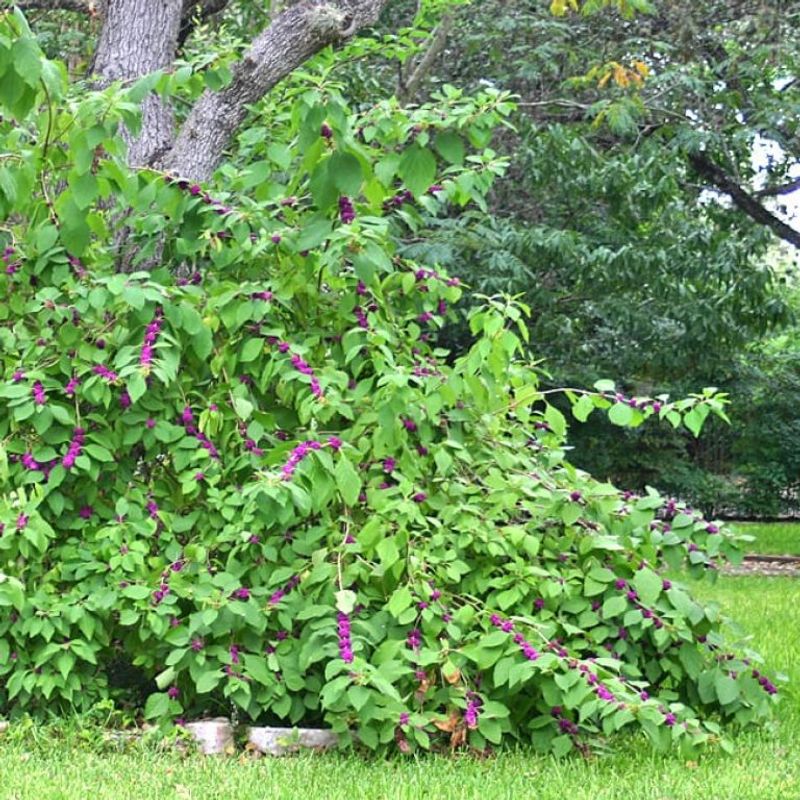
Folks in the South have rubbed crushed beautyberry leaves on their skin for years to fend off mosquitoes. Researchers have found compounds in the leaves that may help repel biting insects, though a single shrub will not clear your yard.
As a screen, beautyberry grows fast into an arching shrub about 5 feet tall. Clusters of neon purple berries pop in fall, and birds like catbirds and robins may strip them clean.
Cut it back hard in late winter for a fuller shape. It drops its leaves, so pair it with an evergreen if you need cover in January.
9. Mountain Laurel
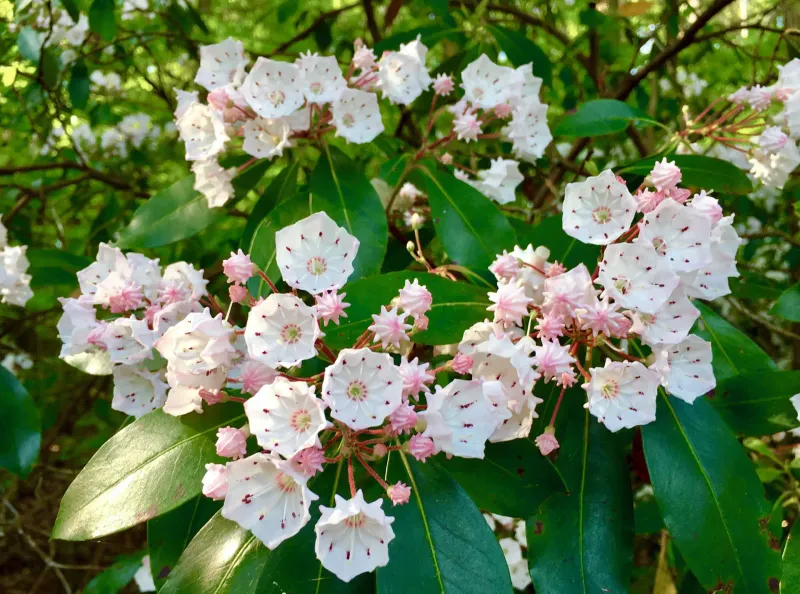
Up in the Blue Ridge, mountain laurel paints the hillsides pink every May. Bring that same show home and let it guard the AC unit on a shady side of the house.
Its glossy evergreen leaves give year-round cover, and cultivars stay between 3 and 8 feet. It wants acidic, well-drained soil, so skip spots with heavy, soggy clay.
Keep in mind every part is toxic if eaten, so plant it away from curious pets. Bumblebees love the flowers, which spring their pollen like tiny catapults when touched.