
A hedge can do more than hide the neighbor’s driveway. Florida has native shrubs that bring flowers, birds, and edible fruit to the same space.
The trick is choosing one that fits your soil, winter temperatures, and room to grow. These seven options offer a better-looking border, with something for your kitchen as well as the wildlife.
1. Cocoplum
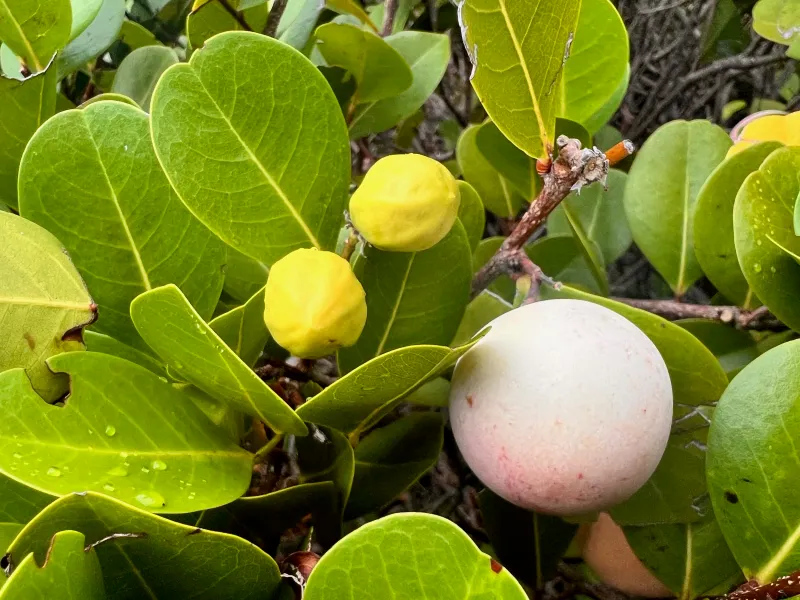
Glossy leaves and plum-shaped fruit make a strong case for retiring a plain green hedge. Cocoplum (Chrysobalanus icaco) gives South Florida yards a dense evergreen border, with reddish new growth on some forms and fruit that ripens to white, pink, or purple.
The flesh is edible, though its mild flavor and sometimes cottony texture make it more of a casual garden snack than a grocery-store plum. Use ripe fruit for preserves if you enjoy experimenting, and remove the large stone before eating.
Plant it in sun or partial shade, allowing roughly 6 to 10 feet of height for many landscape forms unless you plan to prune. Growth habit varies, so ask the nursery whether you are buying a low coastal form or a taller inland selection.
Established plants handle sandy soil and periods of drought, but young shrubs still need regular watering. Coastal forms are especially useful where salt exposure limits other choices.
For fruit, skip the constant flat-top haircut. Light, selective pruning leaves more flowering wood intact and creates a softer screen; in colder inland or northern Florida locations, choose a more cold-tolerant species instead.
2. Simpson’s Stopper
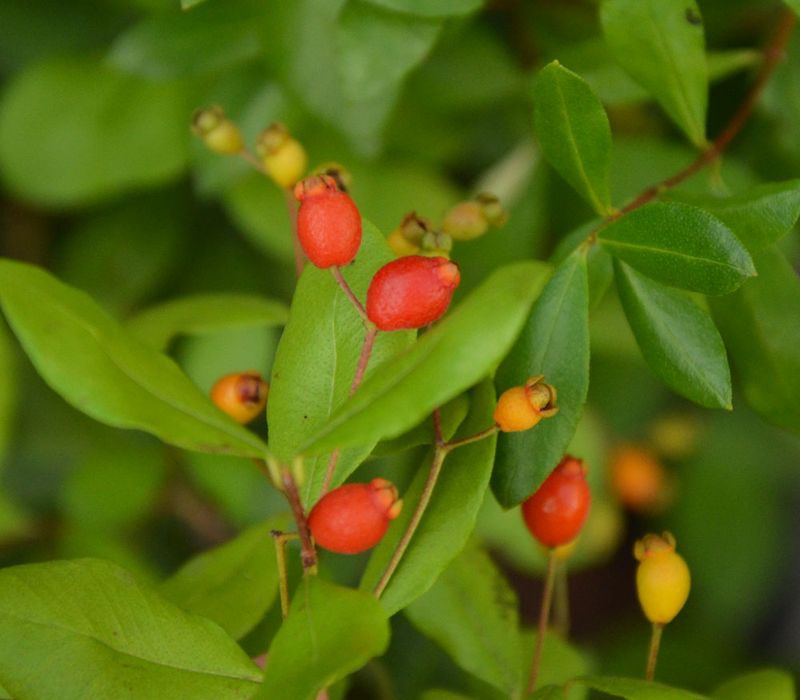
A hedge that smells good when it blooms earns its place near the front door. Simpson’s stopper (Myrcianthes fragrans) combines fragrant white flowers, fine-textured evergreen foliage, and orange-red fruit without the bulky look of many common screening plants.
The ripe fruit has edible flesh surrounding seeds that should be discarded. Expect small harvests and variable flavor rather than bowls of dessert berries, especially when birds discover the crop first.
Give this shrub sun to partial shade and well-drained soil. It suits much of Central and South Florida, while gardeners near its colder limits should check local UF/IFAS Extension guidance before planting an exposed hedge.
Left alone, it can become a large shrub or small tree, often reaching 10 to 20 feet. Select a compact cultivar if space is tight, and confirm its mature size instead of relying on the size of the nursery pot.
Its best landscape trick is flexibility: keep it leafy to the ground for privacy, or expose a few trunks to show the attractive bark. Prune selectively after fruiting when practical, rather than shearing away every flower and future snack.
3. Darrow’s Blueberry
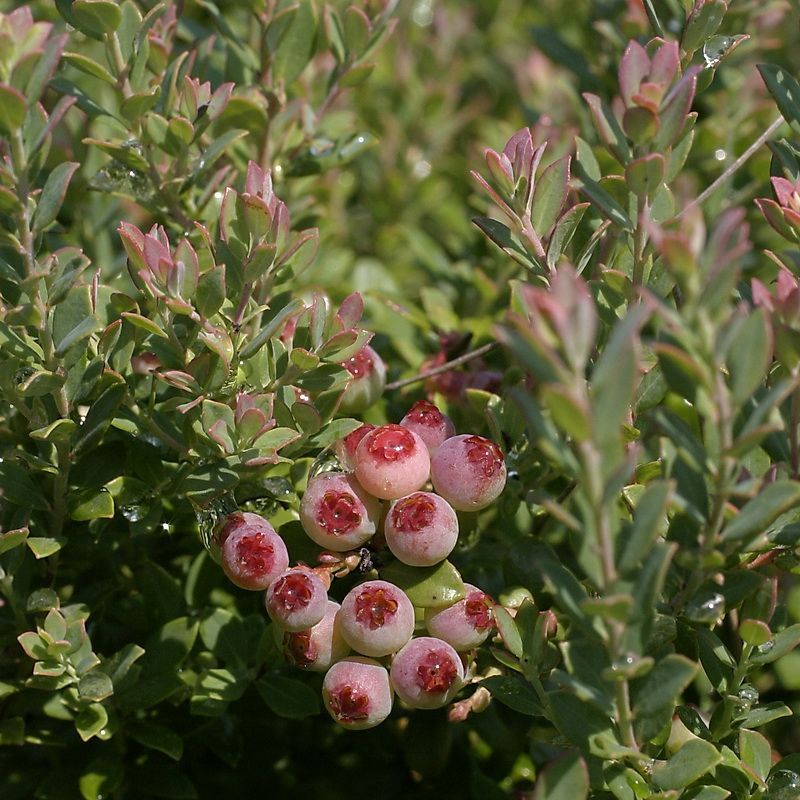
Not every border needs to block a window. For a low planting along a walkway or beneath taller shrubs, Darrow’s blueberry (Vaccinium darrowii) brings blue-green foliage, little spring flowers, and genuinely useful edible berries.
This Florida native generally stays around 2 to 3 feet tall, although size varies with growing conditions. Its small berries ripen in late spring or summer and can be eaten fresh or added to pancakes, assuming the birds leave you enough.
Choose a sunny spot with acidic, well-drained soil. Sandy ground can suit it well, but alkaline fill, limestone-heavy soil, or runoff from concrete can make the site a poor match.
Before buying a whole row, test the soil and ask your county Extension office whether your location fits this species. It is especially useful in North and Central Florida gardens with suitable acidity.
Plant several shrubs for a fuller border and better opportunities for pollination. Mulch with pine bark, water during establishment, and avoid treating it like a thirsty lawn shrub.
Keep pruning light. The natural rounded form is part of the appeal, and repeated shearing sacrifices the flowering growth that produces your harvest.
4. American Beautyberry
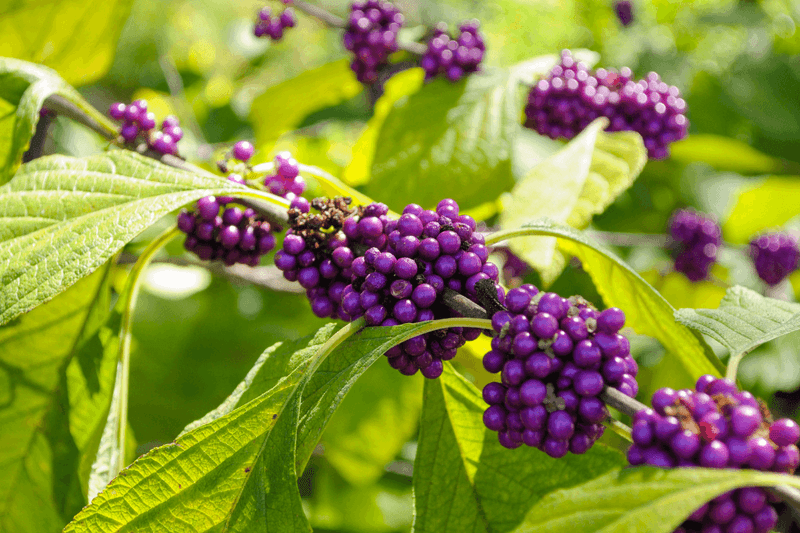
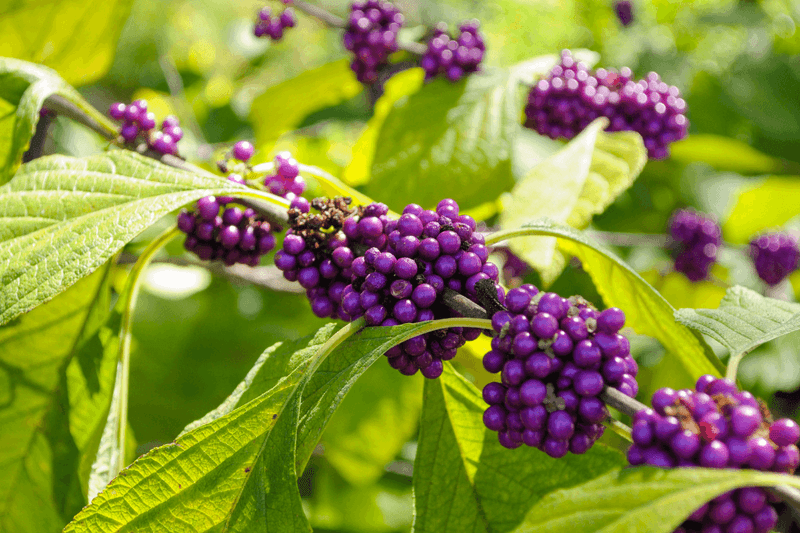
Those bright purple berry clusters look almost too bold to be real. American beautyberry (Callicarpa americana) turns an ordinary woodland edge into a colorful fall border, with arching stems that look best when they have room to spread.
The ripe berries are edible, but their flavor is often bland or mildly astringent. Jelly is usually a more appealing use than eating them by the handful; follow a reliable food-preservation recipe rather than inventing shelf-stable canning instructions.
Only harvest from a positively identified plant that has not been sprayed with products unsuitable for food crops. Try a small amount first, since individual food sensitivities are possible.
Across much of Florida, beautyberry grows well in sun or partial shade and reaches about 4 to 8 feet tall and wide. More sun often brings heavier fruiting, while light shade helps it blend into a leafy garden.
Unlike an evergreen hedge, it can lose its leaves during winter. Use it where seasonal color matters more than year-round privacy.
If the shrub becomes lanky, cut it back in late winter before new growth begins. Flowers and fruit develop on new growth, and birds benefit when you leave some berries unpicked.
5. Chickasaw Plum
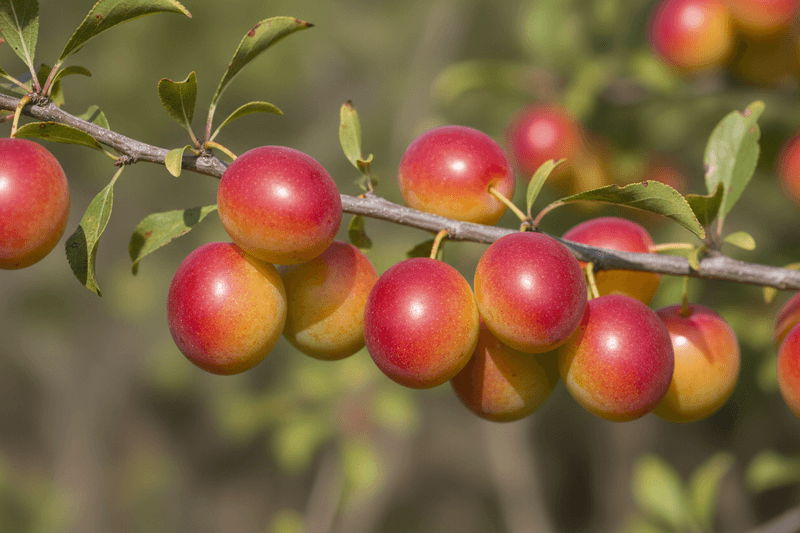
For a roomy property line, a fruiting thicket can beat a ruler-straight hedge. Chickasaw plum (Prunus angustifolia) offers a cloud of white flowers before the leaves emerge, followed by small yellow-to-red plums that make excellent jelly.
Eat only the ripe flesh, and discard the pits. Like other plums, the seeds and other plant parts are not foods; the tart fruit is often more enjoyable cooked than eaten straight from the branch.
This native is best suited to North and Central Florida, especially sunny sites with well-drained sandy soil. It commonly grows 6 to 15 feet tall and spreads through root suckers, forming colonies over time.
That spreading habit is the reason to choose it, or the reason to pass. A wide back boundary can accommodate a thicket, but a narrow foundation bed beside a walkway usually cannot.
Plant more than one genetically distinct seed-grown shrub to improve the chances of good pollination. Several stems from the same spreading plant do not necessarily provide that diversity.
Remove unwanted suckers and damaged branches as needed, and expect seasonal leaf loss. The payoff is spring bloom, summer fruit, and dense cover for wildlife rather than a tidy evergreen wall.
6. Sea Grape
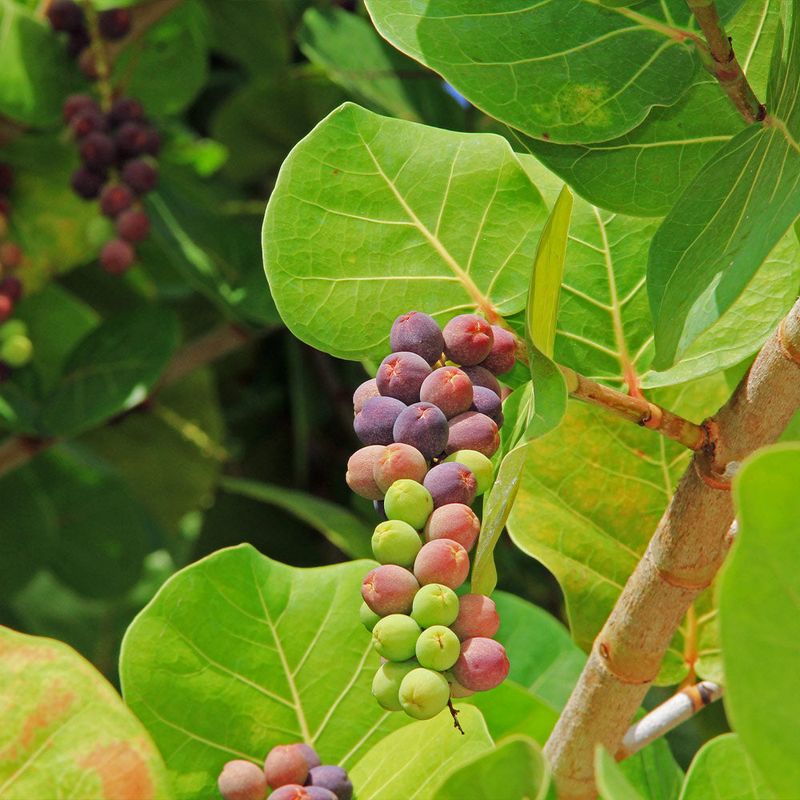
Salt spray changes the planting list fast. Along warm Florida coasts, sea grape (Coccoloba uvifera) brings dinner-plate-shaped leaves and a bold, tropical screen where many ordinary hedge plants struggle.
Its ripe purple fruit has edible flesh around a large seed, with a sweet-tart flavor often used in jelly. Pick fruit only when fully ripe, wash it well, and remove the seeds before eating.
There is one buying detail that matters more than the nursery label’s photo: male and female flowers occur on separate plants. A fruiting female needs pollen from a nearby male, so ask the grower about plant sex and pollination before expecting a harvest.
Sea grape belongs in frost-free or nearly frost-free coastal Central and South Florida locations. Give it full sun, good drainage, and generous space; an unpruned plant can become a substantial tree rather than a modest shrub.
For a broad hedge, train it early with selective cuts instead of trying to force mature plants into a tiny box. Heavy pruning reduces the flowers and fruit that make it useful.
Avoid planting where huge leaves or fallen fruit will crowd a narrow walkway. Near protected dunes or beaches, check local rules before trimming existing sea grapes.
7. Sparkleberry
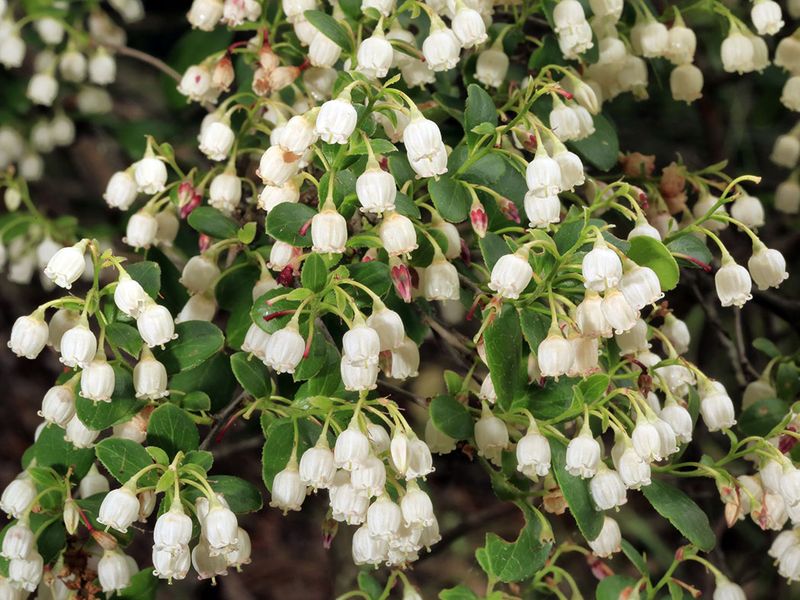
An awkward sunny-to-shady corner does not always need a dense green wall. Sparkleberry (Vaccinium arboreum) offers a looser silhouette, small bell-shaped flowers, attractive bark, and dark berries that birds eagerly seek out.
The ripe fruit is edible, but set your expectations honestly: these berries can be dry, seedy, and less flavorful than cultivated blueberries. Think of them as an occasional nibble or an experimental cooked ingredient, not the main crop for your breakfast bowl.
Its stronger selling point is landscape character. Sparkleberry can grow as a large shrub or small tree, often 10 to 20 feet tall, making it useful for an informal boundary or a layered woodland planting.
In North and Central Florida, choose well-drained ground with sun or partial shade. It handles dry conditions once established and tolerates a wider range of soil conditions than many other native blueberries, though that does not make every alkaline site suitable.
Allow room for its irregular branches rather than clipping it into a tight cube. Remove crossing or damaged growth, and leave the rest of the shape relaxed.
Choose this one when flowers, bark, and wildlife value matter as much as the edible harvest. For larger, tastier picking, Darrow’s blueberry is the better choice.