
That muddy strip beside your driveway can do more than collect puddles and weeds. With the right Florida native plants, it can become a rain garden that catches runoff and brings color, butterflies, and birds closer to home.
The trick is matching each plant to how wet the ground stays, from the lowest pocket to the drier edges. These seven choices give you a useful starting plan.
1. Blue Flag Iris
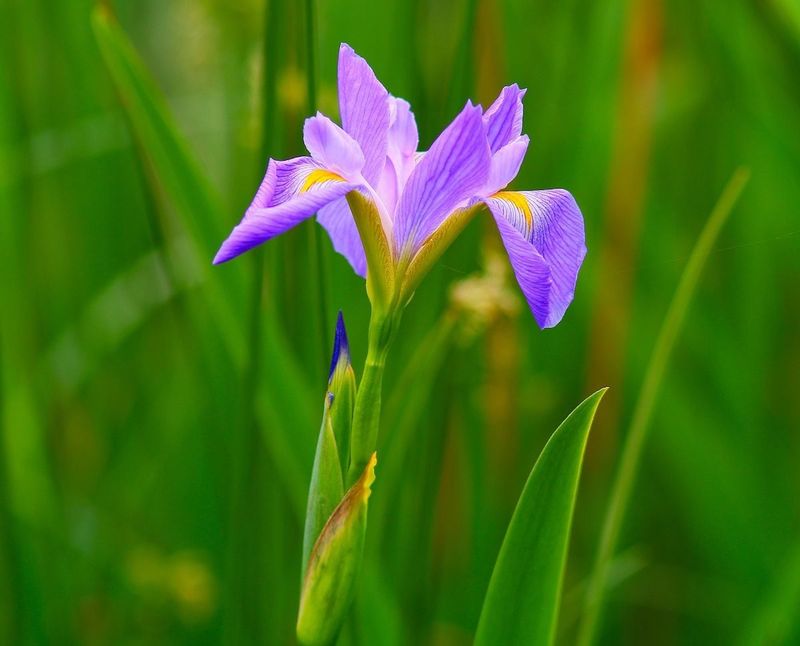
A patch of blue-violet flowers can make a muddy driveway edge look like a planned garden almost overnight. Blue flag iris, Iris virginica, brings that polished look with upright, sword-shaped leaves and spring flowers that stand above the foliage.
Place it in the lower part of a rain garden where soil stays moist and briefly floods after storms. Full sun usually gives the best flowering, though partial shade can work, especially where afternoon heat is strong.
Expect plants roughly 2 to 3 feet tall, and leave about 18 to 24 inches between clumps. Plant several together for a clear ribbon of color rather than scattering single plants along the pavement.
Before digging, check how quickly the strip drains: a typical rain garden should empty within about 24 to 48 hours. Persistent puddles need a drainage assessment, not just more plants, and runoff should stay away from your foundation.
Buy nursery-grown plants labeled Iris virginica, since other irises may need different conditions. Divide crowded clumps when needed, and keep the plants out of foot traffic because iris parts are toxic if eaten.
2. Soft Rush
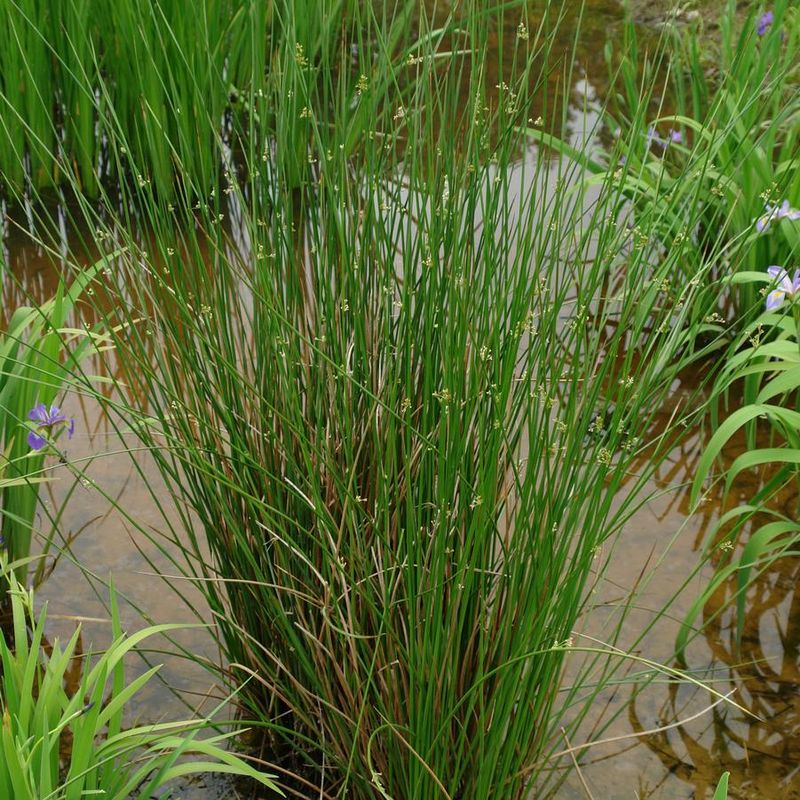
Flowers get the attention, but a rain garden also needs plants that hold the design together between blooms. Soft rush, Juncus effusus, supplies a steady green backdrop with slim, upright stems and a clean, fountainlike shape.
Use it in the wettest planting zone, where rainwater collects before soaking into the ground. It tolerates saturated soil and shallow water better than many flowering perennials, making it useful around the bottom of a shallow basin.
Give soft rush sun to partial shade and room for clumps that commonly reach about 2 to 4 feet tall. Spacing plants roughly 2 feet apart creates a repeated pattern without immediately crowding neighboring flowers.
The small brown flower clusters are subtle, so its main job is texture rather than bright color. Pair it with blue flag iris or scarlet hibiscus to make their broader leaves and flowers stand out.
Remove dead stems when they become distracting, and divide oversized clumps as needed. Ask a native nursery for locally appropriate stock, and keep loose mulch out of the water-entry point so storm runoff does not wash it onto the driveway.
3. Swamp Milkweed
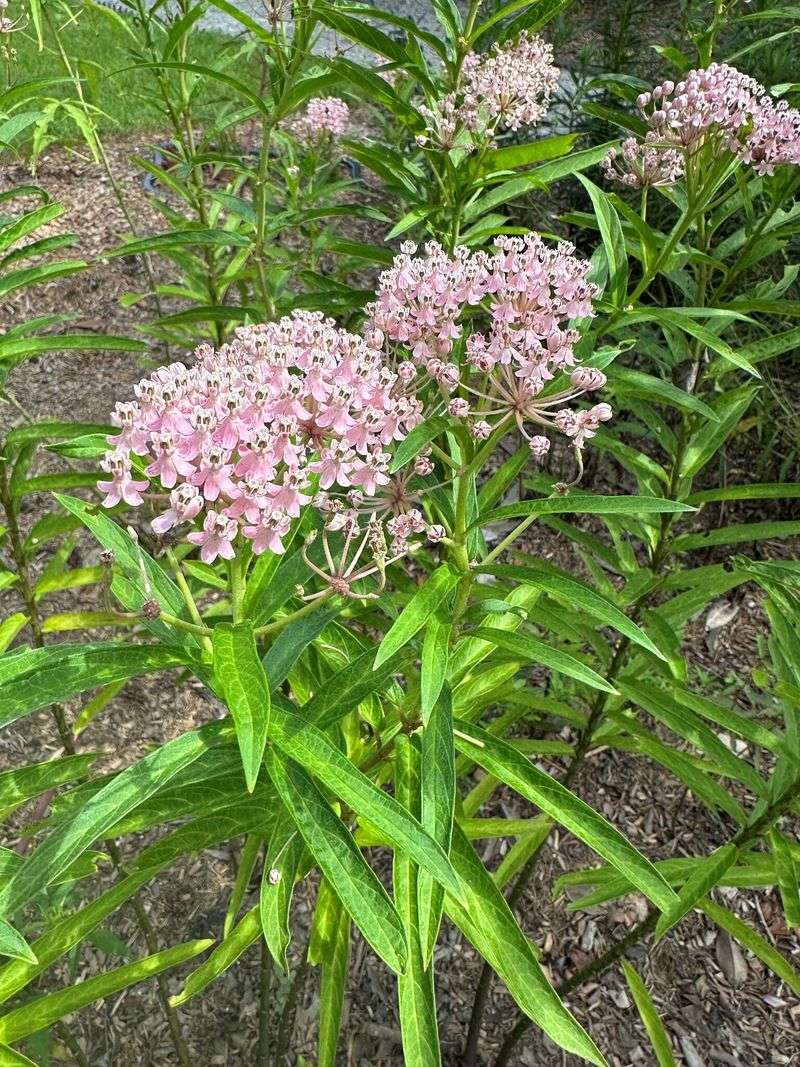
For a wetter flower bed with a butterfly payoff, pink flower clusters are only half the story. Swamp milkweed, Asclepias incarnata, also provides leaves that monarch caterpillars can eat, giving this plant a different role from nectar-only flowers.
It is best treated as a regional choice rather than a statewide default. Ask your county Extension office or a Florida native nursery whether locally sourced swamp milkweed suits your area, especially outside North and Central Florida.
Choose a sunny spot with consistently moist soil, usually on the lower side of the basin rather than its driest rim. Plants often grow about 3 to 5 feet tall, so place them behind shorter flowers and away from driveway sightlines.
Leave roughly 18 to 24 inches between plants and water new transplants during dry spells. Sandy ground that dries completely between storms may not hold enough moisture for this species without extra care.
If caterpillars chew the leaves, the plant is doing its habitat job. Avoid insecticides on or near it, expect seasonal dieback, and check the scientific name so you do not accidentally buy nonnative tropical milkweed.
4. Scarlet Hibiscus
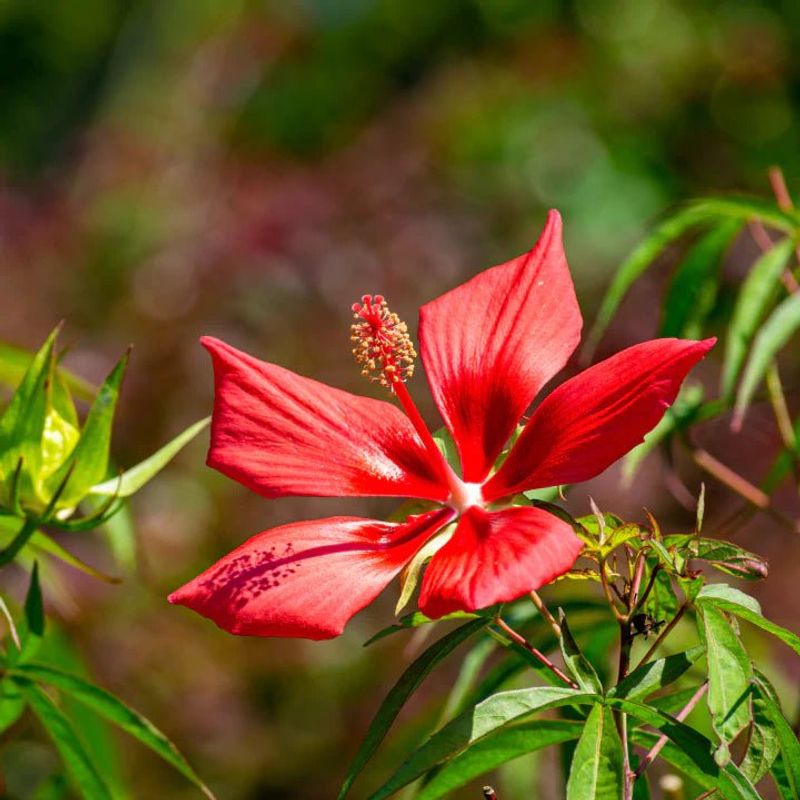
One large red flower can change the whole mood of a driveway border. Scarlet hibiscus, Hibiscus coccineus, delivers that bold focal point without asking you to turn the rain garden into a crowded collection of showy plants.
This Florida native wetland perennial prefers moist to wet soil and full sun for strong flowering. Put it toward the back of the strip, where its height will not block car doors, pedestrians, or your view when backing out.
Allow for a plant roughly 4 to 8 feet tall, depending on conditions, with several feet of growing space around it. A single specimen can anchor a small bed, while a short group works better along a long driveway.
Summer flowers attract visiting pollinators, and the deeply divided leaves add interest even between blooms. Individual flowers are short-lived, but a healthy plant can keep producing new ones through its flowering season.
Stems may die back seasonally, especially in cooler parts of Florida. Leave sound stems through winter if they are not a safety issue, then remove dead growth as new shoots appear; do not mistake its dormant period for plant failure.
5. Golden Canna
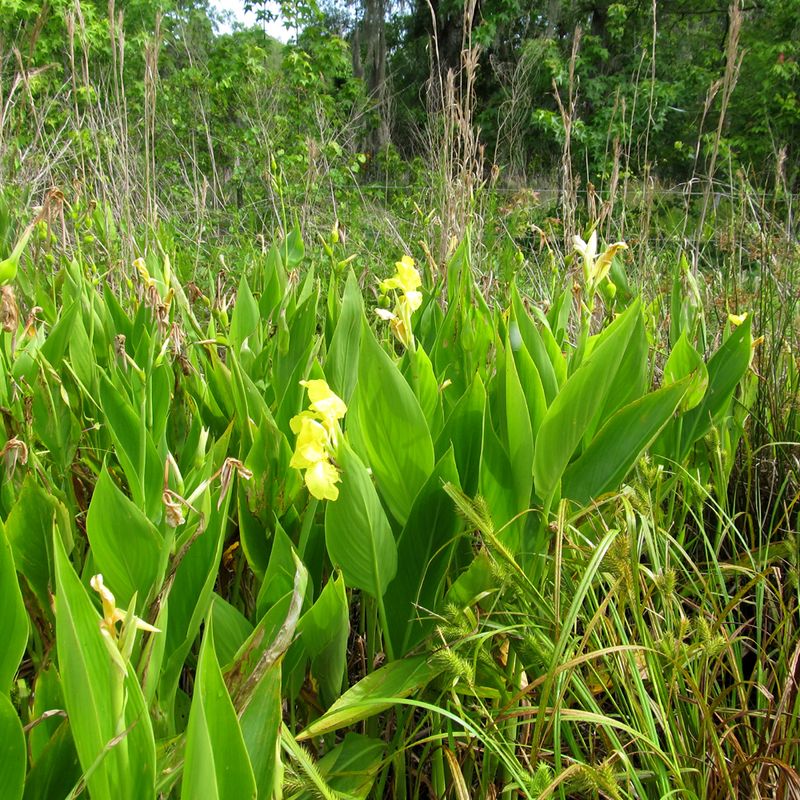
Broad green leaves and bright yellow blooms bring a lush look to a strip that once held only soggy turf. Golden canna, Canna flaccida, is a Florida native suited to wet ground, not just a decorative substitute for a dry flower border.
Set it in a sunny lower pocket where the soil remains moist between rains. It can handle shallow water, but a rain garden beside a home should still drain on schedule rather than function as an accidental permanent pond.
Plants commonly stand about 3 to 5 feet tall and spread by underground rhizomes. Start with a small group spaced around 2 feet apart, leaving enough room to divide the patch when it grows beyond its assigned space.
Its broad foliage gives a useful contrast to the thin stems of soft rush. Yellow flowers also brighten the garden from a distance, which helps a narrow roadside planting read as intentional.
Look for the botanical name Canna flaccida when shopping, because many colorful nursery cannas are hybrids. Remove ragged leaves as needed, avoid routine fertilizer near runoff, and keep expanding clumps from creeping across the pavement edge.
6. Muhly Grass
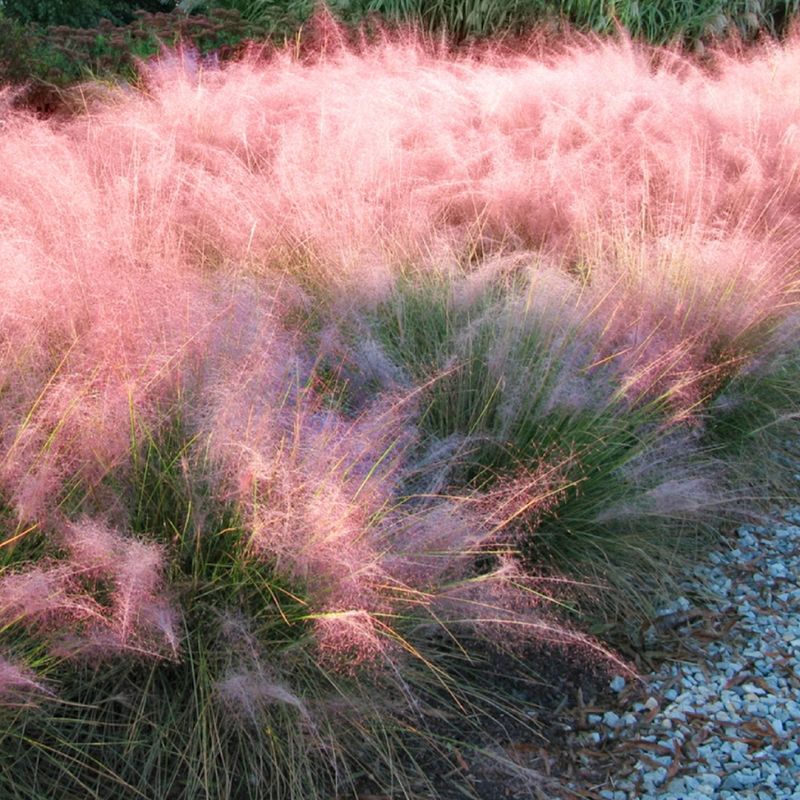
The pink haze arrives when many summer flowers are slowing down. Muhly grass, Muhlenbergia capillaris, gives the driveway border a soft fall finish while filling the drier zone that wetland plants may not enjoy.
Plant it on the upper edge or gently raised shoulder of the rain garden, not in a pocket that stays waterlogged. Although muhly tolerates occasional wet conditions, it performs best with drainage and plenty of sun.
Allow roughly 3 feet between plants for mature clumps that are often about 2 to 3 feet tall, with flower stalks rising higher. Repeating a few clumps along the pavement creates a tidy frame around looser, taller plants behind them.
Once established, muhly can handle the dry intervals common in Florida’s sandy soils. New plants still need watering while roots settle in, so do not treat drought tolerance as permission to skip establishment care.
Cut back old foliage in late winter before fresh growth expands, and avoid cutting into the crown. Keep the grass behind a clear pavement margin, where its arching leaves and plumes will not brush every passing leg or car door.
7. Buttonbush
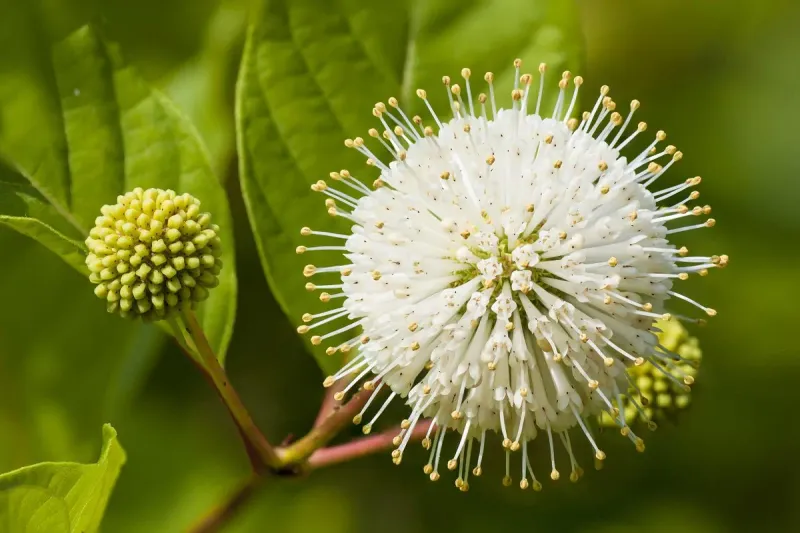
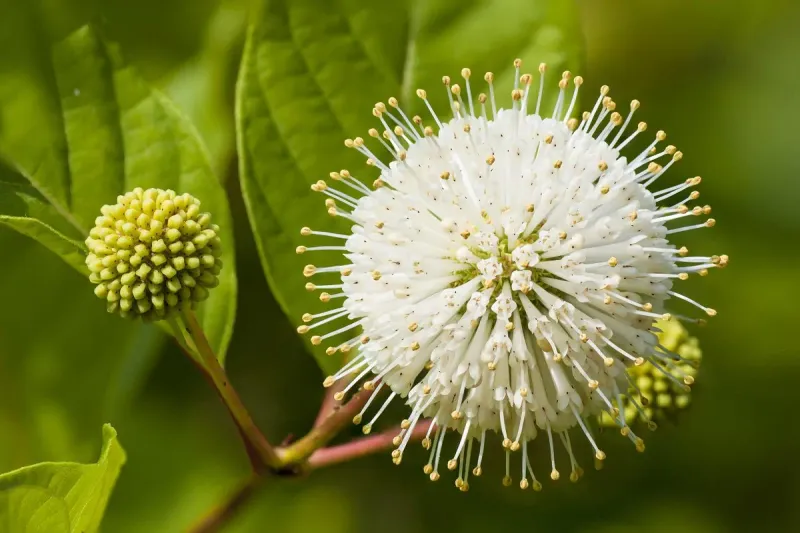
At the wide end of a driveway strip, round white flowers can turn a drainage problem into a small wildlife stop. Buttonbush, Cephalanthus occidentalis, earns its place as the woody option on this list, with ball-shaped flower clusters visited by bees and butterflies.
It thrives in moist to wet soil and tolerates flooding, making it a candidate for a broad, low section of the garden. Sun to partial shade works, though a brighter location generally supports more flowers.
Size is the deciding factor: buttonbush can become a large shrub, often 6 to 12 feet tall or more. Skip it in a narrow strip, beside a driveway entrance, under low utility lines, or anywhere it would need constant trimming to preserve visibility.
Where space allows, set it well back from pavement and let smaller perennials fill the foreground. Its branching structure adds height and cover that grasses and flowers cannot provide.
Prune selectively in late winter if shaping is needed, rather than shearing it into a tight hedge. Buttonbush parts are toxic if eaten, so keep it away from places where children or pets might sample leaves or seed heads.