
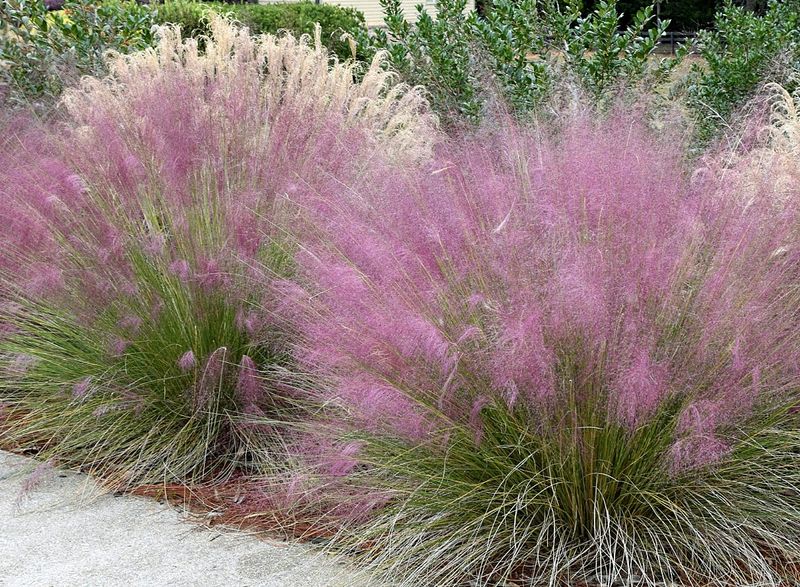
Picture a clump of fine green grass that suddenly floats a cloud of pink and purple above your garden bed. That is what Gulf muhly can do in fall when it gets the right spot.
It gives Central Texas yards a big seasonal payoff without a lot of fuss. Here is how to tell whether it fits your sun, soil, and care routine.
Gulf muhly can create an airy fall haze
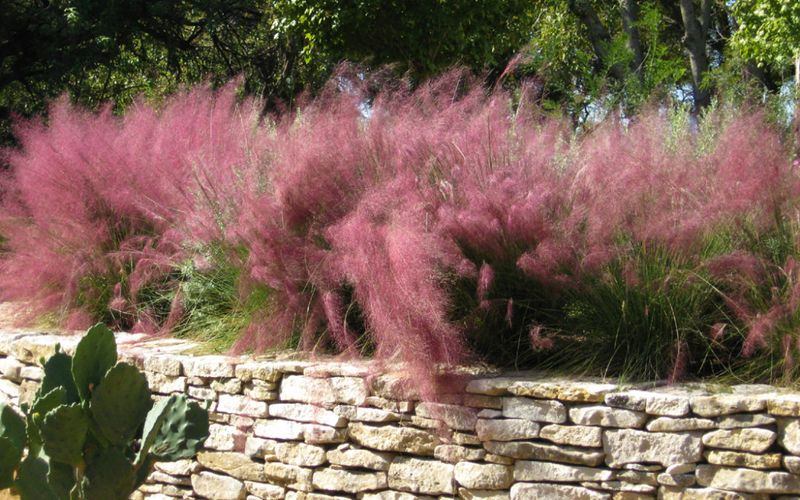
The grass behind the pink haze is Gulf muhly, which Texas Superstar lists as Muhlenbergia capillaris. You will often see it sold at Texas nurseries as pink muhly.
In fall, it sends up clouds of tiny flower clusters that float above the fine green clumps.
Here is a detail that surprises people: the color does not come from big petals. The show comes from airy flower plumes, called panicles, that look like pink-to-purple mist.
USDA plant materials describe the grass this way, with the showy part being the flowering plumes of an ornamental grass rather than rose-like blossoms.
Fall is the general flowering season, and the City of Austin lists pink fall interest for this plant in its plant guide. That said, nobody can promise a fixed bloom date.
The timing and the strength of the color can shift with the individual plant, the site, and the growing conditions.
Think of the haze as a potential payoff, not a guarantee. Backlit by low evening sun, a well-grown clump can glow like a soft pink cloud against a stone wall or a dark evergreen shrub.
In a year when the show is lighter, the fine green foliage still holds its own in the bed.
The rest of this article covers what Gulf muhly needs so you can judge whether it suits your yard: sun, drainage, spacing, watering while it settles in, and a yearly trim.
Texas nativity does not guarantee a local fit
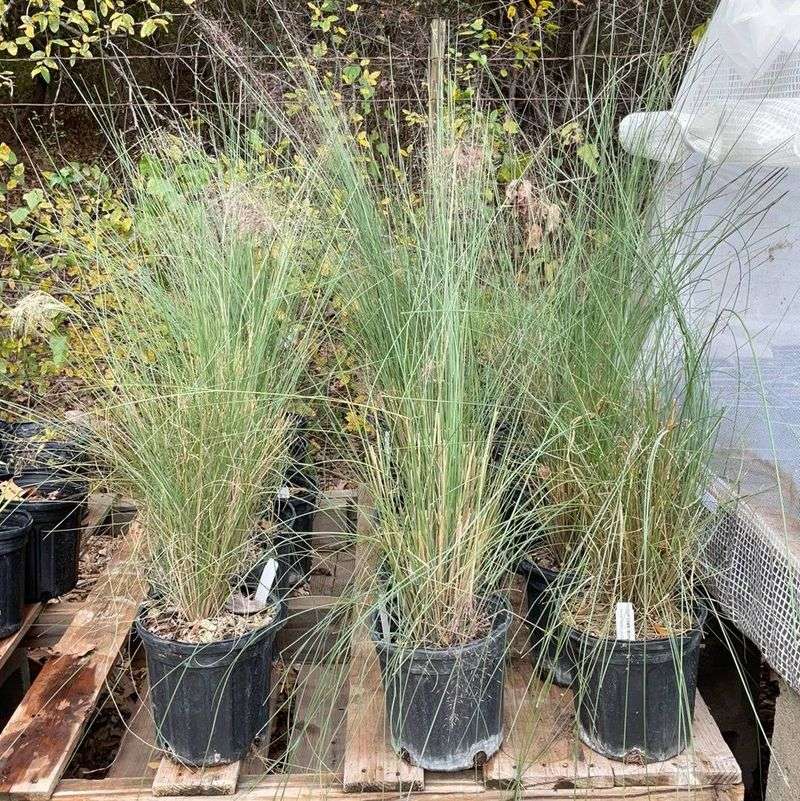
Gulf muhly is often called a native Texas grass, and that is fair at the state level. Texas is a huge place, though, and a plant that grows wild in one part of the state may not be native to another.
Native to Texas and native to your ecoregion are two different claims.
The City of Austin’s Gulf muhly plant guide makes this concrete. It marks the plant as not part of the Edwards Plateau or Blackland Prairie, two ecoregions that cover much of Central Texas.
So if you garden in Austin, Georgetown, or the Hill Country, treat Gulf muhly as a Texas plant that is welcome in landscapes, not as a plant native to your own backyard.
Names add another wrinkle. Texas Superstar uses Muhlenbergia capillaris, but USDA’s plant guide covers gulfhairawn muhly under M. filipes, and the ITIS taxonomic report lists M. capillaris var. filipes as another name.
Practical next step: when you shop, check the tag for the scientific name and ask the nursery what it is. Do not assume every pot labeled Gulf muhly or pink muhly is the same plant.
Sun and drainage support a stronger display
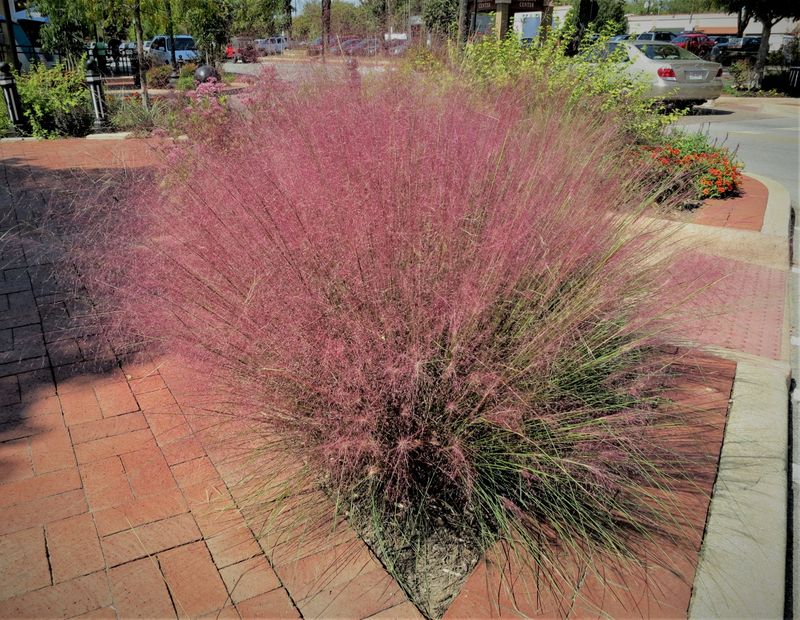
Walk your yard in the afternoon before you buy a single pot. Gulf muhly does its best bloom work in full sun, so a spot that gets bright light most of the day is the place to look.
Shade tends to mean fewer plumes and a thinner show.
Drainage matters just as much. Texas Superstar says the grass adapts to a range of well-drained soils and prefers low-fertility sites, which is good news if your beds are lean and rocky.
A spot where water stands after a hard rain is a poor match.
UF/IFAS lists tolerance across several soil types. That flexibility is encouraging, but it is not a promise that every yard or soil will give the same result.
Sun and drainage are the conditions that give you the best chance at a strong display.
Plan space for the clump, too. Sources commonly describe mature plants at roughly 2 to 3 feet tall and wide, with the plumes rising above the foliage.
Treat that as a rough guide, since size shifts with conditions.
A quick test: dig a hole, fill it with water, and see how long it takes to drain. If it is still full the next morning, consider a raised bed or another location.
Group plants for a more continuous haze
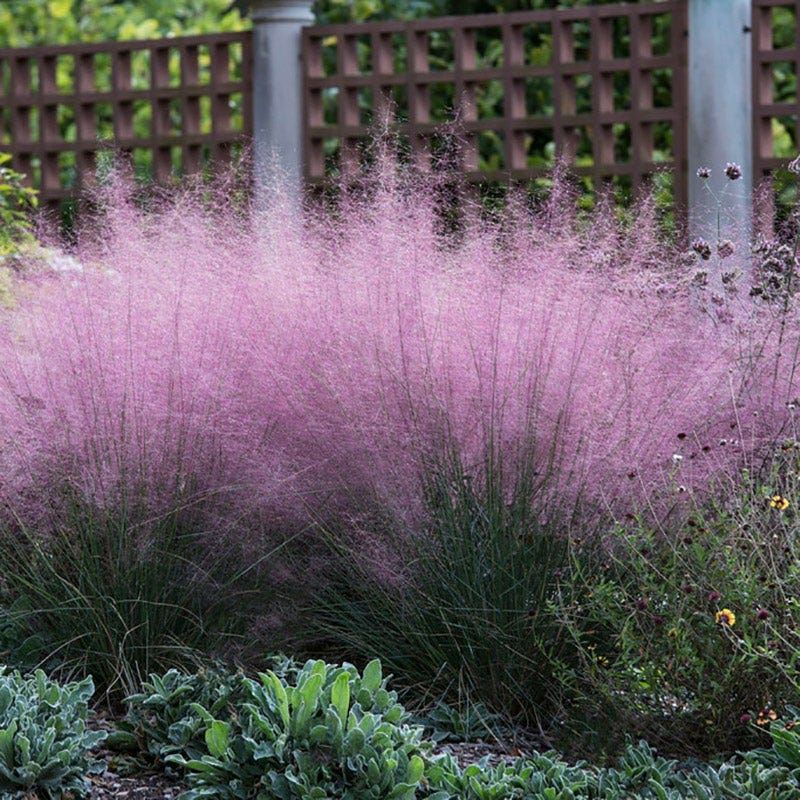
One lone clump can look like a pink puff. A group of them starts to look like weather.
Planting in drifts is the simplest way to turn the fall effect into a landscape feature you can see from the street.
For spacing, UF/IFAS recommends 24 to 36 inches between plants. That gap leaves room for each clump to fill out while letting the plumes of neighbors overlap.
Closer to 24 inches gives a tighter look, and nearer 36 gives each plant more breathing room.
The University of Georgia Extension also points to planting muhly in groups as a way to make a bolder display than single specimens. Think of this as arrangement advice, not a guarantee of a seamless wall of color.
Some years the haze will be thicker than others.
Try this: set out three or five plants in a gentle curve along a driveway edge, a mailbox bed, or in front of a fence. Odd numbers tend to look more natural than even ones.
Mixing in plants with different bloom seasons can keep the bed interesting before the muhly wakes up in fall.
Water new clumps until they establish
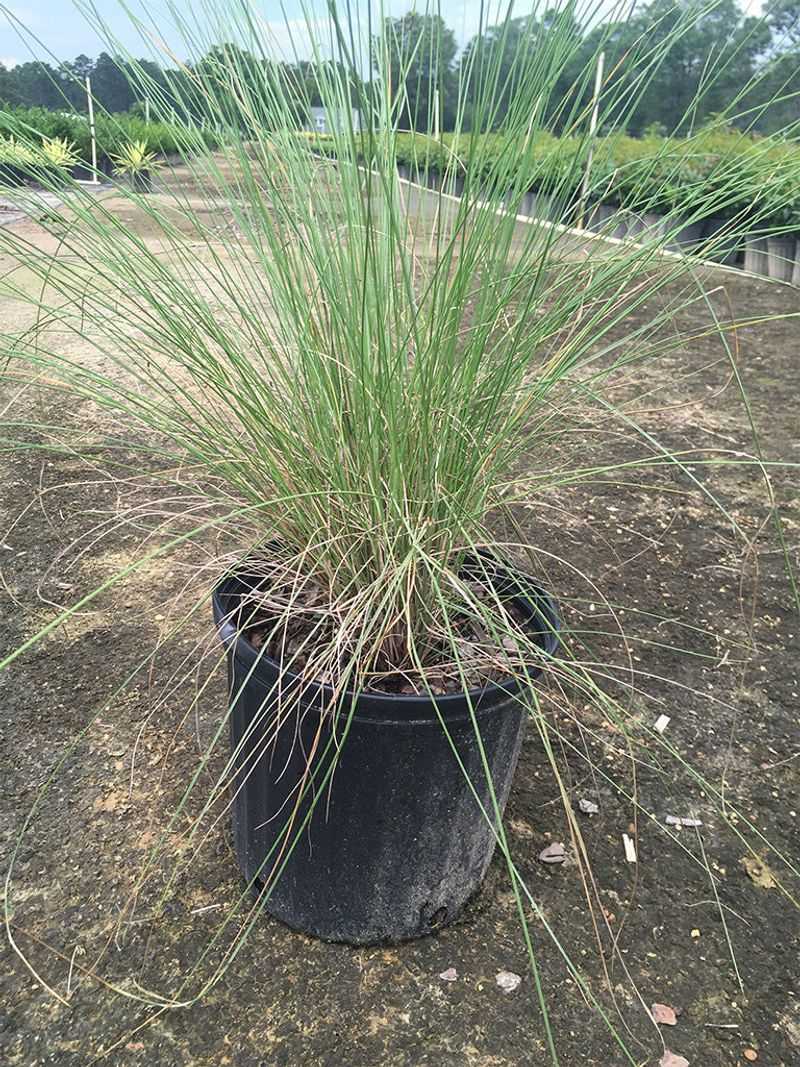
Gulf muhly has a reputation for toughness, and it is earned, but there is a catch. The tough part comes later.
Young plants with small root systems need regular water while they settle in.
UF/IFAS Gardening Solutions advises watering new plants regularly until they are established. No one schedule fits every yard, so watch your soil.
If the top few inches are dry and the leaf blades look dull or curled, it is time to water deeply.
After that, the picture improves. Texas Superstar describes established Gulf muhly as drought tolerant, which is a real advantage during triple-digit Texas summers and city watering limits.
Drought tolerant does not mean drought proof. The sources do not say mature plants never need help during a long dry spell, so a deep soaking during an extreme stretch is reasonable if the clump looks stressed.
A fresh layer of mulch around, but not piled against, the crown can help hold moisture while the roots spread. Keep an eye on new plants through their first summer.
Trim old foliage before spring growth
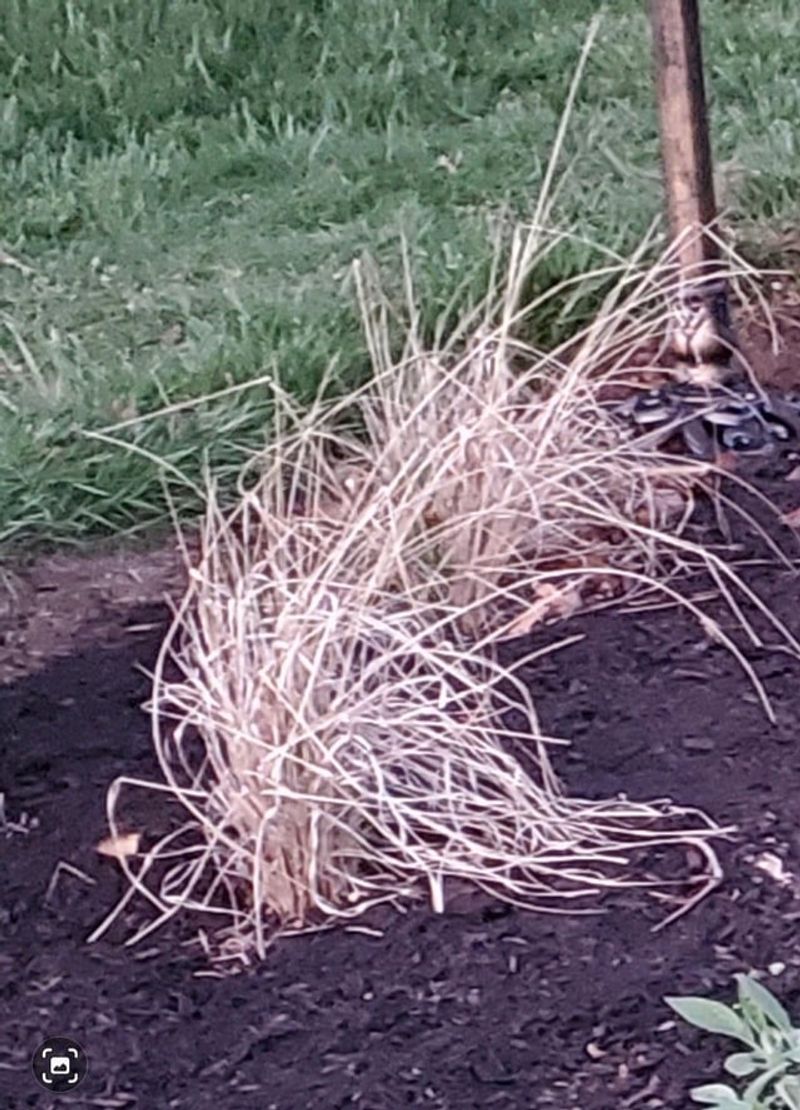
Once the pink fades and winter turns the clump tan, the grass is waiting for a haircut. The timing is the key part: cut back or tidy the old foliage in late winter or early spring, before new growth begins.
Waiting too long means you will be snipping around fresh green shoots.
Advice on how low to cut is not uniform. University of Georgia Extension recommends a late-winter cutback, UF/IFAS Gardening Solutions describes cutting to the ground, and the City of Austin guide simply says to cut back in winter.
Because of that, check with your county’s Texas A&M AgriLife Extension office for the cut height that suits your area, rather than relying on one number.
Gulf muhly is not a maintenance-free plant. Expect a yearly trim, a bit of watering while young, and an occasional glance for stress.
Sharp pruners or a hedge trimmer work, and bundling the clump with twine first makes cleanup easier.
Then let spring do the rest, and the clump will refill with fresh green blades.
Decide whether Gulf muhly fits your yard
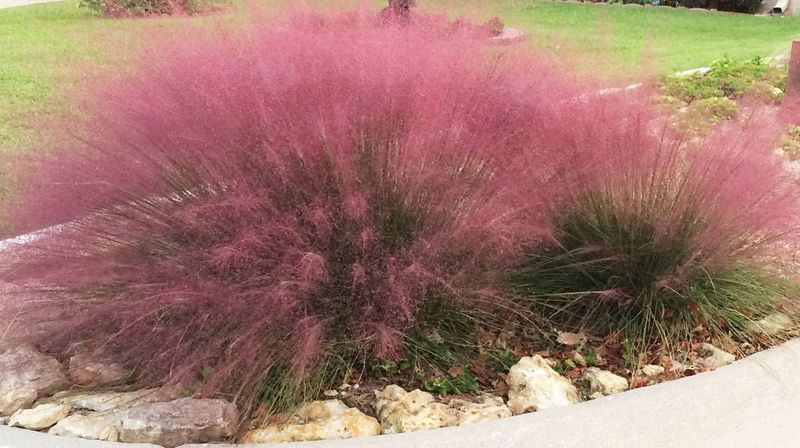
Gulf muhly is a good match if you have a sunny, well-drained spot, want a fall feature, and are willing to water during establishment and trim before spring growth. For those yards, the potential payoff is a soft pink-to-purple haze, as Texas Superstar describes it.
If your site is shady, soggy, or you want a plant native to your exact ecoregion, as the City of Austin guide notes, look at other options.
Some falls the clouds will be thick, and some falls they will be thin, but the bed never loses its fine texture.