
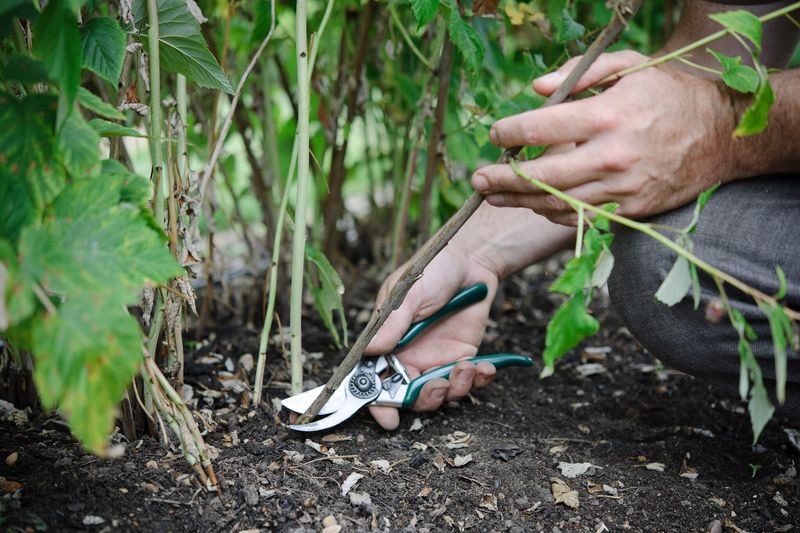
Walk out to your raspberry patch after harvest and you will see a tangle of canes, some finished and some still working. Cut the wrong ones and you could throw away next year’s berries.
The right choice depends on one thing: what type of raspberry you grow and how old each cane is. A few simple clues will help you prune with confidence.
Identify the cane before you make a cut
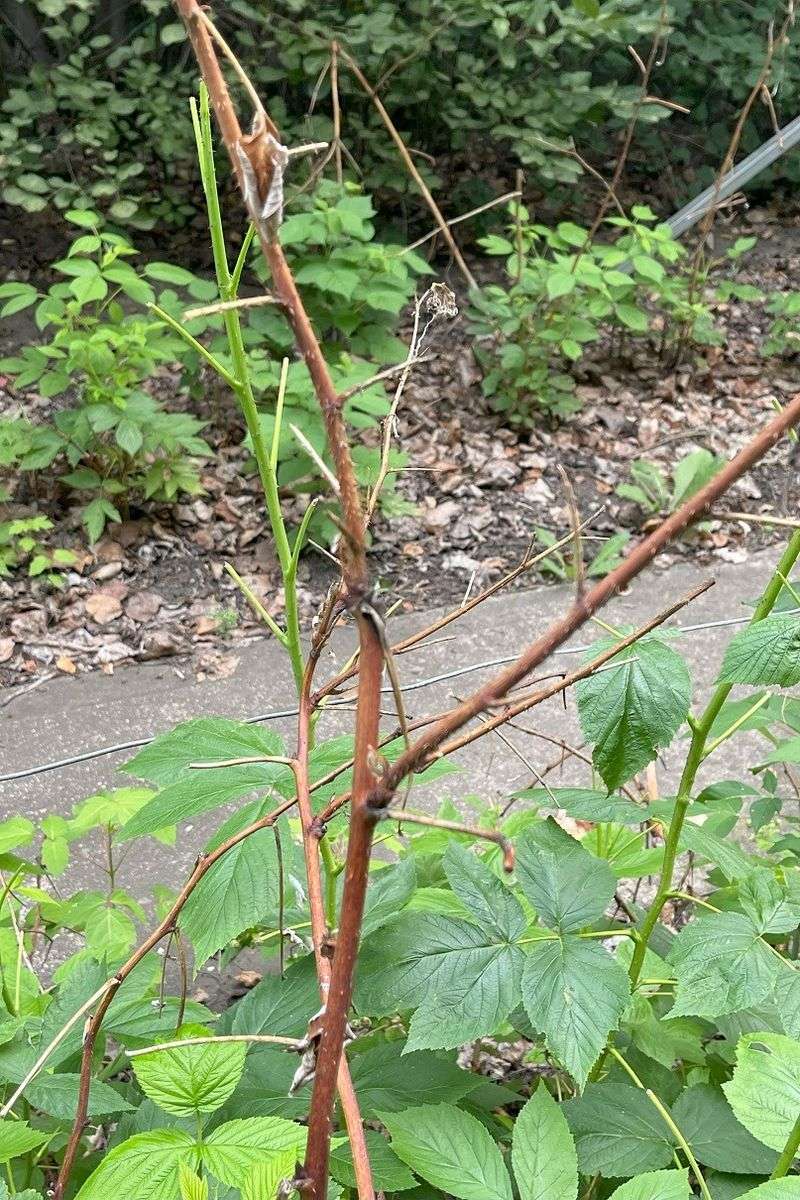
Raspberry roots and crowns are perennial, but each cane generally lives only two years, according to University of Minnesota Extension. First-year canes are called primocanes.
On summer-bearing types, those canes overwinter and become floricanes, which fruit in their second year and then die.
So the first question is not how a cane looks, but what it has already done. Color alone can mislead you, and not every brown cane needs to go.
Look for old fruit clusters or fruiting laterals, the short side branches that carried berries, which Minnesota’s pruning guidance uses to mark a spent floricane.
Next, confirm your variety’s fruiting type. Summer-bearing and everbearing (primocane-fruiting) raspberries follow different pruning plans, as Iowa State Extension explains.
Check the plant tag or nursery record before you pick up the pruners.
Remove spent canes from summer-bearing raspberries
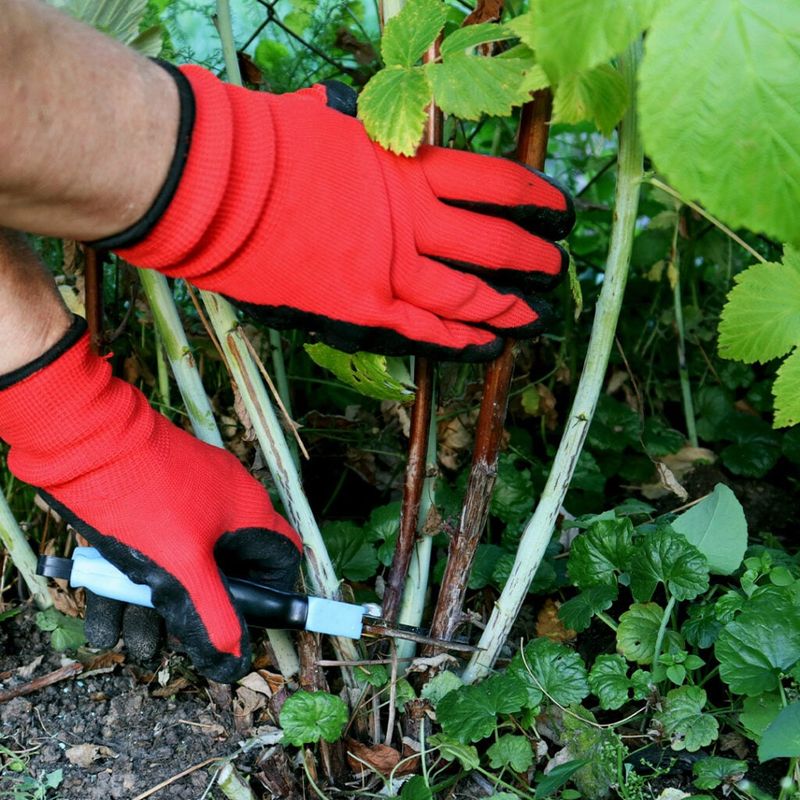
Once a summer-bearing patch finishes fruiting, the canes that carried berries are done. Cut them back to ground level, either right after harvest or during dormant-season pruning.
Pull them out of the row so they do not tangle with the new growth.
Keep the healthy first-year canes. Those are the ones that can fruit next summer.
Also remove any weak, damaged, or diseased canes, as Iowa State Extension advises.
Then thin what is left. Iowa State’s home-garden guidance suggests leaving remaining canes about 6 inches apart, though that is one source’s recommendation and not a rule for every patch.
Better airflow also makes picking easier.
Do not toss a healthy cane just because it looks old or brown. Check for old fruit clusters or fruiting laterals, the clues described in University of Minnesota pruning guidance.
A cane without them is likely a keeper.
Keep healthy canes for a possible second crop
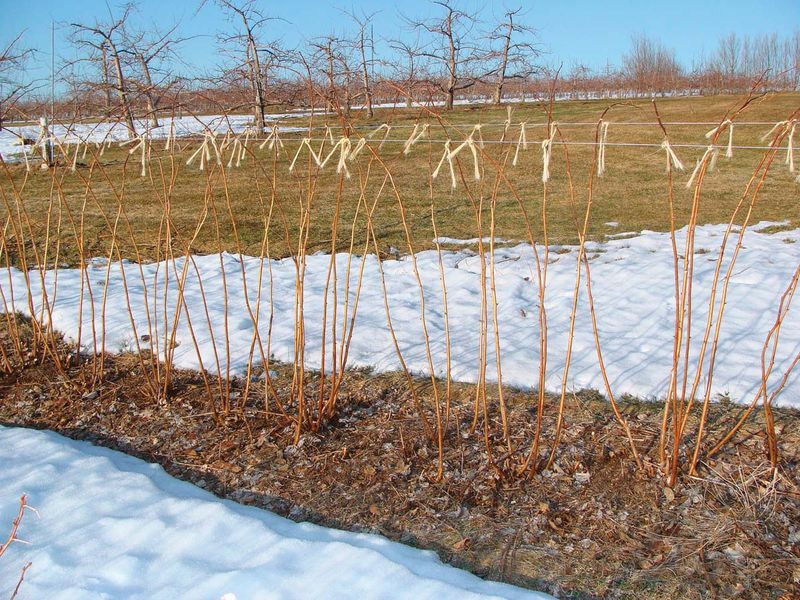
Everbearing raspberries, also called primocane-fruiting types, are a bit misleading. They do not fruit nonstop.
As University of Minnesota Extension describes, the tips of first-year canes can bear in late summer or fall.
If you leave those canes in place, their lower portions can bear again the following summer. That gives you two possible harvests from the same canes.
It is a chance at a summer crop, not a promise of one.
For this plan, do not cut every cane after the fall harvest. Preserve the healthy canes and remove only the spent portions, such as the fruited tips, as appropriate.
Minnesota’s pruning guidance covers how this works.
Canes that fruited in summer on their lower sections will finish and can be removed later. A quick look at where the old fruit stems sit tells you what to cut.
Choose a single fall crop by cutting canes during dormancy
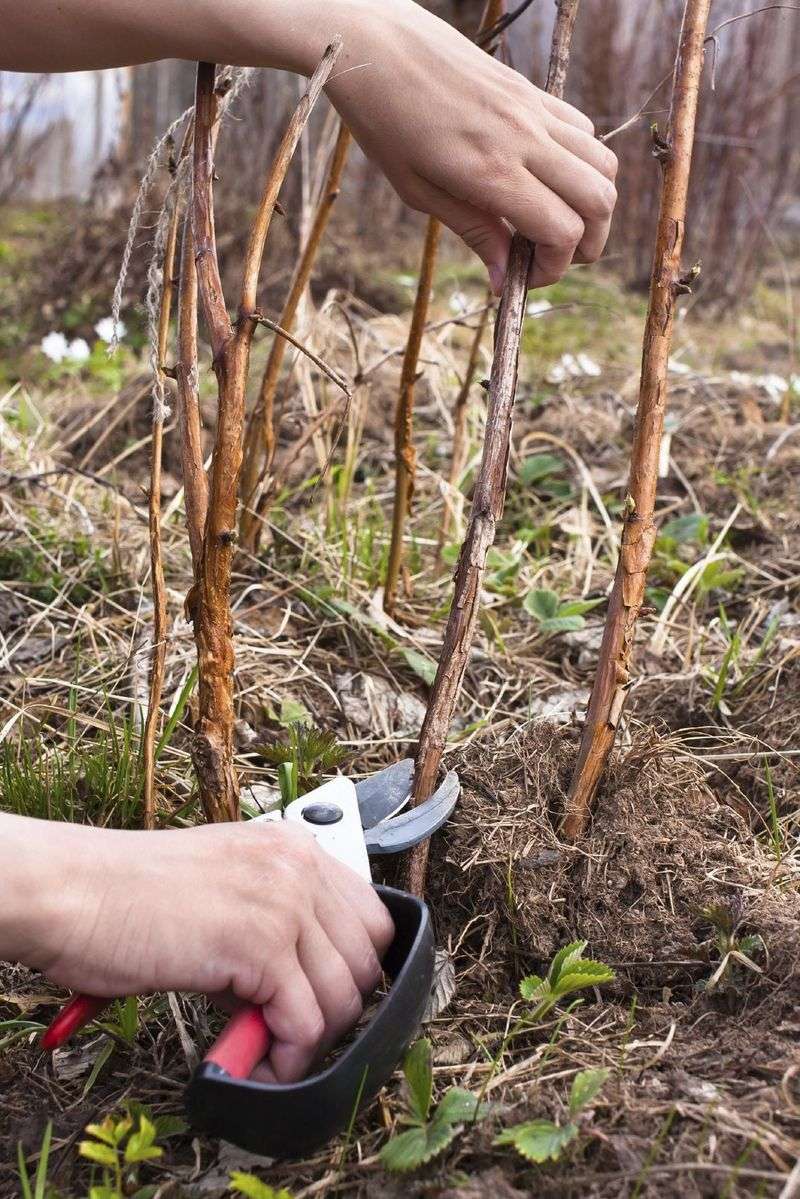
Some gardeners prefer simplicity. With everbearing raspberries, you can cut all canes to ground level during dormancy and manage the patch for one fall crop.
Timing depends on local guidance, since dormancy arrives at different times in different places.
This choice gives up the potential summer crop, because you are removing the canes that would have carried it. In return, the patch is easier to manage and the new canes all start fresh together.
Iowa State reports that the single-crop approach typically produces a larger fall crop than its two-crop system, per Iowa State Extension. That comparison comes from their own trials, so your garden may not match it.
Soil, heat, and variety all play a part.
For another regional view of everbearing management, see Utah State Extension’s raspberry guidance. Choose the plan that fits the harvest you want.
Use local harvest and dormancy cues in the South
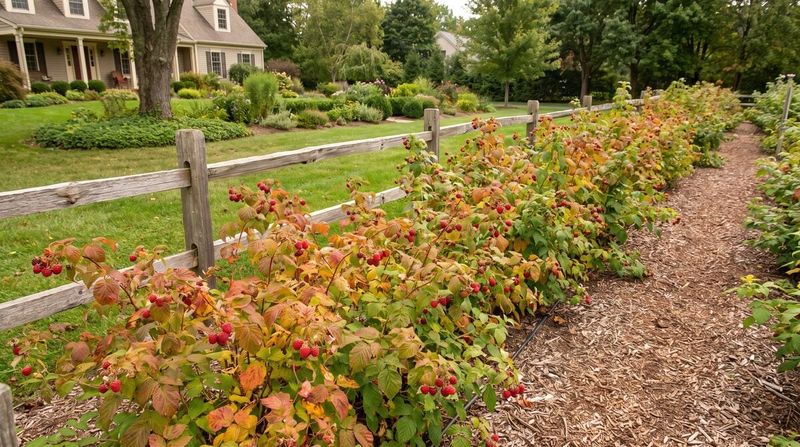
There is no single pruning date for the whole South. Let the end of your variety’s harvest and the plant’s dormancy guide you, and check your local extension office.
A national month-by-month schedule can steer you wrong.
Be careful with two-crop plants. Cutting every cane right after fall harvest would remove the potential next-summer crop, a point Iowa State Extension makes clear.
Raspberries also do not suit every Southern yard. University of Georgia guidance limits some erect fall-bearing varieties to the Piedmont and Mountain areas.
UF/IFAS says raspberries are hard to grow as perennials in Florida and lists Dorman Red only for trial.
In Texas, Texas A&M AgriLife published a 2025 factsheet on variety and shade strategies. Treat each of these as guidance for that place, not a rule for yours.
Clear pruned canes from the patch and set realistic expectations
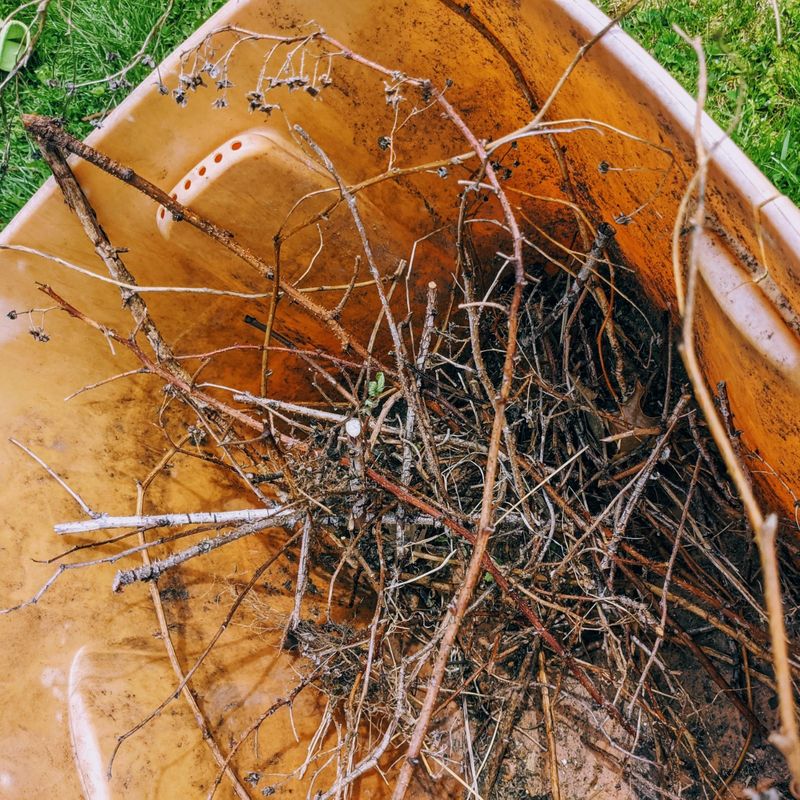
Once you finish cutting, carry the prunings out of the patch. Leftover canes, especially diseased ones, can harbor problems that spread to healthy plants, as Iowa State Extension notes.
Cane blight is one example, described in UMass Extension’s fact sheet.
Do not assume burning is the answer. Disposal rules and options vary by town and county, so follow local guidance.
Here is the quick decision guide. Summer-bearing plants: remove the spent second-year canes and keep healthy first-year canes.
Everbearing plants: pick a one-crop or two-crop plan before you cut, as Minnesota Extension outlines.
Good pruning keeps the patch manageable and preserves fruiting potential, but it cannot guarantee a bigger harvest. A tidy patch simply gives the plants their best shot.