
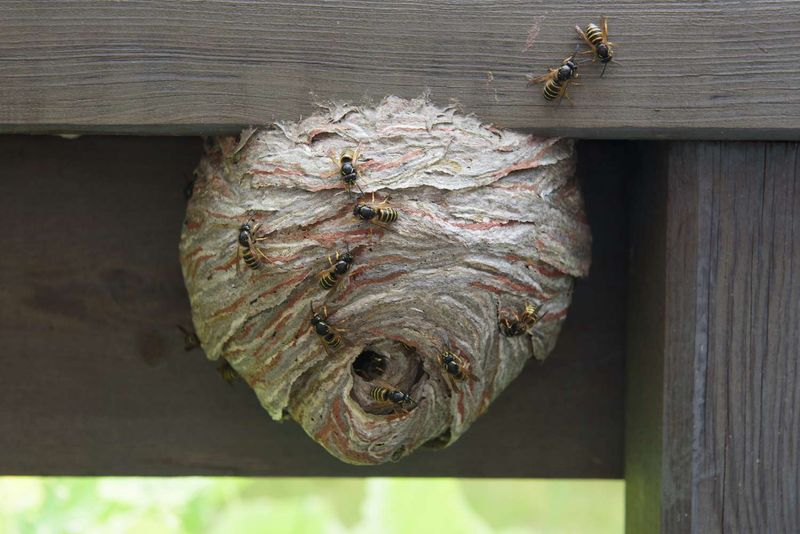
Plenty of Texans have heard that one old-fashioned porch plant can keep hornets away from the front door. It sounds like an easy fix, especially as fall nests get busy.
The truth is more useful than the legend, because a few simple habits can cut down on close encounters. Here is what the research says and what you can do instead.
Does a porch plant keep Texas hornets away?
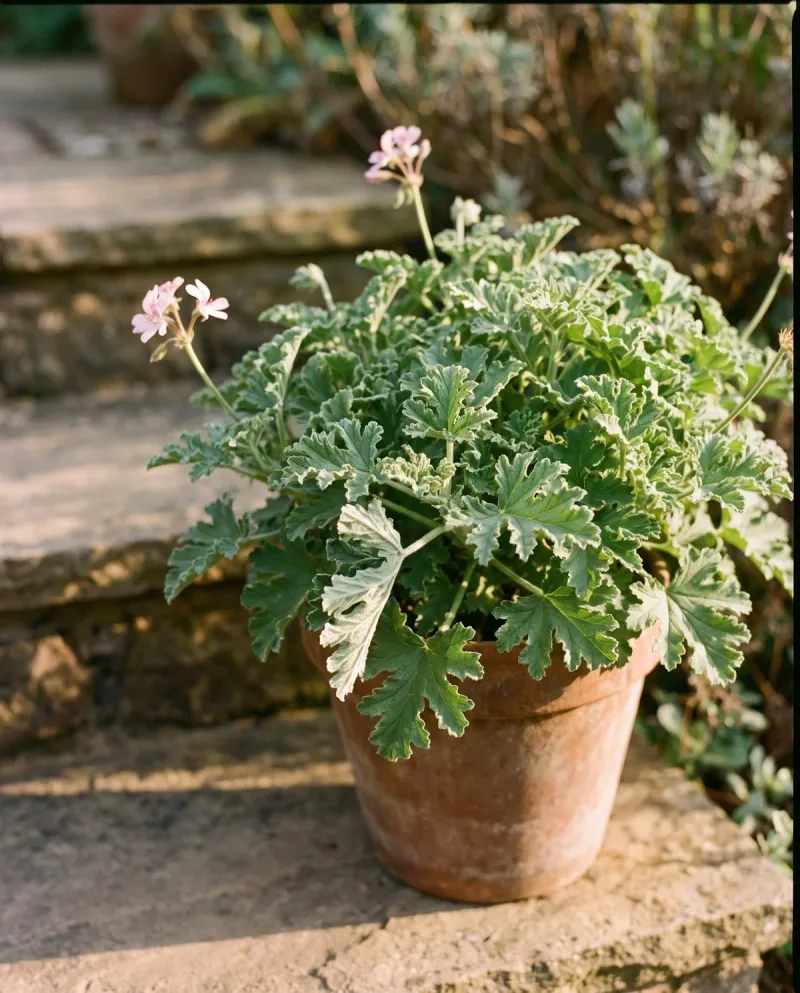
Short answer: no living porch plant has been shown to keep hornets away from a doorway or stop a nest from forming. The closest research is a peer-reviewed field study on essential oils, and it tested concentrated oils around baited traps, not potted plants on a porch.
Scented geranium is often the plant people have in mind when this idea comes up. It is a pretty, fragrant ornamental, and it can look great in a pot by a Texas door.
But it should be treated as decoration, not as a guard for your entry.
That may sound disappointing, yet it points to a better plan. Wasps visit porches for reasons like food, trash, flowers right at the entry, and sheltered spots to build.
Those are things you can actually change.
The rest of this article walks through what the oil study did and did not test, what Texans usually mean by the word hornet, and how to make your doorway less appealing. You will also learn what to do when you spot a nest.
Nothing here requires removing every wasp from your yard, and many wasps are helpful predators and pollinators. The goal is simply fewer surprises when you step outside with a cup of coffee or a bag of groceries.
The oil study tested traps, not porch pots
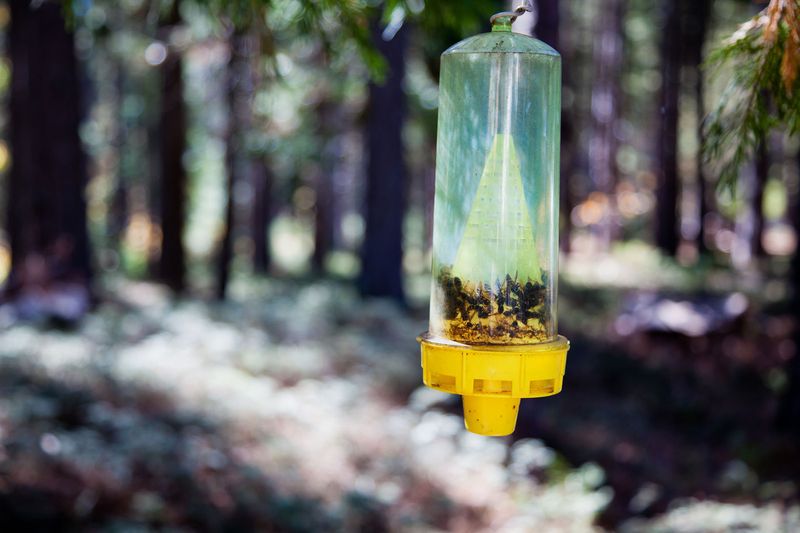
Researchers did find something interesting. In that 2013 study, several concentrated essential oils, including geranium oil, reduced visits by certain yellowjackets and paper wasps to traps that were baited with an attractant.
Notice the details. The wasps were responding to concentrated oils placed around baited traps.
Nobody tested a living geranium, mint, or lemongrass plant growing in a pot, and nobody tested a doorway or looked at whether nests were prevented.
A plant in a container releases far less scent than a bottle of concentrated oil, and the study never measured whether a plant could do the same job. So the results cannot be stretched into a promise about porch gardening.
The authors worked for a pest-control-products company. That does not mean the findings are wrong.
It is simply good context for keeping the claim narrow, and the study should not be applied to every wasp or every stinging insect.
Think of it as a lab-style clue, not a porch recipe. If you enjoy fragrant herbs, grow them because you like them, and rely on other steps to keep wasp visits down.
What Texans call a hornet can vary
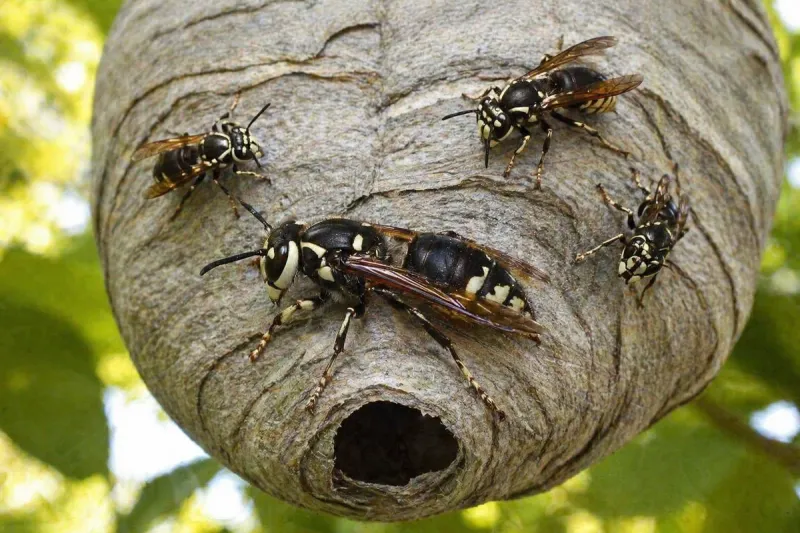
Ask around Texas and you will hear “hornet” used for almost any big, buzzing, striped insect. Paper wasps, yellowjackets, and solitary wasps all get the nickname, even though they build different nests and act differently.
According to Texas A&M AgriLife Extension, the bald-faced hornet is the only true hornet it reports in Texas. Its nests are usually high in trees, though they can sometimes be attached to building eaves.
That detail is handy. If the insect near your door is building an open, umbrella-shaped nest under the porch roof, you are probably not looking at a bald-faced hornet.
If a large gray, football-shaped nest hangs high in a pecan or oak, that fits the bald-faced hornet better.
You do not need to become an expert in every species. Just remember that advice for one kind of wasp does not always fit another, and that a photo from a safe distance can help a pest professional or your county Extension office sort it out.
Getting the name right also keeps worry in proportion. Many wasps stay busy hunting caterpillars and other garden pests, and most want nothing to do with you unless their nest is bothered.
Make the doorway less rewarding
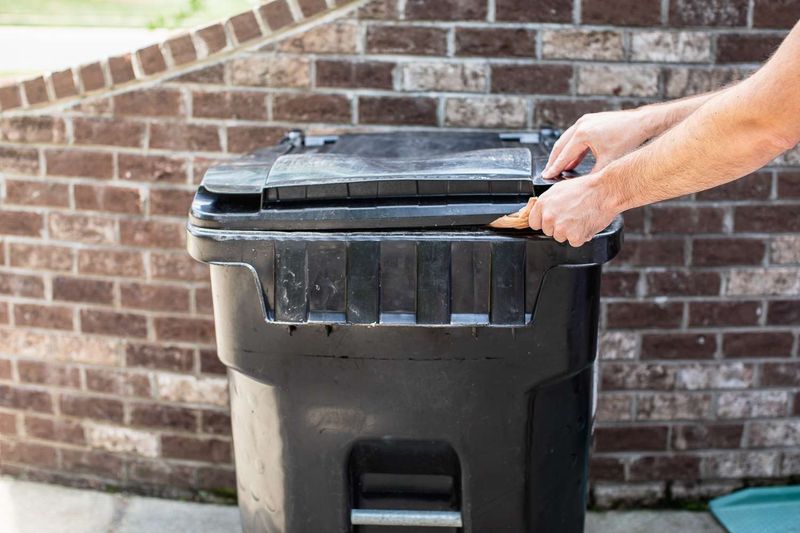
Wasps go where the food is. Texas A&M’s school pest management plan for yellowjackets recommends tight-fitting lids on trash and recycling containers, cleaning up spills, and keeping outdoor food in sealed containers.
It also suggests placing waste containers away from entrances. If your bins sit right beside the front door or the garage entry, moving them a few yards down the side of the house is a simple change.
Rinse out soda cans and juice bottles before they go in the recycling. Wipe sticky patches on porch tables and railings, and bring pet food dishes inside after meals.
The same guidance advises against planting flowering trees, shrubs, or flowers immediately beside building entrances and walkways. The point is about the spot where people walk in and out, since insects visiting blooms can end up in your path.
It is not a reason to rip out flowers across the yard. A pollinator bed near the back fence can keep its blooms, and a flowering pot can sit a few steps away from the door instead of right beside it.
None of this will guarantee a wasp-free porch. It simply gives foragers fewer reasons to hang around the spot where your family comes and goes.
Autumn can bring more interest in sweet foods
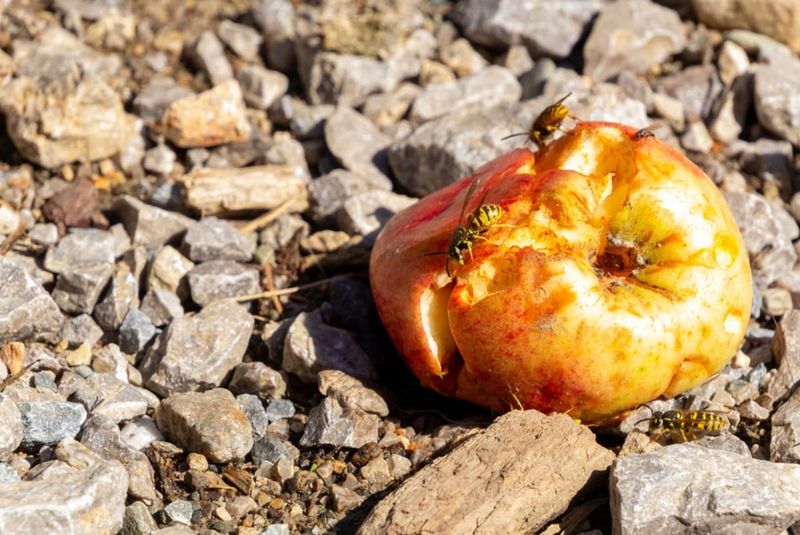
Come fall, you may notice wasps hovering around your sweet tea or a dropped slice of watermelon. University of Maryland Extension explains that foragers can become more interested in sweet foods in autumn as other nectar sources decline.
That is a seasonal shift in what wasps look for, not a sign that anything you planted has failed. Activity also varies from yard to yard, so your neighbor may see far more or far fewer wasps than you do.
For the entry area, a few habits go a long way. Keep food and drinks covered when you sit on the porch, and use a lid or a straw on cups left outside.
Pick up fallen fruit from pecan, fig, persimmon, or citrus trees before it softens and ferments. Keep trash sealed, especially after cookouts and tailgate weekends.
Check the bottom of a drink can before you sip, since a wasp can crawl inside unnoticed. A quick look takes two seconds.
Fall is also when many Texans spend more time outside as the heat finally eases, so a few small routines now can make porch season far more pleasant.
Repeated flights to one spot can signal a nest
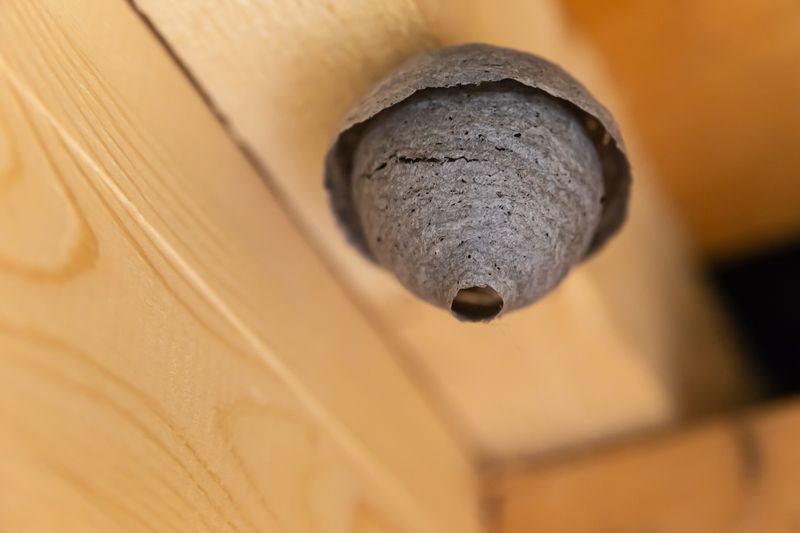
If you see wasps flying in and out of the same spot again and again, there may be a nest there. The opening could be in the ground, a wall gap, a eave corner, or a hollow in a tree.
Leave it alone. Both Texas A&M AgriLife Extension and University of Maryland Extension advise against disturbing nests, and they recommend professional help when a nest is hard to reach or unsafe to treat.
Do not burn, flood, or casually spray a nest. If a pesticide is ever used, it must follow its label, and a licensed pest professional is usually the safer route for nests over doors, in walls, or high up.
Not every nest needs to go. Nests in remote spots, such as a tree at the edge of a lot, can often be left alone, and UC IPM points out that many wasps are beneficial and that the goal is fewer human encounters.
You may see yellowjacket traps for sale. Their results are limited and depend on the species, and they are not a porch shield or a way to get rid of a nest.
Note where the traffic is and keep family and pets clear of that area. Snap a photo from a distance to share with the professional.
A safer porch starts with practical habits
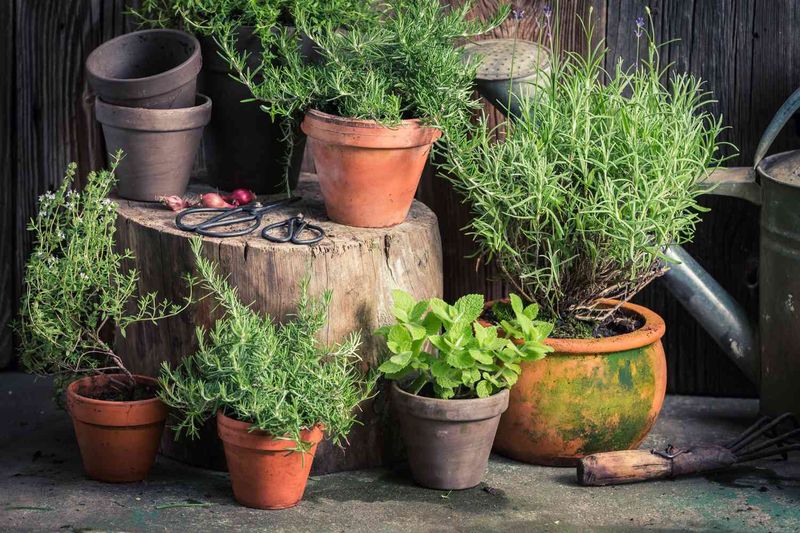
Pick porch plants for how they look and smell, and enjoy scented geranium if you like it, but do not count on it as a hornet shield. The steps that count are sealing food and trash, following Texas A&M’s advice to keep flowering plants away from the immediate entrance, and calling a pro for any risky nest, as Extension guidance suggests.
A calm porch is mostly a tidy one. The wasps will still be out there doing their work, just a little farther from your doorbell.