
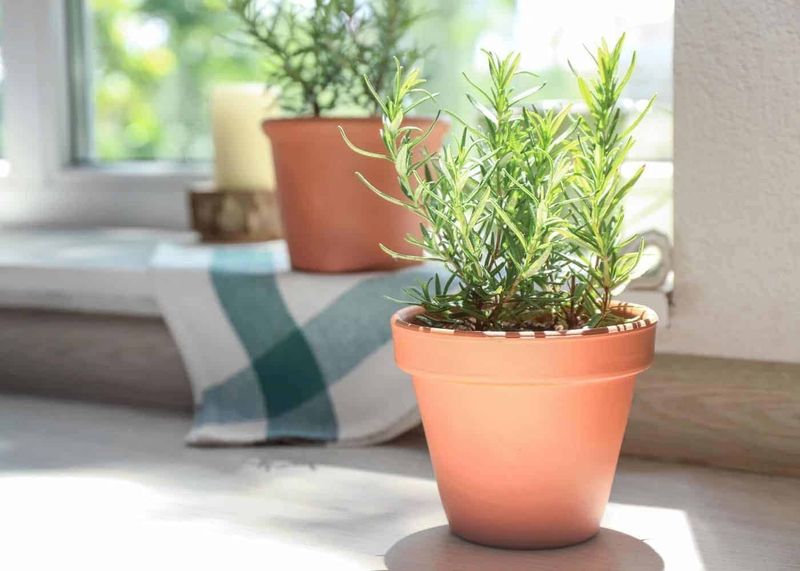
Rosemary looks tough, but a pot changes the game when winter rolls in. The thin walls of a container leave roots far more exposed than they would be in the ground.
A few simple steps taken before the first hard freeze can lower the risk of winter injury. Here is how North Carolina gardeners can give a favorite pot of rosemary a better shot at spring.
Why a pot leaves rosemary roots more exposed to cold
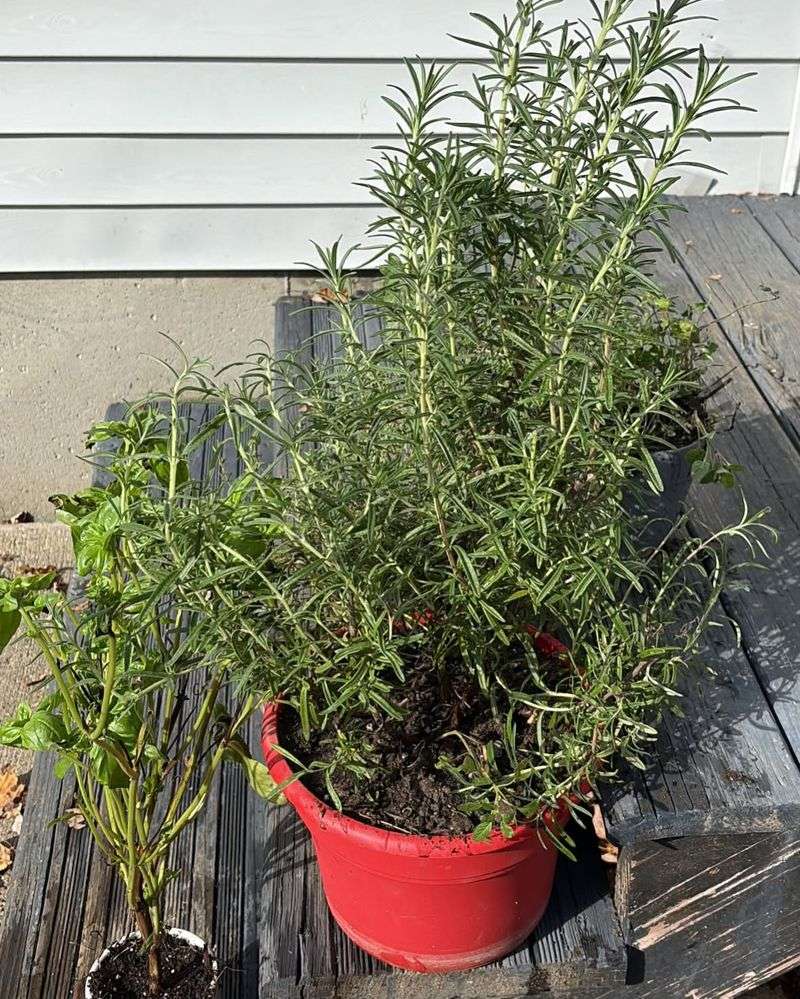
Roots in the ground sit inside a huge blanket of soil that changes temperature slowly. A pot has no such blanket.
Only a thin wall separates the potting mix from the cold air, so the roots can chill much faster and drop lower than they would in a garden bed.
That difference is the heart of the problem. NC State Extension container guidance points out that container plants have less insulation around their roots, and it recommends moving pots to a sheltered spot and insulating the root ball when cold is on the way.
Clay, plastic, and ceramic all let cold pass through, and a pot sitting on bare concrete loses even more warmth from below.
Nursery growers face the same issue. NC State’s advice on preparing nursery plants for winter treats container roots as more vulnerable than roots in the ground, which is why protection often focuses on the pot rather than only on the leaves.
None of this means a potted rosemary is doomed. Many survive mild winters, especially along the coast or in warmer pockets of the Piedmont.
It simply means the plant carries a higher risk than the same variety in a bed, and the risk climbs when the mix is also soggy and cold. Knowing where the weak spot is makes the fixes in the rest of this article make sense.
A light frost is not the same as a damaging freeze
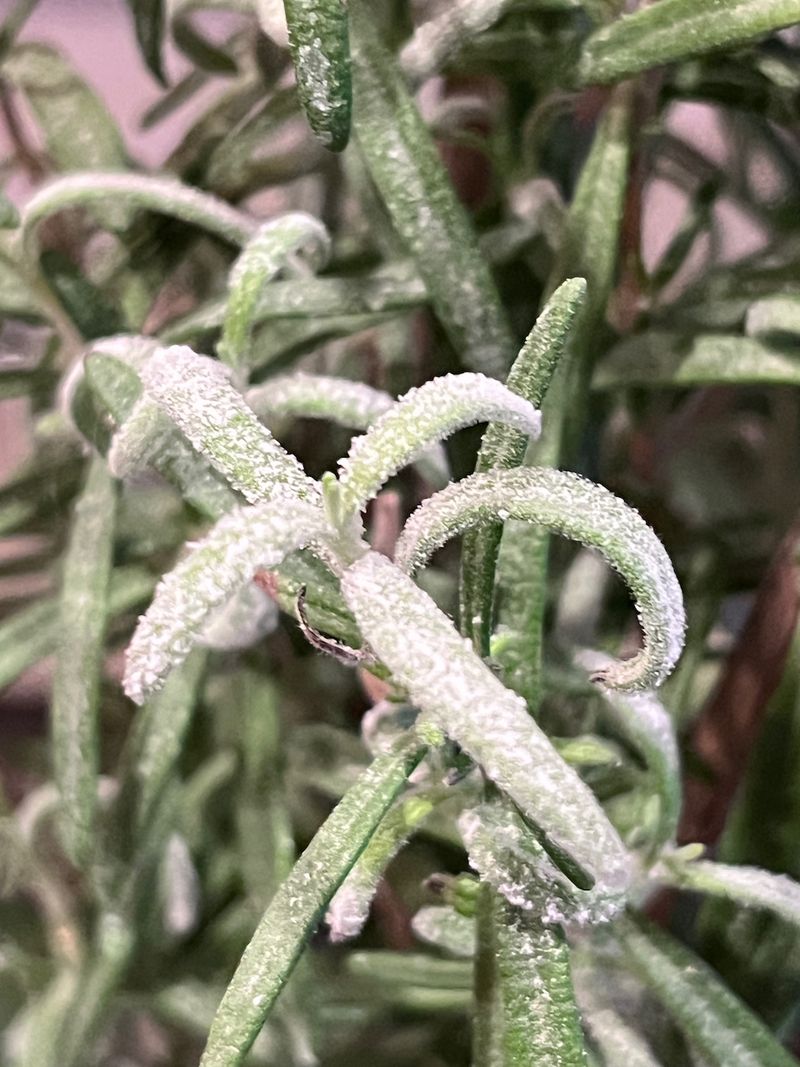
Seeing frost on the lawn does not mean the rosemary is finished. Rosemary can handle some cold, and Illinois Extension notes that it can keep going past the first frost, though it advises protection before temperatures fall to freezing and below.
A light frost is a signal to get ready, not a signal to give up.
Variety and timing matter too. NC State Extension reports that some rosemary selections tolerate very low temperatures if they have time to harden off gradually in fall, and it names ‘Arp’ as a winter-hardy choice.
Those numbers describe plants with a slow, natural adjustment to cooling weather, and they are not a safe promise for a pot sitting on an exposed porch.
Even a tough cultivar may struggle once the root ball is chilled through. A sudden plunge after a warm spell is harder on a plant than a gradual cool-down.
Your location shapes the timing. Mountain gardeners may see hard freezes weeks before folks near the coast.
The USDA Plant Hardiness Zone Map shows average annual extreme minimum temperatures for your spot, which is useful for comparing places. It is not a forecast, and it cannot promise how a particular winter will behave or how a container will fare.
A practical habit is to watch your local forecast from October on and act when freezing nights show up in the extended outlook.
Move a valued plant to a bright, cool shelter
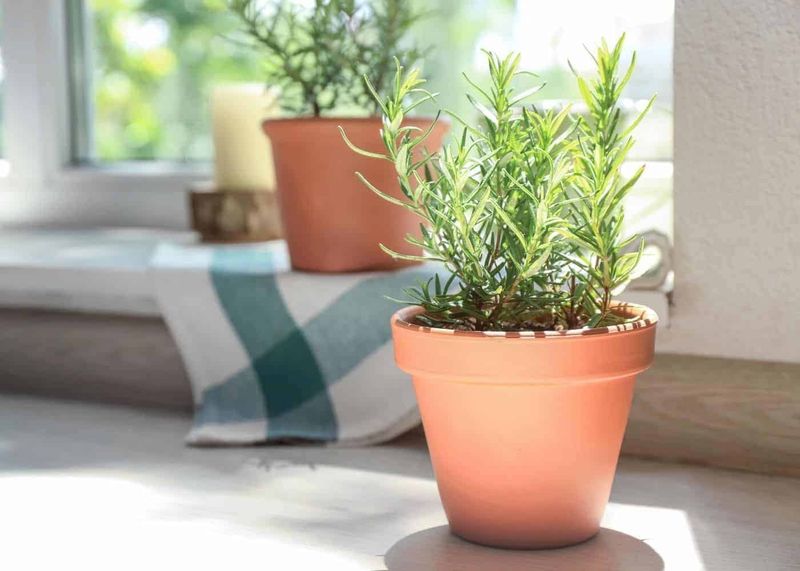
For a plant you really care about, moving it ahead of freezing weather is the most dependable choice. Aim for a bright spot that stays cool but above freezing, such as an unheated sunroom, a bright garage window, or a cool porch that is closed in.
Illinois Extension describes a cool, sunny location as better for rosemary indoors than a warm room.
Indoor care is not automatic, though. NC State’s plant profile calls rosemary difficult to overwinter inside.
A warm, dim living room with dry air can leave leaves crisp and brown.
The tempting fix is more water, but extra water to make up for dry-looking leaves can lead to root rot. Better light and cooler air do more good than a heavier hand with the watering can.
Before the pot crosses the doorway, look it over closely. Check the stems, the undersides of leaves, and the soil surface for aphids, mealybugs, whiteflies, and spider mites.
NC State notes these pests may need watching on indoor rosemary, and a pest that hitches a ride can spread to your houseplants.
If you spot any, rinse the plant off or treat it outside first. Let the pot drain fully before moving it.
Try to bring it in after a few cool nights rather than during a warm spell, so the change in conditions is not too sharp.
Even with good care, some plants sulk indoors. Treat the move as a way to lower risk, not a guarantee.
If the plant stays outside, insulate its root ball
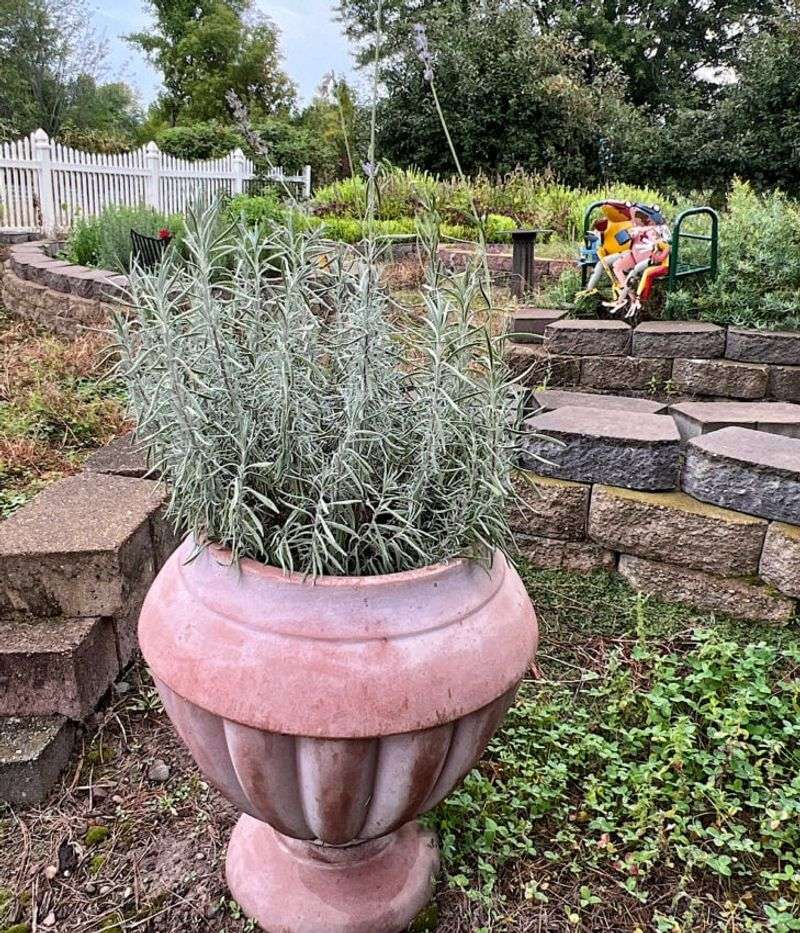
Not everyone has room for a bulky pot indoors. If yours has to stay out, start with location.
Set it close to the house, under an eave, or in another sheltered corner where walls block wind and hold a bit of warmth.
Next, protect the pot itself. NC State Extension describes insulating the container by wrapping it or surrounding it with materials such as leaves or straw.
Since the roots are the exposed part, insulation around the pot matters more than a cover over the foliage alone.
Here is one simple setup. Lift the pot onto a board or a pair of pot feet so it is not sitting on cold concrete, and keep the drainage holes clear.
Wrap the sides with burlap or bubble wrap, then pile straw or shredded leaves around the outside, held in place with a few stakes or a ring of chicken wire.
Group several pots together if you can, because they shield each other. Leave the top of the plant open to air in mild weather so moisture does not get trapped around the stems.
On very cold nights, a breathable frost cloth over the plant can add a little extra cover. Remove it when the day warms up.
These steps reduce risk, but they cannot guarantee survival through severe or long cold spells. In a mountain county, a stretch of deep freezes may beat even a well-wrapped pot, while a coastal yard may need only light protection.
Keep the potting mix drained and water only when needed
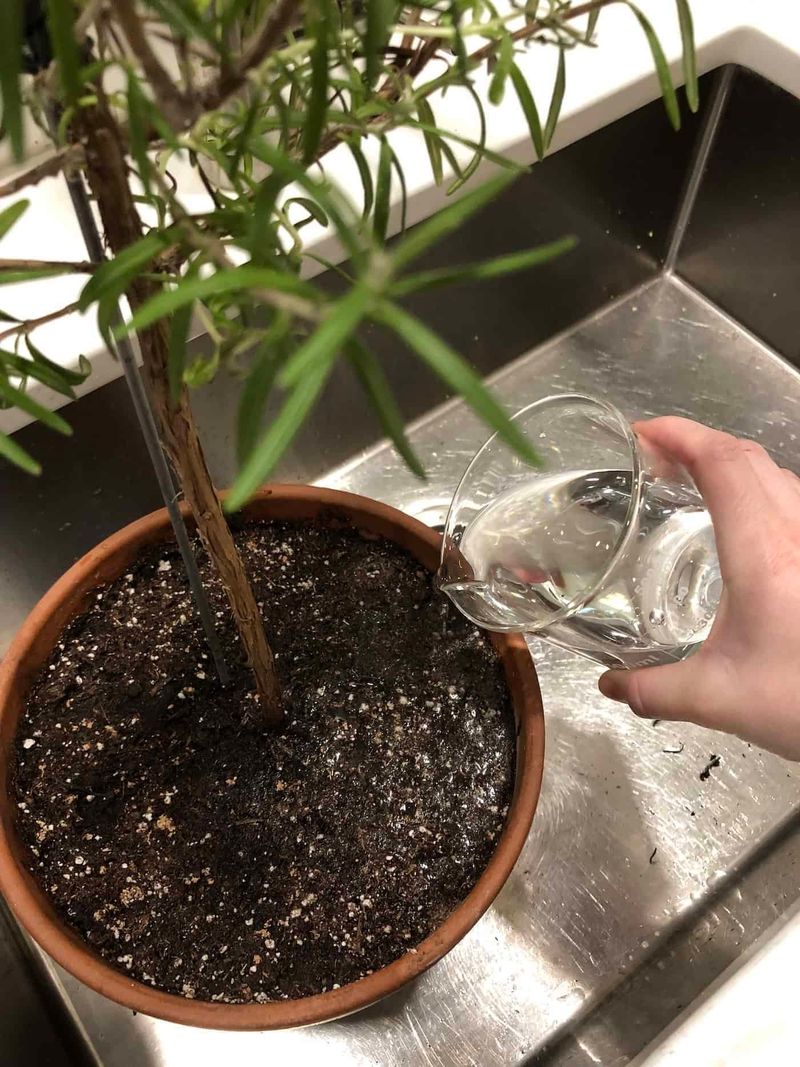
Rosemary comes from dry, well-drained ground, and wet roots in cold weather are a bad mix. Overwatering is a common reason rosemary declines, according to NC State’s plant profile.
Soggy soil can also lower the plant’s winter toughness.
Start with the pot. Choose one with drainage holes, use a quick-draining mix, and never leave it standing in a saucer of water.
Tip the saucer out after every rain or watering.
Then check the mix through the winter instead of following a calendar. Push a finger a couple of inches into the soil.
If it feels dry, water, but only when temperatures are above freezing, and let the extra water run out the bottom. If it still feels damp, wait.
Watering in the morning of a mild day gives the pot time to drain before a cold night. A wrapped pot or a pot near the house may dry out more slowly than you expect, and a pot under an eave may get no rain at all, so each spot needs its own check.
This is a measured approach. It does not mean keeping the soil constantly moist, and it does not mean a heavy soak as freeze protection.
As NC State’s container guidance suggests, container plants still need their moisture checked in winter, but good drainage comes first.
A rosemary that is a little dry usually bounces back better than one with rotting roots.
Choose protection that fits your space
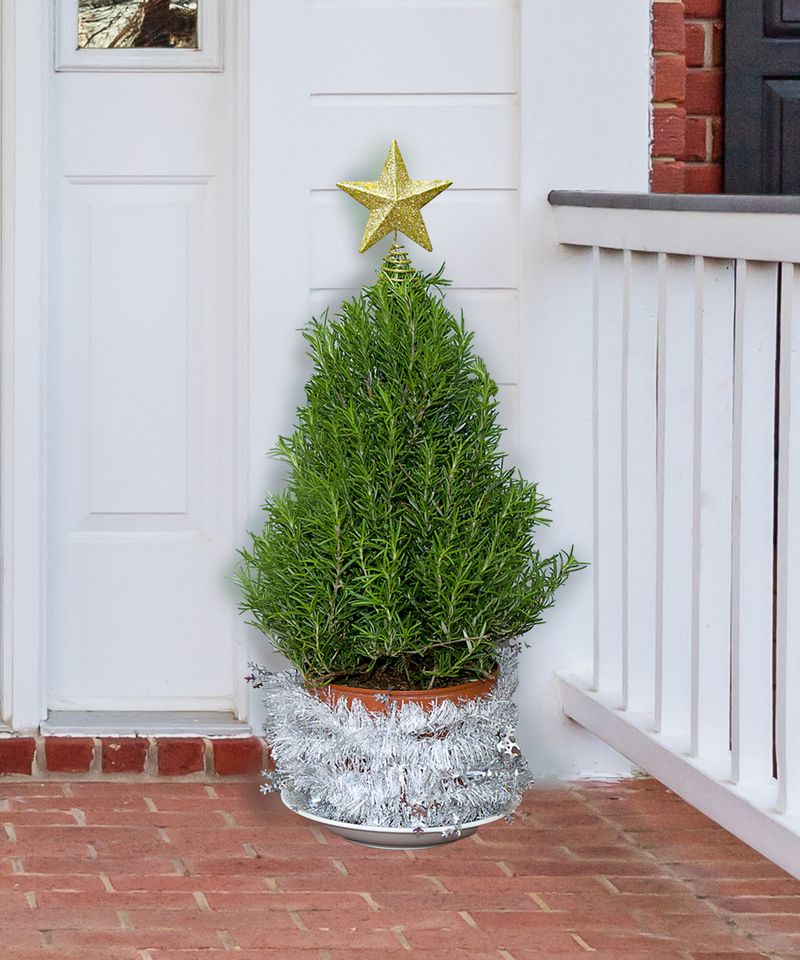
If you can, move a valued rosemary to a bright, sheltered place that stays above freezing. If you cannot, tuck the pot near the house, wrap or surround it with insulation, and keep the mix well drained.
Your own yard, whether mountain, Piedmont, or coastal, decides how much help the plant needs.
Any of these choices lowers the odds of winter injury without removing them. Rosemary rewards a bit of planning, and the pot is the part worth protecting.