
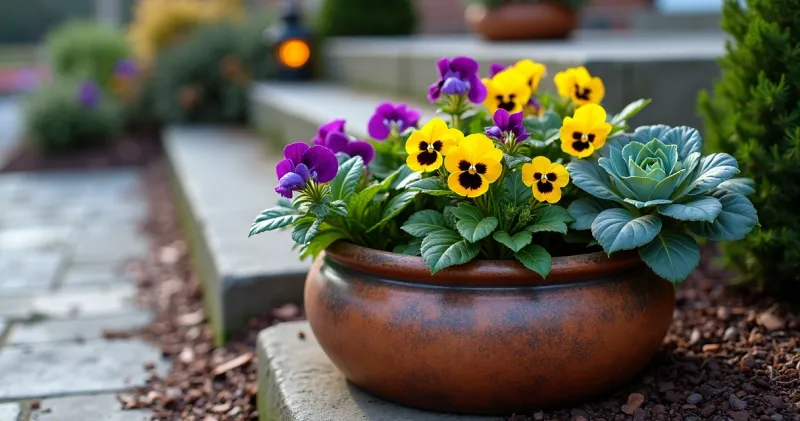
A porch pot can look tired by the time fall settles in, but pansies can give it a fresh start. These cheerful flowers come in many colors and are a favorite for cool-season containers across Texas.
Planting at the right time, giving them sun, and knowing what to do when a freeze threatens can make a real difference. Here is how to set up a pansy pot that brings color to your entry through the cooler months.
Pansies offer seasonal color in Texas containers
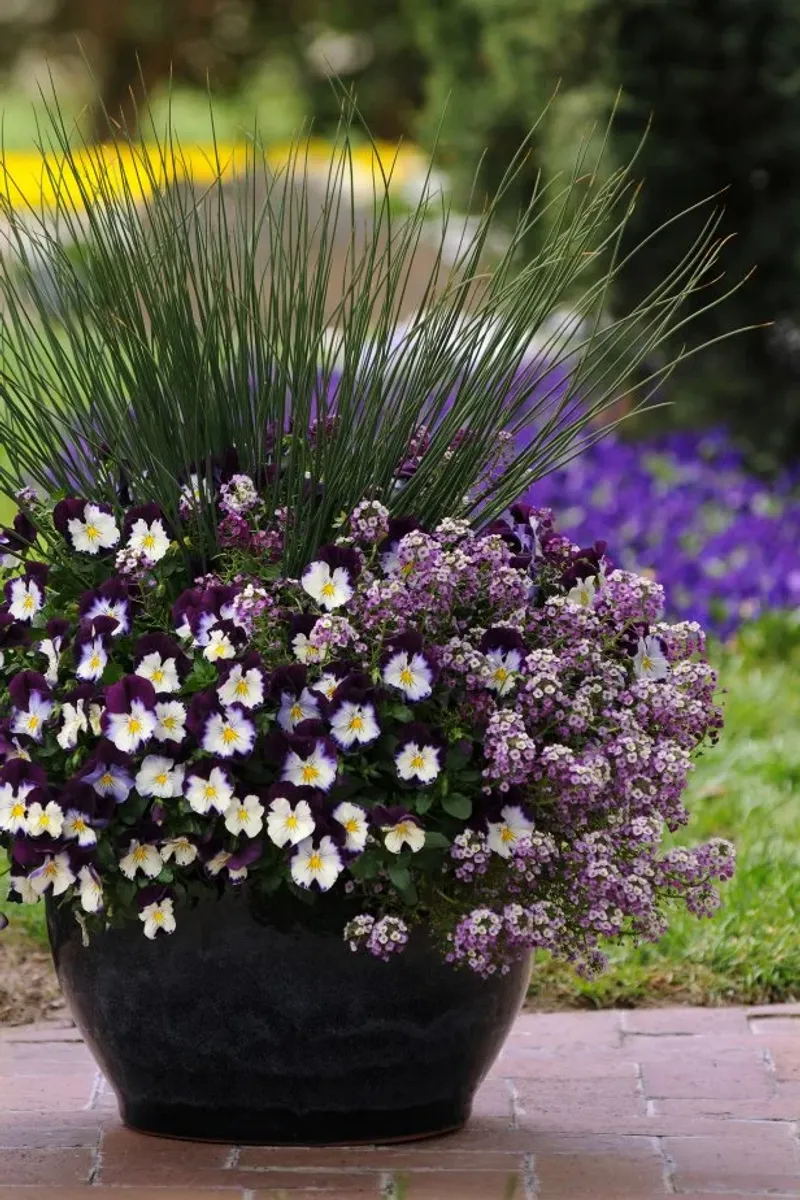
Few cool-season plants fit a porch pot as well as the pansy (Viola × wittrockiana). Texas A&M AgriLife’s Earth-Kind seasonal color guidance lists pansies as hardy, sun-loving annuals, which is exactly the profile you want for a container that sits in open light by the front door.
Color is where pansies shine. Their blooms run from deep purple and royal blue to sunny yellow, orange, red, and creamy white, and many have the little face-like markings that make them easy to recognize.
That range lets you match a brick entry, a painted door, or a set of mixed pots without much trouble.
The Bexar County office of Texas A&M AgriLife Extension has long suggested pansies for winter color in Central and South Texas, as described in its pansy planting advice. That is regional guidance, so results will differ from the Rio Grande Valley to the Panhandle, and even from one side of a neighborhood to another.
A fair promise is seasonal winter color rather than nonstop blooms. Pansies tend to flower as long as conditions allow, and a cold snap or a stretch of gloomy days can slow them down.
The rest of this guide focuses on the practical steps that help a porch container perform: when to plant, which plants to buy, how to water, and how to protect the roots when a hard freeze is in the forecast.
Choose a locally appropriate fall planting window
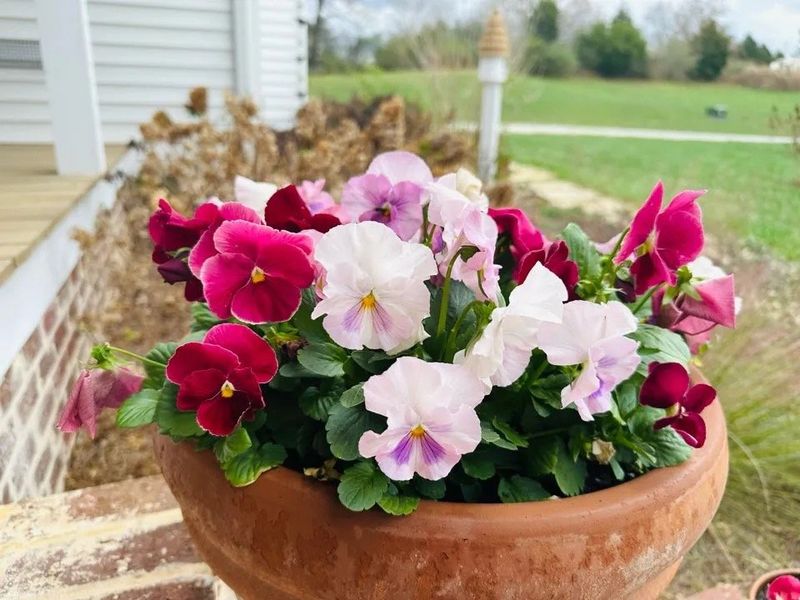
Fall is a useful time to plant pansies because the plants get a chance to settle in before severe cold arrives. Cooler soil and milder days let roots grow without the stress of summer heat.
The Bexar County Extension article, Colorful Pansies: Plant Them Now, makes that case for its part of the state.
That advice belongs to Central and South Texas, though, and it is not a statewide deadline. A gardener near the Gulf Coast may be watching for the first real break from heat, while someone in the Panhandle may already be tracking nights near freezing.
Neither one needs to rush because of a date on a calendar.
Freeze conditions also vary on a small scale. Texas A&M AgriLife’s freeze protection publication notes that local topography, nearby buildings, and other site conditions affect how cold a spot gets.
A porch tucked against a south-facing brick wall can stay noticeably milder than an open pot on a low lawn.
A simple approach is to watch your own forecast and the first stretch of cooler nights where you live. Ask a local nursery or your county Extension office when they see pansies going in.
Aim to plant early enough that roots have a few weeks to grow, but let local weather, not a headline, set your date.
Select healthy plants and give them sun
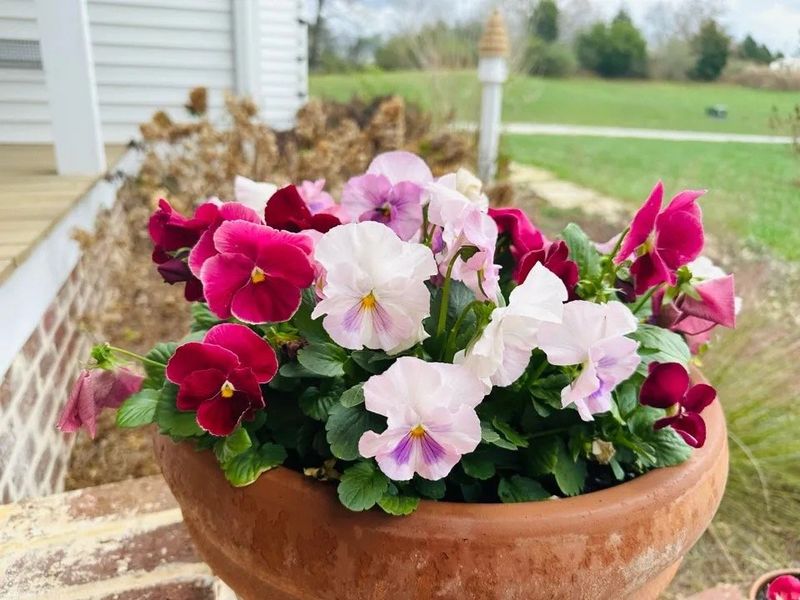
At the nursery, look for compact, bushy plants with plenty of green leaves and a few buds along with open flowers. Skip pansies that are tall and stretched out, with long bare stems, because they tend to struggle to fill a pot.
Plants that are root-bound, with a thick tangle of roots circling the inside of the cell, are also poor choices.
Slide one plant out of its cell if the seller allows it. Healthy roots look white or light tan and hold the soil together without forming a solid mat.
Gently loosen any circling roots at planting time so they can spread into fresh potting mix.
Sun matters just as much as plant quality. The Bexar County Extension guidance says pansies do well with six or more hours of sun, so pick the brightest spot you have.
In winter the sun sits lower, so check where light actually lands on your porch in cooler months instead of relying on summer patterns.
Choosing good plants and planting at a sensible local time work together. The same Extension article stresses early root establishment before severe cold.
A sturdy transplant with a few weeks to grow roots will usually handle chilly nights better than a weak plant set out at the last minute.
Use drainage and steady care to support the display
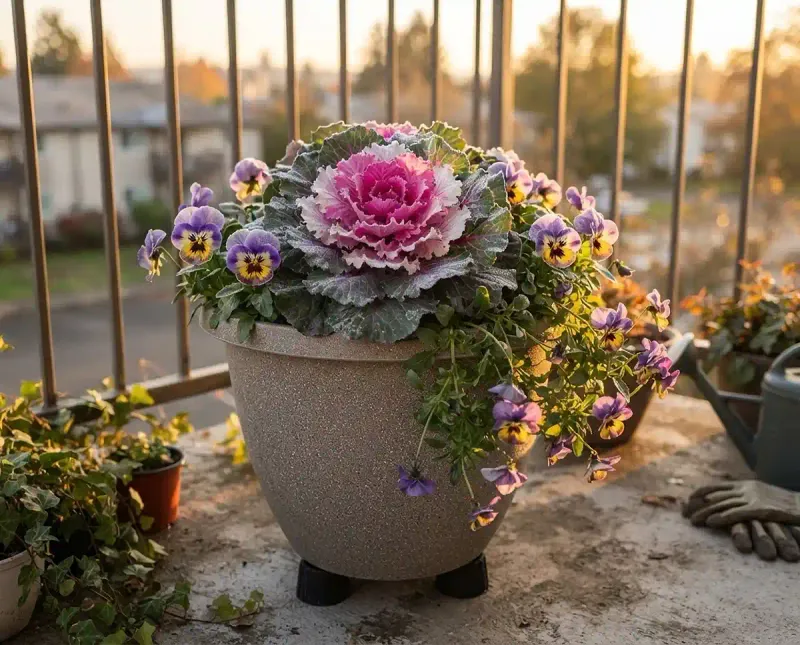
Drainage comes first. Pick a pot with holes in the bottom, fill it with a quality potting mix, and set it on feet or a stand so water can escape freely.
A saucer that holds water can keep the roots soggy, so empty it after rain or watering.
Standing water is a real threat to pansy roots. Texas A&M’s seasonal color guidance warns that water left standing encourages root disease.
A pot that never drains can undo all your good plant selection.
Water well right after planting to settle the mix around the roots. The Bexar County Extension advice is to water new plants regularly, then water as the soil dries.
Poke a finger an inch or two into the mix; if it feels dry, water until it runs from the bottom, and if it still feels damp, wait.
Deadheading helps the display look tidy and supports more flowers. Pinch or snip faded blooms along with their stems so the plant keeps making new buds instead of setting seed.
A quick check every few days takes only a minute.
Even with good care, blooms can slow during a cold spell and pick up again when milder weather returns. Treat that pause as normal rather than a sign that something went wrong.
Protect container roots when a hard freeze threatens
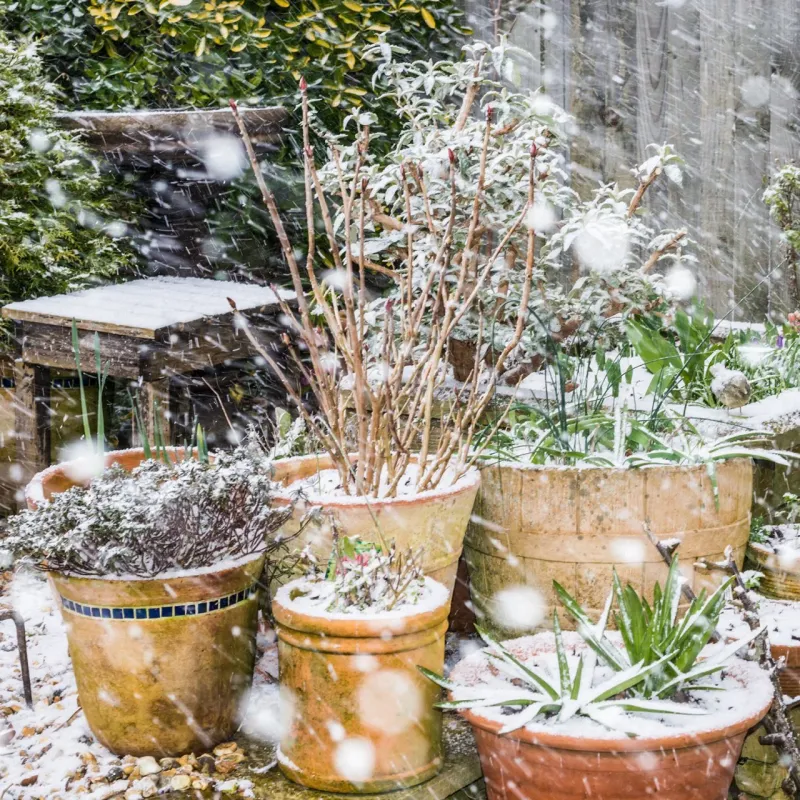
Pansies are known for handling cold, but that reputation comes from plants growing in the ground. A pot is different.
Soil in a container is exposed to cold air on every side, so roots can chill far more than they would in a garden bed.
Texas A&M AgriLife’s freeze protection guide cautions that container roots can die when the temperature in the container drops much below 32 degrees Fahrenheit. That does not mean every pot will fail, but it does mean a pansy that shrugs off cold in a landscape bed may be at greater risk on an open porch.
When a killing freeze is forecast, the best move is to carry pots into a garage or another protected place if you can. Set them where they still get some light, and bring them back out when temperatures recover.
If moving is not possible, group the pots close together against a protected side of the house, away from the coldest wind. Packing pots side by side helps them share some warmth from the wall.
Adding mulch, such as shredded bark or leaves, around the outside of the containers gives the root zone a bit more insulation.
Think of these steps as ways to improve the odds, not guarantees. A short, light freeze is a very different test from several days of deep cold.
Your local forecast and the exposure of your porch will tell you how much effort a given night deserves.
The Extension’s emphasis on early root growth also helps here, since a well-established plant generally has more reserves to draw on.
Use covers as limited help, not a guarantee
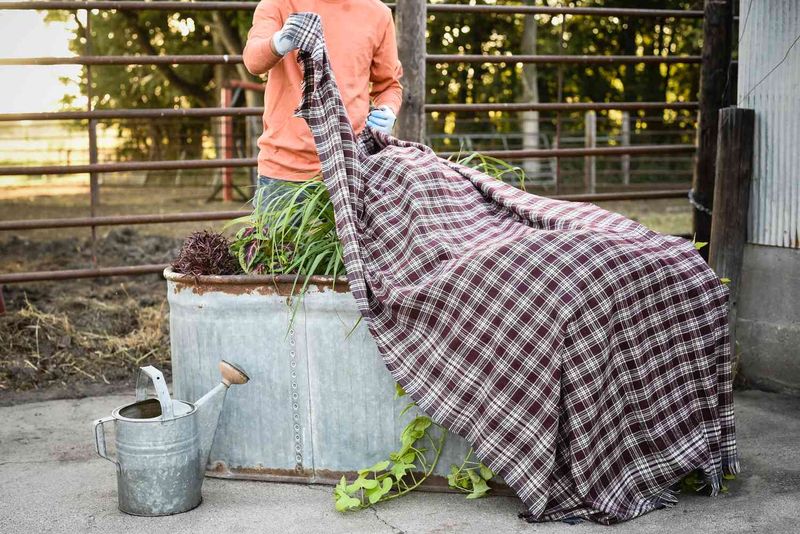
If a frost is expected and you cannot move the pot, a cover can add a little protection. Texas A&M recommends a loose sheet, blanket, or frost fabric that can trap heat rising from the ground.
Drape it over the plants before dusk and secure the edges so it holds in warmth, then remove it once temperatures climb the next morning.
Avoid laying clear plastic directly on the foliage. AgriLife’s freeze guidance warns that it can worsen contact injury, and the same publication explains that light covers that help in an ordinary frost may offer little to no protection in a severe freeze.
Sprinkling water on plants is not a casual fix either, because ice is a poor insulator and the method needs careful, continuous timing.
So a cover is best seen as a helper for light frosts, paired with the shelter and mulch steps above. For a hard freeze, moving the pot is the stronger choice.
Putting it together, plant in your area’s fall window, give the pot sun and drainage, and keep a sheet and a clear path to the garage handy. Earth-Kind’s seasonal color advice and the Bexar County pansy guidance both point toward this kind of simple routine.
Even the best-prepared pot cannot promise color every day. A pansy on the porch is a winter bonus, and some weeks will simply be better than others.