
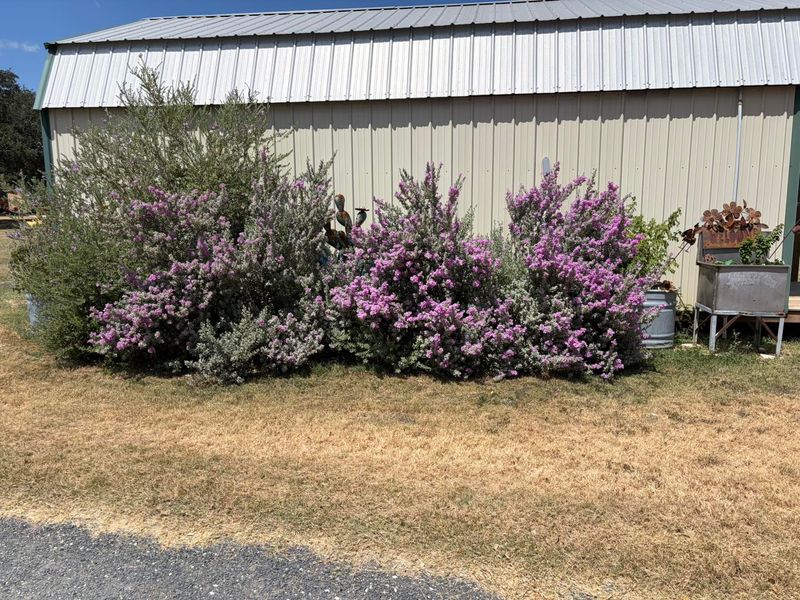
Bare foundation lines look rough, and nobody wants rats moving in next to the house. It is tempting to hope one tough Texas shrub can fix both problems at once.
Texas sage, also called cenizo, is a great-looking choice for sunny Central Texas yards, but rat prevention takes a different set of tools. Here is how to enjoy the plant and still keep your home hard for rats to get into.
What the available evidence says about shrubs and rats
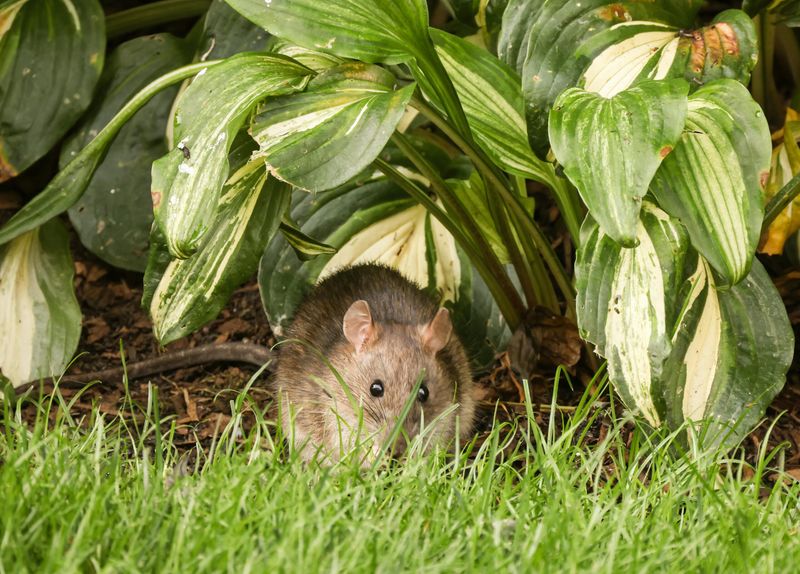
Here is the straight answer: the sources reviewed for this article do not establish Texas sage, or any other named native Texas shrub, as a rat repellent. That is a limit of the evidence we found.
It does not prove that no plant could ever affect rat behavior, and it does not mean every foundation shrub has been tested.
What the guidance does point to is habitat. UC IPM’s rat guidance focuses on thinning dense plantings and leaving space around shrubs and buildings, not on planting a shrub barrier.
In other words, a bush against your wall is not a guard at the door.
Scent-based fixes get the same cautious treatment. NC State Extension says repellents are not reliable for rat management or prevention.
So the plan in this article splits into two jobs. Picking an ornamental shrub is a design decision.
Keeping rats out is a habitat and exclusion job, and the two should not be confused.
Dense cover can hide rat activity
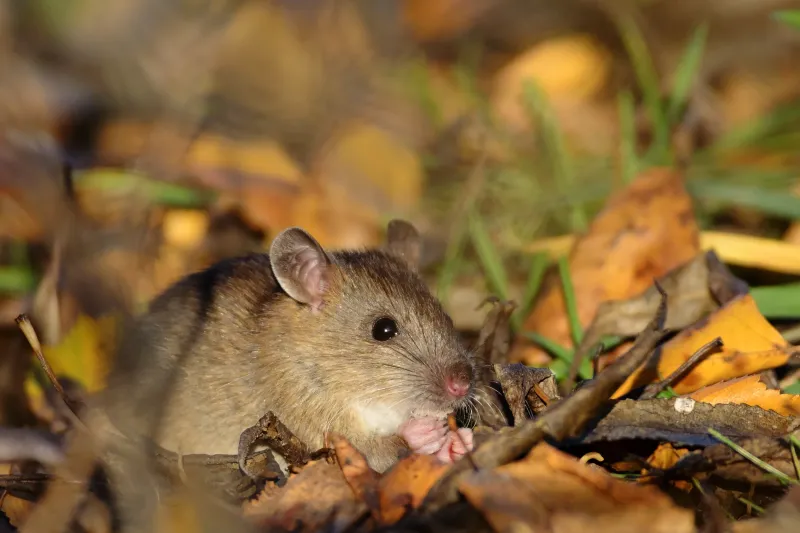
Thick growth that hides the ground gives rats a place to move around unseen, and it makes your own inspections harder. That does not mean every shrub attracts rats.
It means that a tangle of branches, leaf litter, and debris can cover signs like burrows, droppings, or gnawed edges.
The type of rat matters. Texas A&M AgriLife School IPM notes that Norway rats commonly burrow near foundations, while roof rats favor elevated nesting sites, including trees and dense vegetation.
So a ground-level burrow check and a look at overhanging branches are both worth doing.
You may have heard that landscaping draws rats. A 1996 Boston study looked at 54 landscaped sites and found Norway rat activity linked to dense, connected shrub stands and ground litter.
Keep that study in perspective. It was observational, it covered one urban setting, and it was not a Texas trial.
It does not show that cenizo causes rat activity.
The practical takeaway is simple. Open, tidy beds are easier to read, and easier to read means problems get caught sooner.
Fragrant plants are not a dependable rat barrier

Herb-scented advice is everywhere online: plant rosemary, lavender, or mint and rats will stay away. The sources reviewed here do not back that up.
Nothing in them shows that a living aromatic shrub prevents a rat infestation.
Some odors may bother rodents for a short time, but that is a long way from protecting a house. NC State Extension says repellents are not reliable rat management or prevention.
Peppermint oil is a good example of advice that gets stretched. The Ask Extension peppermint answer is about mice, not rats, and it points readers toward exclusion and sanitation instead.
If you love the smell of herbs, plant them for the kitchen or the pollinators. Just do not count on them to guard the foundation.
Sealed gaps and clean yards do that job far better.
Texas sage is an ornamental choice, not pest control
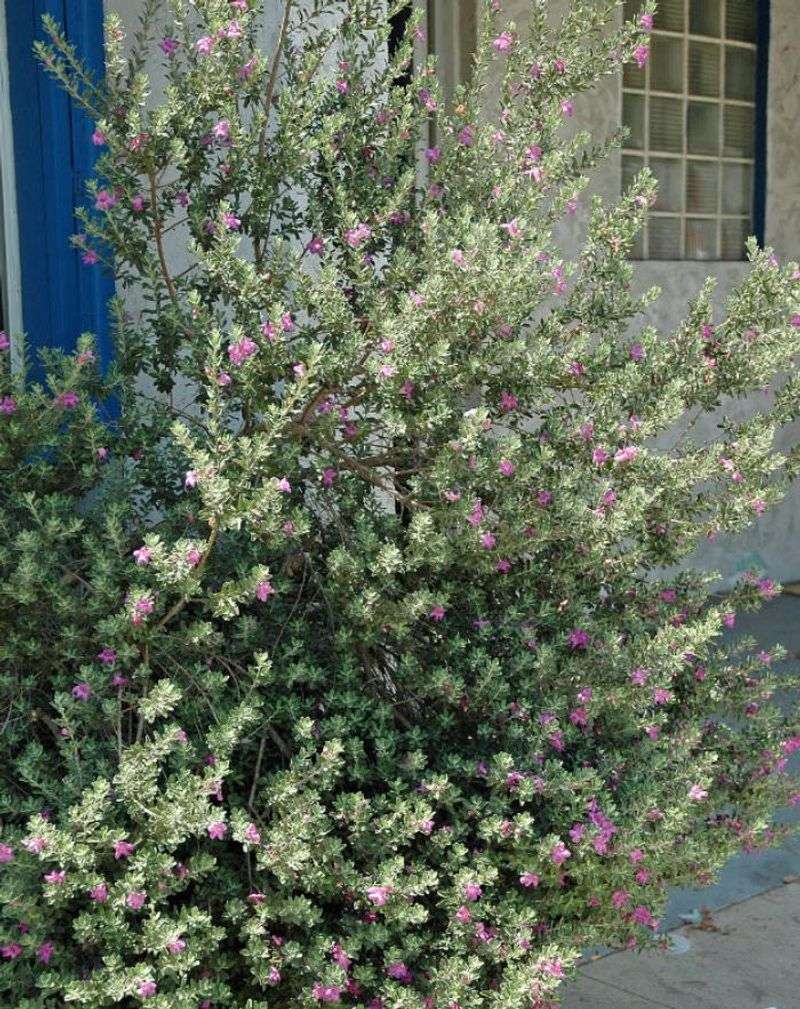
Texas sage, or cenizo (Leucophyllum frutescens), earns its spot in Central Texas yards for looks and toughness. It is an evergreen shrub native to parts of Texas, with silvery foliage that stays put through winter.
It also handles full sun and low water, which suits our triple-digit summers and watering limits.
Size is where homeowners get tripped up. The City of Austin plant guide lists it at about 5 to 8 feet tall and 4 to 5 feet wide.
That is a lot of shrub for a narrow strip beside the slab.
The same guide recommends well-drained soil and a natural, unsheared form. Clipping it into a tight box fights the way it grows, and soggy beds near a downspout will not suit it.
Before you buy, measure from the wall to the edge of the bed. Leave room for that 4 to 5 foot spread plus space to walk behind it, and do not plant it tight against the house.
If the bed is too narrow, a smaller plant or a spot farther out in the yard is the better call.
To be clear, this is a landscaping pick. It adds evergreen color and low-water ease, but it is not pest control.
Keep the foundation line visible

Think of your foundation bed as something you need to be able to see. Thin out dense growth, trim branches that hide the ground, and leave a gap so you can look along the wall.
That way a new burrow or gnawed gap stands out early.
For numbers, UC IPM recommends at least 2 feet between shrubs and between shrubs and buildings. Treat that as practical guidance, not a universal building code rule.
Texas A&M AgriLife, in its School IPM rodent plan, similarly advises trimming vegetation that hides the ground.
Here is a simple routine. Walk the foundation once a month with a flashlight, lift low branches, and look for fresh holes, droppings, or rub marks along the wall.
Clearance makes problems easier to spot. It does not guarantee rats will stay away, so use it alongside the steps in the next section.
Use exclusion and sanitation to reduce rat access
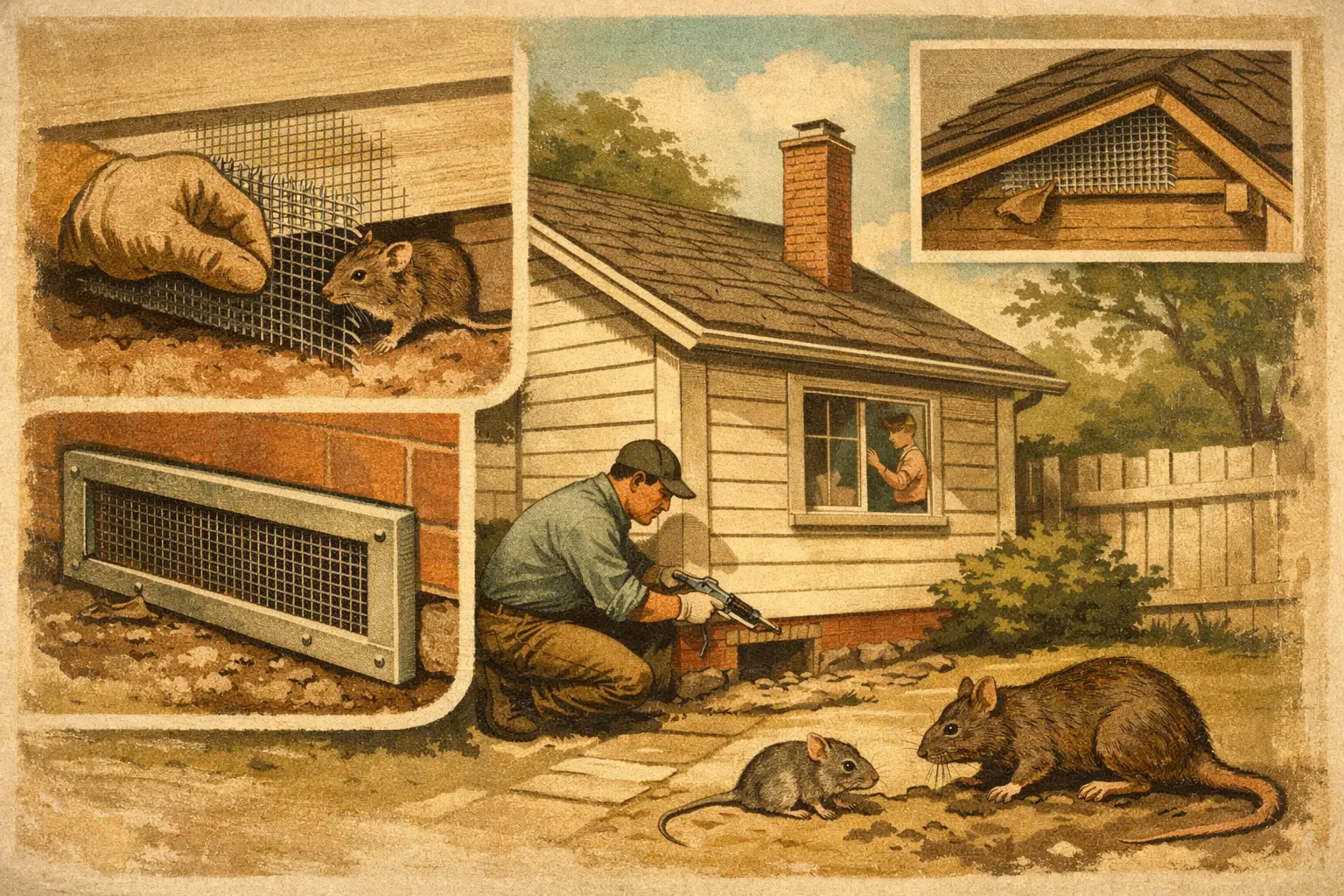
The measures that work on rat access are less glamorous than a shrub. EPA guidance lists sealing entry gaps, removing food and water sources, and securing garbage.
Add clearing leaf piles and deep mulch near the house, since both give rats cover.
Start with the walls. Check around pipes, vents, garage doors, and the roofline, and close gaps with sturdy materials.
Texas A&M AgriLife calls rat-proofing the most permanent control approach when it is feasible.
Next, take away the easy meals. Use lidded trash cans, bring pet food in at night, pick up fallen fruit, and fix drips from hoses and AC lines.
If you already have rats, a shrub will not solve it. Rodenticides carry risks, and UC IPM warns they are toxic to people, pets, and non-target wildlife.
Follow product labels and get professional guidance where needed.
Here is the decision rule. Choose Texas sage only where its size and growing conditions fit, and keep the space beside the house open for inspection.
A good-looking bed is nice, but a sealed house is what keeps the rats outside.