
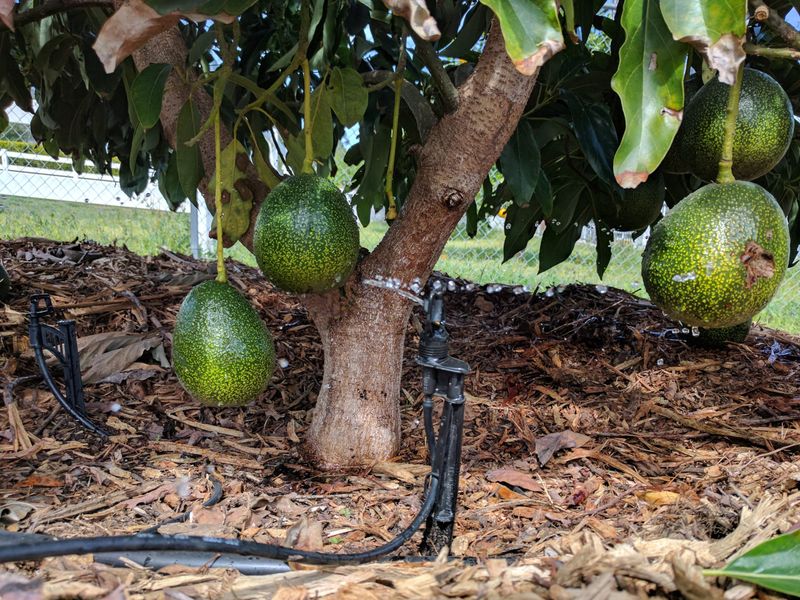
Your avocado tree does not stop working when the garden looks quiet. Below the mulch, shallow roots are taking in water and air all winter long.
Before the rains arrive, a few simple checks can tell you a lot about how those roots are doing. Here is what to look at and what to do about it.
Wet soil can deprive avocado roots of air
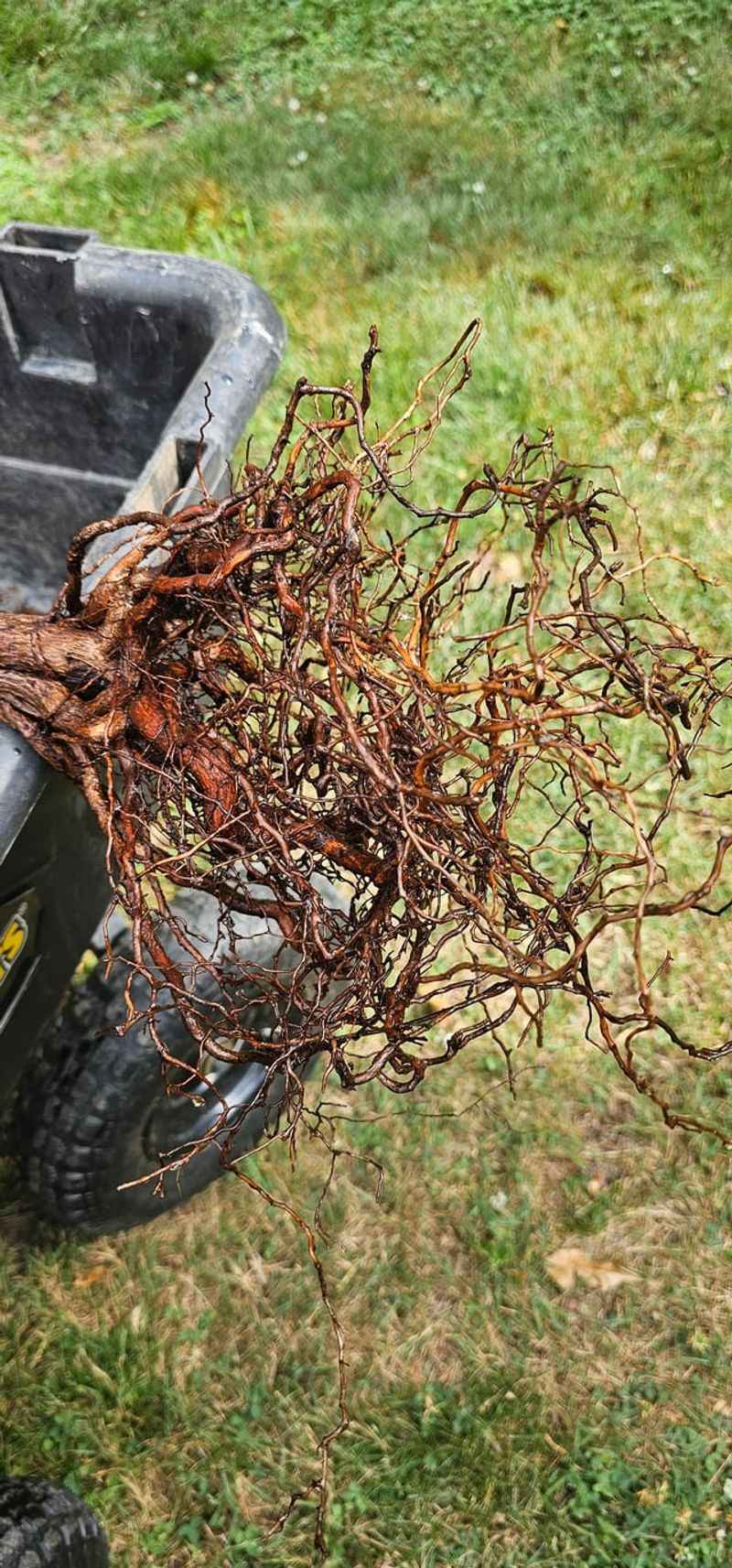
Avocado feeder roots sit close to the soil surface, and they need air as much as they need water. When soil stays soggy, the air spaces fill with water and roots can be starved of oxygen.
UC integrated pest management guidance links poor drainage and wet soil to root asphyxiation and Phytophthora root rot, a disease that thrives in those conditions.
Rain itself is not the villain. Winter storms deliver free water and can wash built-up salts down past the root zone.
The trouble starts when water has nowhere to go, especially in heavy or poorly drained soil. UC Topics in Subtropics points to prolonged wetness, not rain alone, as the real concern for roots.
You may notice small, pale leaves or a thin, sparse canopy and wonder if root rot is to blame. Those can be clues, and UC disease monitoring notes list them among possible signs.
But many kinds of stress cause the same look, including salt, drought, or poor irrigation, so one symptom never confirms a diagnosis.
That is why the smartest move is to look at the ground before judging the leaves. Knowing how your soil drains tells you far more than a single yellow branch.
The next section shows how to check it.
Check the root zone before rain arrives
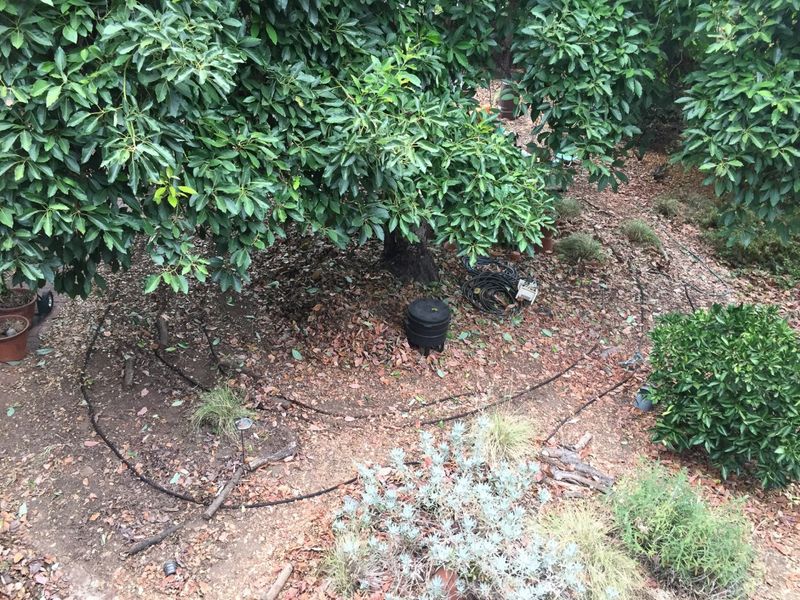
Walk out to the tree a day or two before a storm and look at the ground under the canopy. Notice whether water pools after your last irrigation, whether puddles linger for hours, or whether the soil feels cool and soggy a few inches down.
These signs tell you how well your particular yard drains.
Push a trowel or a long screwdriver into the soil beneath the outer canopy, where feeder roots are active. If it slides in easily and the soil crumbles damp, moisture is probably fine.
If it comes out muddy or smells sour, the root zone is holding too much water.
Those observations should drive your next move. UC guidance on irrigating home garden avocados advises against watering soil that is already wet, so a damp reading means holding off on the hose.
A dry reading just before a light rain may still call for a drink.
One caution about fixes. UC’s avocado planting guide suggests a raised mound when planting a new tree in heavy clay.
That is a planting step, not a rescue for an established tree, and digging or piling soil around existing roots can do harm.
For a mature tree with slow drainage, the practical response is adjusting water and mulch, not rebuilding the ground around it.
Let soil moisture—not the calendar—guide irrigation
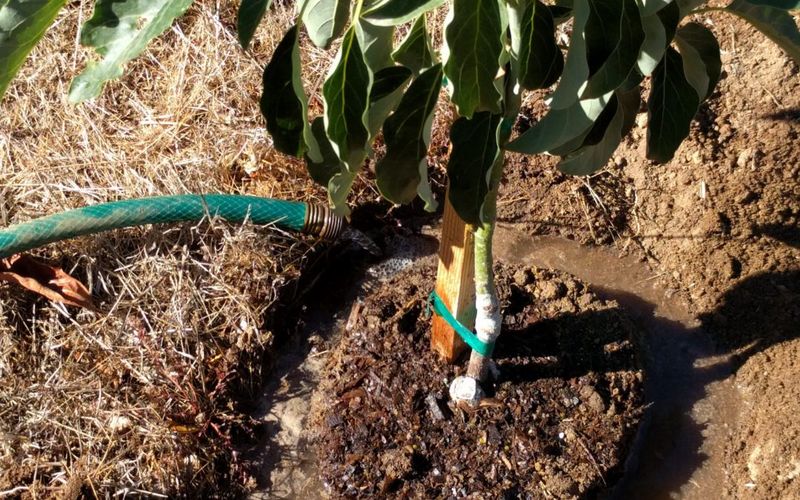
A fixed watering schedule ignores what the sky and soil are doing. Some winters bring steady storms, others leave weeks of dry, breezy weather.
Your irrigation should follow those changes rather than a date on the calendar.
Start with the soil check. If the root zone is already moist, skip the next cycle and look again in a few days.
If a storm just delivered a good soaking, there is usually no reason to add more on top of it.
None of this means turning off water for every avocado tree all winter. UC guidance notes that both over-watering and under-watering can hurt tree health.
In a dry stretch between storms, a tree can still need water, especially if soil is sandy and drains fast.
Tree age matters too. Young trees have small root systems and can dry out sooner, while mature trees with deep mulch and wide canopies hold moisture longer.
Slope, soil type, and how much sun the tree gets all shift the answer.
A simple routine works well: check the soil, note recent and forecast rain, then decide. Keep a short note of what you find so you learn how your own yard behaves.
After a season or two, you will have a good feel for when your tree actually needs water.
Mulch helps only when the root zone can drain
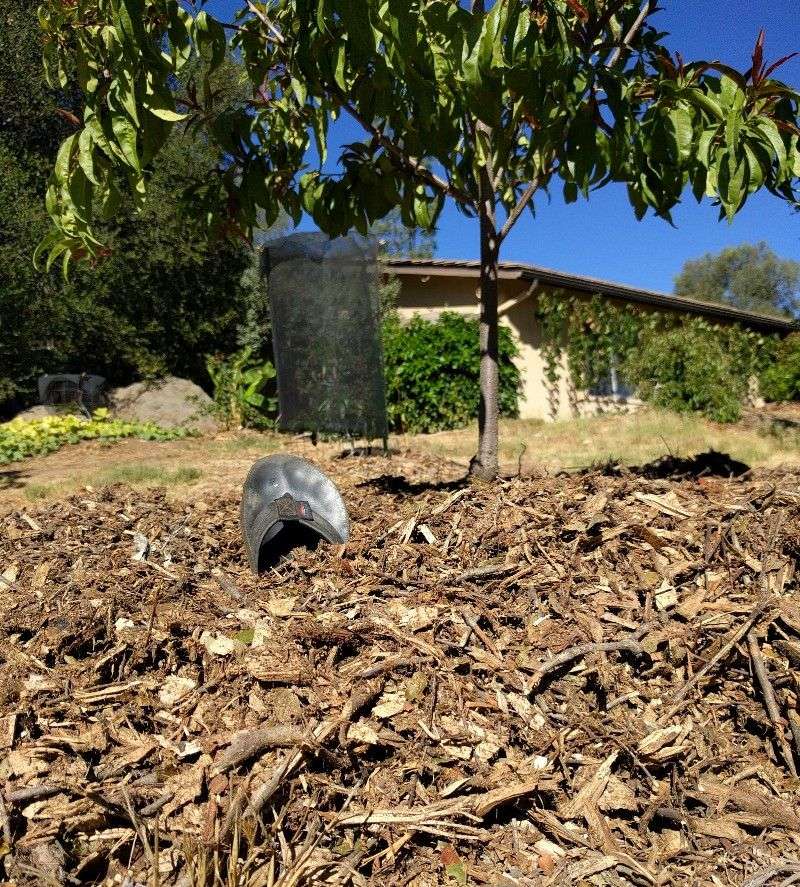
Coarse, woody mulch is one of the better things you can give avocado roots. It cushions the soil surface, supports root growth, and is part of how UC root rot management guidance approaches Phytophthora, alongside careful irrigation and good drainage.
It is a helper, not a cure, and it will not make a tree immune.
The catch is that mulch also holds moisture. In poorly drained soil during long wet spells, a thick layer can keep the root zone too soggy, as UC Topics in Subtropics explains.
So the right choice depends on how your soil drains.
Keep mulch clear of the trunk, leaving a gap so the bark can stay dry. UC’s planting guide describes about 6 inches of mulch for a heavy-clay planting, kept 6 to 8 inches from the trunk.
UC’s orchard guidance gives a general range of 4 to 6 inches. These numbers fit specific settings, not every backyard.
If your soil drains well, a coarse layer can stay in place through winter. If water lingers or the soil stays saturated, pull mulch back from part of the root zone and let the surface breathe.
You can replace it once the ground dries out.
Treat mulch as something you adjust, not something you apply once and forget.
California bloom timing and winter weather vary
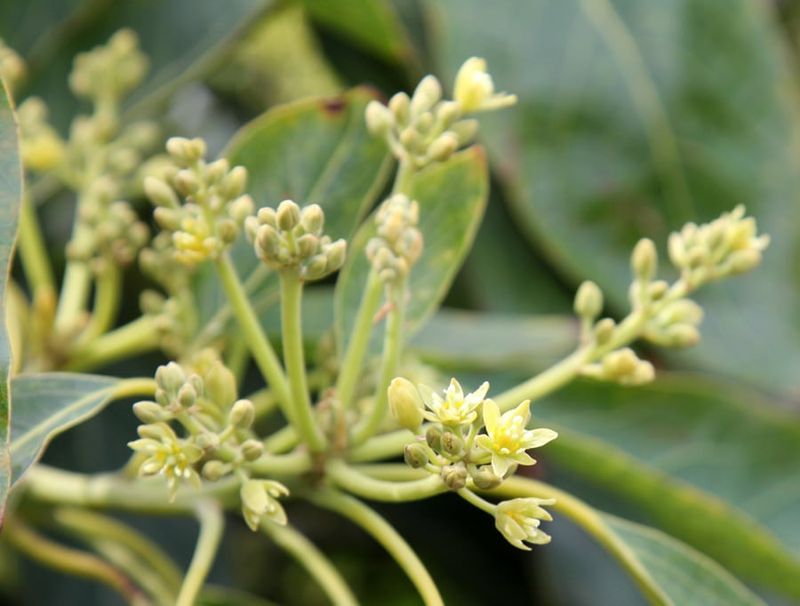
It is tempting to tie winter chores to next spring’s flowers, but avocado bloom depends on much more than the root zone. UC Cooperative Extension’s avocado phenology notes describe flowering in Irvine beginning around early March and continuing into May.
The same source stresses that timing can shift by weeks or months across California.
So a coastal yard, an inland valley, and a foothill lot may all bloom on different schedules. Variety, elevation, and the weather that year all play a part.
Do not assume the Irvine dates match your neighborhood, and they should not be applied to other states.
Weather during the flowering season matters as well. UC Riverside’s avocado overview names frost, low temperatures during bloom, and extreme heat during fruit set as factors that can affect flowering and fruit set.
Healthy roots give a tree the best footing to handle those swings. But no pre-rain task can control a cold snap or a heat wave, and none can promise flowers or fruit.
Think of root care as keeping your tree in good working order, while the season decides the rest. Watching your own tree each spring, and noting when it blooms, will teach you more about your microclimate than any general date.
Winter fertilizer is not bloom insurance
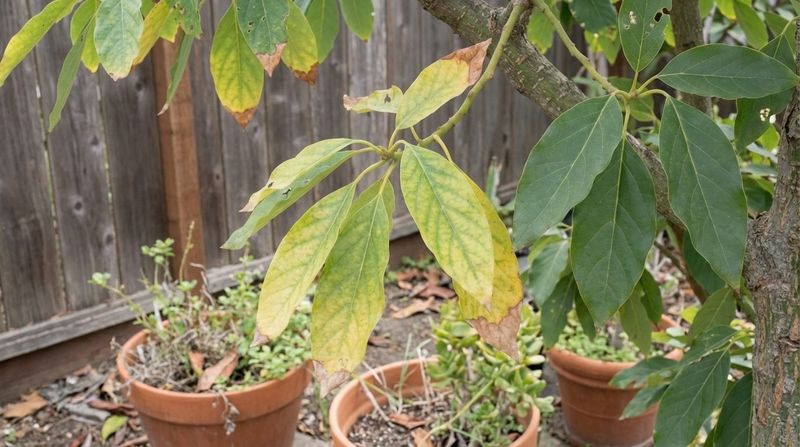
Feeding in fall or winter can seem like a smart way to set up spring flowers. It is not a reliable one.
California Department of Food and Agriculture guidance says avocado trees take up very little nitrogen in winter, so much of what you spread may go unused.
The same guidance describes fertilization as depending on crop load, tree condition, and timing. A heavily cropping tree and a resting young tree have different needs, so there is no single winter recipe.
Extra nitrogen is not a safe bloom booster, either. Too much fertilizer can harm trees, and heavy rain can wash unused nutrients past the roots.
If you are unsure whether your tree needs feeding, look at leaf color, growth, and last year’s crop before reaching for a bag. A local nursery or your county UC Cooperative Extension office can help you sort out a plan that fits your tree.
Prepare the roots, not a promised harvest
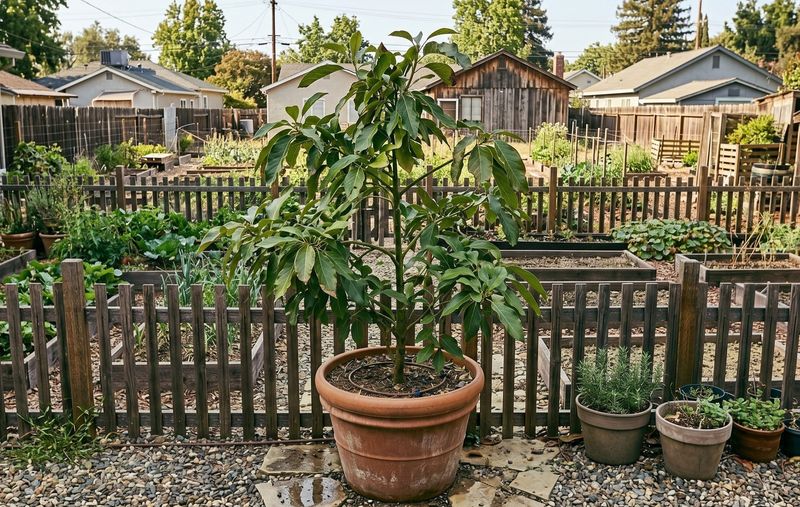
Before the next storm, take a quick look at your tree. Check whether water drains or pools, feel the soil for moisture, and water only when the root zone needs it, following UC irrigation guidance.
Keep coarse mulch off the trunk, and pull it back if the soil stays saturated, as UC root rot guidance supports for root health.
These steps help roots stay healthy, but they cannot promise spring flowers or fruit. Your tree is working underground all winter, and a little attention there is the best gift you can give it.