
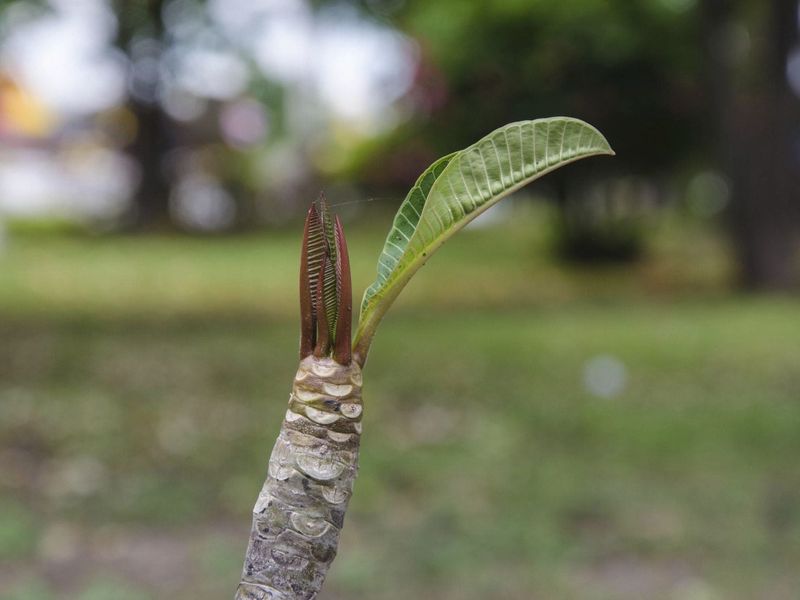
A single plumeria can become several plants if you take stem cuttings and root them with care. Many Florida gardeners start cuttings in a jar of water, while extension and society guides lean toward curing the cut end and planting it in a well-drained mix.
Nobody has run a head-to-head test that crowns one method the winner, so this guide sticks to what the guidance actually says. You will learn how to handle the sap, cure the cutting, choose a pot, and match your plan to your local frost risk.
Well-drained rooting is guidance, not a proven yield boost
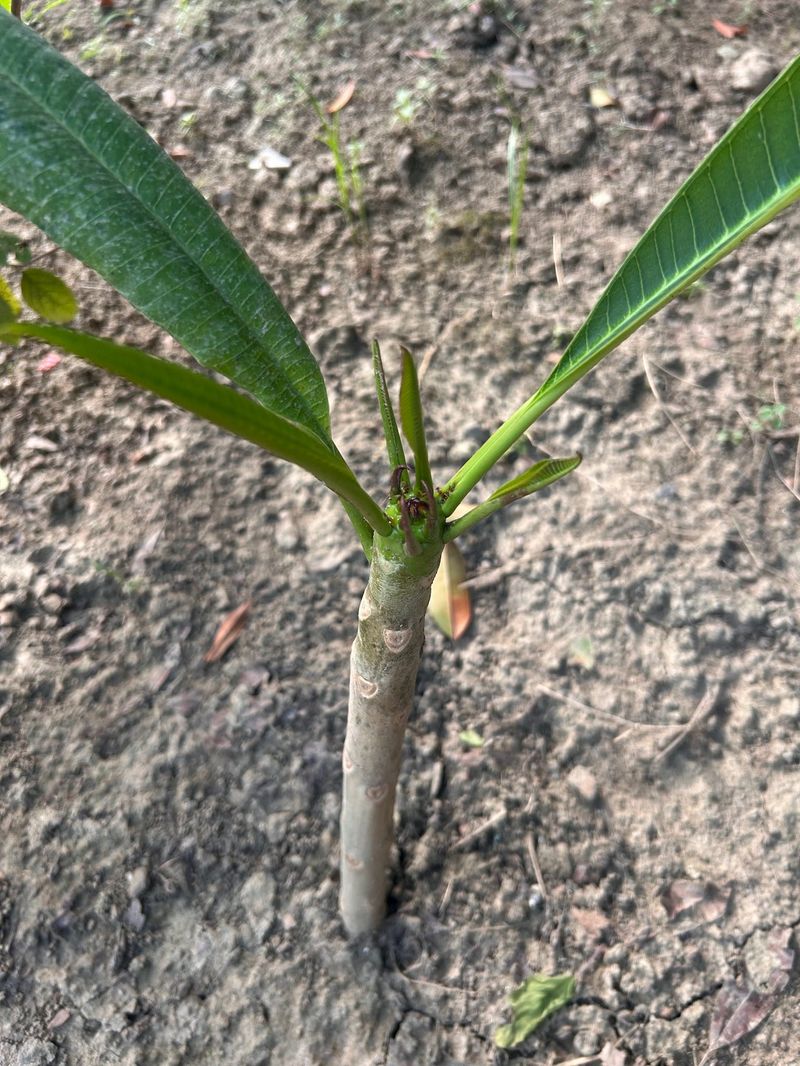
Here is the honest starting point: no controlled test shows that curing a plumeria cutting and planting it in gritty mix gives you more plants than rooting it in water. What exists is steady advice from extension and growers about how to give cuttings a good start.
That advice is worth following, but it is not a guaranteed yield boost.
Plumeria is described by UF/IFAS Gardening Solutions as a plant that grows readily from cuttings. Hawaii’s CTAHR plumeria guide recommends curing cuttings and avoiding too much water while roots form.
The point of that advice is to keep a fresh cut from sitting in constantly wet conditions.
That is not the same as saying water rooting is impossible. Some growers do report success, including a plumeria society grower account of rooting in perlite with a small amount of water.
Those reports are individual stories, so they cannot tell us how often the method works compared with others.
Think of the rest of this article as practical propagation advice, not a contest between methods. You will get steps you can follow, with the gaps in the evidence stated plainly.
A cutting can preserve the plant you selected
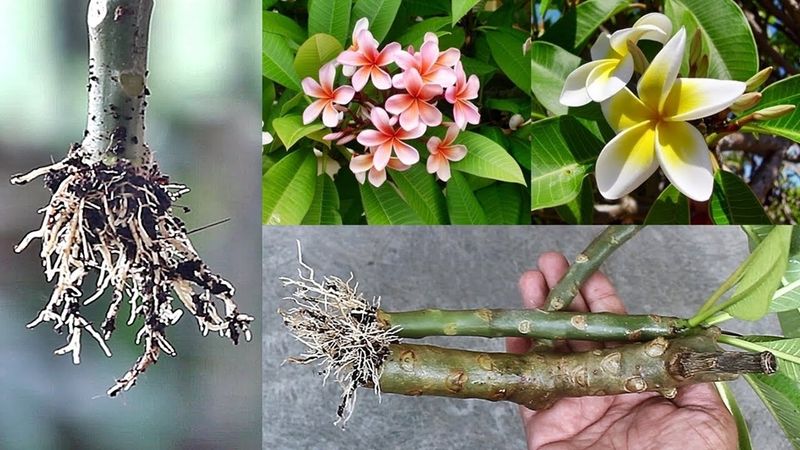
Stem cuttings are a way to make new plants from a plumeria you already own. If you love the color and scent of one tree, a cutting is how you try to get another just like it.
Seeds are a different story, because seedlings can vary in flower traits.
Hawaii’s CTAHR guide notes that cuttings maintain the selected cultivar. That is the real payoff here: a copy of a plant you already know and like.
Keep your expectations grounded. A cutting gives you a chance at an extra plant, not a promised number of healthy starts from one tree.
Avoid heavy pruning just to harvest more cuttings, since a parent plant can only spare so much.
Handle the cuts with care. UF/IFAS notes that plumeria sap can irritate skin and eyes, and CTAHR gives a similar warning.
Wear gloves, use clean tools, and keep your hands away from your face until you have washed up.
Let the cut end cure, with timing treated as guidance
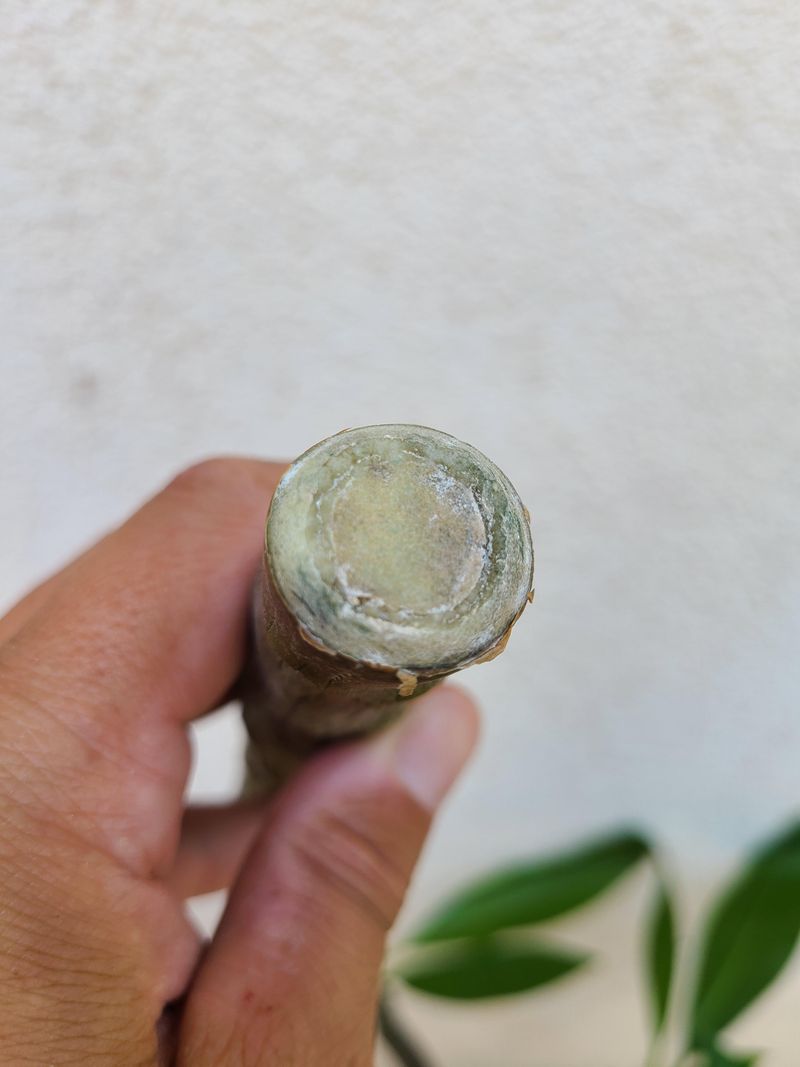
Curing simply means letting the cut surface dry out before the cutting goes into a pot. A dried end is less likely to sit wet and soft once it meets the mix.
Most plumeria guidance builds on this idea.
The sources do not agree on how long it takes. The UF/IFAS publication Plant Propagation Techniques for the Florida Gardener lists 2 to 4 days for plumeria.
Hawaii’s CTAHR guide recommends at least two weeks.
Neither number is a proven cutoff, and neither guarantees rooting. Climate, cutting thickness, and humidity could all play a role, though the sources do not say how.
A practical approach is to pick a recommendation and stay consistent while you watch how your cuttings behave. Keep them in a dry, shaded, sheltered spot while they cure, and note the dates so you can compare batches over time.
Choose a stable pot and a mix that drains well
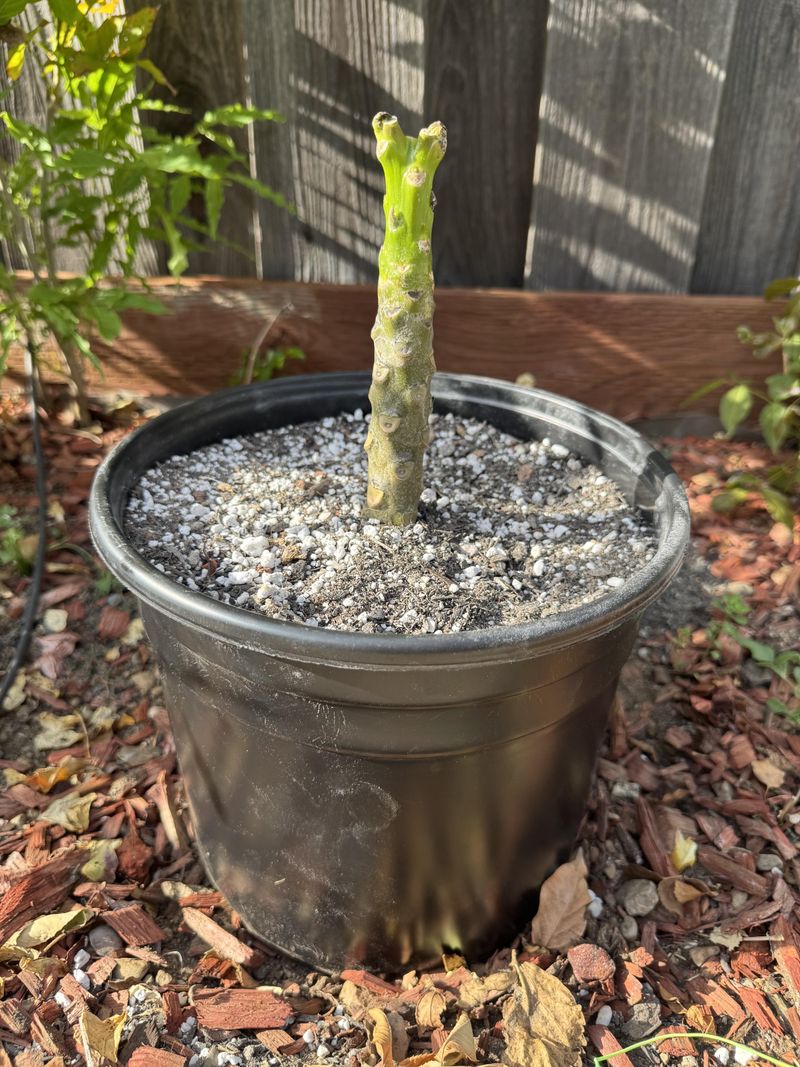
Start with a pot that will not tip over and a mix that lets water run through. The Southern California Plumeria Society suggests cactus mix blended with perlite or pumice.
Drainage holes matter just as much as the mix itself.
Florida’s sandy soil drains fast, but a container is a different world. Potting mix can hold water far longer than yard sand, so the blend you choose is what keeps the base of the cutting from sitting wet.
The word gritty can be misleading. A dry mix should mean one that does not stay saturated, not bone-dry material and not a promise to never water.
The society’s directions begin with moist mix, and CTAHR cautions against watering too much or too often.
If the cutting wobbles, stake it. A cutting that rocks in the pot has a harder time settling in, so a simple stake and a heavy, stable container help it stay put.
Give the cutting warmth and time
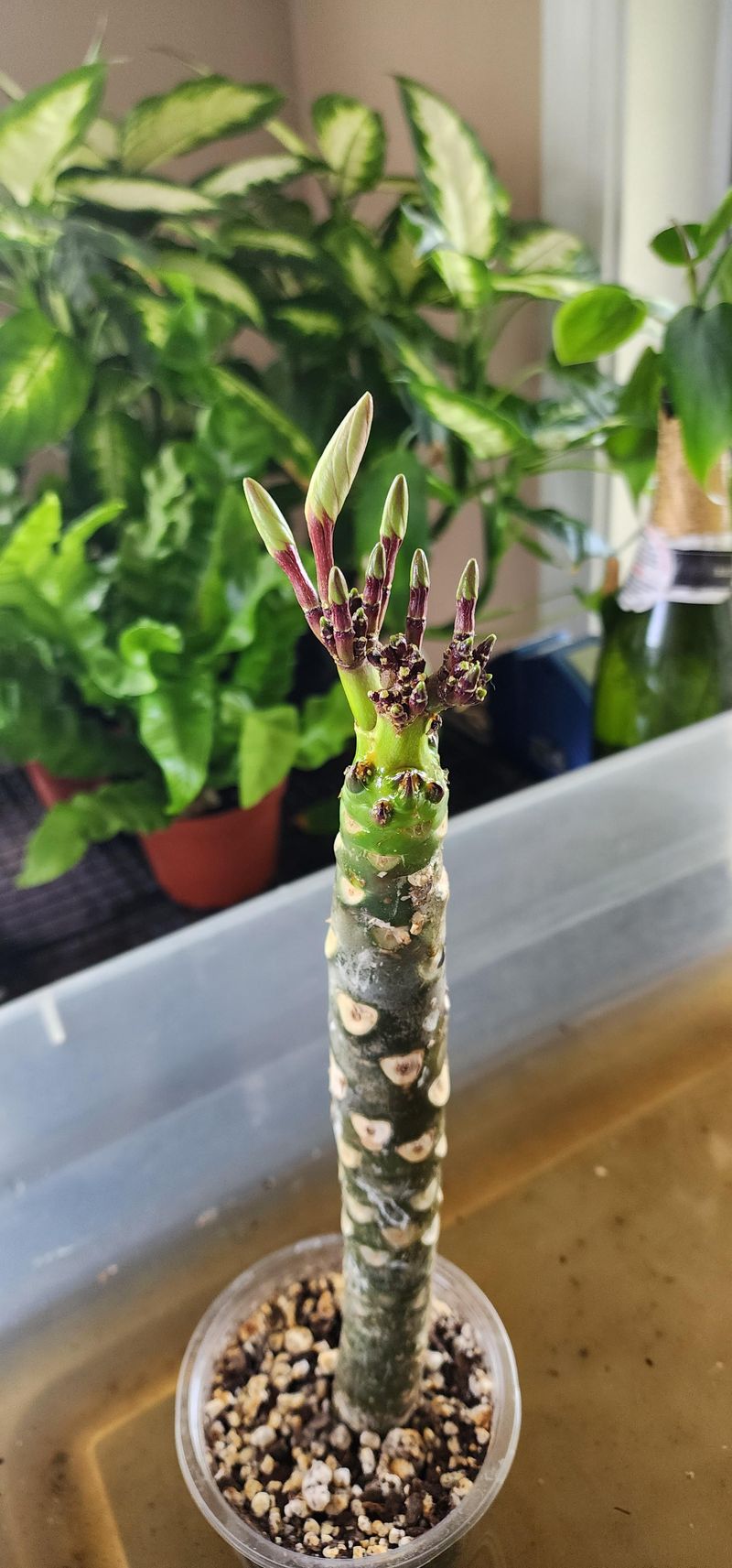
Once planted, the cutting needs a calm spot. The plumeria society recommends a warm, ventilated place out of baking direct sun.
A bright porch or a spot with open shade fits that description in many Florida yards.
Go easy on water after the first moist planting. The goal is to avoid mix that stays soaked, so let the pot’s drainage do its job rather than topping it up out of worry.
No exact watering schedule is given in the sources, so watch the pot and the weather.
Patience is the bigger challenge. CTAHR says rooting can take about two months.
Treat that as a rough estimate, not a deadline or a guarantee.
Resist the urge to tug the cutting to check for roots. Moving it around can disturb the base, and the sources do not describe a reliable sign to look for.
Match the pot’s location to Florida’s frost risk
Florida is not one climate when it comes to plumeria. UF/IFAS places its best fit in USDA Zones 10B through 11 and warns that frost threatens it in much of Central Florida.
If your yard sits in the warmest parts of the state, a young plumeria faces far less cold risk. In colder areas, the risk is real, and your own yard’s pockets of cold matter too.
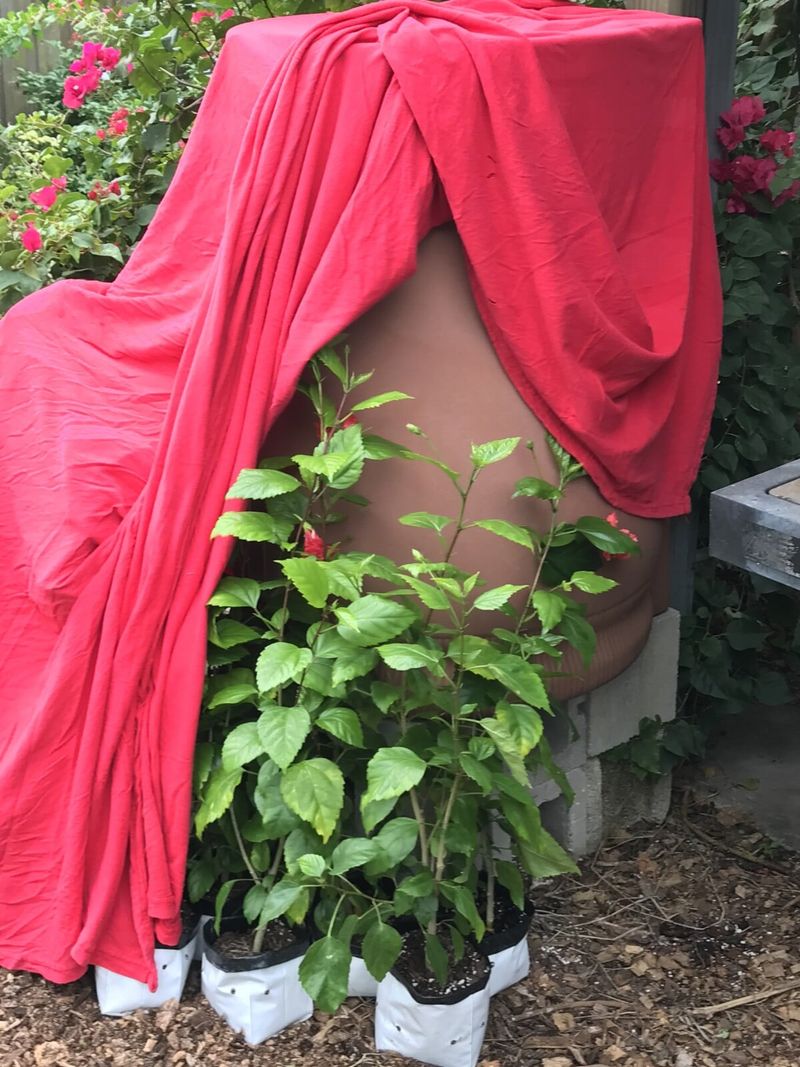
For gardeners in those colder areas, container culture and protection from cold become relevant. A pot can be moved, covered, or sheltered when a cold night is forecast, which an in-ground plant cannot do.
Check your zone and your local forecast before you decide where new cuttings will live long term. Not every Florida yard faces the same frost exposure, so plan for the conditions where you actually garden.
Follow the method without expecting a bigger harvest
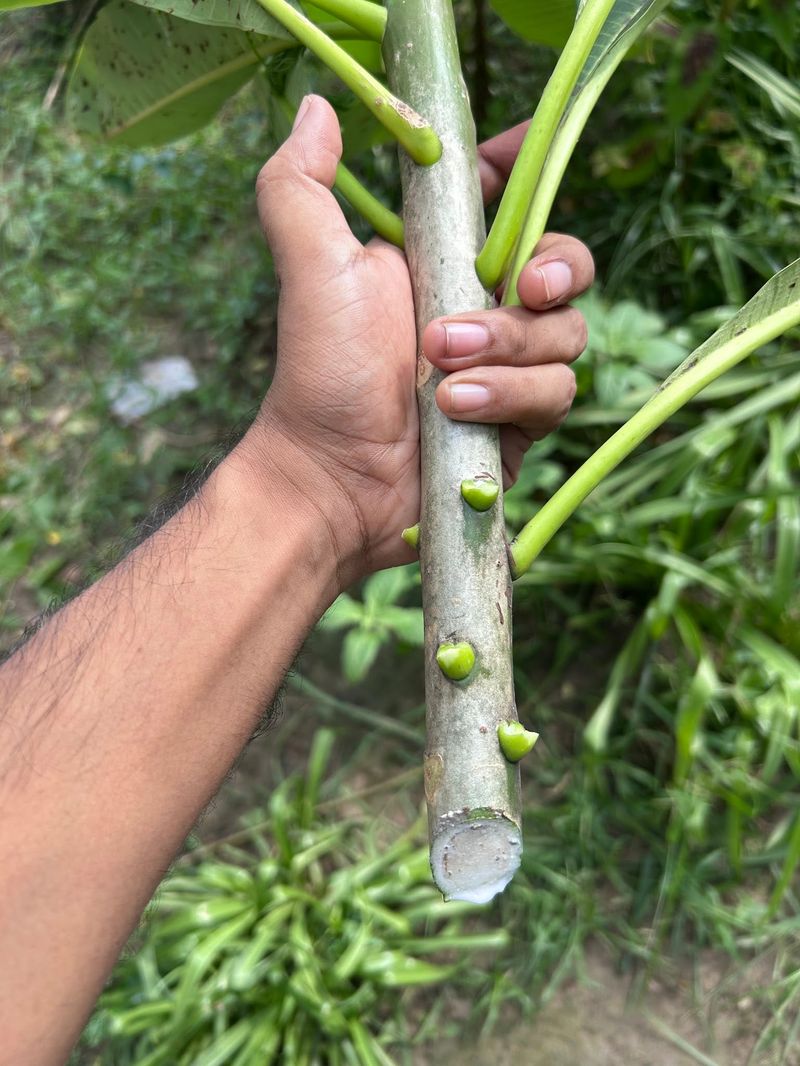
The sequence is simple: cure the cutting, plant it in a free-draining mix that starts moist rather than bone-dry, avoid soaking it, and give it warmth and time. That follows CTAHR and the plumeria society’s directions.
It is established advice, not proof you will end up with more plants than a jar of water would give you. Good care just stacks the odds in a sensible direction.
A cutting asks for little: a dry cut, good drainage, and patience.