
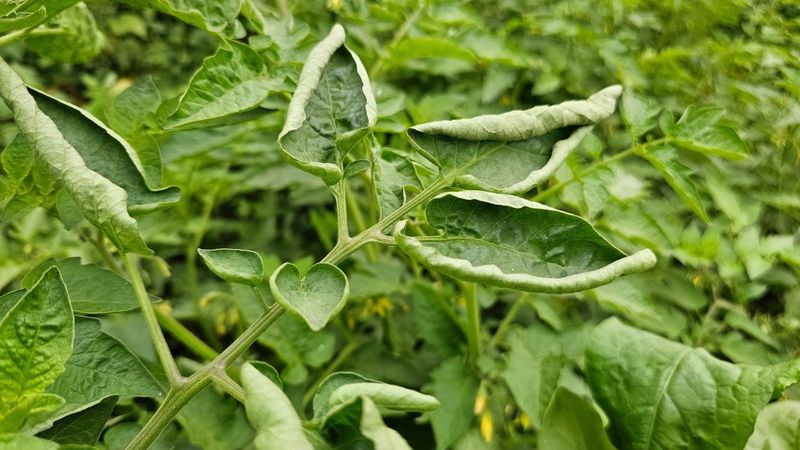
Tomato leaves that fold up like tacos can make any gardener nervous. The curl is a real message from the plant, but it is only one part of the story.
Stress, herbicide exposure, viruses, and insects can all bend leaves in similar ways. Learning what else to look at can help you pick a sensible next step instead of guessing.
Read the whole plant, not just the curl
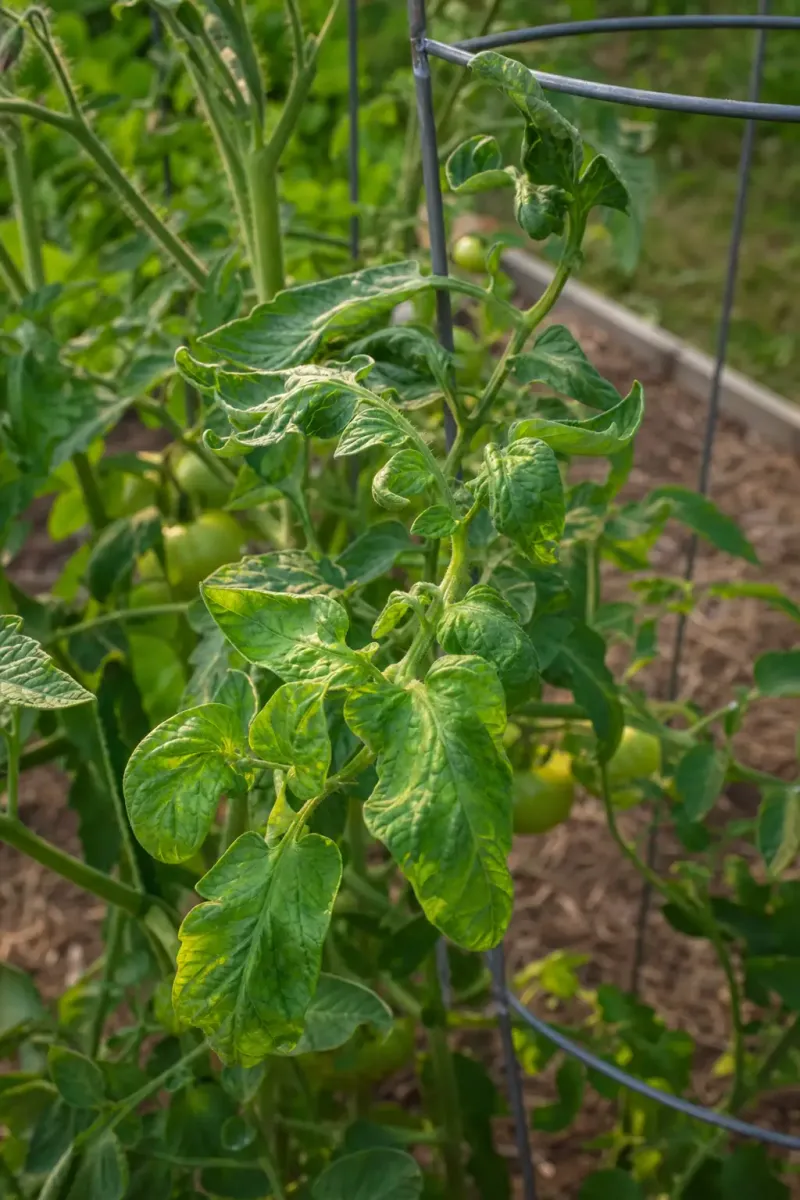
Curl direction is a clue, not a answer key. Different problems can bend leaves the same way, and one problem can show up as more than one shape, which is why Texas A&M AgriLife Extension treats twisting and curling as a puzzle to work through.
Start with a quick checklist. Are the older leaves curled, or only the newest growth?
Has the plant slowed down, or has fruit set changed? Do the leaves look yellow, mottled, leathery, or misshapen?
Then widen the view. Look for insects, think about recent heat, rain, and pruning, and ask whether any lawn or weed products were used nearby.
Some viruses cause upward curl too, as University of Minnesota Extension explains, so the full pattern matters more than the curl alone.
Upward rolls on older leaves can reflect stress

Picture a plant that looks otherwise happy, with firm, leathery older leaves rolled upward like little troughs. That pattern fits physiological leaf roll, which University of Minnesota Extension describes as a response to growing conditions rather than a disease.
Many stresses are linked to it. Heat, dry spells, fast growth, and heavy pruning are common associations, and Oklahoma State University Extension notes that prolonged wet soil can be involved as well.
So the roll does not simply mean the plant is thirsty.
The good news is that this pattern usually does not noticeably reduce growth or yield. Leaves that have already rolled may stay rolled even after conditions settle down, so judge the plant by its new growth instead.
Check the soil before changing your watering
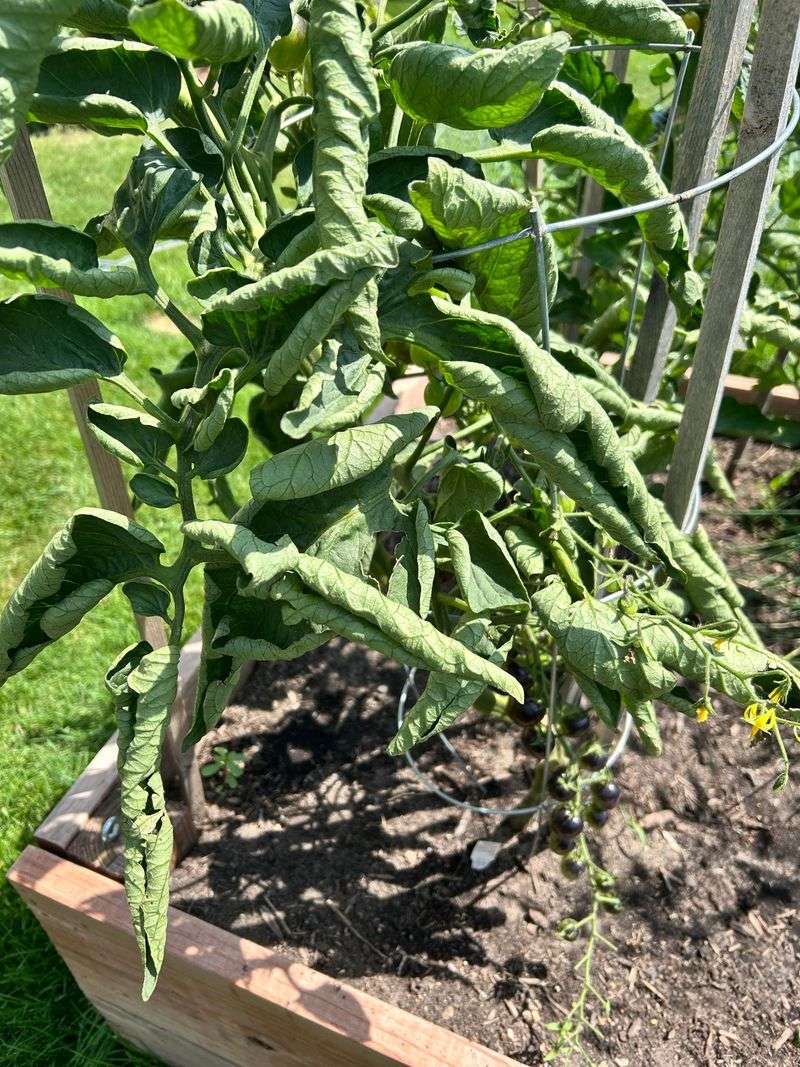
Before you reach for the hose or the fertilizer, put a finger into the soil. Moist, dry, or soggy soil tells you far more than the leaf shape does, and wet soil can be part of the picture, as Oklahoma State University Extension notes.
When the root zone is dry, water thoroughly at the base so moisture reaches deep. Aim for reasonably even moisture, and add mulch to help reduce the swings between soaked and parched.
University of Minnesota Extension offers similar advice for home tomato beds.
No single schedule fits every garden. Sandy Florida soil, heavy Texas clay, a stretch of rain, a heat wave, and a large mature plant all change how much water is needed.
Extra fertilizer or automatic extra water may not help and can make things worse.
Downward curls and twisted shoots raise an exposure question
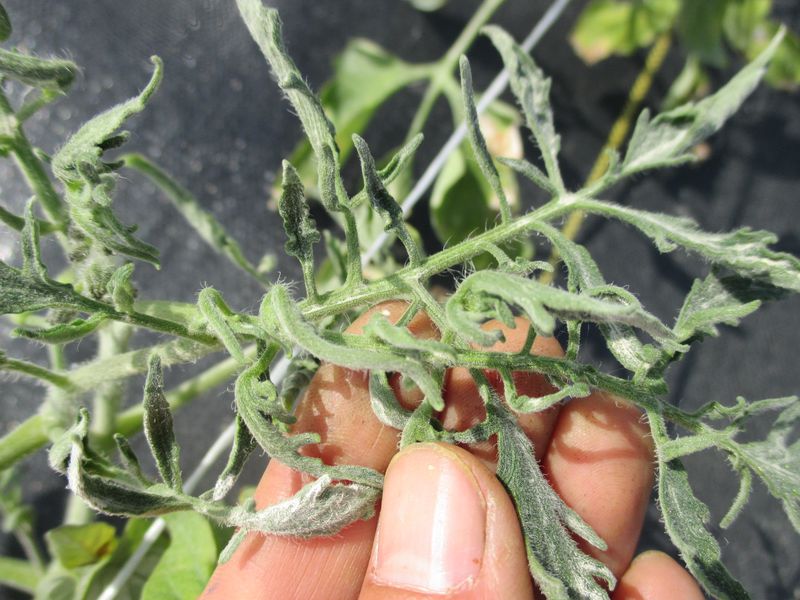
Narrow, distorted new leaves that bend downward, along with twisted, split, or brittle stems, can point toward herbicide injury. They do not prove it, since Texas A&M AgriLife Extension lists several causes of twisting and curling.
Think about how a product could have reached the bed. Spray drift from a neighbor’s lawn, a sprayer that once held weed killer, or lawn clippings, manure, or compost can all carry residues.
Tomatoes can react to very low levels, according to University of Minnesota Extension.
Walk the garden and see whether nearby plants show similar distortion. Ask around about recent lawn or weed-control work.
How the plant looks cannot tell you whether residues are present, so avoid assuming anything about the fruit either way.
Yellowing and stunting make virus a concern
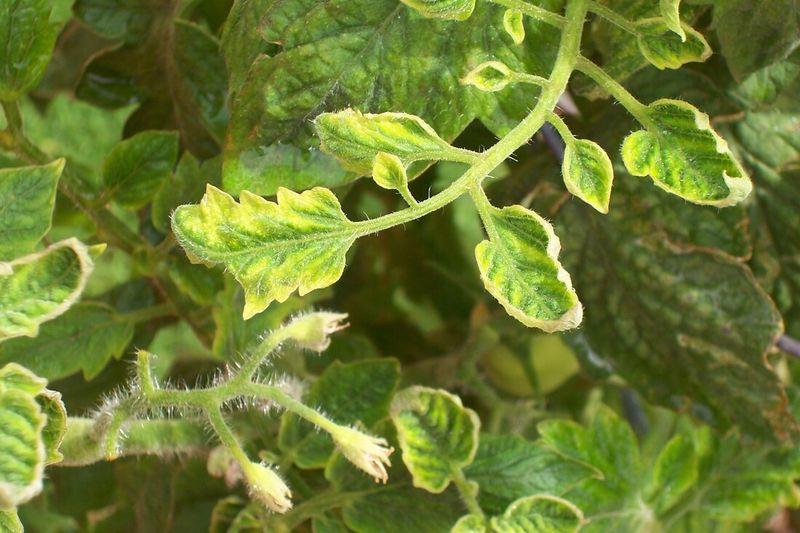
When leaves curl upward or inward and the plant also turns yellow, looks mottled, grows small or misshapen leaves, stays stunted, or sets little fruit, virus moves higher on the list. A plant with plain leaf roll usually still looks vigorous.
Neither pattern settles the question alone.
Tomato viruses can look alike, and some resemble herbicide injury, so you cannot name a specific virus by sight. University of Minnesota Extension stresses this overlap.
In the South, tomato yellow leaf curl virus is a regional concern. UF/IFAS Extension describes it as spread by whiteflies, with cupped new leaves, yellowing, smaller leaves, and stunting.
Texas A&M AgriLife Extension counts it among viruses seen in Texas. Still, how common it is varies by place and season, and not every curled tomato has it.
Look under curled leaves for aphids
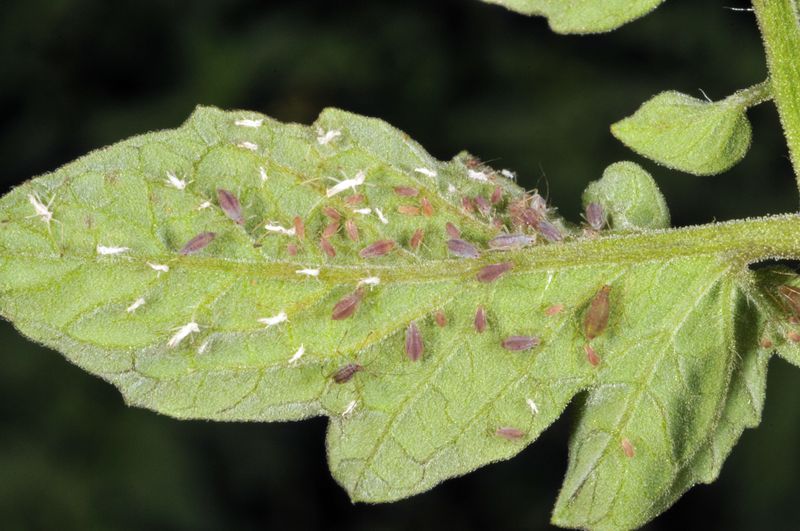
Flip a few curled leaves over and take a slow look, ideally in good light. Aphids are small, soft-bodied insects that cluster on the underside of leaves and on tender new growth.
Sticky honeydew on leaves or distorted new shoots adds to the clue. Heavy feeding can cause leaves to curl, according to University of Minnesota Extension.
Spotting a few aphids does not mean they caused every symptom, and it does not rule out stress, herbicide exposure, or virus. Treat them as one clue among several, and note where they are and how many you find.
Choose a next step without guessing at a cure
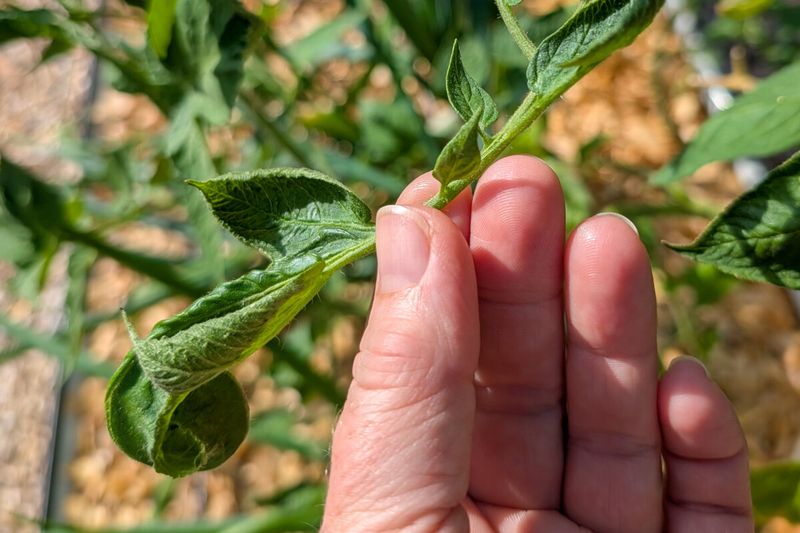
If the plant looks healthy apart from rolled older leaves, keep watching. Check the soil, keep moisture steady, and judge progress by new growth rather than by leaves that already curled, as University of Minnesota Extension suggests.
If herbicide exposure seems possible, investigate the source instead of treating appearance as proof, and avoid making food-safety assumptions from how the plant looks. When distortion spreads or virus-like signs show up, call your local Extension office or a plant diagnostic lab.
Virus has no cure, so Extension guidance centers on preventing spread, and Florida recommendations include removing diseased plants and managing whiteflies. Use any pesticide only for a confirmed problem and follow the label.
A curled leaf asks a question, and a good diagnosis answers it.