
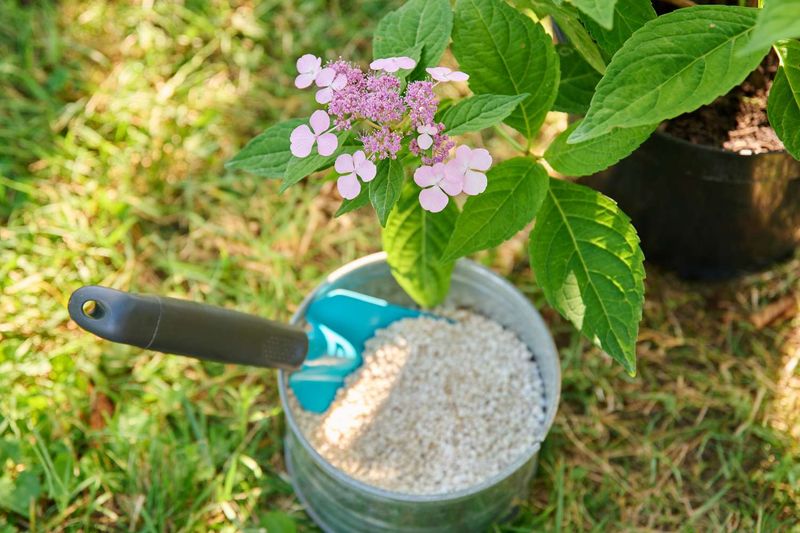
Your hydrangea has big green leaves, but the flowers never showed up. Many gardeners wonder if a fall meal of fertilizer is helping or hurting.
The answer depends on your plant, your yard, and your local climate. Here is how to decide before you open that bag.
Fall feeding is not a proven shortcut to bigger blooms
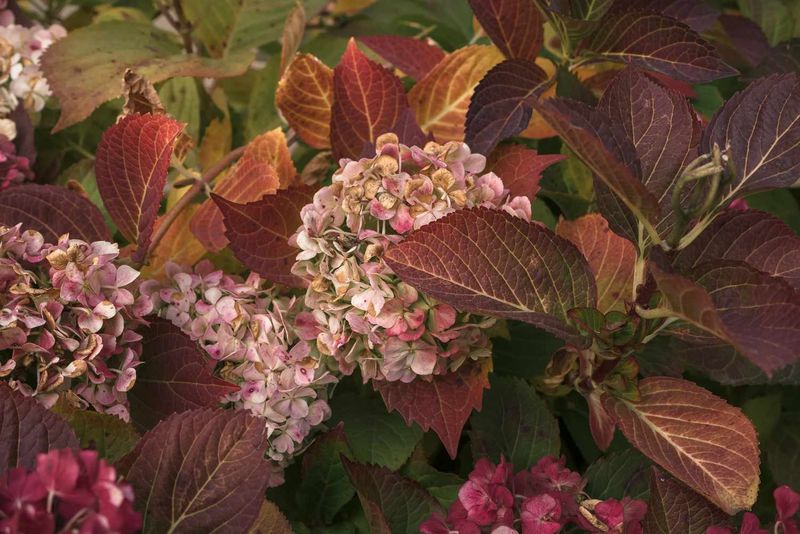
Skipping fall fertilizer will not, by itself, hand you bigger hydrangea blooms next summer. None of the guidance reviewed shows that result.
What the guidance does show is a reason to hold back on automatic feeding.
Extension advice for bigleaf hydrangeas points to feeding in the growing season. University of Georgia guidance suggests light applications in March, May, and July, and Mississippi State Extension gives a similar schedule.
Those are regional recommendations, not a rule for every hydrangea or every Southern yard.
In Florida, UF/IFAS says established landscape plants often need little or no fertilizer unless a deficiency is identified. So the safer plan is simple: do not feed on autopilot, and avoid piling on nutrients your shrub may not need.
Flowers also depend on the type of hydrangea, how it was pruned, winter cold, shade, and water. The next sections walk through each one so you can work out what your plant is telling you.
Too much nitrogen can favor leaves over flowers
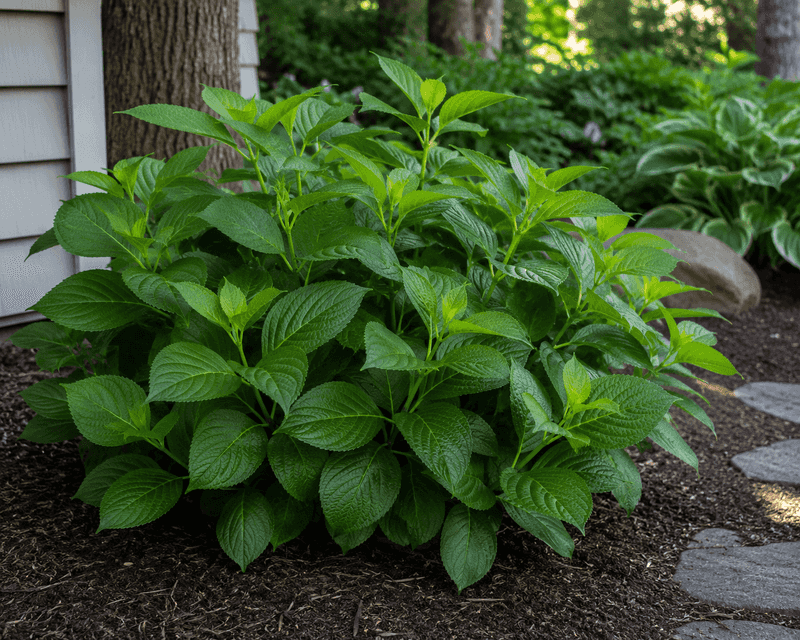
Nitrogen is the nutrient that pushes leafy growth. Give a hydrangea too much, and it may put its energy into foliage instead of flowers.
Georgia guidance says excess nitrogen can contribute to failure to flower, and Mississippi State warns that too much can decrease flower production.
That is a real risk, but it is not the same as saying fall timing decides next year’s blooms. The sources do not show that.
They support avoiding too much nitrogen, not a magic cutoff date.
Picture a shrub with huge, glossy, dark green leaves and almost no flowers, planted near a heavily fertilized lawn. Excess nitrogen is worth considering there.
It is still only a suspect, not a confirmed cause.
Before blaming fertilizer, look at the rest of the story. Ask when you last pruned, how much sun the plant gets, and whether a freeze hit last winter.
If you have been feeding often, scaling back to what local guidance recommends is a reasonable first step.
Southern feeding advice depends on the plant and place
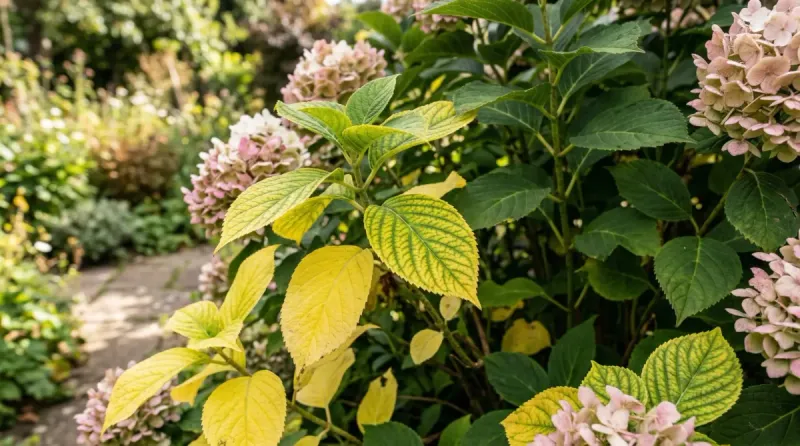
The South covers a lot of ground, and feeding advice changes with it. In its guidance for bigleaf hydrangeas, UGA suggests light applications of general-purpose fertilizer in March, May, and July, followed by watering.
That is Georgia advice for bigleaf plants, not a formula for the whole region.
Mississippi State gives a similar spring-to-midsummer schedule and covers more than one hydrangea type. Neither source tells gardeners to feed in fall.
Florida looks different. UF/IFAS explains that established landscape plants often need little or no fertilizer unless a deficiency shows up, and it stresses slow-release products, label directions, and limiting runoff.
Texas gardeners face soils and climates that range from humid east to dry west, and the sources reviewed give no single Texas feeding date. Your county Extension office is the best place to get advice that fits your soil and rainfall.
No source here sets a universal fall cutoff, so treat any one-size calendar with caution.
Hydrangea type changes which buds can become flowers
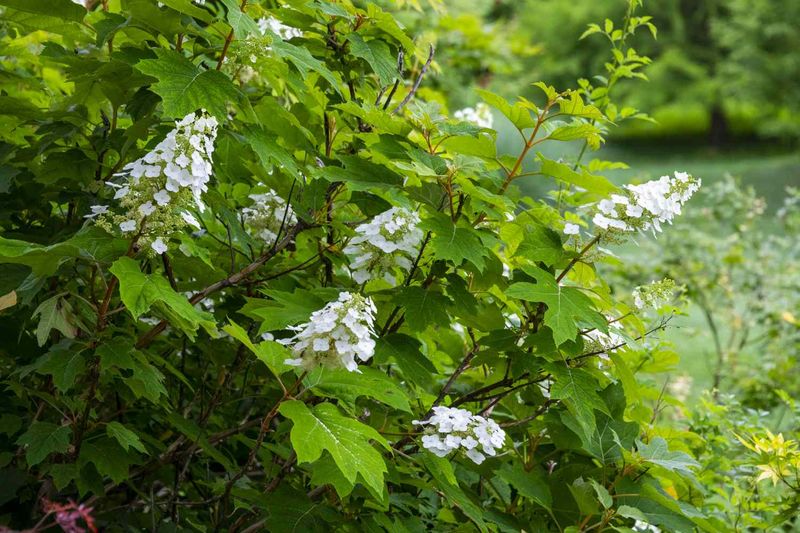
Before you try to fix poor flowering, work out which hydrangea you own. The type decides when flower buds form.
Bigleaf and oakleaf hydrangeas generally bloom on old wood, meaning stems grown the year before. Smooth and panicle types bloom on new wood, and some reblooming cultivars bloom on both.
Bigleaf hydrangeas set next season’s flower buds in late summer, according to UGA and Mississippi State. That makes late summer and fall care matter for them.
Still, those sources do not say fertilizer timing decides whether buds form.
Pruning is where the type matters most. Clemson Extension’s pruning guidance separates these groups for good reason.
Cutting an old-wood hydrangea in fall or winter can remove the buds that would have opened in summer.
A panicle hydrangea can handle a late-winter trim because it blooms on growth made that season. If you are unsure of your variety, check the plant tag or ask your local Extension office before picking up the pruners.
What else can leave a hydrangea without flowers?
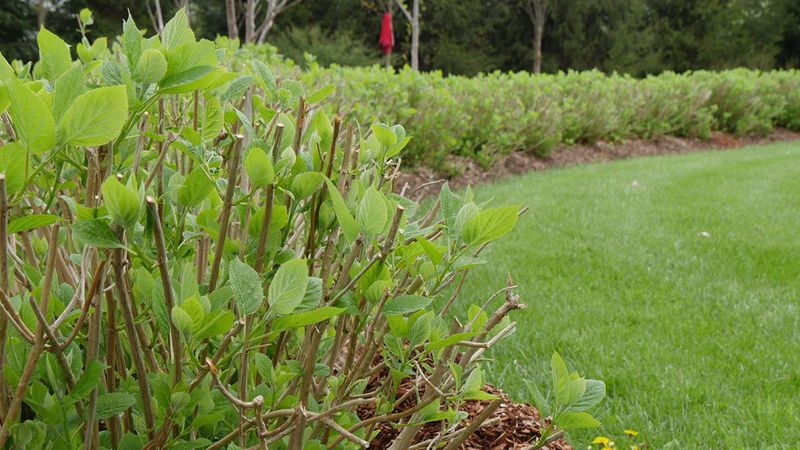
When a hydrangea gives you leaves but no blooms, fertilizer is only one suspect. The University of Maryland lists several other problems in its guide to hydrangea problems, and Mississippi State also flags several causes of poor flowering.
Think of these as leads to investigate, not a checklist that proves anything.
Pruning at the wrong time is a common one, especially for old-wood types whose buds were cut off. Cold is another.
A hard winter freeze or a late spring frost can kill buds or stem tips, even on a healthy plant.
Shade matters too. A shrub that gets too little light may grow plenty of leaves but set few flowers.
Water stress can also hurt, since hydrangeas droop and struggle during dry spells, and stressed plants may bloom poorly.
Walk around the plant and look at the stems, the light, the soil moisture, and last year’s weather. Often more than one factor is at play, so match the clues to your own yard.
Let evidence guide the next application
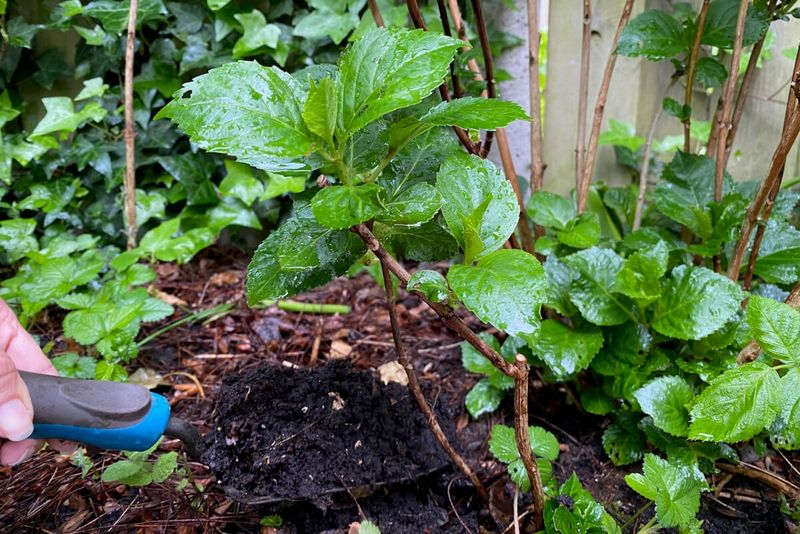
Start by naming your hydrangea. Then check what your state or county Extension office says for that type in your area.
If you still cannot tell whether the plant needs anything, a soil test gives you real numbers instead of guesses.
UF/IFAS says to apply only what plants can use and to follow label directions. Its landscape guidance also cautions against applying nutrients unnecessarily, since extra fertilizer can wash into waterways.
In Florida it recommends low-phosphorus landscape products.
That is also why a high-phosphorus bloom booster is a poor default. Unless a soil test or a diagnosed need calls for phosphorus, skip it.
Skip routine extra feeding too, and read the label for rates and timing.
If a test or a clear deficiency does point to fertilizer, apply the product as directed and water it in. A thoughtful decision can save you from unneeded applications, but it cannot promise bigger blooms.
Sometimes the best thing you can do for a hydrangea is leave the bag on the shelf.