
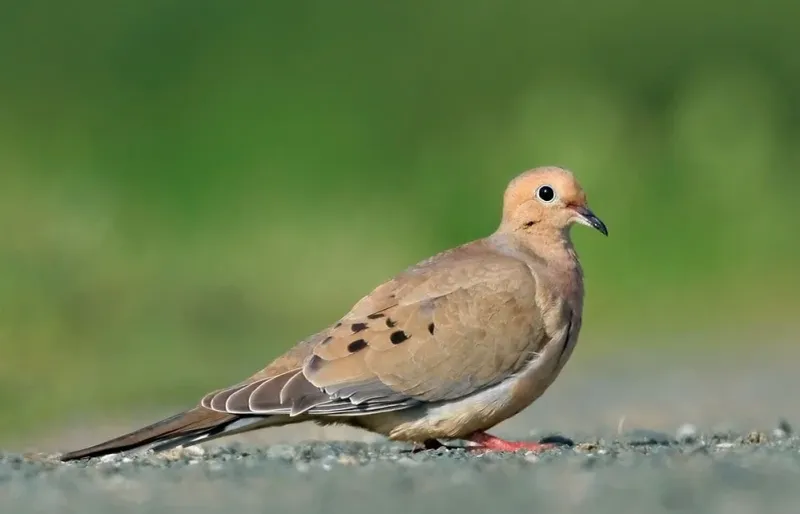
You glance out the window and there is that soft gray dove again, sitting in the same corner of the yard. It happens so often in fall that many people start to wonder what the bird is up to.
The answer is usually simpler than you might guess, and it can help you decide whether to welcome the visits or gently discourage them. Knowing what repeat visits can and cannot tell you also keeps you from making changes your yard does not need.
Food can make one patch of yard worth revisiting
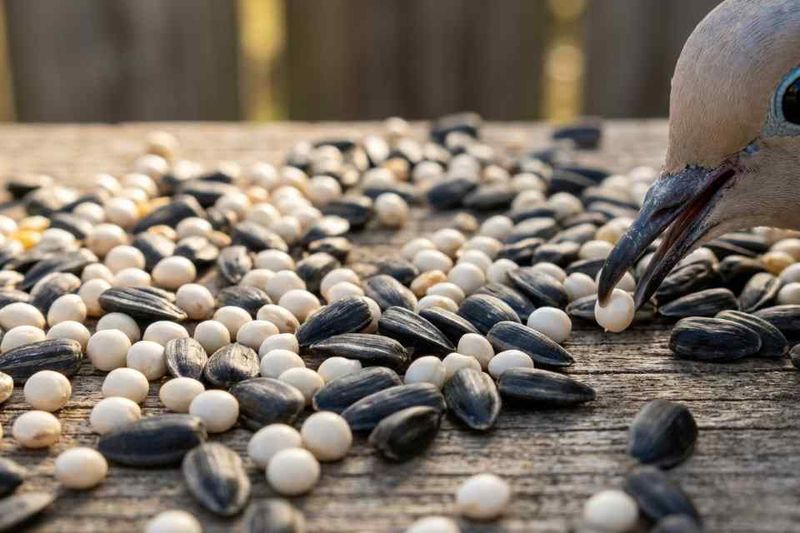
Mourning doves are ground feeders that eat mostly seeds. A U.S.
Fish and Wildlife Service species guide notes that they often return to the same feeding site until the food is gone. So a dove that keeps turning up in one corner of your yard may simply have found a reliable meal.
Doves tend to walk and peck rather than hop through branches. They favor bare ground and short grass, where seeds are easy to spot and reach.
A dirt strip beside a walkway, a thin lawn patch, or a gravel edge can fit that bill nicely.
Seeds can come from several places. Cornell Lab of Ornithology describes doves eating seeds from both native and cultivated plants.
Spilled seed under a feeder can also draw them, even if the feeder was meant for finches or sparrows. Weedy plants that have gone to seed, or grain scattered by other birds, can do the same job.
Try a quick walk around your yard and look down. Where is seed collecting?
Is there open soil nearby? Those details often explain the pattern better than any mystery.
One caution is worth keeping in mind. Food is a likely explanation, but it does not cover every yard.
It also does not prove that a single dove is coming back each time, since several birds can use the same good spot.
Nearby cover can offer a place to pause
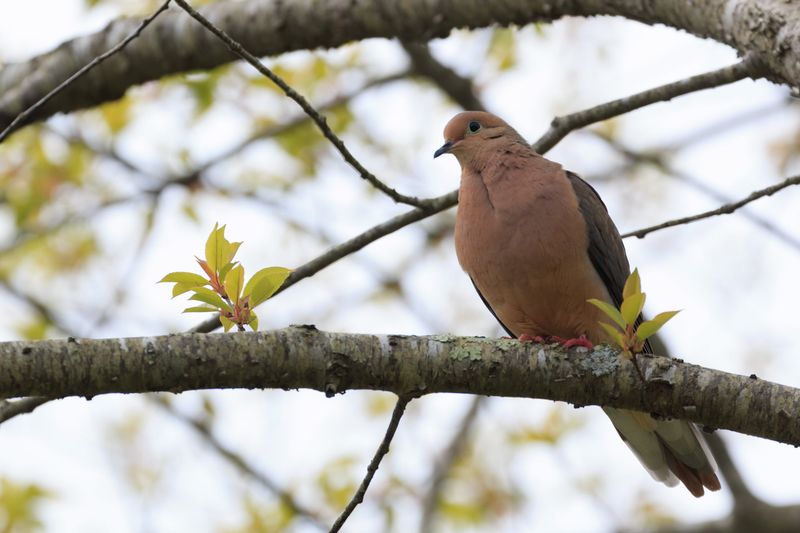
Sometimes a dove is not eating at all. Trees, shrubs, brush, and thickets give doves a spot to sit, watch, and rest.
The same federal species guide describes this kind of cover as roosting habitat, where doves may perch before flying down to feed.
That means a yard with a feeding area and a handy perch nearby can be a very convenient stop. Think of an overhead wire, a bare branch on a pepper tree, or the top of a hedge.
A dove can scan for danger from up there, then drop to the ground when the coast looks clear.
Here is where it helps to slow down. A dove sitting in one place during the day is a daytime pause.
It does not tell you the bird sleeps there overnight. Roosting at night is a separate behavior, and you would need to see birds there at dusk or dawn, repeatedly, to say much about it.
A simple check can sharpen your view. Note what time of day you see the bird, how long it stays, and whether it heads to the ground or stays put.
A quick perch before breakfast looks different from a bird settling in for an afternoon rest.
If you like having doves around, leaving a mix of shrubs and small trees can keep your yard useful for them.
Fall movement is uneven across California
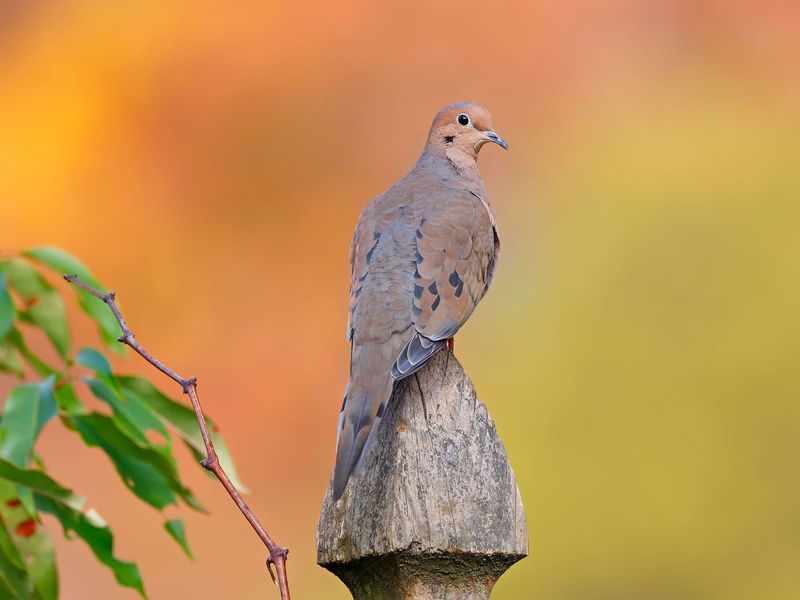
Fall brings a lot of bird talk, so it is easy to assume every dove you see is on the move. California does not work that way.
The California Department of Fish and Wildlife describes mourning doves as resident across most of the state.
Some birds do shift with the season. Certain doves move south from northern latitudes, and others move downslope in mountain ranges as the weather cools.
Those movements happen in some places and not others, so your neighbor two counties over may see something quite different from what you see.
The Cornell range map shows the same general picture: some populations stay year-round while others travel. For a homeowner in a coastal city, the doves in the yard may well be the same local population all year.
For someone in the foothills, a fall change in numbers could reflect downslope movement.
Spotting a dove in October, then, does not mean it is migrating. It could be a year-round neighbor that found a good patch of seed.
Fall can also change what food is available, as plants set seed and gardens are cleaned up, which may change where birds spend their time.
If you want to learn more about your own area, keep a few notes through the season. Local patterns will tell you more than any statewide rule.
Repeat visits do not identify a bird or confirm nesting
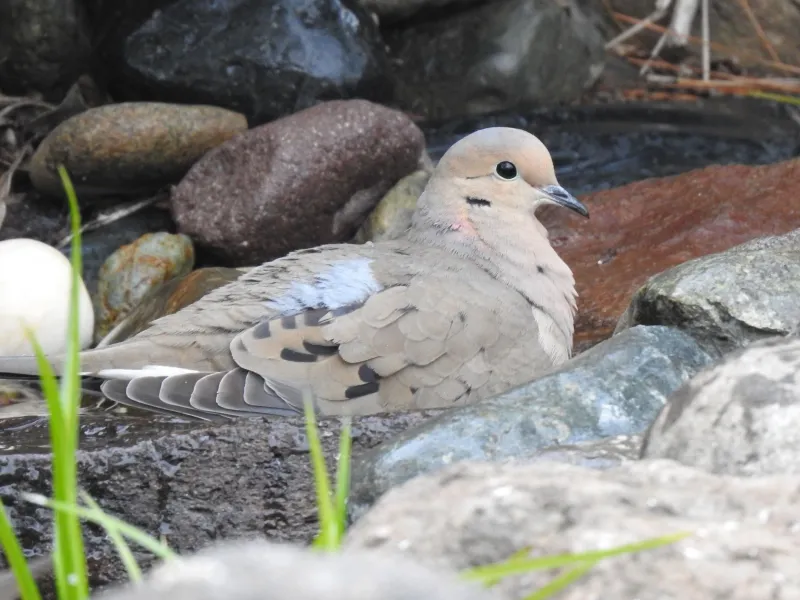
Seeing a dove in the same place three days running feels like a pattern. It is a pattern of a place being used, though, not proof about who is using it.
Unless a bird wears a band or has a clear marking, you cannot know whether it is one dove or several. The federal species guide supports repeated use of a feeding site, not the identity of the visitor.
Nesting is the other big assumption. Repeat visits alone do not confirm a nest.
A dove stopping by for seed, a drink, or a rest looks a lot like one that is nesting nearby, at least from a kitchen window.
Mourning doves are flexible about where they nest. They may use trees and shrubs, and sometimes the ground or a ledge on a structure.
Timing varies too, and an older California Department of Fish and Wildlife account says breeding can happen nearly year-round depending on the weather. So the calendar will not settle the question either.
What does settle it is direct evidence. Look for a loose platform of twigs, a bird sitting low and still for long stretches, or adults carrying sticks.
Observe from a distance, and do not part branches to check.
Without those clues, treat the visits as a sign that your yard is handy, and leave it there.
Choose whether to welcome or discourage visits
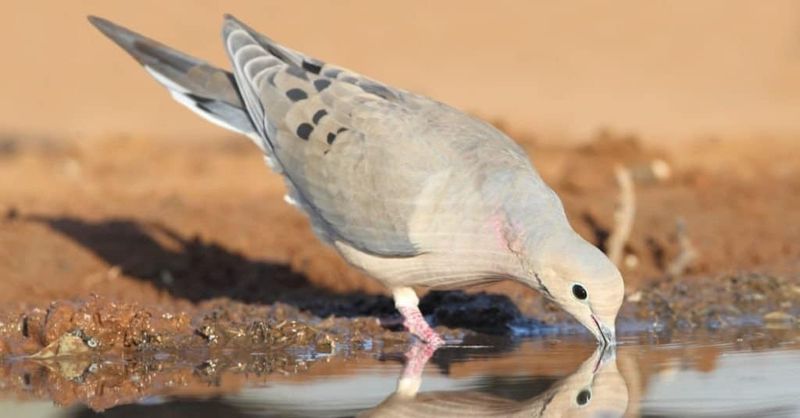
Once you have a sense of what draws doves, the choices get practical. If you enjoy them, you can support them without much effort.
Leave a few seed-producing plants standing, since doves eat seeds from native and cultivated plants, as noted by Cornell Lab of Ornithology. Keep cats indoors, because ground-feeding birds are easy targets.
Clean water and clean feeders matter for bird health. CDC guidance says to clean and refill birdbaths weekly or when they look dirty.
Feeders should be cleaned at least monthly, and more often if they get dirty. In a hot, dry California summer, a birdbath can foul quickly, so a quick scrub is worth the minute.
If you would rather see fewer doves, start with the ground. Check under feeders for spilled seed, and sweep or rake it up regularly.
Look for other seed on bare soil or paving, too.
Removing that food is a reasonable step because doves often return to a feeding site while food remains, as the U.S. Fish and Wildlife Service guide explains.
It may not stop the visits, though. Doves can still stop by for open ground, a perch, or neighboring food.
Pick the approach that fits your yard, and give any change a few weeks before judging it.
Give active nests and unwell birds space
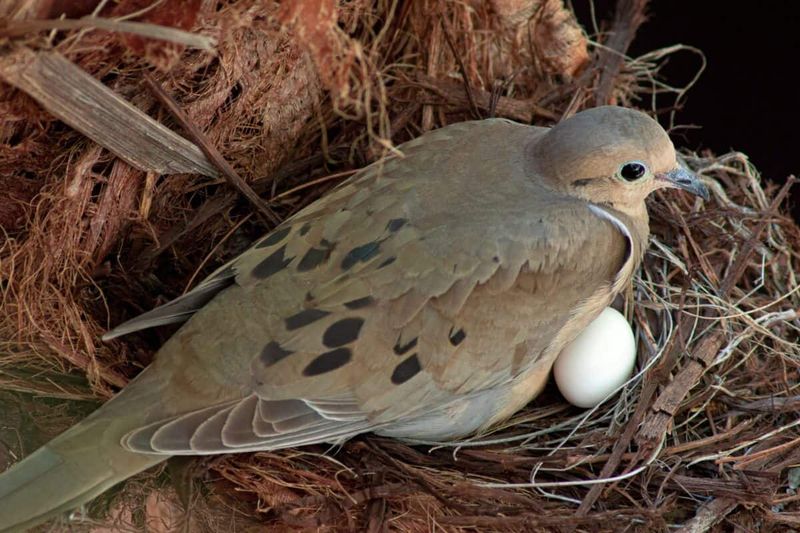
If you do find a nest, the rule is simple: leave it alone. The U.S.
Fish and Wildlife Service says it is illegal under the Migratory Bird Treaty Act to destroy a nest containing eggs or chicks, or one with young still dependent on it. Watch from a distance, keep pets and kids back, and check applicable guidance before removing any nest that looks empty.
A sick or injured dove calls for a different kind of restraint. Signs might include a bird that cannot fly, sits fluffed and still on the ground, or lets you come very close.
Do not handle, feed, or water it unless a professional tells you to. Keep pets away, and contact the California Department of Fish and Wildlife or a permitted wildlife rehabilitator for direction.
Well-meant help can do real harm, such as giving the wrong food or stressing a bird that is already weak. A phone call is usually the kindest first move.
For everyday visits, keep it in perspective. Food, open ground, and nearby cover are ordinary reasons a dove may keep coming back.
None of them proves it is the same bird, that a nest is close, or that it sleeps in your yard.
Sometimes a dove on the lawn is just a dove having lunch.