
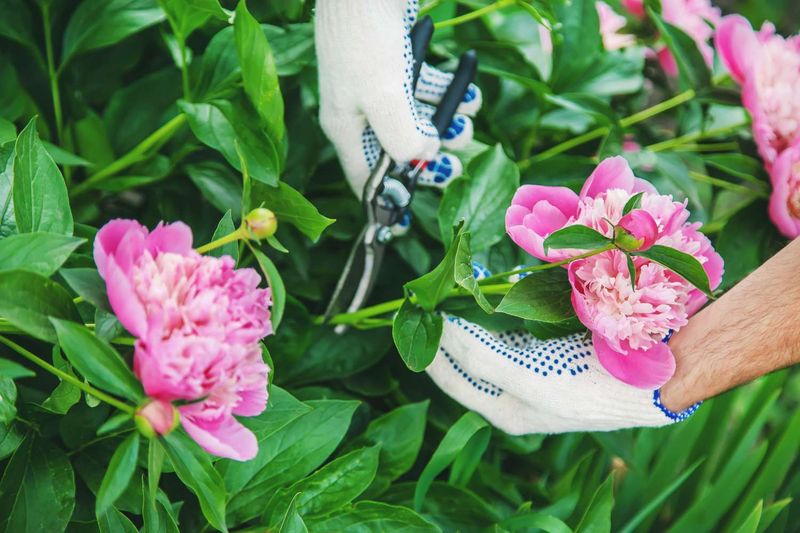
Once the last peony petals drop, many gardeners grab the pruners and cut everything down. That habit can do more harm than good.
Knowing when to cut, what to remove, and what else affects flowering keeps your plants healthier. Here is a simple plan that fits Southern yards.
Keep healthy foliage after the flowers fade
Peony blooms are gone, but the green leaves are still hard at work. Extension guidance warns that cutting healthy foliage in July or August can weaken the plant and may reduce flowering later.
Leaving the leaves alone is the safer choice.
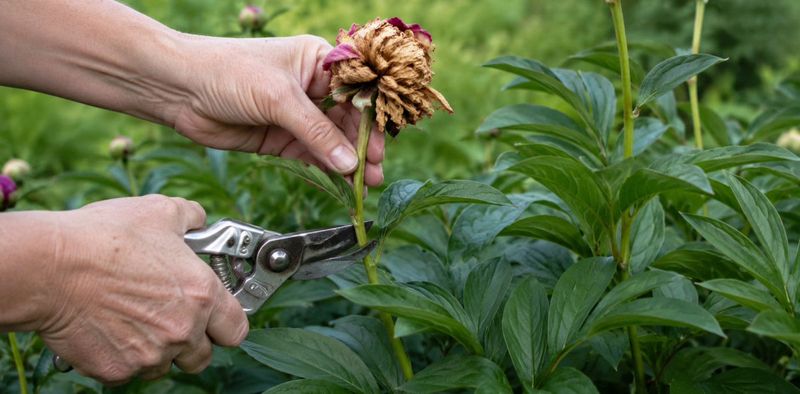
Cleaning up after bloom is a different job from fall cutback. Deadheading means snipping off a spent flower, and UConn Extension describes removing the spent flower stem back to a set of leaves while the rest of the foliage stays in place.
That keeps the plant tidy without stripping it.
Picture a stem with a faded bloom. Follow it down until you reach a healthy leaf, then cut just above it.
The remaining stems and leaves stay put.
Deadheading is a tidiness step. It does not promise a bigger show next year, so do not expect it to fix a plant that struggles for other reasons.
Think of it as housekeeping, and save the heavy cutting for later in the season. Per Iowa State Extension, early foliage removal is a common reason peonies fail to bloom.
Cut back herbaceous peonies after dieback
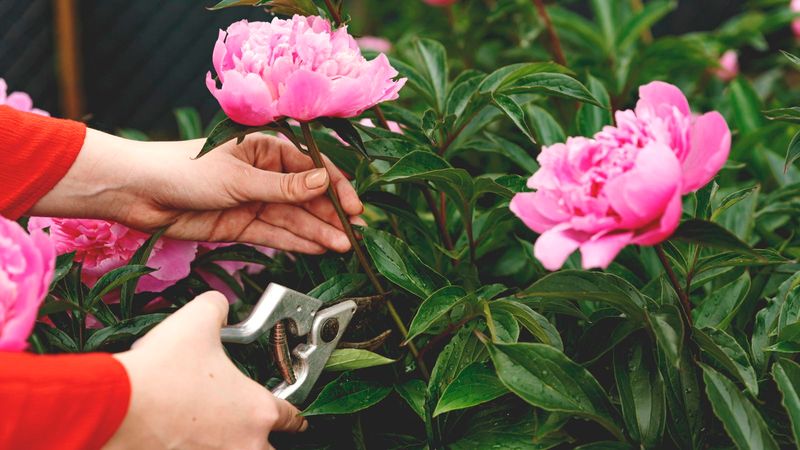
Timing comes from the plant, not the calendar. Wait until the leaves have yellowed, browned, or been damaged by frost, then cut the dead stalks close to the ground.
A frost can be a handy cue, but it is not a fixed date, and Southern gardens reach this point at very different times.
If a plant still looks green, give it more time. Guidance from Iowa State Extension points to waiting until the foliage has died back naturally or been hit by frost.
Use clean, sharp pruners and cut stems low without digging into the crown or damaging the buds near the soil. Wiping the blades between plants is a good habit.
Know your type before you cut. This ground-level routine fits herbaceous peonies and herbaceous Itoh or intersectional peonies.
Tree peonies are different, and UConn Extension notes their woody stems should stay intact. If your plant has a woody framework above the soil, leave it alone.
Remove debris as a sanitation measure
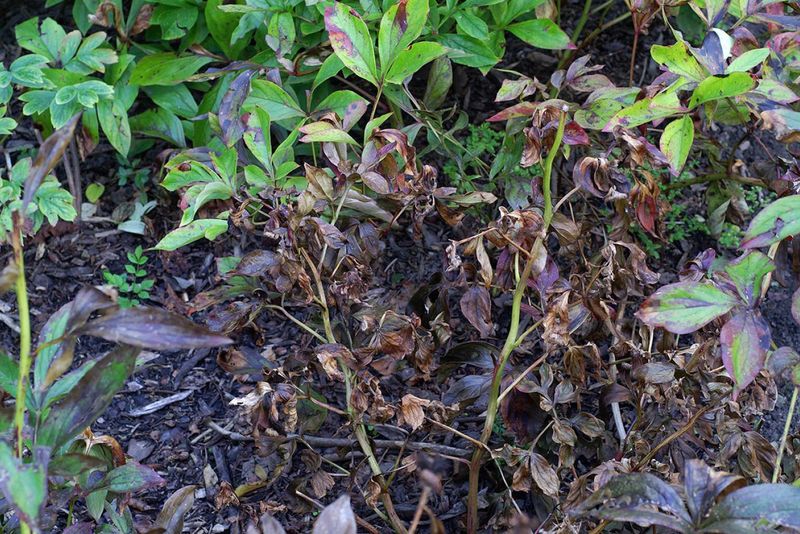
Disease organisms can hang on in dead plant material. Peony problems like leaf blotch and botrytis blight may overwinter in old leaves and stems, so clearing them out gives next season’s growth a cleaner start.
After cutting, rake up the stems and any leaves that have fallen around the plant. Iowa State Extension advises removing and destroying infected debris, and says diseased leaves should not go in the compost pile.
Bag them for the trash instead.
Healthy-looking trimmings are a gray area, but if you saw spots, mold, or blackened stems this year, treat everything as suspect.
This is sanitation, plain and simple. It can reduce the chance that disease carries over, but it cannot guarantee a healthy plant or lots of flowers.
Wet weather, crowded plants, and poor air flow also play a role, so give each plant breathing room as well.
Check other causes of poor flowering
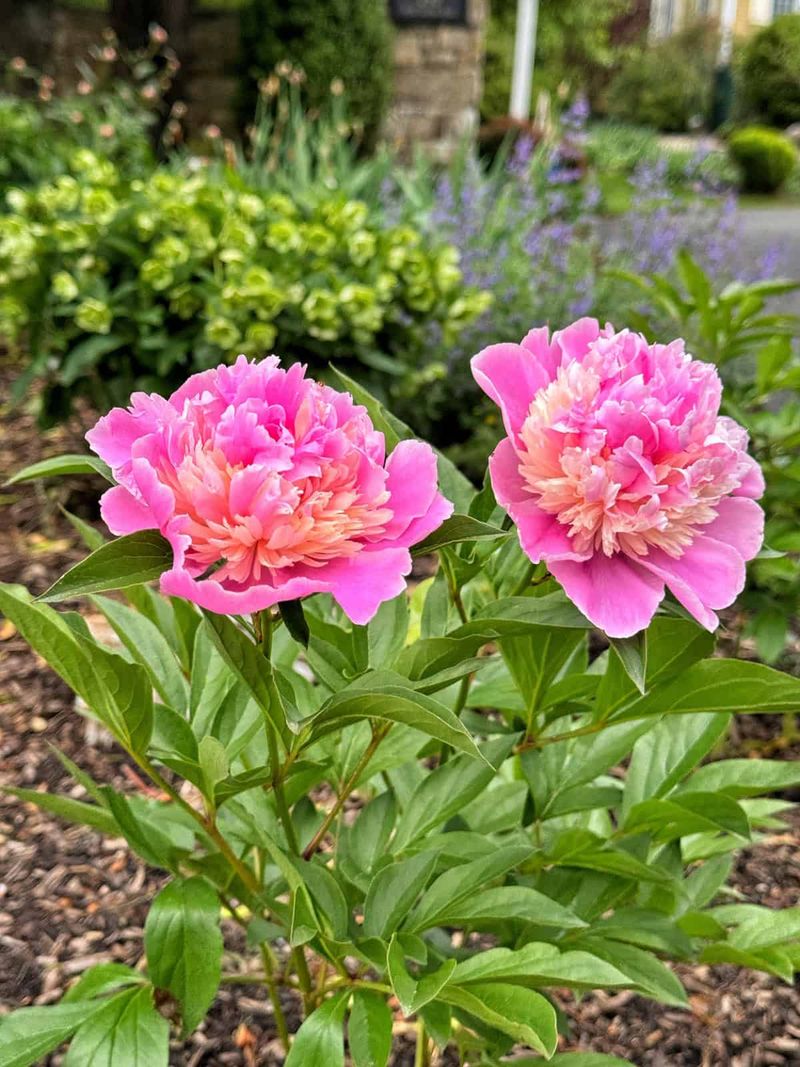
A peony that leafs out but never blooms is frustrating. Before blaming your fall routine, look at the planting spot.
Too little sun is a top suspect, and Iowa State Extension recommends at least six hours of direct sun.
Planting depth matters just as much. The buds, often called eyes, should sit about 1 to 2 inches below the soil surface.
Buried deeper, a plant may produce healthy leaves and few flowers.
Plant age and disturbance also count. A young plant or one recently moved or divided may take a few seasons to flower well, so patience is part of the fix.
Feeding can backfire too. Too much nitrogen tends to push leafy growth at the expense of blooms, so go easy on lawn-style fertilizer near your peonies.
Treat this as a checklist, not a single cure. Check sun, depth, age, and feeding, and adjust one thing at a time.
Account for winter chilling in warm regions
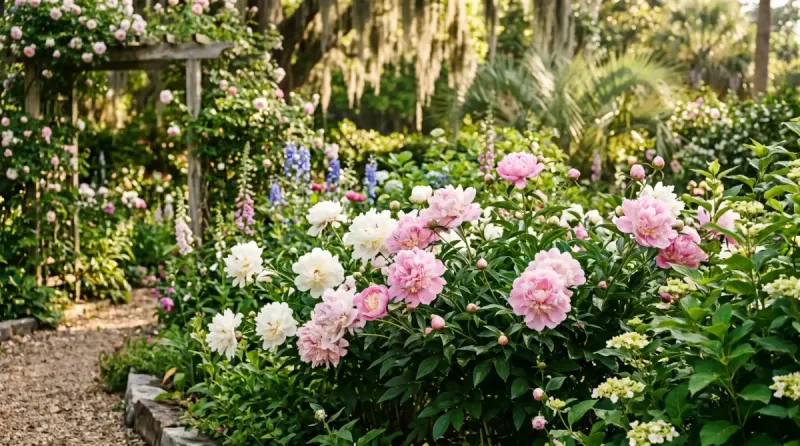
The South is not one climate. A garden in the Texas Panhandle gets very different winters than one in South Florida, and that difference matters to peonies.
Herbaceous peonies need a stretch of cold winter weather to flower well. North Carolina State Extension says plants can languish in warm areas where chilling is hard to meet, though low-chill types may be an option in some places and shallow planting is advised.
That fits with Virginia Tech Extension, which describes the cold requirement and notes that mild winters in southern areas can provide inadequate chilling.
If your peonies grow leaves but skip flowers year after year, and sun and depth check out, a mild winter may be the reason. Ask your local extension office how many chill hours your area typically gets and whether low-chill selections do well nearby.
Some warm locations may simply not offer enough chilling for reliable bloom, and that is a limit of the site, not a gardening failure.
Use a seasonal routine, not a bloom guarantee
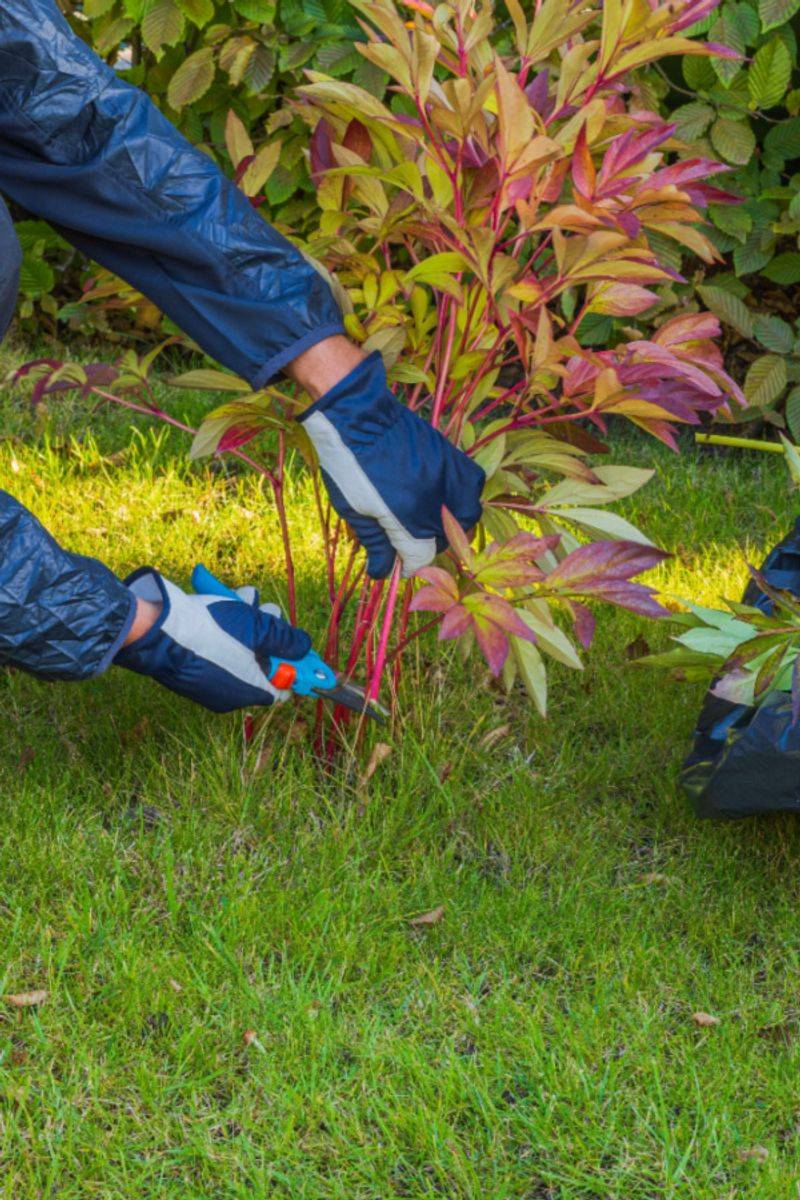
Here is the whole year in order. After flowering, deadhead spent blooms back to a set of leaves and leave healthy foliage alone.
Through summer, let the leaves keep working, as UConn Extension suggests.
When herbaceous foliage dies back or frost damages it, cut it near the ground and clear the debris, following Iowa State guidance on destroying infected material. Identify your peony type first so you never cut woody tree peony stems.
If flowers stay scarce, look at sun, planting depth, plant age, and feeding, as outlined by Iowa State Extension. Then consider whether your winters give enough chill, a point North Carolina State Extension raises for warm areas.
Cleanup can help limit disease, but it does not decide next spring’s flowers. A peony rewards good timing and the right spot, and it keeps its own schedule.