
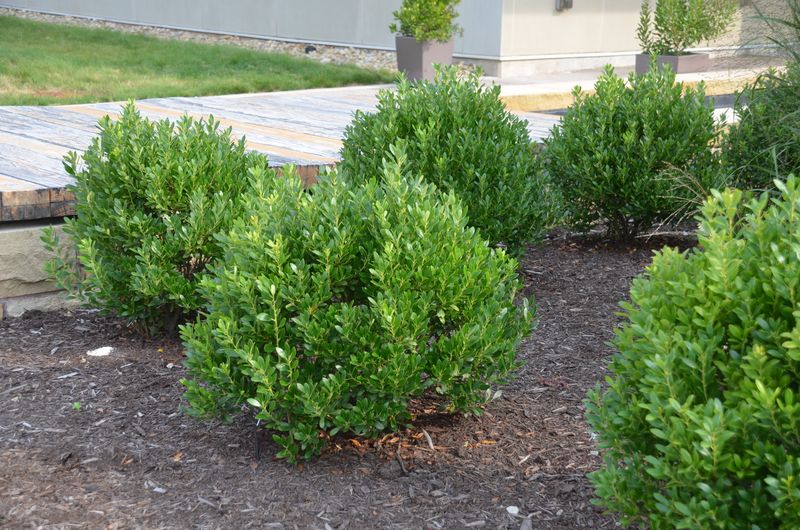
A neat border should not take over your weekend. Florida-native shrubs can give you lasting greenery without the constant clipping that a tight boxwood hedge demands.
The trick is choosing a plant that fits your space, soil, and part of Florida, then letting its natural shape do the work. These seven options offer different looks, with compact varieties and a few cold-weather limits to keep in mind.
1. Dwarf Yaupon Holly
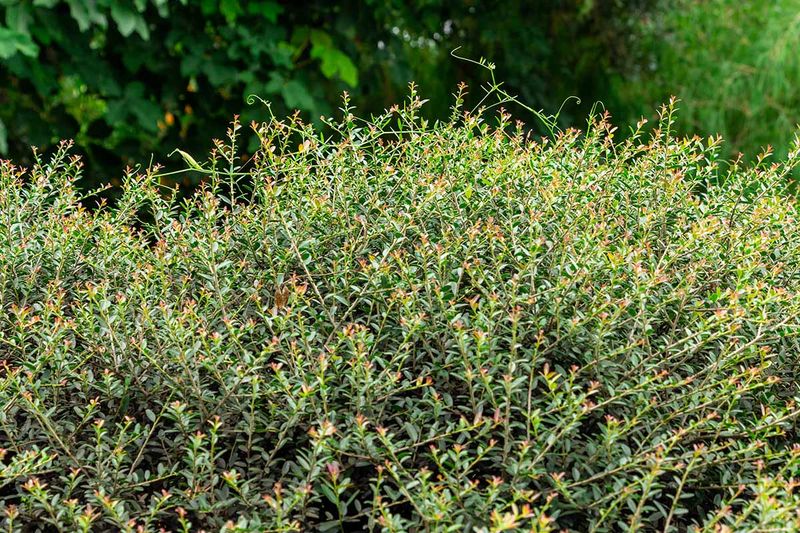
Put away the hedge trimmer and let those little green mounds keep their own shape. Dwarf yaupon holly offers one of the closest native alternatives to a rounded boxwood border, especially where you want small leaves and a tidy outline.
The species, Ilex vomitoria, is native to Florida, but the full-size plant can become a small tree. Look for a compact selection such as Schillings Dwarf or Bordeaux, and check its mature dimensions before buying.
Many dwarf selections grow roughly 3 to 5 feet tall and spread wider than their nursery pots suggest. Space plants by their expected width, not by how quickly you want the gaps filled.
Sun produces the fullest growth, though light shade is usually fine. Established plants handle drought and Florida’s sandy soils well, provided you water regularly while roots are getting settled.
Remove an occasional stray branch rather than shearing the whole row. Many commonly sold dwarf selections are male, so do not expect the red berries found on female yaupons.
2. Inkberry Holly
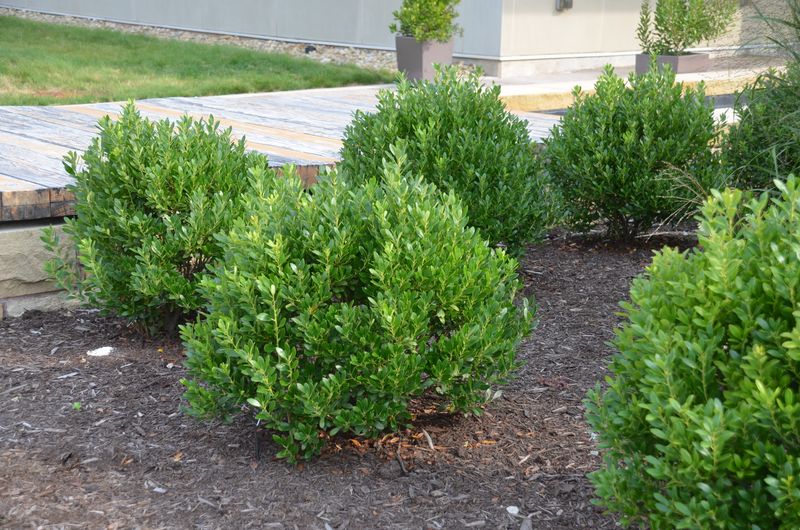
A damp planting bed needs a different answer from a dry strip beside the driveway. Inkberry holly, Ilex glabra, earns its place where acidic soil stays reasonably moist and other small evergreen shrubs struggle.
Its dark leaves give a border a quiet, solid look. Female plants can produce black berries when a compatible male flowers nearby, adding food for birds without turning the planting into a showy display.
For a boxwood-sized replacement, shop for a compact cultivar rather than an unnamed seedling. Some selections stay around 3 to 4 feet tall, while ordinary plants can reach 6 feet or more.
Give inkberry sun to partial shade and avoid alkaline fill soil or a hot, bone-dry bed. It is generally a stronger choice for North and Central Florida than for limestone-heavy South Florida sites.
Choose plants with foliage down to the base, since some forms become bare-legged with age. Light selective pruning and occasional sucker removal usually make more sense than repeated clipping, which cannot fix a poor site or an oversized variety.
3. Dwarf Walter’s Viburnum
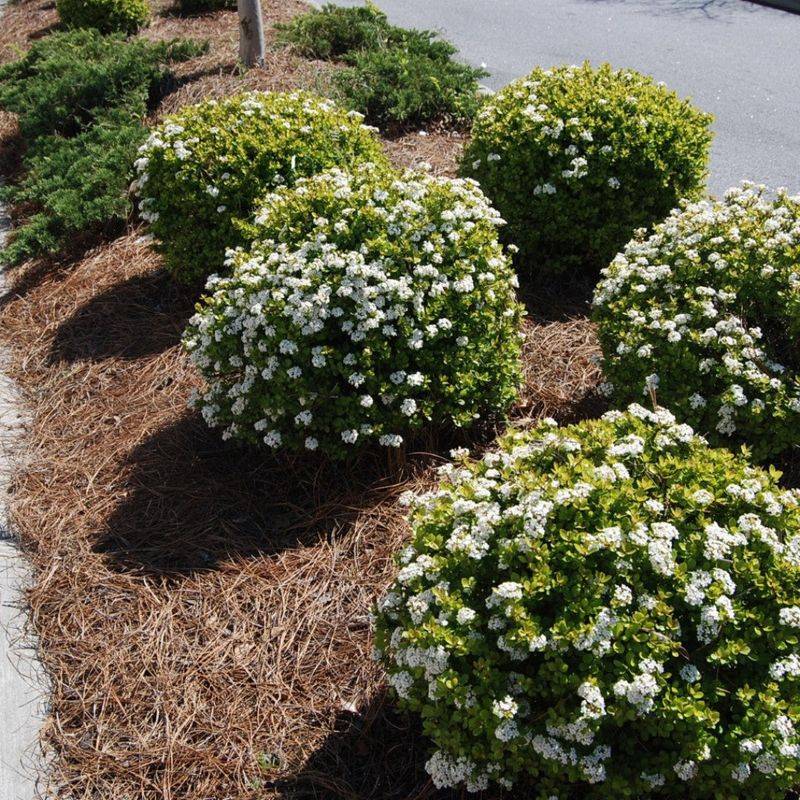
Small white flowers can turn an everyday green border into a spring highlight. A dwarf form of Walter’s viburnum brings that bonus without the height of the standard native shrub.
Viburnum obovatum naturally grows much taller than a typical boxwood edging, so the cultivar matters here. Named compact selections such as Mrs. Schiller’s Delight are often sold for low foundation plantings, but confirm the size listed by your nursery.
Plant it in sun or partial shade, leaving enough room for its rounded habit. It tolerates a range of Florida soils and can handle moist conditions, although you should still match the selection to your bed’s drainage.
The spring flowers attract visiting insects, and selective pruning after flowering preserves more of that seasonal display. Repeated shearing removes the soft outline that makes the plant useful in a relaxed border.
There is one green-all-year caveat: Walter’s viburnum is evergreen to semi-evergreen and can lose leaves during cold weather, especially in North Florida. For warmer sites, it is a strong low-maintenance option; for an always-leafy northern border, yaupon is the safer choice.
4. Simpson’s Stopper
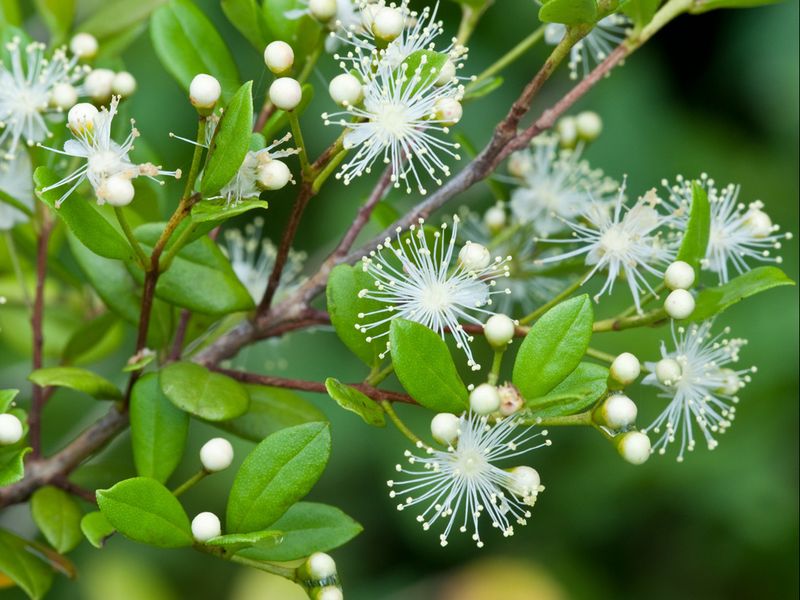
Birds get something out of this border, too. Simpson’s stopper pairs evergreen foliage with white flowers and orange-red fruit, making it more useful to wildlife than a row kept clipped into green bricks.
The native species, Myrcianthes fragrans, can grow into a large shrub or small tree. A compact selection, such as a locally available dwarf form, is the better starting point for a low border.
Read the nursery label carefully because compact does not always mean knee-high. If your bed only allows 2 feet of height, choose another plant rather than planning to cut a larger stopper down forever.
Sun to partial shade works well, and established plants tolerate dry spells in well-drained soil. Simpson’s stopper is especially useful in Central and South Florida, with protection worth considering in colder inland locations.
Give each plant room to branch naturally, then remove damaged or awkward stems as needed. Less clipping also leaves more flowers and fruit intact, so the border can stay attractive while offering birds a reason to visit.
5. Florida Boxwood
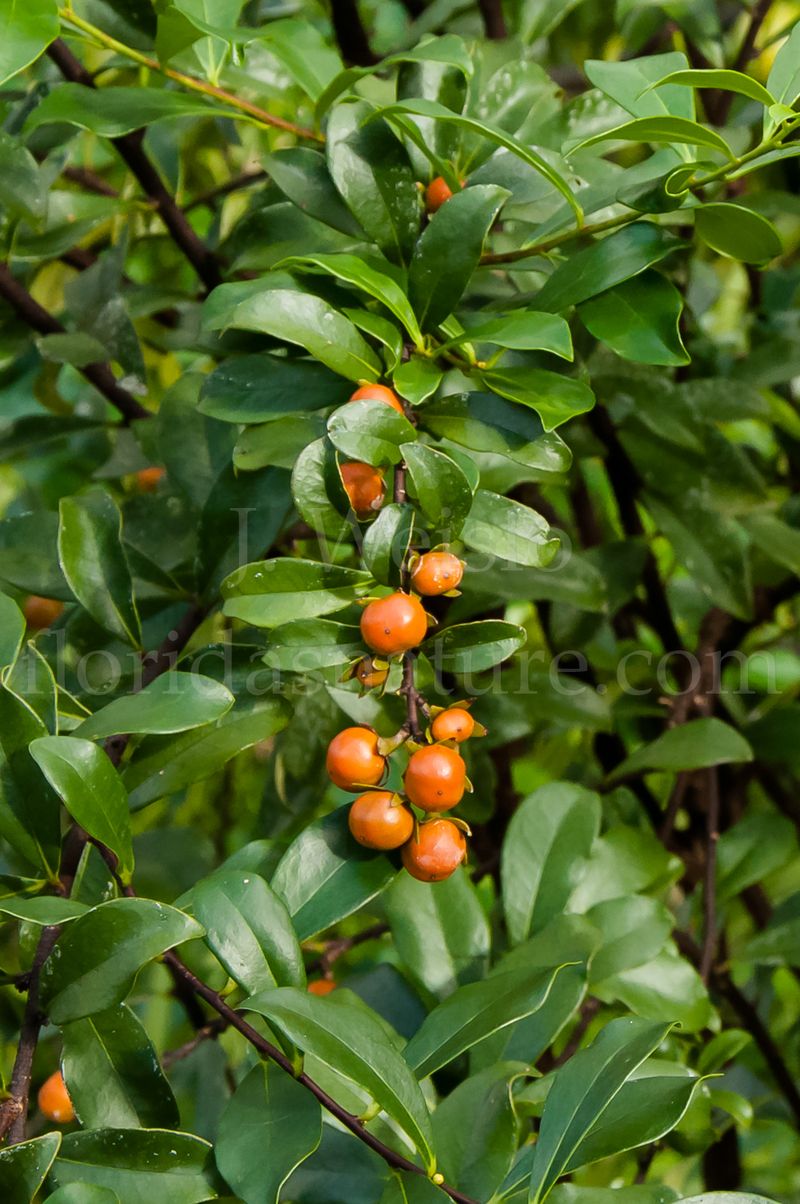
The name sounds familiar, but Florida boxwood is not the common boxwood sold for formal hedges. Schaefferia frutescens is a different plant, native to South Florida, with evergreen leaves and a naturally dense branching habit.
Its best role is a loose, medium-height border in a warm yard. Left alone, it can become a substantial shrub or small tree, so it is not a maintenance-free substitute for a tiny clipped edging.
Use it where the bed has enough depth and height to accept that growth. Its relatively slow pace can reduce pruning pressure, especially when you choose a location that does not require a fixed, low roofline.
Florida boxwood suits well-drained South Florida sites, including areas with limestone-based soil. Sun or partial shade is appropriate, and established plants can tolerate dry conditions.
Ask a native nursery about availability and local cold tolerance before ordering, since this is not a statewide recommendation. For a broad border in a frost-light location, it offers a fitting native replacement without asking you to maintain a ruler-straight hedge every week.
6. Wild Coffee
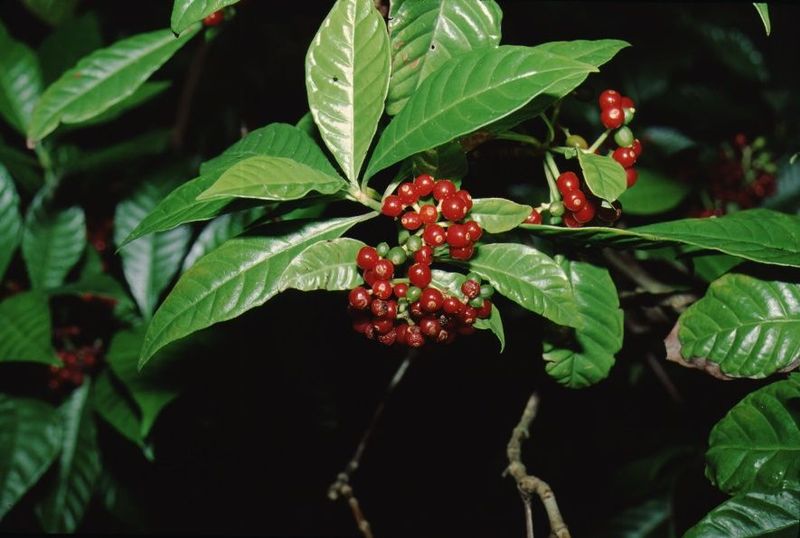
Under a tree canopy, glossy leaves can do more for curb appeal than another row of struggling sun-loving shrubs. Wild coffee brings rich texture to shaded borders with its deeply marked leaf veins and full, leafy growth.
Psychotria nervosa is native to Florida and works best in warm Central and South Florida gardens. Cold snaps can damage foliage, so exposed North Florida beds are not the place to count on year-round greenery.
The standard plant often reaches about 4 to 6 feet tall, sometimes more in favorable conditions. For a shorter replacement, ask a native nursery about compact selections and verify their expected height and width.
Partial shade helps keep the foliage looking good, particularly away from harsh afternoon sun. Give it well-drained soil, mulch the root zone, and water during establishment rather than assuming a native plant needs no care.
Small flowers support visiting pollinators, and birds eat the red fruit. Keep pruning selective so you preserve those benefits, and remember that wild coffee is an ornamental native, not a source of ordinary coffee beans.
7. Dwarf Wax Myrtle
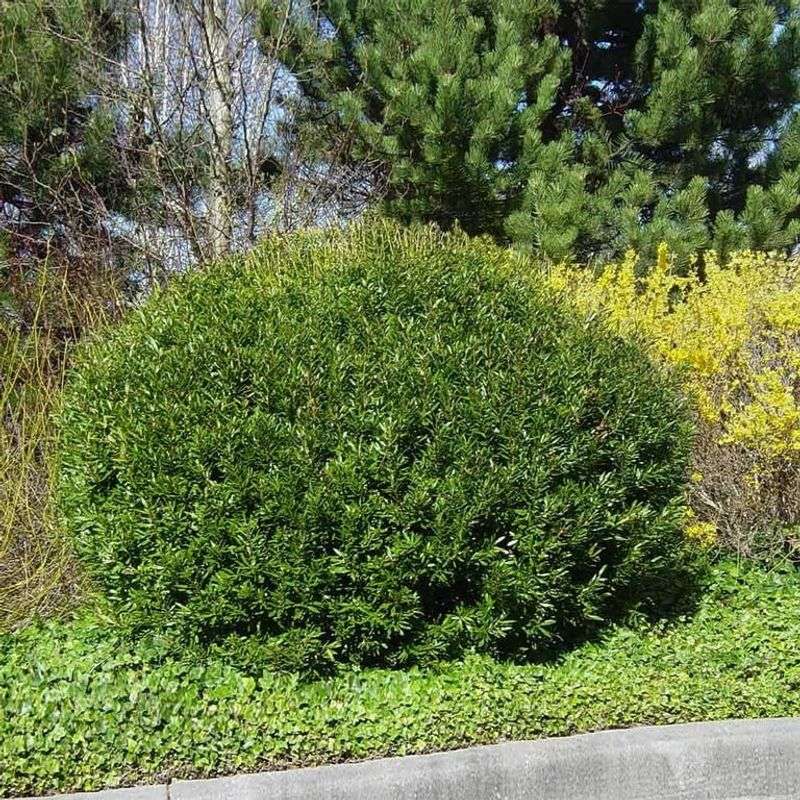
A softer outline can make a front yard feel neat without looking stiff. Dwarf wax myrtle offers fine-textured evergreen foliage for gardeners who prefer a relaxed border over tightly clipped balls.
Choose a named compact form of Florida-native Morella cerifera, such as Don’s Dwarf. Standard wax myrtle grows far too large for most boxwood-sized spaces, and even dwarf forms need their mature dimensions checked before planting.
Expect a broader, somewhat taller planting than a low edging, often around 3 to 5 feet depending on the selection and conditions. It fits best along a spacious walk, property edge, or foundation bed with room to spread.
Sun encourages fuller growth, while partial shade is also workable. Wax myrtle tolerates a useful range of Florida conditions, including sandy soil and some coastal exposure, but newly planted shrubs still need consistent moisture.
Watch for suckers and remove them if they move beyond the border. An occasional thinning cut can control crowded stems, while letting the outer branches keep their natural shape avoids the weekly trimming cycle you were trying to escape.