
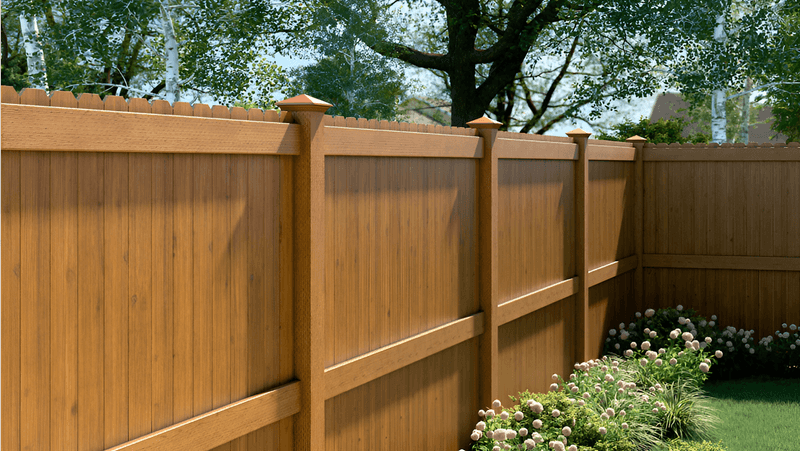
Your wooden fence may look like a simple boundary, but in a wildfire it can act like a path that leads right to your house. Dry leaves, stacked firewood, and tangled vines along the fence can give flying embers something to catch on.
The good news is that a few small chores can lower that risk before fire season arrives. Here is what California fire officials suggest you move, trim, or swap out.
A wooden fence can create a path toward the house
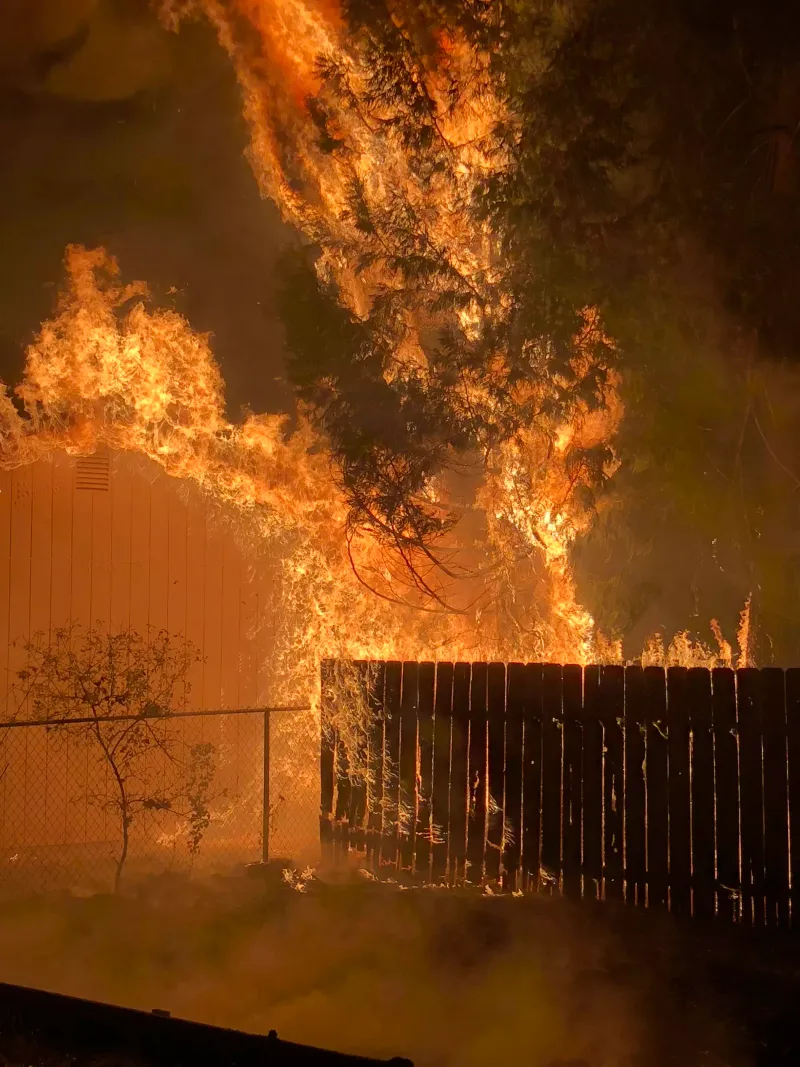
Picture a long wooden fence that ends right at your wall or siding. If that fence ever caught fire from a drifting ember or nearby flames, it could carry fire straight to the house.
CAL FIRE’s home hardening guidance warns that an ignited fence can create a direct path to a home.
Fuel along that path makes a difference. Dry weeds, piled leaves, and dead plants at the base of the fence can help flames travel, and they can catch embers too.
That is why fire agencies pay attention to what sits against a fence, not only the fence itself.
None of this means every wooden fence will burn. UC ANR’s Fire Network explains that vulnerability depends on the fence material and location, the vegetation nearby, and whether the fence is exposed to embers or direct flame.
A tight, well-kept fence in a cleared yard is in a very different spot than a gappy, sun-dried one buried in brush.
Construction matters as well. Privacy fences with horizontal ledges can collect embers, and older boards that have dried and cracked may ignite more easily than newer, well-maintained ones.
Walk your fence line and notice its age, its condition, and what touches it.
The steps in this article follow a simple idea: take away the fuel next to the fence, then deal with the spot where the fence meets your home. Each step is small, and you can do most of them on a weekend with basic tools.
Clear dry growth and debris from the fence line
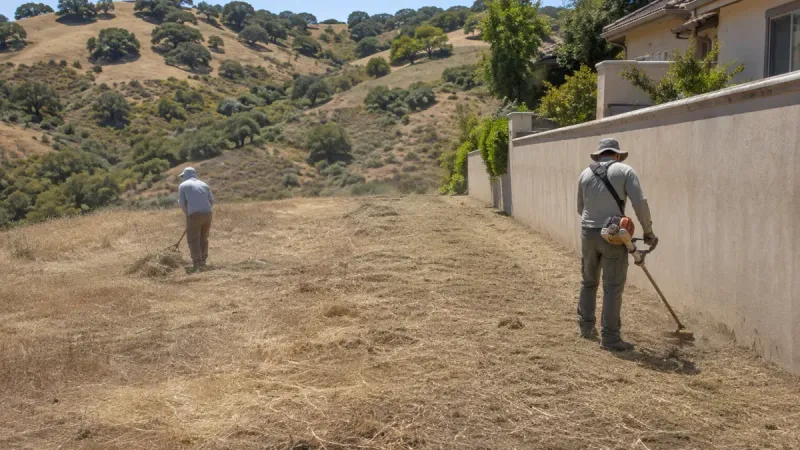
Start at ground level. Dry grass, weeds, brush, dead plants, and fallen leaves that touch or pile up along the fence are the first things to go.
UC ANR advises removing grass, shrubs, low tree branches, and other combustible material that touches a fence.
Pay special attention to the bottom of the boards. Leaf litter loves to collect there, especially in corners and where the fence meets a wall.
Rake it out, bag it, and check again after windy days or after a big leaf drop.
This is targeted cleanup, not a call to strip your yard bare. Healthy, well-spaced plants that are not touching the fence can stay.
The goal is to remove what is dry, dead, or stacked up against the wood.
One more detail comes from UC ANR’s homeowner guide. It suggests keeping wooden boards from touching the soil and offers a gap of about one inch as a construction rule of thumb.
That is a building tip, not a wildfire code requirement, so treat it as a helpful target if you are repairing or replacing boards.
Make this a regular habit. Dry growth returns quickly in our long, rainless summers, and a quick pass every few weeks keeps the base of the fence tidy.
Move firewood and other stored combustibles away
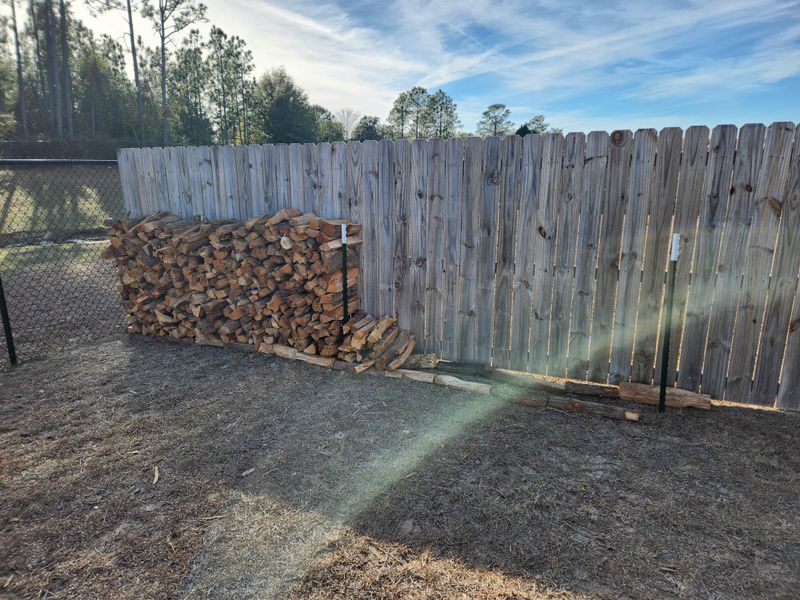
A fence makes a handy wall for stacking things. Firewood, lumber scraps, cardboard, old pallets, and plastic bins often end up leaning against it.
UC ANR’s guide says plainly not to store combustible materials such as firewood against fences.
Here is why it matters. A woodpile is a dense block of fuel, and putting it beside a wooden fence places two sources of fuel side by side.
If an ember lands there, the fire has more to work with right next to your property line.
Take a quick inventory of what sits along the fence. Think of patio cushions, scrap wood, garden stakes, paper yard-waste bags, and propane-free items that can still burn, like tarps and crates.
Anything flammable that has been parked there for months is a good candidate to move.
Pick a new spot with some distance from the fence and from your house. A shed, a garage shelf, or an open area of bare ground can work well.
Stack firewood neatly and bring in only what you plan to burn soon.
Moving these items takes the fuel away from the fence immediately, with no tools or plants to manage. It may be the fastest win on your list.
Keep climbing plants from adding fuel to the fence
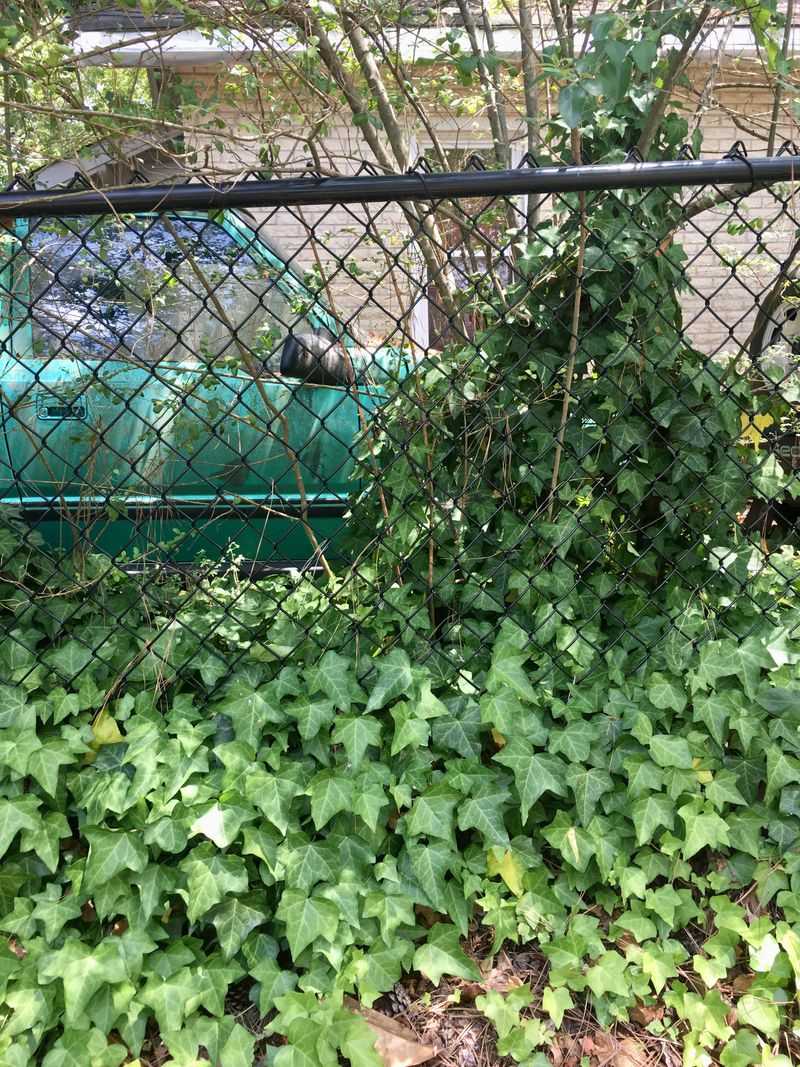
Vines are lovely, but they behave differently from ground-level weeds. When jasmine, ivy, or other climbers grow up a fence, they add plant material right where flames could reach.
Dead stems and leaves also get trapped inside the tangle, creating a dry layer that is hard to see.
CAL FIRE flags vegetation and debris at the base of a fence, including climbing plants, as something to deal with. So take a close look at any vine on your fence and ask a few questions.
Is it thick? Is there dead material inside?
Does it reach the house?
You do not have to tear out every vine. You can thin heavy growth, cut out dead stems, pull away trapped leaves, and keep climbers from running toward the house.
Pruning also helps you see the condition of the boards beneath.
Do not assume a green vine is safe. UC ANR notes that even well-watered plants can burn if they are exposed to enough heat or flame.
Good care helps, but it does not make a plant fireproof.
If a fence is mostly a trellis, consider a freestanding trellis placed away from the fence and house. That way you keep the beauty without stacking fuel on the wood.
Replace the attached section with noncombustible fencing
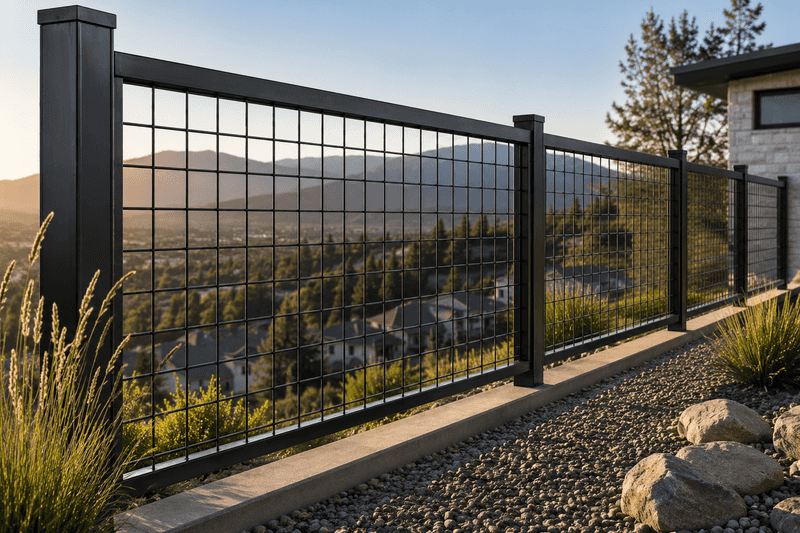
The spot where a wooden fence touches your house is the weak link in the chain. CAL FIRE’s current home hardening guidance recommends replacing the first 8 feet of an attached combustible fence with a noncombustible option.
Metal is one example, and CAL FIRE also points to noncombustible or ignition-resistant materials when you replace a fence.
You may see a different number elsewhere. A 2024 CAL FIRE retrofit guide and the UC ANR Fire Network page describe the last 5 feet.
The documents simply differ, so 5 feet should not be treated as the current universal rule.
Neither distance is a statewide legal mandate. Both are recommendations.
Your city, county, or fire district may have its own standards, and CAL FIRE notes that local requirements can be stricter than state guidance.
Before you buy anything, call or check the website of your local fire department or fire district. Ask what distance and materials they recommend or require for a fence that attaches to a home, and whether a permit is needed.
If a full replacement is not possible right now, a gate or short metal section at the house can be a practical first step. Plan the rest of the fence for later, and keep the wooden portion clear of debris in the meantime.
Use hardscape near the house without extending the rule to every fence

Gravel, pavers, and concrete come up often in fire-safety talk, and they have a specific home. CAL FIRE’s defensible space guidance recommends hardscape in the first five feet around the house, where there is little for embers to land on or ignite.
That recommendation is about the area surrounding your home. It does not say you need a five-foot strip of gravel along every fence in your yard.
The reviewed official sources do not set one required clearance width for all fences.
So how can hardscape help near the house? A gravel band along the foundation, a paver walkway beside a wall, or a concrete patio edge can all create a break between the building and anything flammable.
If a fence meets the house, the ground right there is a smart place to use these materials.
Along the rest of the fence, stick to the simpler steps already covered: keep the base clear of dry growth and debris and keep stored items away. You can still plant, mulch with care, and enjoy your garden further out.
Hardscape also suits California’s water-wise style. It needs no irrigation, it holds up in summer heat, and it pairs well with drought-tolerant plants set a little farther from the walls.
Make the fence-line check part of seasonal yard prep
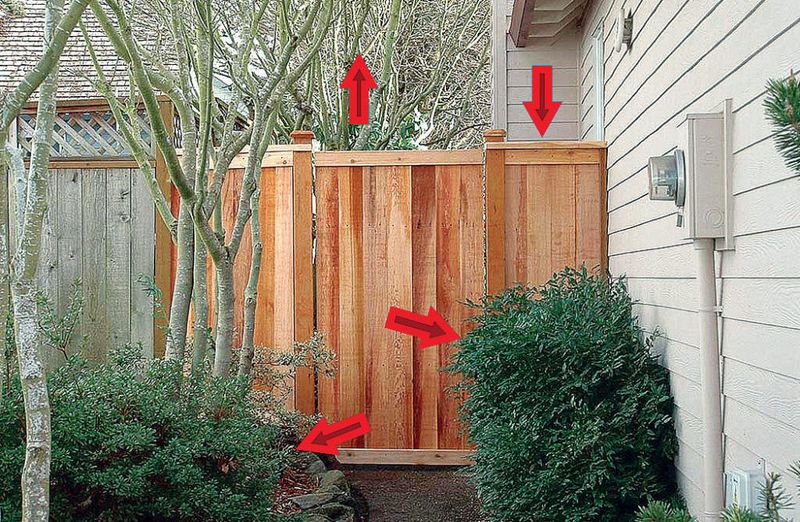
Turn all of this into one routine you repeat each spring. First, walk the fence and look at its condition, its gaps, and what touches it.
Second, clear dry growth, leaves, and debris from the base. Third, move firewood and other stored items away.
Next, check climbing plants and cut back dead or heavy growth that sits on the fence. Finally, if the fence attaches to your house, look up your local fire department or fire district guidance on replacing the attached section, as CAL FIRE’s home hardening page describes.
When you mow or clear, timing counts. CAL FIRE advises working before 10 a.m. and avoiding hot or windy conditions.
A fence is a quiet thing until it matters, and a clean line along it is cheap insurance.