
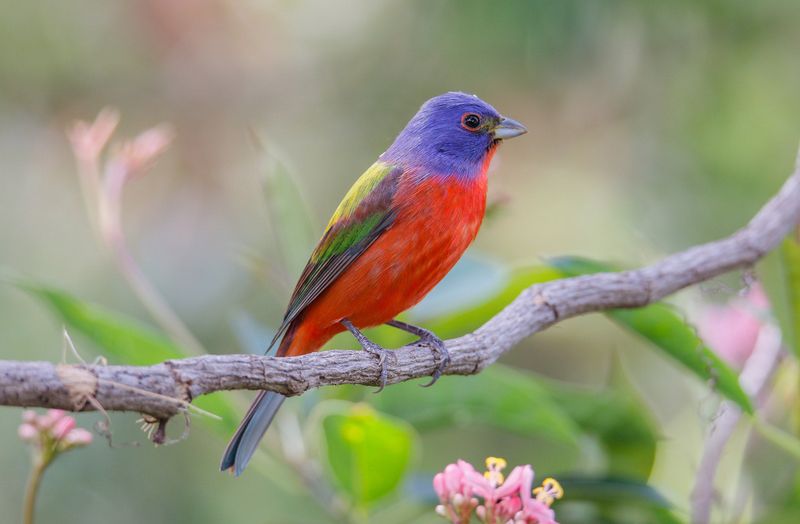
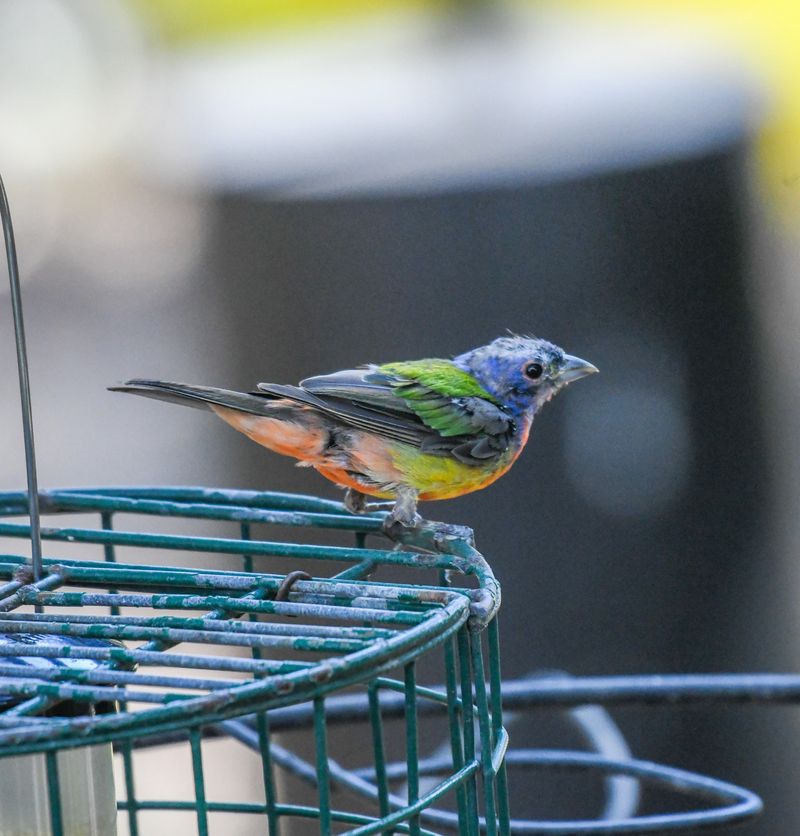
A tiny bird painted in blue, red, and green can show up near a Florida feeder and leave you wondering where it came from. Painted Buntings are seasonal visitors in much of the state, and their timing follows a pattern you can learn.
A few smart yard choices can make your space more useful to them. None of it comes with a promise, but it is a fun project for fall.
When do Painted Buntings reach Florida yards?
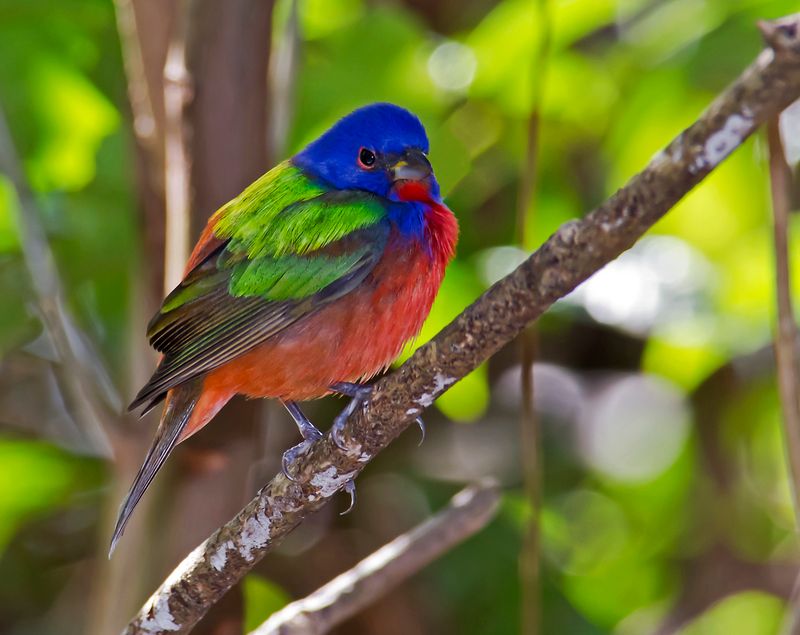
Florida sees Painted Buntings in more than one way. Florida Fish and Wildlife describes eastern-population birds that spend the winter in central and southern Florida.
Birds from the eastern population also breed in northeast Florida, so the state does not follow one single calendar.
Researchers have tracked the fall trip. A peer-reviewed geologger study describes migration to southern Florida and the Caribbean in late September or October.
That is a seasonal pattern tied to the bird’s yearly cycle. Nothing in the sources shows that a cold snap sets the birds moving, so there is no need to wait for a chilly morning before you get ready.
Where you live matters. In central and southern Florida, fall is a good time to prepare your yard for winter residents.
In the northeast part of the state, birds may also be around in the nesting season. Western-population birds, including many from Texas, generally winter farther west and south, so they follow a different route.
The state also keeps track of how these birds are doing. The eastern population monitoring program exists because that group has declined.
That does not mean the species is rare everywhere, only that the eastern birds are being watched. Think of your yard as a small stopover or winter pantry, and treat any sighting as a bonus.
The brightest bird may not look bright
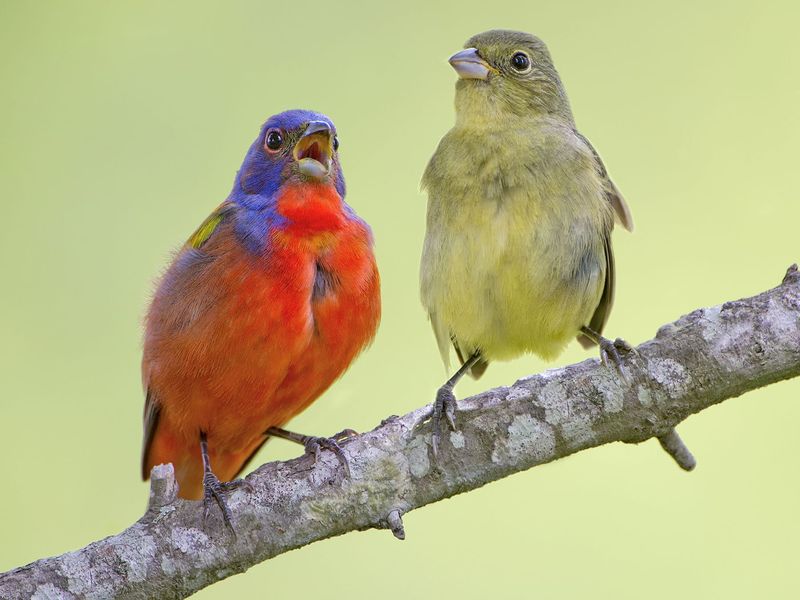
Most people picture the adult male: blue head, red belly, and a green back that looks hand-painted. Females and immature males look very different.
Audubon’s field guide notes that they are greenish, a soft yellow-green that blends into leaves.
That means your first visitor may look like a plain, round green songbird. Check for a small, thick bill and a bright, even olive-lime color without strong wing bars.
Watch low in the cover, where these birds often feel safest.
For timing in South Florida, Fairchild Tropical Botanic Garden gives a useful reference. Its account of garden visitors describes an observation season from October through the first half of April.
That is a South Florida window, not a statewide schedule, so use it as a rough guide if you live in the far south.
Keep expectations realistic. You may see only a flash of green near a seedy corner, and a brilliant male may never appear.
A pair of binoculars and a few quiet minutes at dawn will help you spot what is there.
A small-opening feeder can offer white millet
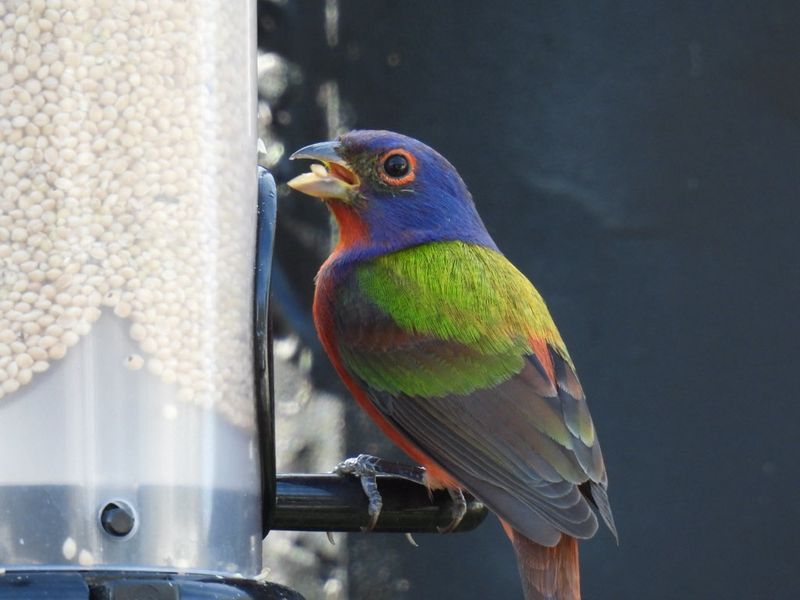
Start with the seed. Fairchild reports that Painted Buntings in South Florida use white millet, and it works best in a feeder with small openings.
Their account of garden visitors is experienced local guidance, so treat it as a smart bet, not a sure thing.
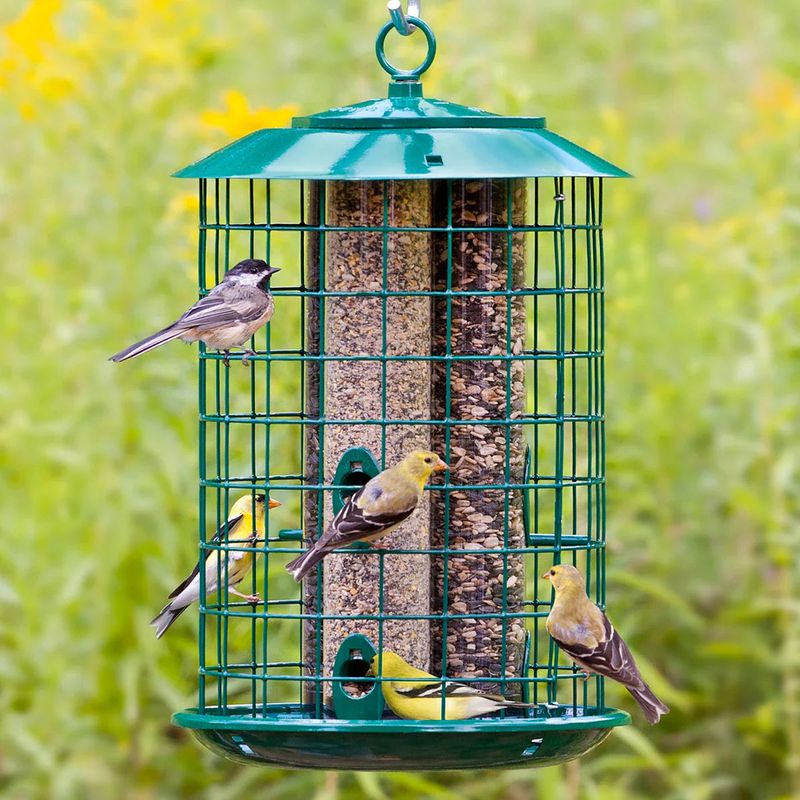
A caged tube feeder is one option. Fairchild’s habitat advice describes this style as one that lets small birds reach the seed while keeping larger birds out.
That helps the little buntings eat without competing with grackles or jays.
Keep the setup modest. One feeder with fresh white millet is plenty for a first try.
Fill it partway so the seed stays dry and fresh, and check it often in Florida humidity.
Feeders are a supplement. Cornell’s life history notes that these birds forage mostly on the ground, eating weed and grass seeds.
So scatter your attention beyond the feeder, and think of the seed as a bonus that sits alongside natural food and cover.
If nothing shows up in a few weeks, do not give up. Birds find new food sources slowly, and a feeder is only one piece of what a yard offers.
Seedheads and cover make the yard more useful
Natural food matters. Cornell lists forage seeds from bristle grass, panic grass, sedge, and pigweed, among other plants.
Since these birds feed mostly on the ground, letting some seedheads stand through fall and winter keeps that food available.
Cover helps too. UF/IFAS bird-friendly planting guidance recommends native plants for both food and shelter.
A mix of grasses, shrubs, and a few taller plants gives birds places to feed and duck out of sight.
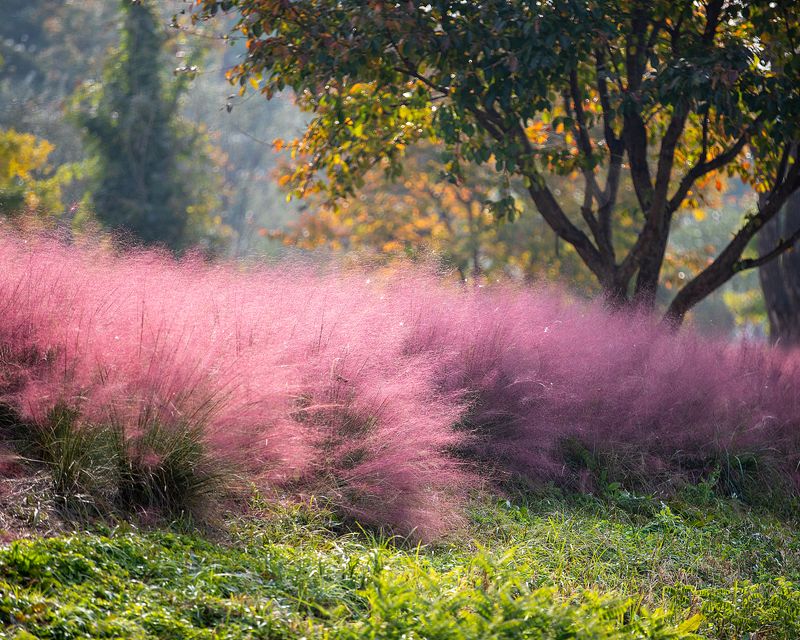
Muhly grass is a good Florida example. UF/IFAS describes it as a native grass that suits a range of Florida conditions and can offer small birds food and shelter.
It also handles sandy, fast-draining soil, which helps if low upkeep is your goal.
River oats is another choice with different needs. UF/IFAS notes that its seeds feed songbirds, but it likes moist, partly shaded spots and does best in northern Florida.
In a hot, sunny, dry yard in the south, muhly grass is the easier fit.
Neither plant is proven to lure Painted Buntings. They are bird-supporting landscape picks.
Leave a weedy, seedy patch where you can, and you build a yard that helps many small birds.
A safe feeder balances cover with visibility
A clean feeder is a safer one. UF/IFAS advises cleaning seed feeders at least every two to three weeks, and more often in warm or wet weather.
Toss spoiled or damp seed, and rake up waste and hulls from the ground below.
Placement is a balance. Birds like shrubs nearby for a quick escape, but dense brush right beside a feeder can hide a cat.
UF/IFAS suggests keeping feeders 10 to 15 feet from shrubs or brush where a cat could lurk. That gap gives birds a clear view while still keeping cover within a short flight.
Cats are a real threat. Florida Fish and Wildlife recommends keeping pet cats indoors to protect birds and other wildlife.
A cat that stays inside is also safer from traffic and disease.
Windows need attention too. Advice on feeder distance varies.
Audubon suggests placing feeders within 3 feet of a window or more than 30 feet away, while UF/IFAS mentions about 3 meters when you cannot move it far. No one distance is settled, so focus on the glass itself.
Make hazardous windows visible with decals, screens, or other collision deterrents. A quick fix on the worst pane can prevent a painful surprise.
Start with food, then let the yard do more
Here is the short list. Offer white millet in a small-opening feeder, as Fairchild reports.
Leave useful seedheads standing, since Cornell notes these birds forage mostly on the ground.
Add cover at a safe distance, and follow UF/IFAS cleaning and placement tips. Keep cats inside and mark your windows.
These steps support birds but cannot promise a sighting.
The buntings are on their own calendar, so a good yard is simply ready when they pass through.