
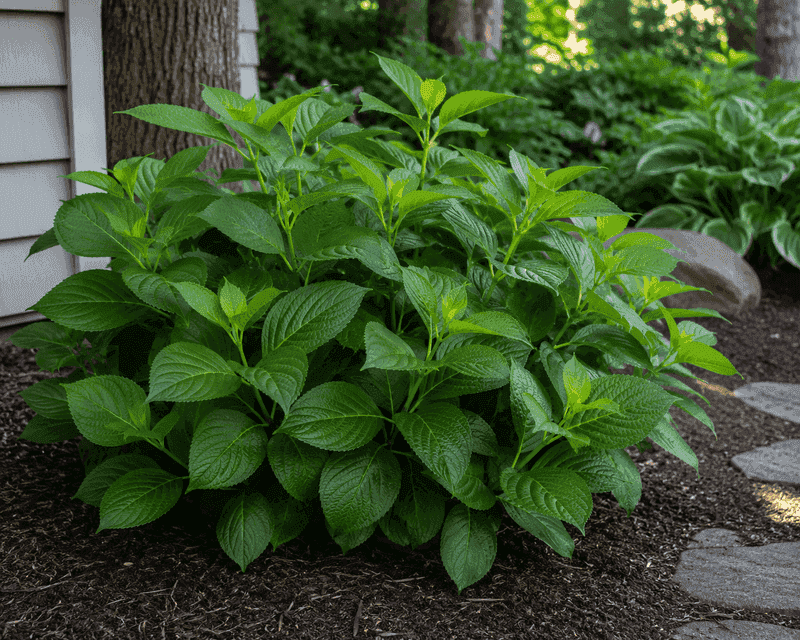
Your hydrangea looks great from a distance, with big green leaves and strong stems. Then summer comes and goes, and there are no flowers at all.
That mix of healthy leaves and empty branches is frustrating, but it usually leaves clues. Here is a simple order of checks to help you find what is holding your shrub back.
Green leaves do not identify the cause
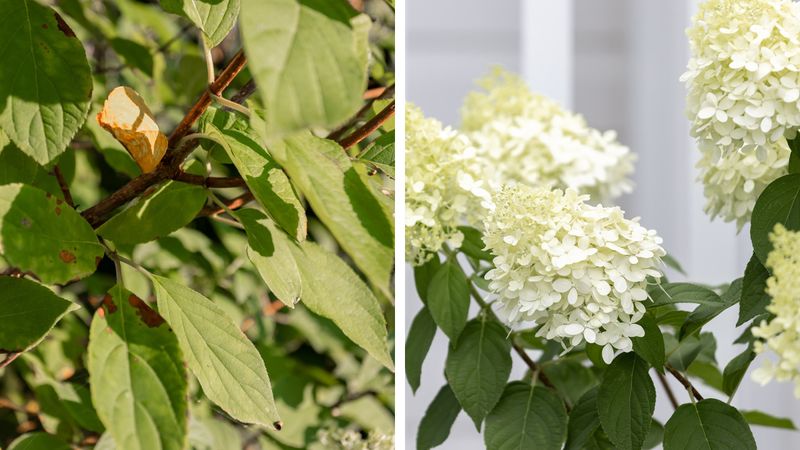
A leafy hydrangea is proof of one thing: the plant is growing. It does not tell you the soil is healthy, and it does not tell you why flowers are missing.
Plenty of gardeners assume the trouble must be underground, but that is only one of several possibilities.
Too much nitrogen can push a shrub to make leaves instead of blooms, and too little light can cut flowering as well. Those are real causes, yet neither one fits every plant.
University of Maryland Extension lists several reasons hydrangeas fail to bloom, including pruning at the wrong time and damage to flower buds from cold.
Flowering also depends on the type of hydrangea you have and the conditions around it, as Iowa State Extension explains. So treat this as a short list of checks rather than a single answer.
Work through fertilizer, light, water, and hydrangea type, and you will likely narrow things down before you change anything in the soil.
Could fertilizer be feeding leaves instead of flowers?
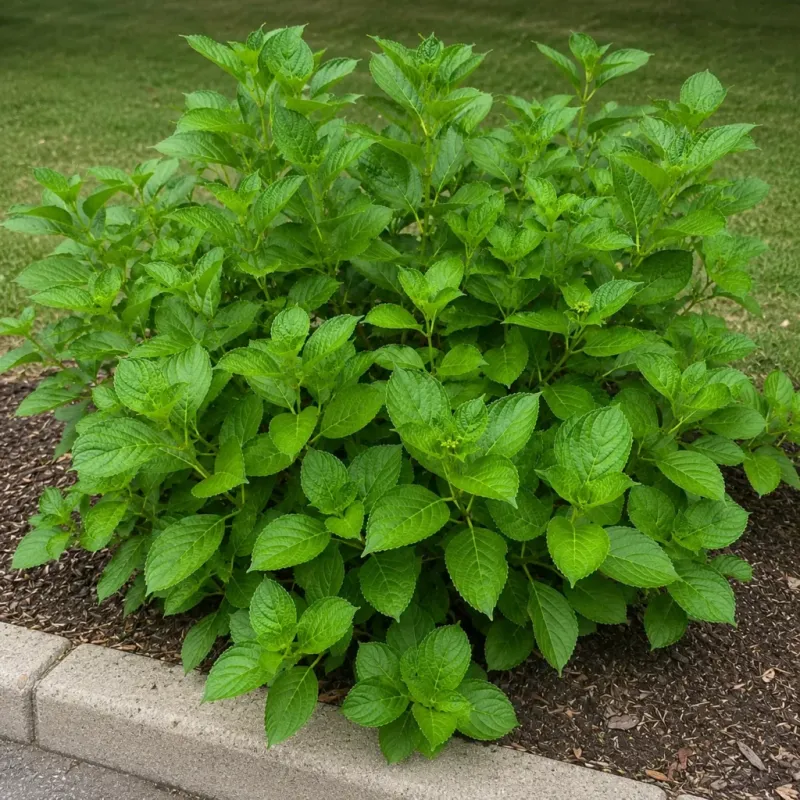
Nitrogen is the nutrient that builds leaves. When a hydrangea gets more than it needs, it can grow lots of foliage at the expense of flowers, according to UGA Extension.
That does not mean every leafy hydrangea has been overfed, so start by looking at your own history.
Think back over the past year. What did you put on the shrub, and how often?
Then look at the lawn beside it, because lawn fertilizer spread near a bed can reach a nearby shrub, a point raised in an Extension Q&A.
Pull out the bags and read the labels. The first number in the three-number ratio is nitrogen.
Note where each product went and how far the spreader reached.
If the record shows heavy nitrogen near the plant, hold off on feeding rather than adding more. If it shows little or none, fertilizer probably is not your answer, and you can move on to the next check.
Changing shade can quietly cut flowering
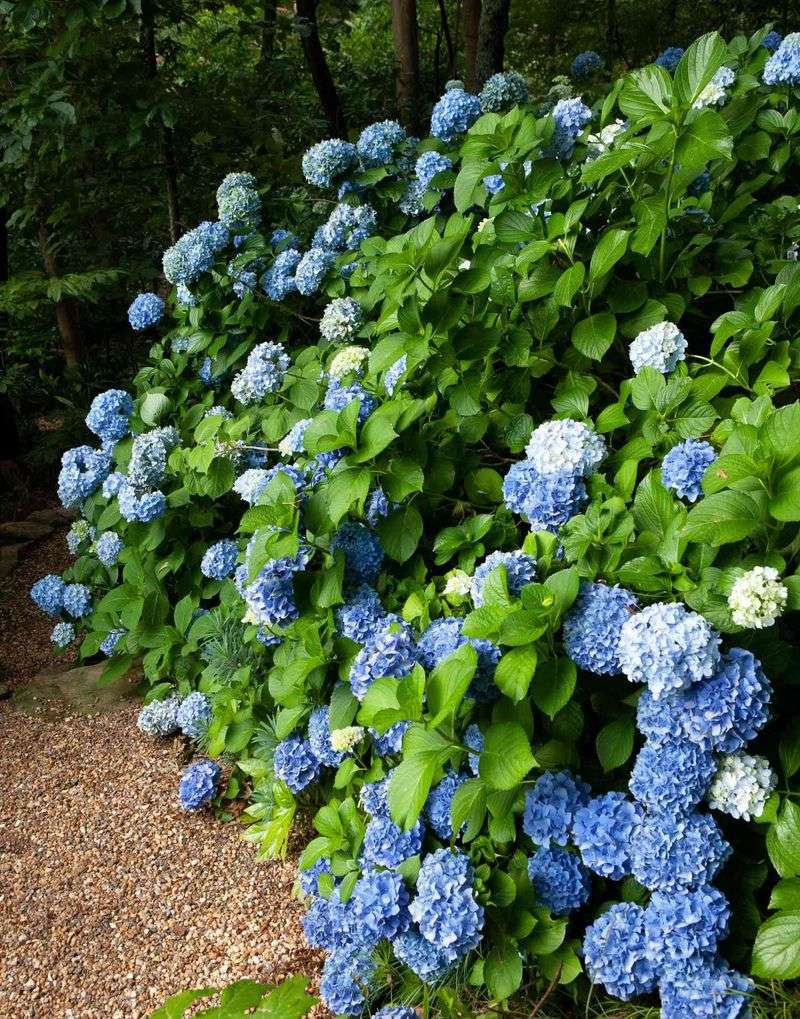
Trees and shrubs keep growing, so a bed that got plenty of sun five years ago may be much darker now. Walk out several times through the day in the growing season and note when sun actually hits the plant.
A quick photo each morning and afternoon makes the pattern easy to see.
Too much shade can reduce flowering, as Iowa State Extension notes. But there is no single sun number that works for every hydrangea or every Southern yard.
Species differ. UConn’s fact sheet points out that panicle hydrangeas generally tolerate more sun than bigleaf types.
In hot climates, afternoon shade can protect some hydrangeas, and UF/IFAS describes oakleaf hydrangea as a good fit for partly to almost fully shaded Florida sites.
So the question is not simply whether the plant needs more sun. Ask whether the light changed, and whether your type suits the light it gets now.
Tree roots are a water clue, not a bloom diagnosis
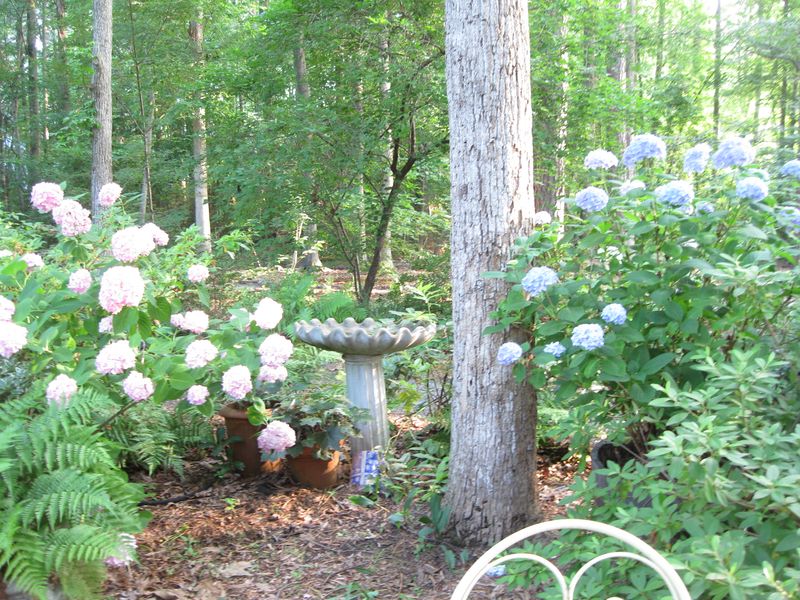
If your hydrangea sits under or beside big established trees, those trees are drinking from the same soil. Iowa State Extension says shrubs among many competing tree roots may need more irrigation, according to its hydrangea growing guide.
That makes tree roots a reason to check soil moisture, especially during dry spells. Push a finger a couple of inches into the soil near the plant.
If it is dry while the rest of the yard is not, the shrub may be short on water.
Notice what this does not say. Nothing here shows that roots block nutrients or directly stop flowering, so avoid blaming them without other signs.
Resist the urge to dig around the shrub to look. Digging near trees can injure roots, as UGA Extension in Forsyth County cautions.
Watching the soil is gentler and tells you more.
Steady moisture matters more than extra water
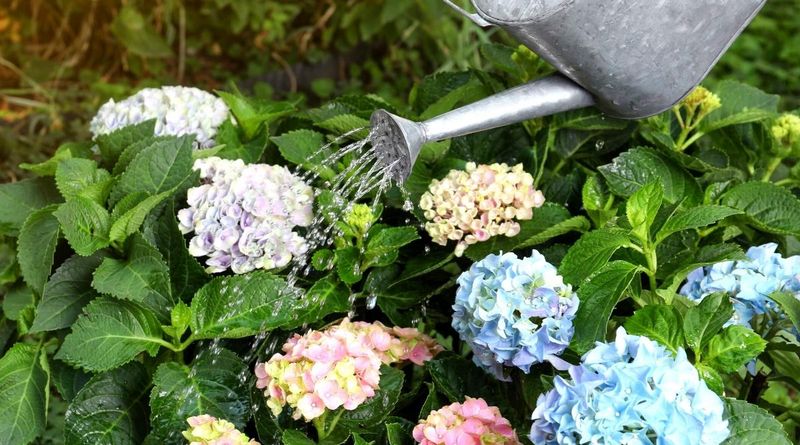
Hydrangeas like steady moisture, not feast and famine. They also do not like sitting in soggy ground.
Poor drainage can lead to root disease, so pouring on more water because the plant is not blooming can backfire.
Check before you irrigate. After rain or watering, see whether water pools around the base or drains away within a reasonable time.
Then test the soil a few inches down. Damp and cool means wait, and dry means water deeply.
Mulch helps keep that balance. Mississippi State Extension recommends a 2 to 3 inch layer to conserve moisture and keep roots cool, and its hydrangea publication cautions against overwatering.
Keep mulch a little back from the stems. Sandy Florida soil and heavy Texas clay hold water very differently, so adjust to what your own bed does rather than following a fixed schedule.
Check the hydrangea type before ruling out pruning
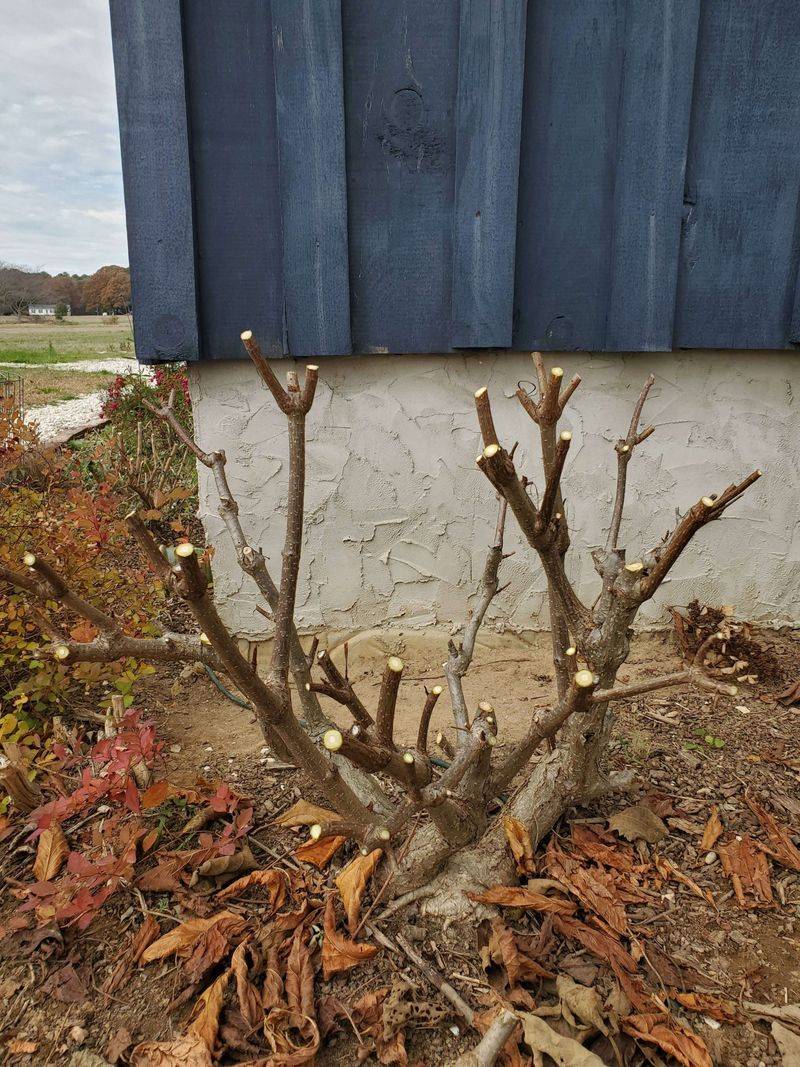
Many gardeners cannot say which hydrangea they own, and that matters more than almost anything else here. Bigleaf, oakleaf, mountain, and climbing hydrangeas can bloom on old wood, meaning stems that grew last year.
Smooth and panicle hydrangeas bloom on new growth, as Iowa State Extension explains.
Now think about your last haircut for the shrub. Cutting an old-wood bloomer back in fall, winter, or spring can remove the buds that would have flowered.
The same cut on a panicle type is usually harmless.
Cold is another suspect. A late freeze can kill flower buds even on a plant that leafs out beautifully, a problem noted by University of Maryland Extension.
Mississippi State’s hydrangea guide also ties flowering to type and care.
If you are unsure of your type, look at the leaf shape and flower form from a past year, or take a photo to your county Extension office.
Test before you amend the bed
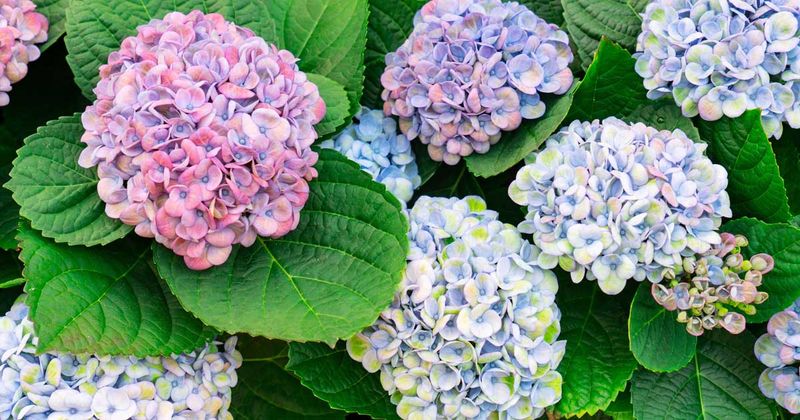
By now you have a short checklist: fertilizer history, light, moisture and drainage, and hydrangea type. Finish those before touching the soil.
If those checks do not explain things, a soil test is the next step.
Texas gardeners can send home landscape samples to the Texas A&M soil testing lab, which gives nutrient recommendations. Florida gardeners can find guidance in UF/IFAS soil testing information.
Follow the results and the product directions.
About pH: its clearest effect is flower color in bigleaf and mountain hydrangeas, as Iowa State Extension explains, and Penn State Extension notes that other common types do not change color with pH. It is not a general cure for missing blooms.
Skip routine bloom boosters and bone meal. UMass Extension warns against too much phosphorus.
Make one targeted change, then give the plant a full season to answer.