
A bright painted bunting can slip past a tidy Florida yard without finding a reason to stay. During winter, these shy birds need seeds, low cover, and a safe place to feed.
The seven native plants below can help turn an open lawn into a more welcoming stop. No plant guarantees a visit, but the right mix gives buntings more of what they need.
1. Switchgrass
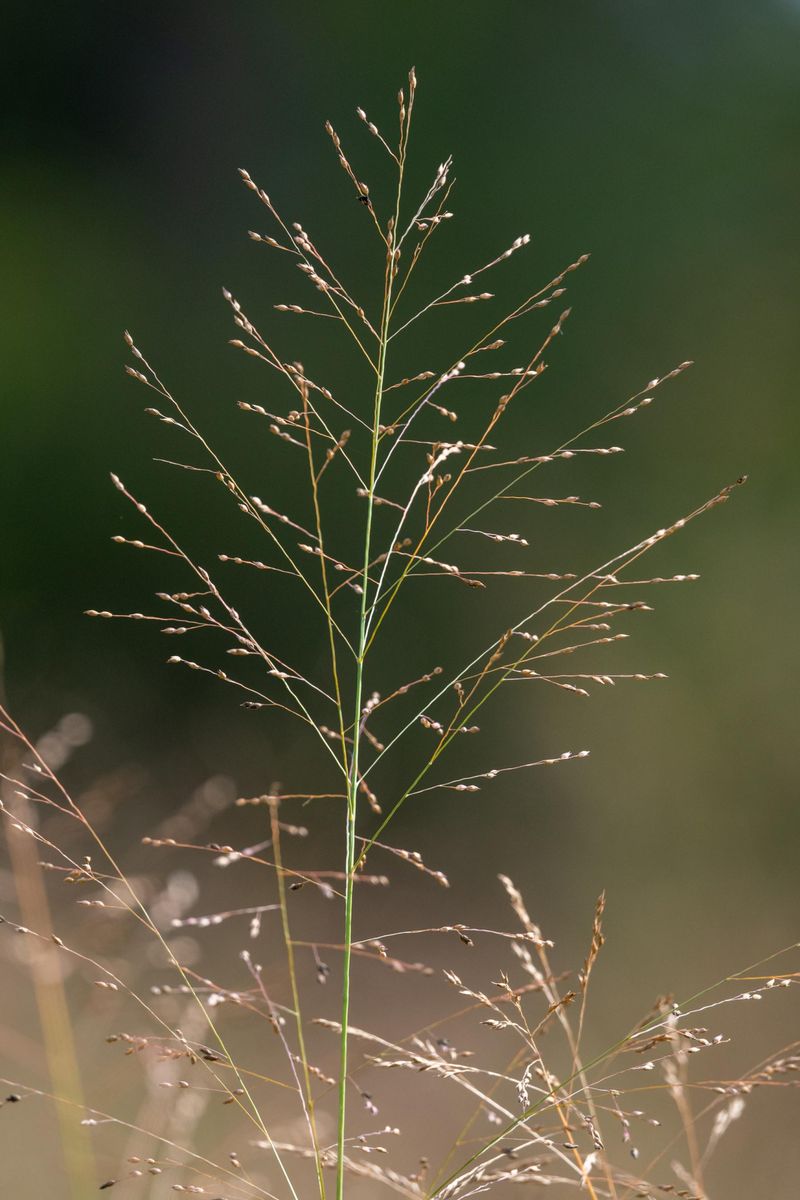
An uncut patch of grass can offer more winter value than a perfectly trimmed lawn. Switchgrass, Panicum virgatum, produces branching seed heads and upright stems that add both food potential and structure to a bird-friendly planting.
Painted buntings eat mostly seeds during winter, often feeding close to the ground. Leaving mature grass seed heads standing lets seeds fall gradually, although buntings may choose some seed sources over others.
Give switchgrass a sunny position and room for its mature size, commonly about 3 to 6 feet tall depending on the selection and conditions. It suits a back border better than a narrow strip beside a walkway, and many Florida forms handle moist ground as well as periods of dryness once established.
Plant a small group near shrubs rather than one isolated clump in open lawn. Water new plants while their roots develop, avoid heavy fertilizer, and delay cutting until late winter or early spring, checking first for bird activity.
Ask a native nursery for locally appropriate stock, since ornamental selections vary in size and growth habit.
2. Muhly Grass
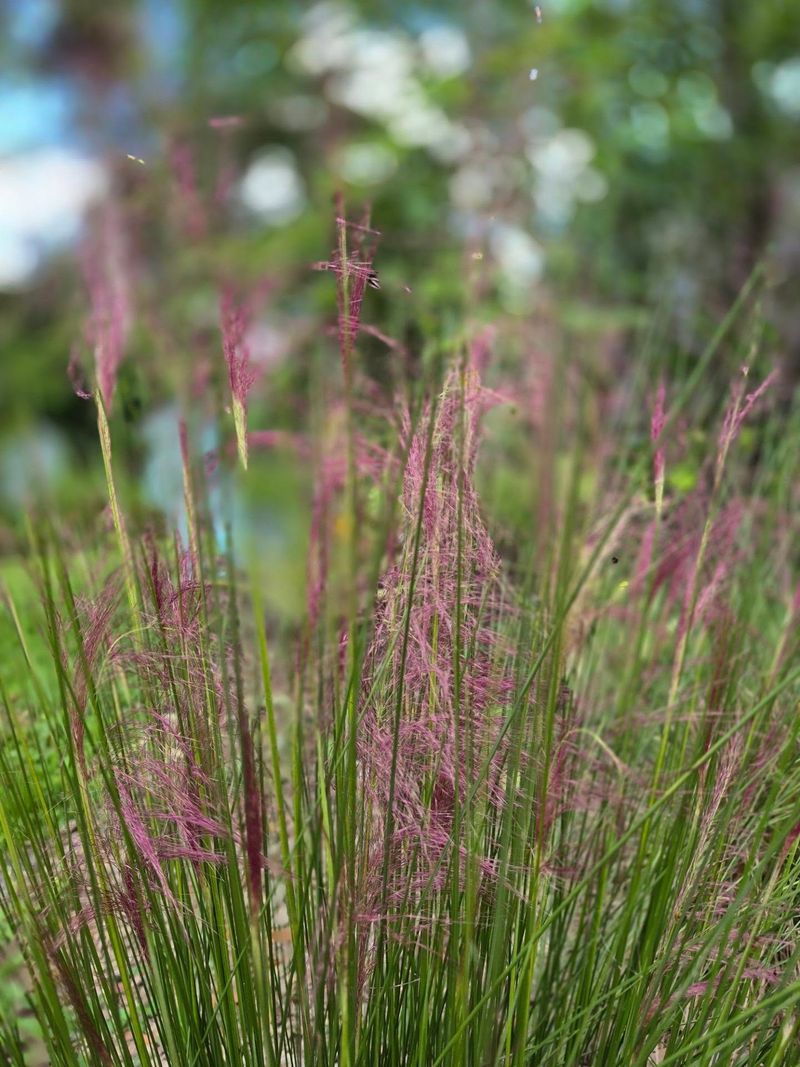
Those pink clouds do not lose all their garden value when the color fades. Muhly grass, Muhlenbergia capillaris, leaves behind fine seed-bearing stems and a dense base that helps soften the edge between lawn and wildlife cover.
Its strongest homeowner advantage is simple: it looks intentional even in a front-yard planting. Use several clumps in a sunny bed, with a native shrub behind them, to create an attractive border that also offers small birds a less exposed place to move.
Muhly generally grows about 2 to 4 feet tall and wide and performs well in Florida’s sandy, well-drained soils. Give young plants regular water during establishment, then adjust irrigation to rainfall rather than keeping the bed constantly wet.
Leave the faded plumes through much of winter instead of shearing them immediately after flowering. Their small seeds can contribute to a seed-rich landscape, but muhly alone is not a proven painted bunting magnet.
Pair it with other seed-producing plants and nearby shelter, and remove old growth before fresh spring foliage becomes difficult to avoid.
3. Purple Lovegrass
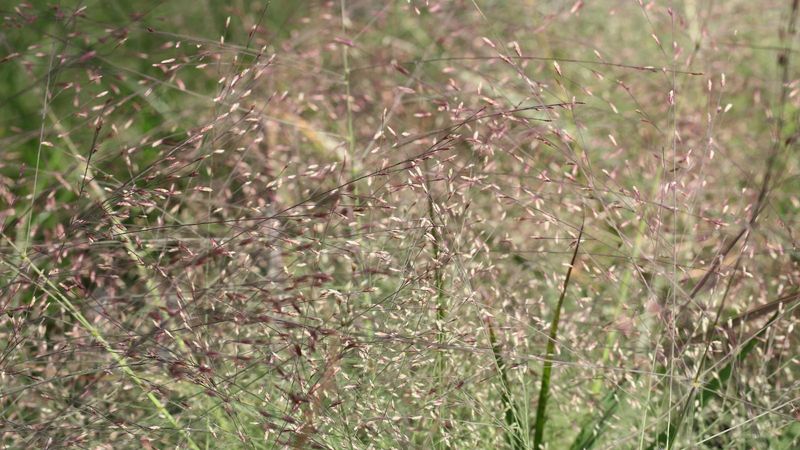
For a small yard, a low seed patch may be easier to fit than a towering meadow. Purple lovegrass, Eragrostis spectabilis, creates a loose haze of reddish-purple flower heads above a compact clump of foliage.
This Florida native is useful along the sunny front edge of a habitat bed, where it will not hide the plants behind it. Its seed heads usually appear in late summer and fall, making your cleanup choices especially important for the winter garden.
Let mature heads dry and release their seeds rather than clipping every stem as soon as the color fades. That keeps small grass seeds in the feeding zone used by ground-foraging birds, including buntings when they visit suitable habitat.
Choose a well-drained spot, especially in sandy yards, and expect plants roughly 1 to 2 feet tall when flowering. Avoid rich fertilizer and constant irrigation once established.
Keep a little open ground between clumps so fallen seeds remain accessible, but place the planting near escape cover rather than in an exposed island surrounded by lawn.
4. Bushy Bluestem
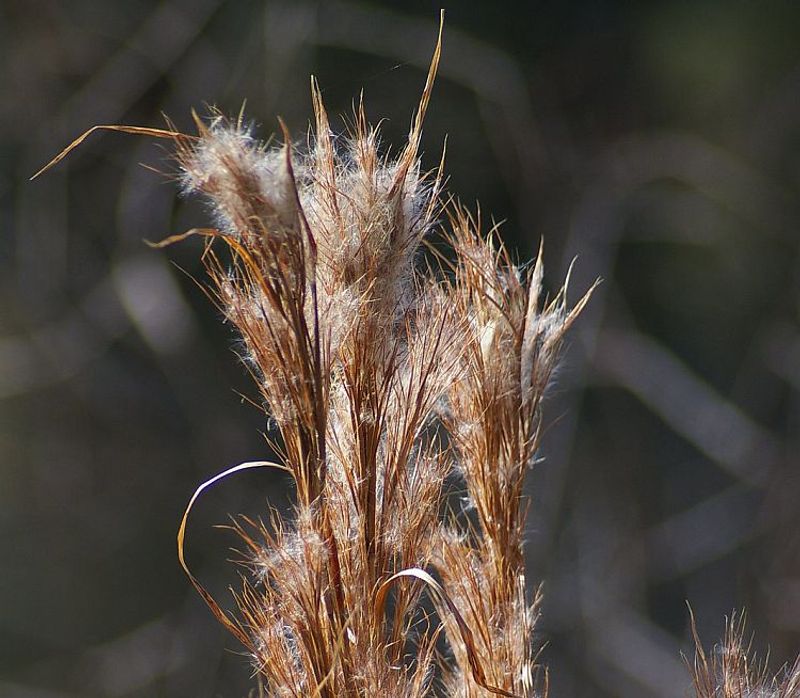
A damp corner does not have to become another patch of struggling turf. Bushy bluestem, Andropogon glomeratus, brings height and fluffy seed clusters to sunny places where the soil stays moist.
Unlike the smaller grasses on this list, it works best as a substantial background planting. Mature stems can reach about 3 to 6 feet, creating a loose screen that helps connect a feeding area with thicker cover.
Use it near a rain garden or in a naturally moist bed, not in the driest sand beside a hot driveway. It tolerates wet conditions, but matching the plant to the site is easier than trying to support it with constant watering.
Keep the tawny seed heads standing into winter, and allow some seed to reach the ground. The planting contributes grass seeds and concealment, though evidence does not establish bushy bluestem as a uniquely preferred painted bunting food.
Give the clumps enough space to avoid crowding paths or blocking sightlines. If seedlings appear beyond the bed, move or remove them while small, preserving the useful patch without letting it take over.
5. Partridge Pea
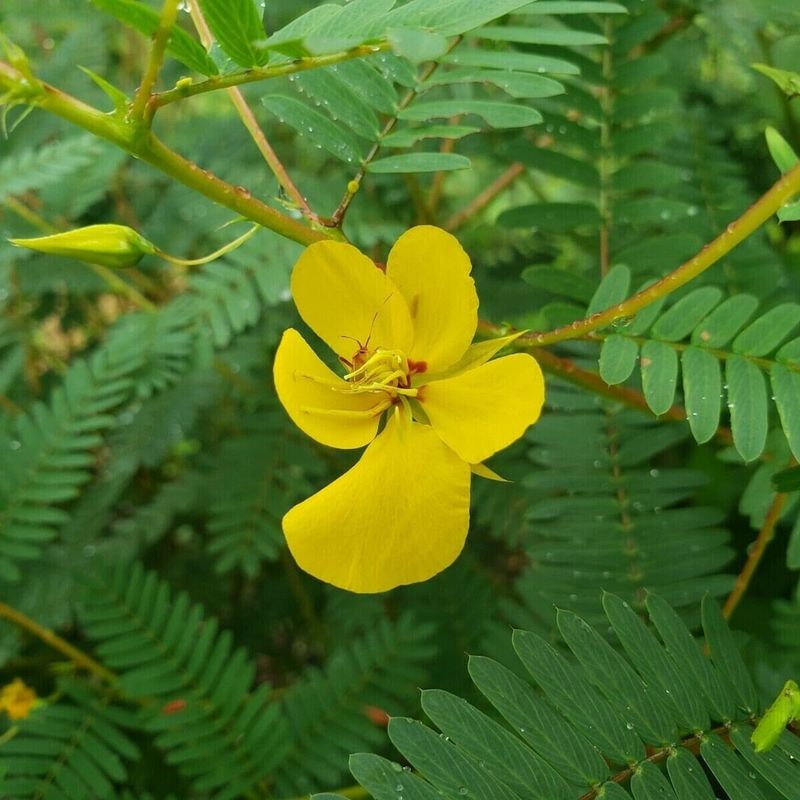
Yellow flowers are only the first act in this plant’s busy season. Partridge pea, Chamaecrista fasciculata, follows its blooms with seed pods, adding a different kind of seed source to a garden dominated by grasses.
It is a native annual, so think of it as a renewing patch rather than a permanent shrub. Plants commonly reach about 1 to 3 feet, and seedlings can return where mature pods release seeds onto suitable ground.
Choose a sunny, well-drained area with some exposed soil. A thick blanket of mulch can limit new seedlings, while a lightly managed wildflower edge gives the next generation room to grow.
The seeds are used by wildlife, including seed-eating birds, but that does not mean painted buntings will reliably select them. Its added benefit is supporting insects during the growing season, which broadens the value of the whole planting.
Allow pods to ripen before removing spent plants, and avoid clearing the entire patch at once. Fall planting timing varies across Florida, so ask your county Extension office or a local native nursery when to sow locally sourced seed for your area.
6. Firebush
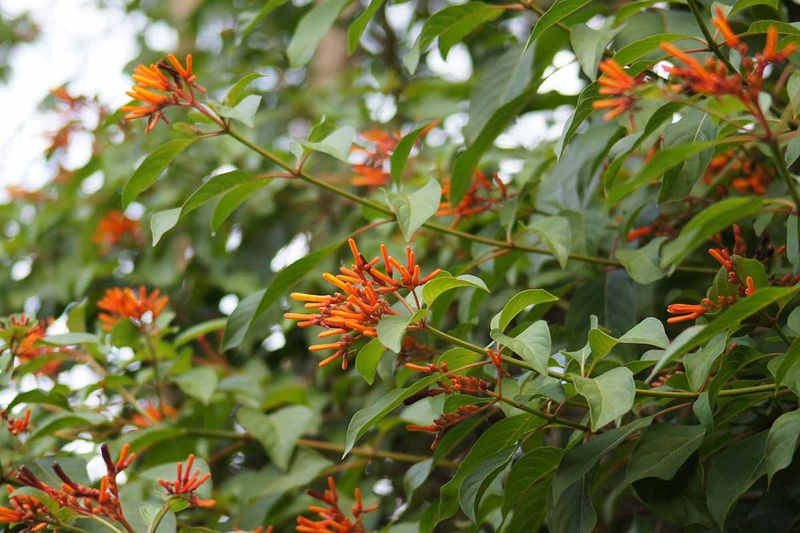
Food is less useful if a shy bird feels exposed while eating it. Firebush, Hamelia patens, helps solve the shelter side of the habitat puzzle, especially in frost-free South Florida gardens.
Its branching growth gives small birds places to pause and retreat near a seed patch. The flowers also support pollinators, but this shrub belongs on the list mainly for cover, not because its fruit is a proven winter staple for painted buntings.
Buy the Florida-native form, Hamelia patens var. patens, from a nursery that can confirm its identity. Some plants sold under the firebush name are nonnative forms or hybrids, so the label deserves a closer look.
Plant in sun to partial shade and leave room for a large shrub, often 5 to 10 feet tall or more in warm locations. Frost can damage or kill back the top growth farther north, making it less dependable as winter shelter there.
Instead of clipping it into a tight ball, prune selectively to retain leafy lower branches. Put seed-producing grasses nearby, keep cats indoors, and give birds a clear route between feeding ground and protective vegetation.
7. Wax Myrtle
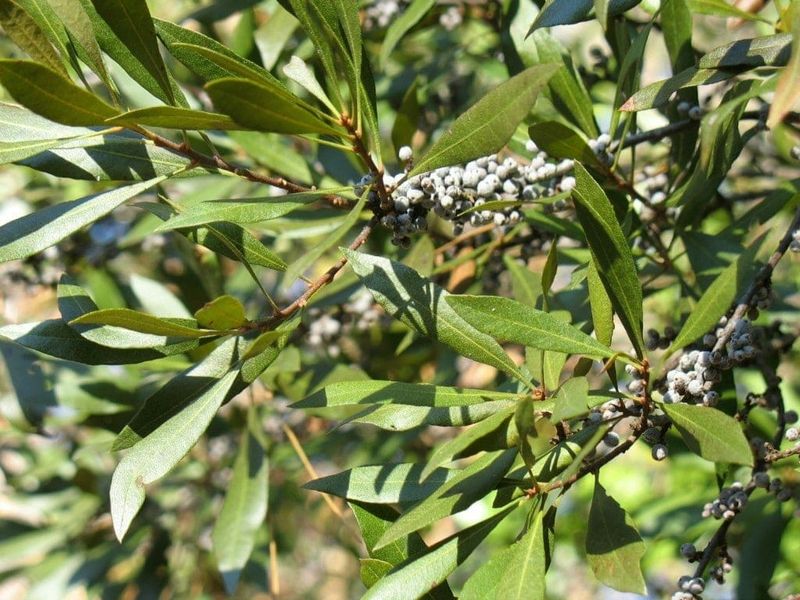
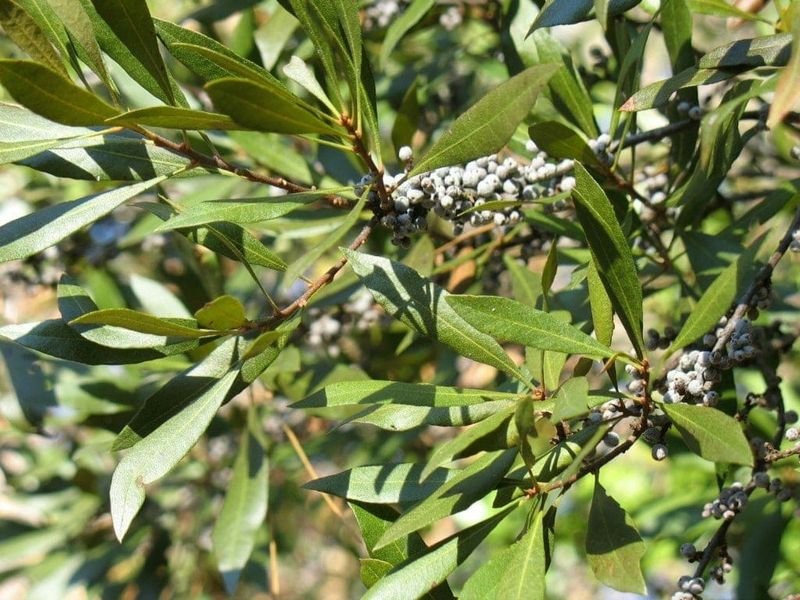
A leafy hiding place can make the difference between a quick flyover and a cautious visit. Wax myrtle, Morella cerifera, supplies evergreen cover when nearby grasses have turned brown and open lawn offers little protection.
That year-round structure is its main job in a painted bunting garden. Female plants produce waxy fruits used by several bird species, but those fruits should not be presented as a dependable bunting food source.
Wax myrtle grows across much of Florida and suits a range of soils, including many sandy sites. Give it sun to partial shade and enough room for a large shrub or small tree, commonly 10 to 20 feet tall, rather than squeezing it beneath a low window.
For useful shelter, preserve some foliage near ground level instead of removing every lower branch. A loose screen beside a mixed grass bed creates a more sheltered feeding edge than a single tree standing alone.
Start with one well-placed shrub and a few seed-producing plants if space is limited. Leave winter seeds available, reduce pesticide use, and provide clean water nearby; together, those choices build habitat more effectively than any plant by itself.