
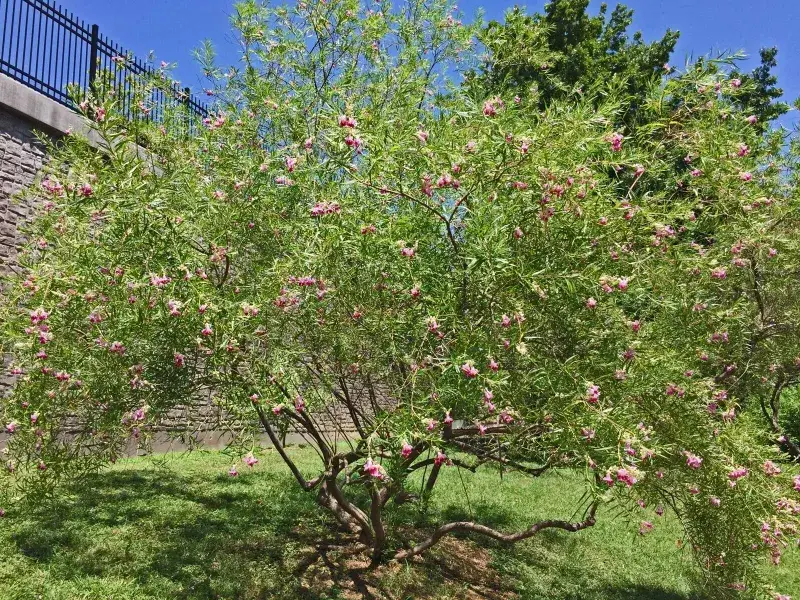
A small tree with orchid-like flowers sounds like a great fit for a sunny Texas yard. Desert willow is a popular pick, and fall is a smart time to get one in the ground.
Cooler air takes stress off a new tree while the soil still holds some warmth. Here is how to pick the spot, plant it well, and give it a fair shot at flowers and hummingbird visits next summer.
Fall gives roots a chance to get ahead
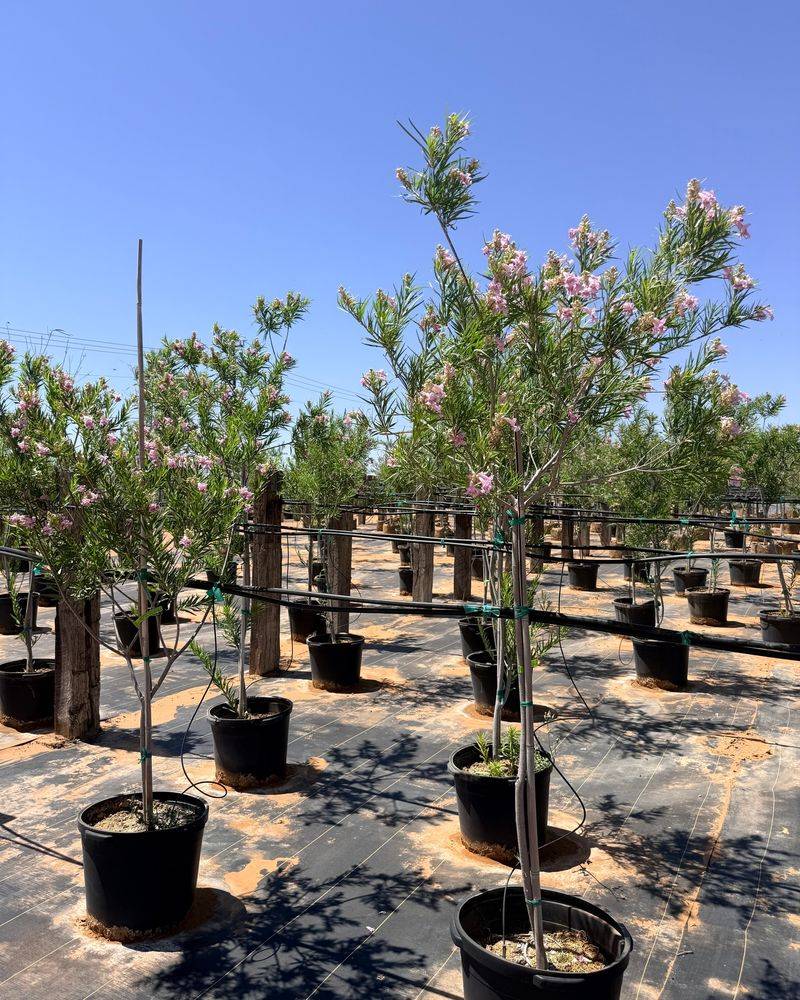
Texas tree guidance leans toward fall for a simple reason. According to Texas A&M AgriLife guidance on fall planting, tree roots can keep growing while the soil stays warm, even after the air cools off.
That gives a new tree a few months to settle in before summer heat arrives.
Think of it as a possible head start. The idea comes from general advice for trees, not from a trial on desert willow in particular.
Nobody can promise that a fall-planted tree will be fully established by next summer, and no source shows it will beat a spring-planted one.
Triple-digit weather is hard on any young tree. A desert willow planted this fall will not simply shrug it off.
Roots that have had more time to spread may help, but the tree still needs attention while it is getting established.
Texas A&M Forest Service says in its tree planting guide that newly planted trees need careful watering for at least two years. So a good fall planting is a smart first step, not the finish line.
Here is a practical way to look at it. If you can plant in October or November, you give the roots a longer runway.
If you miss the window, a spring planting with steady care can still work well. What matters most is a good site, correct planting, and close attention afterward.
Will your yard suit a desert willow?
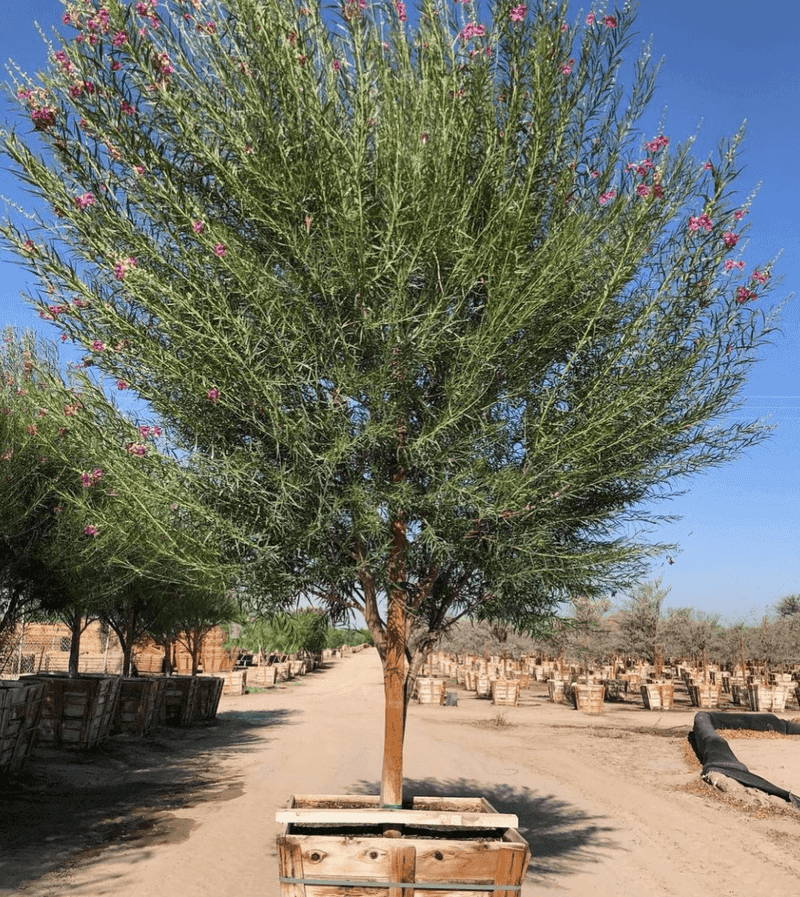
Before you buy a tree, walk your yard and look honestly at the light and the soil. Desert willow wants full sun and drainage that lets water move through.
A spot where puddles linger after a storm is a poor match.
According to Texas A&M’s Plants of Texas Rangelands, desert willow is a small, loose-form tree, often about 20 to 30 feet tall. Its flowers can be pink, lavender, white, or dark rose.
That open shape makes pretty filtered shade, but give it room away from rooflines, power lines, and tight patios.
The same source lists it in well-drained soils and says it can grow in most soils. Do not read that as a green light for soggy ground.
Growing in many soils is not the same as tolerating standing water. The City of Austin plant guide also recommends well-drained soil.
Native status depends on where you live. Desert willow occurs in the Edwards Plateau and other Texas ecoregions, but that does not make it native to every Central Texas property.
Check your local conditions before you describe it as a native planting.
One more detail: it is deciduous. Expect bare branches in winter, and know that long seed pods may hang on into spring.
Some yards, such as a thin clay bed that stays wet, may be better served by a different tree.
Plant the root ball at the right depth
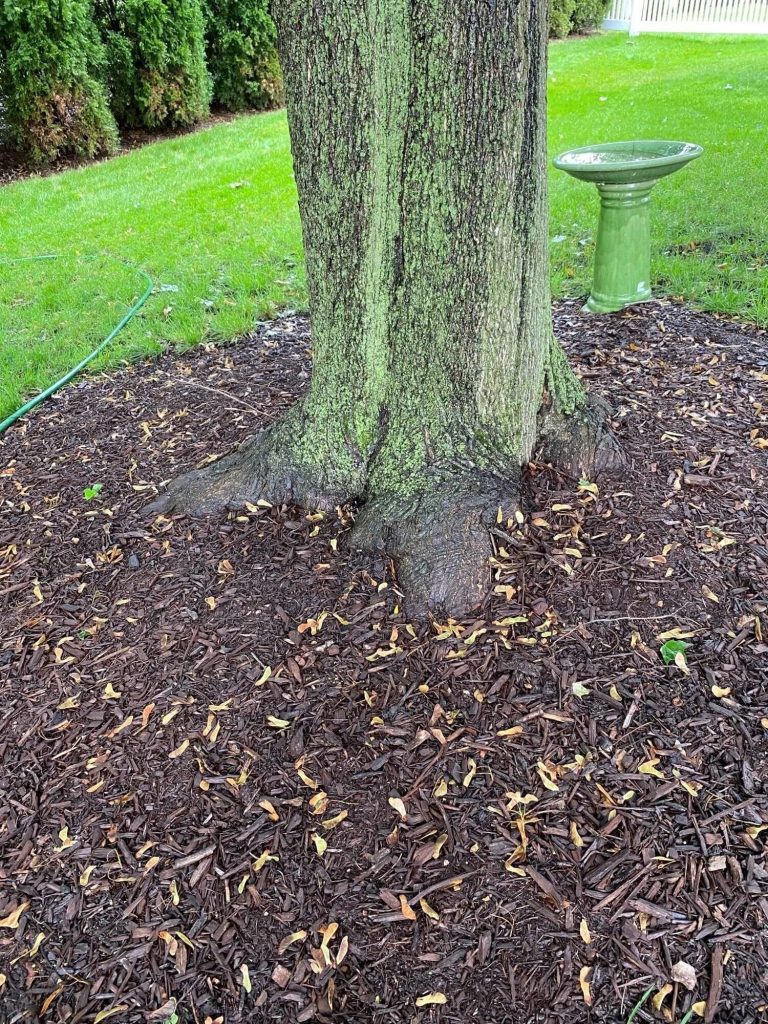
Planting day goes best when you follow the steps in order. Texas A&M Forest Service lays them out in its tree planting guide, and they work well for desert willow.
- Check drainage first. Dig the hole, fill it with water, and see how long it takes to empty.
- If the hole takes longer than 24 hours to drain, choose another site.
- Dig the hole at least twice as wide as the root ball, but no deeper.
- Set the root collar, where the trunk flares out, flush with or slightly above the surrounding ground.
- Backfill with the same soil you dug out, firming it gently as you go.
- Spread mulch 2 to 3 inches deep, keeping it from piling against the trunk.
Depth is where many new trees go wrong. A hole dug too deep lets the tree sink and can hold water around the base.
Planting a bit high on a well-drained site is safer than planting low.
Gently loosen any circling roots before the tree goes in. Skip the fancy soil mix.
Using your own soil encourages roots to reach out into the surrounding yard instead of staying in a pocket of rich dirt.
A mulch ring should look like a doughnut, not a volcano. Leave a small gap around the trunk so the bark stays dry.
Water for establishment, not by a fixed calendar
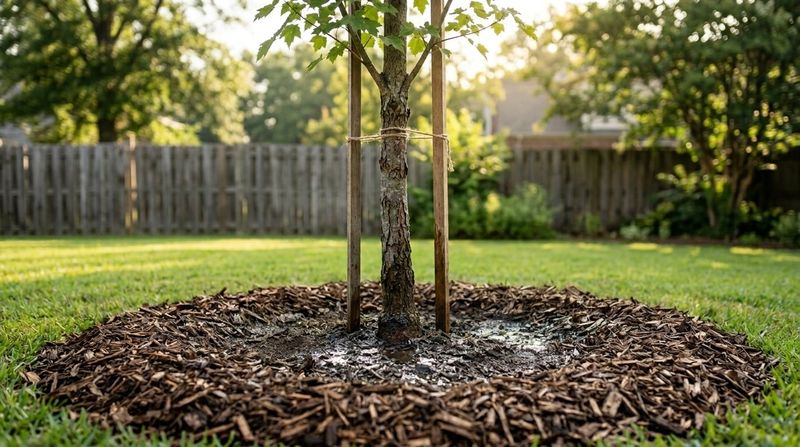
After planting, the soil tells you more than the calendar does. Poke a finger a few inches into the root zone near the tree.
If it feels moist, wait. If it is dry, give it a slow, deep soak.
Rainfall, soil type, and drainage all change how often a tree needs water. A fall with steady rain may need little help, while a dry, windy stretch may need more.
Texas A&M’s EarthKind planting advice says to avoid overwatering and to check soil moisture.
That caution matters even more here. Desert willow likes well-drained conditions, so a fixed, frequent schedule can leave roots sitting in wet soil.
Yellowing leaves and a soggy root zone can be a clue that you are giving too much.
Neglect is the other mistake. Drought-tolerant does not mean drought-proof, and a new transplant has a small root system.
The Texas A&M Forest Service calls for careful watering for at least two years, as noted in its planting guide.
Surviving a dry spell is also different from blooming well during one. The U.S.
Forest Service species review describes desert willow as somewhat drought-intolerant in the wild and notes it may shed leaves during drought. Flower and fruit production are tied to precipitation.
In landscapes, Texas A&M describes it as drought-tolerant, which fits an established tree better than a brand-new one.
Flowers and hummingbirds are possible summer bonuses
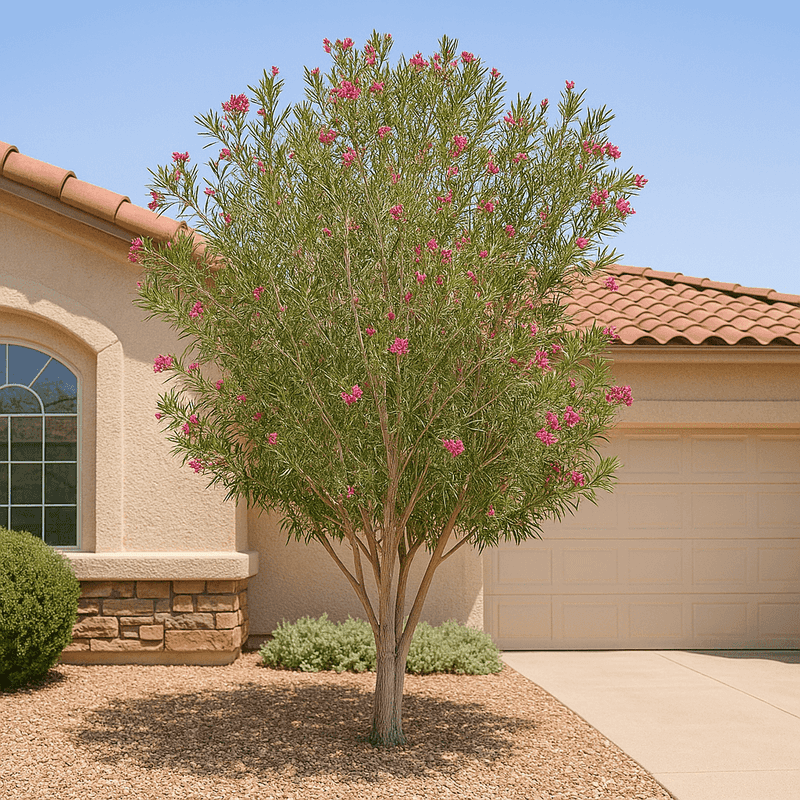
The reward most people want is those ruffled, trumpet-shaped blooms. Texas A&M reports flowers on new growth after heavy rains, from May through September.
That is a wide window, not a date to circle on the calendar.
Timing and abundance shift from year to year. The U.S.
Forest Service review says flowering can stretch across much of the warm season, with timing influenced by rainfall. A young tree in its first summer may bloom lightly, or wait, and a dry stretch can slow things down.
Hummingbirds are a possible bonus. In the Texas Parks and Wildlife hummingbird report, volunteers listed desert willow among the plants they saw hummingbirds using.
That is a good sign, but it has limits. The report says it cannot tell us which plants hummingbirds prefer, because it did not record how many of each plant were available at each site.
It also cannot predict a visit to your particular yard.
If you want to improve the odds, pair the tree with other nectar plants and keep a shallow water source nearby. Treat any hummingbird sighting as a happy extra, not a promise.
Aim for a better start, not a guaranteed summer payoff
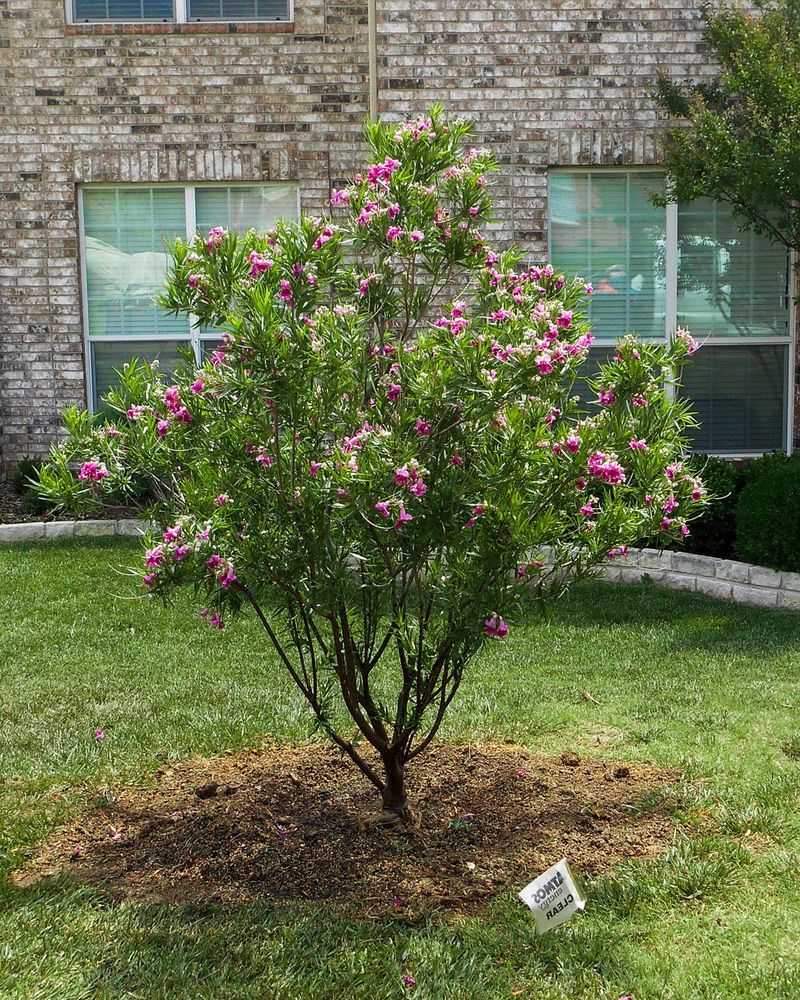
Plant in fall if your spot is sunny and drains well, set the root collar at the right height, and check the soil before you reach for the hose. That is a sound plan, backed by general fall planting guidance and the Forest Service planting steps.
Earlier planting gives the tree a possible head start. Flowers and a hummingbird or two are possible rewards, not an all-summer guarantee.
A well-sited tree that is watched closely has the best chance to pay you back over the years.