
Your peace lily was glossy and green last month, and now the leaf tips look like they got toasted. That browning is the plant’s way of telling you something in its daily routine is off.
The good news is that most causes are simple, common, and fixable at home once you know what to look for. Here are the eight problems that show up most often, plus what you can do about each one.
1. Overwatering and Soggy Soil
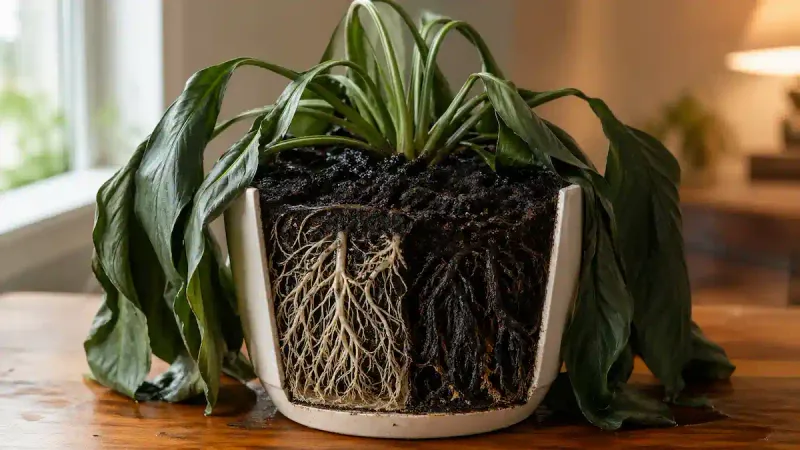
Love can drown a houseplant faster than neglect ever could. Many peace lily owners water on a strict schedule, and the soil never gets a chance to breathe between drinks.
When roots sit in wet soil for days, they start to rot and can no longer move water up to the leaves. The irony is painful: the plant looks thirsty, turns brown, and droops, even though it’s soaking.
Leaves often yellow first, then brown from the edges inward, and the soil may smell sour.
Start by pushing a finger about an inch into the soil. If it feels damp, wait.
Check that the pot has drainage holes, and dump any water sitting in the saucer after about 15 minutes.
If rot is suspected, slide the plant out and look at the roots. Healthy ones are firm and pale, while mushy, dark roots should be trimmed with clean scissors.
Repotting into fresh, well-draining mix may help a struggling plant recover, though badly rotted plants don’t always bounce back.
In humid Florida and Gulf Coast homes, potting soil dries slowly, so you may need to water less often than plant tags suggest.
2. Letting It Dry Out Too Far
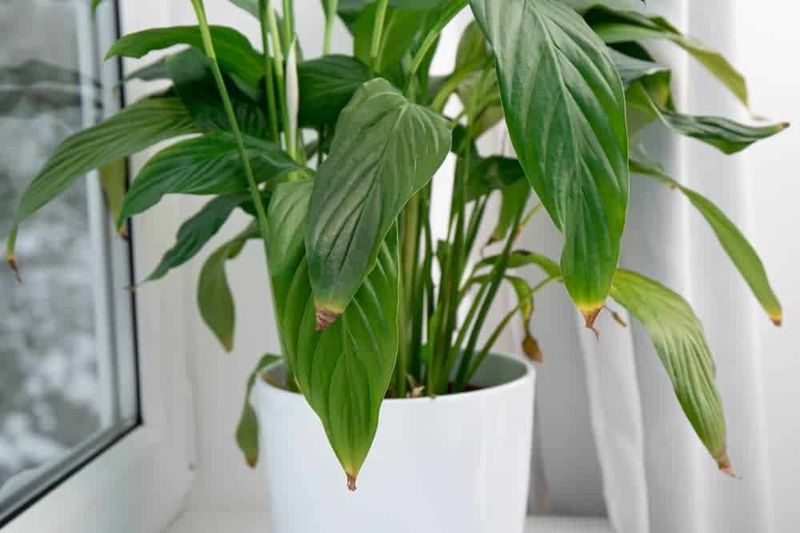
Peace lilies are famous drama queens. Skip watering a few days too long and the whole plant flops over like it fainted on a couch.
One dramatic wilt usually isn’t a big deal, since the plant perks up within hours of a good drink. The trouble starts when this happens again and again.
Each bone-dry spell damages the thin leaf edges, which turn crispy and tan, and those brown spots won’t turn green again.
Watch for soil that has shrunk away from the sides of the pot. When that happens, water can run straight down the gap and out the bottom without wetting the root ball at all.
A simple fix is bottom watering. Set the pot in a sink or tub with a few inches of water for 20 to 30 minutes so the soil soaks it up evenly.
Then let it drain fully.
Going forward, check the soil every few days instead of waiting for the droop. During long Texas summers, when air conditioning runs constantly, indoor air can dry pots faster than you’d expect.
Aim for soil that stays lightly moist, never soggy and never dusty.
3. Chlorine, Fluoride, and Hard Tap Water
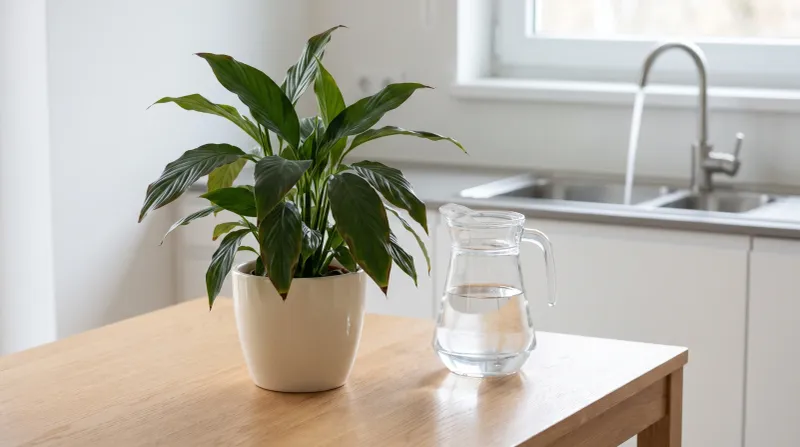
Here’s a sneaky one. Your watering habits can be perfect and the tips still turn brown, just a neat little band at the end of every leaf.
Peace lilies are known to be sensitive to chemicals found in many city water supplies. Fluoride and chlorine, along with dissolved minerals in hard water, can build up in the leaf tips over time.
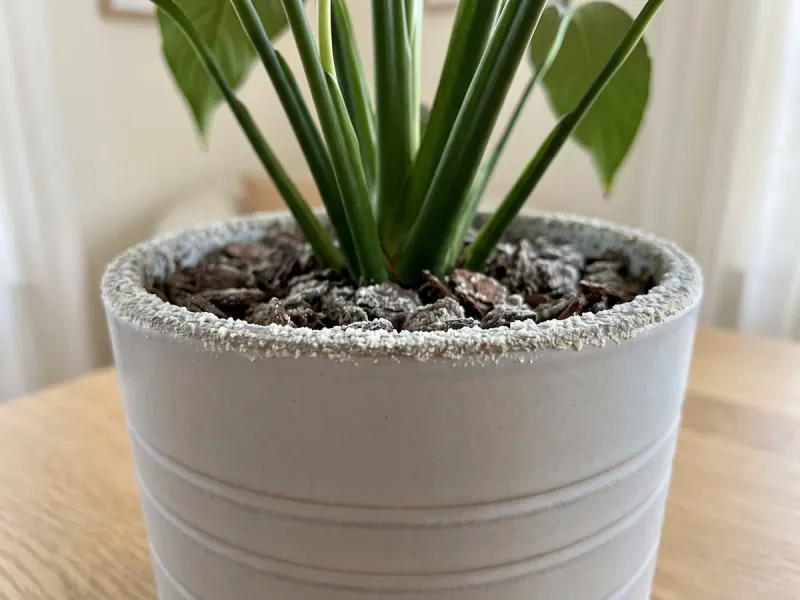
Many parts of Texas and central Florida have quite hard water, so white crust on the soil surface or pot rim is a common clue.
You don’t need fancy equipment to test this theory. Try one of these swaps for a month or two:
Fill your watering can and let it sit out overnight, which allows some chlorine to escape. Use collected rainwater, which is soft and plentiful during Southern summer storms.
Or pick up distilled or filtered water if your tap is especially harsh.
Fluoride doesn’t evaporate the way chlorine does, so standing water may only partly help. Existing brown tips won’t heal, but new leaves often come in cleaner.
Trim old tips at an angle with sharp scissors to keep the plant looking tidy while you wait.
4. Too Much Direct Sun
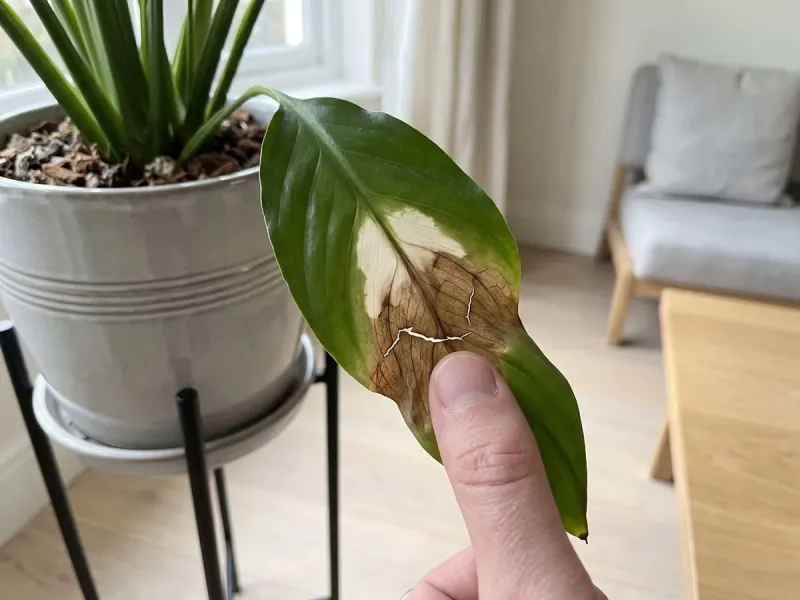
Picture the floor of a tropical rainforest in Central and South America. That shady, dappled spot under taller trees is where peace lilies evolved, which explains a lot about their sunlight tolerance.
Put one in a hot, sunny window and the leaves can scorch. Sunburn looks different from tip browning.
You’ll often see pale, bleached, or papery brown patches in the middle of the leaf, usually on the side facing the glass.
Southern sun is no joke, even indoors. A west-facing window in Tampa or San Antonio in July can feel like an oven, and glass can magnify the heat right onto the foliage.
Move the plant a few feet back from the window, or hang a sheer curtain to soften the light. Bright, indirect light is the sweet spot, enough to read a book comfortably but without sun beams landing on the leaves.
If you keep your peace lily outside on a covered porch during warm months, choose full shade. A north-facing porch or a spot under a deep overhang usually works well.
Snip off badly burned leaves at the base, since they won’t recover and just drain energy.
5. Fertilizer Buildup
More food equals more growth, right? Not with this plant.
Peace lilies are light feeders, and generous fertilizing is one of the most common ways well-meaning owners burn the leaves.
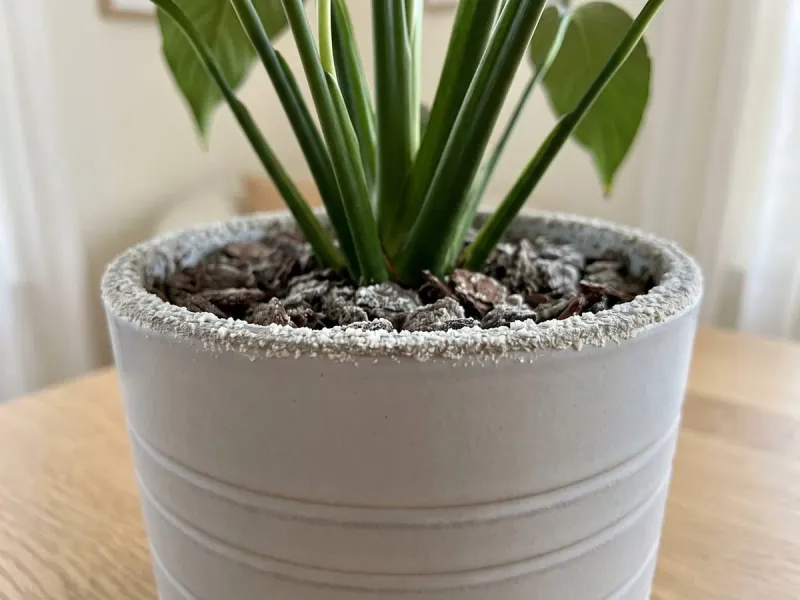
Extra fertilizer leaves behind salts that collect in the soil. Those salts pull moisture away from roots and can push brown edges and tips across many leaves at once.
A crusty white layer on the soil or around drainage holes is a strong hint.
To flush the soil, take the plant to a sink or outdoor spigot and run plain water slowly through the pot for a few minutes. Let it drain completely.
Doing this every few months may help keep salts from creeping back.
After that, scale back. A balanced houseplant fertilizer mixed at half strength once every six to eight weeks during the growing season is plenty for most plants.
In Florida and South Texas, that season can stretch from March well into October, but you can stop feeding in the cooler, darker winter months.
Skip fertilizer entirely for a plant that’s already stressed or freshly repotted. Give it a month to settle before offering any food.
6. Dry Indoor Air
It sounds strange to talk about dry air in the humid South. Yet step inside almost any Southern home in August, and the air conditioner has quietly pulled much of that moisture out of the room.
Peace lilies prefer humidity around 50 percent or higher. When indoor air drops well below that, leaf edges and tips can dry out and brown, especially on plants parked near AC vents or ceiling fans.
Winter heating does the same thing during cold snaps.
A cheap hygrometer will tell you exactly what you’re working with. If the number keeps landing in the 30s, your plant may appreciate a boost.
Grouping houseplants together creates a small pocket of shared moisture. A pebble tray, which is a shallow dish of gravel and water placed under the pot, adds a bit more.
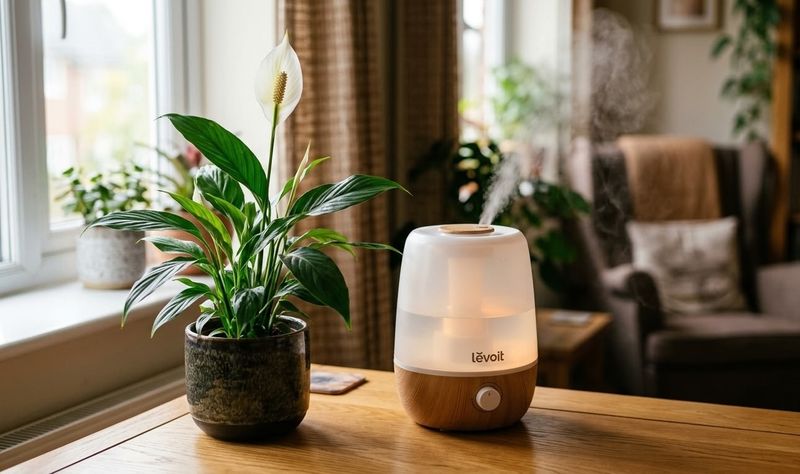
A small room humidifier works best of all if you have several tropical plants.
Misting feels nice but tends to help only for a few minutes. Most importantly, move the plant away from blowing vents.
That steady stream of chilled, dry air is often the real culprit behind those crispy margins.
7. Rootbound Pot
Got a peace lily that drinks water like a sponge and still browns? It may have simply outgrown its home.
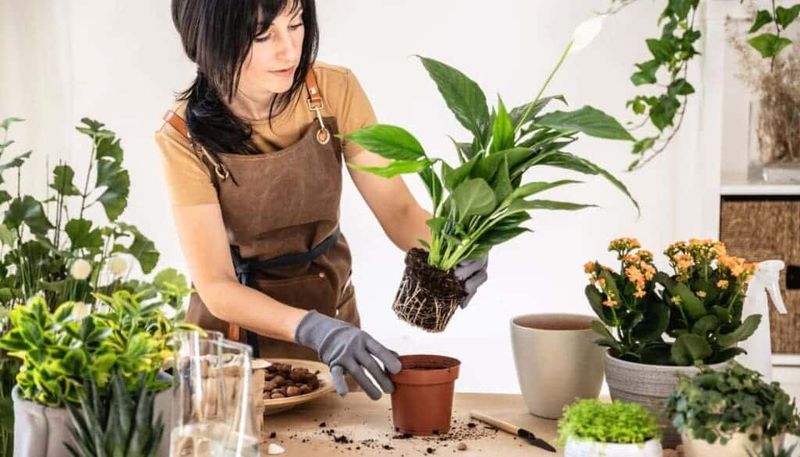
Over a year or two, roots fill the pot and start circling the edges. Once there’s more root than soil, the pot dries out within a day or two, and nutrients run short.
Leaves respond with brown tips and slower growth, and you might spot roots poking out the drainage holes.
Spring is a great time to repot in most of the South, though in Florida’s mild climate you can do it nearly any time outside of a heat wave. Pick a container just one or two inches wider than the old one.
Going much bigger leaves extra soil that stays wet and invites rot.
Gently loosen the circling roots with your fingers before setting the plant in fresh, well-draining potting mix. Water it well and keep it out of strong light for a week while it adjusts.
Fun fact: crowded peace lilies can also be divided into two or three smaller plants. That makes for easy, free gifts for friends and neighbors.
8. Cold Drafts and Natural Aging
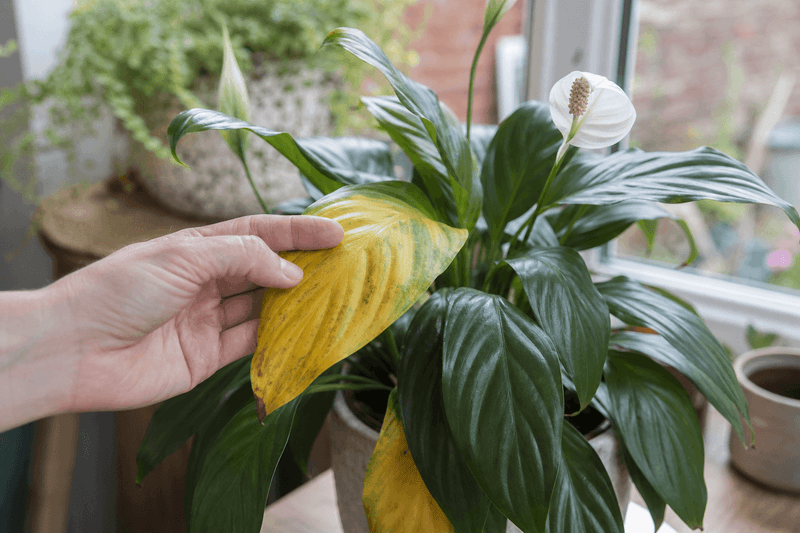
Not every brown leaf is a crisis. Sometimes the plant is just being a plant.
Older leaves at the bottom naturally yellow, then brown, and eventually die off as new growth takes over. If it’s only one or two outer leaves and the rest look healthy, simply cut them off at the base and move on with your day.
Cold is a different story. Peace lilies are tropical and dislike temperatures below about 55 degrees.
Sitting by a drafty front door, a single-pane window, or on a porch during a surprise North Texas cold front can leave dark, water-soaked patches that turn brown within days. Even Florida gets the occasional chilly night that catches porch plants off guard.
Keep the plant somewhere with steady temperatures between 65 and 85 degrees. If you summer it outdoors, bring it in whenever nights are forecast to dip into the 50s.
As a quick closing check, look at where the browning appears. Tips usually point to water quality or humidity, centers to sun, and whole drooping leaves to roots.
Match the pattern, fix one thing at a time, and new leaves will tell you if you got it right.