
That flowerpot you have not moved since summer might already have a tenant. Florida’s warm fall weather keeps spiders, scorpions, and snakes active while gardeners tackle planting and cleanup.
Sheltered spaces beneath pots and around stacked wood can offer these animals cover, moisture, or food. Here are seven venomous creatures worth knowing, plus simple ways to avoid an unpleasant surprise.
1. Southern Black Widow
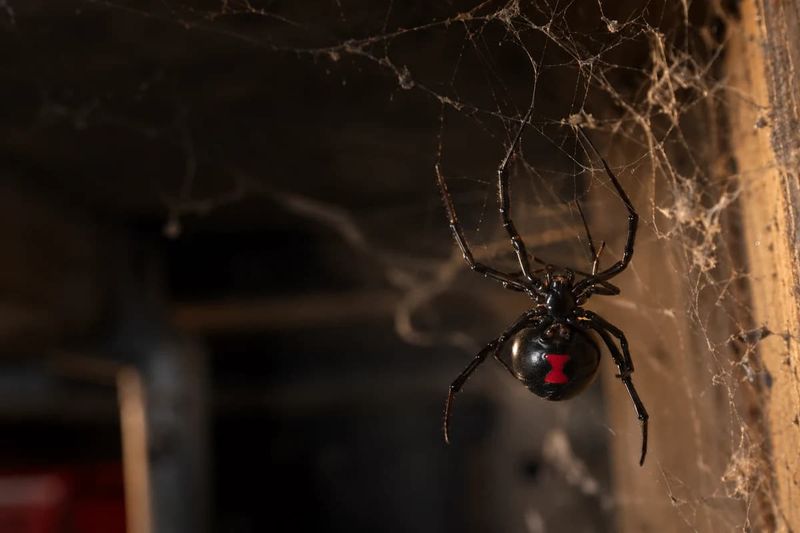
A pot rim can hide more than a little dirt. An adult female southern black widow may build her tangled web beneath it, especially when the pot sits undisturbed beside a wall, shed, or stack of lumber.
Females usually have a shiny black body and a red hourglass marking underneath the abdomen. Do not turn a spider over to check that marking, and remember that young widows can look different from adults.
Unlike a spider that actively hunts across the ground, a widow generally waits in its web. Bites usually happen when someone presses against or traps the spider, such as while gripping a hidden pot edge or reaching between logs.
Before moving stored containers, inspect the rims, drainage openings, and surrounding webs with a flashlight. Wear work gloves, but never treat gloves as bite-proof protection or reach where you cannot see.
A suspected widow bite deserves prompt medical advice because pain, muscle cramps, and other symptoms can develop. Call Poison Control at 1-800-222-1222 for guidance, and call 911 for breathing trouble or other severe symptoms.
2. Brown Widow
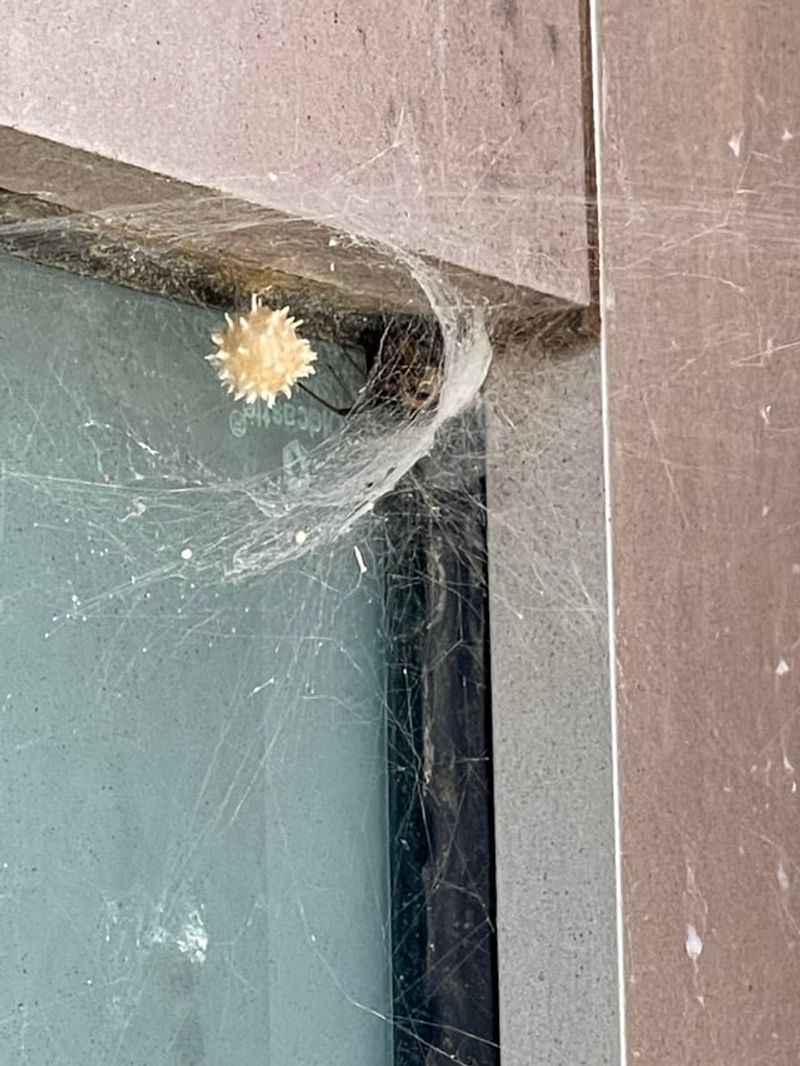
Spiky little egg sacs are a useful clue around patio furniture and stored pots. Those cream-colored balls may belong to a brown widow, a nonnative spider now established in Florida.
Brown widows often settle close to people, using protected spaces beneath planter rims, outdoor chairs, shelves, and other yard objects. Their bodies range from pale tan to darker brown, and their legs commonly have bands.
An orange or yellowish hourglass may appear underneath the abdomen, but color alone cannot confirm an identification. The textured egg sacs are more distinctive, although you should still avoid touching either the sacs or the spider.
Reported bites are generally less severe than black widow bites, but they can still hurt and need medical guidance. A quiet spider under a container is not a reason to panic, nor is it a reason to pick it up.
During fall patio cleanup, check beneath furniture before putting your hands around its edges. Remove unnecessary clutter near frequently used seating, and seek professional pest help if widow webs repeatedly appear where children play.
3. Florida Bark Scorpion
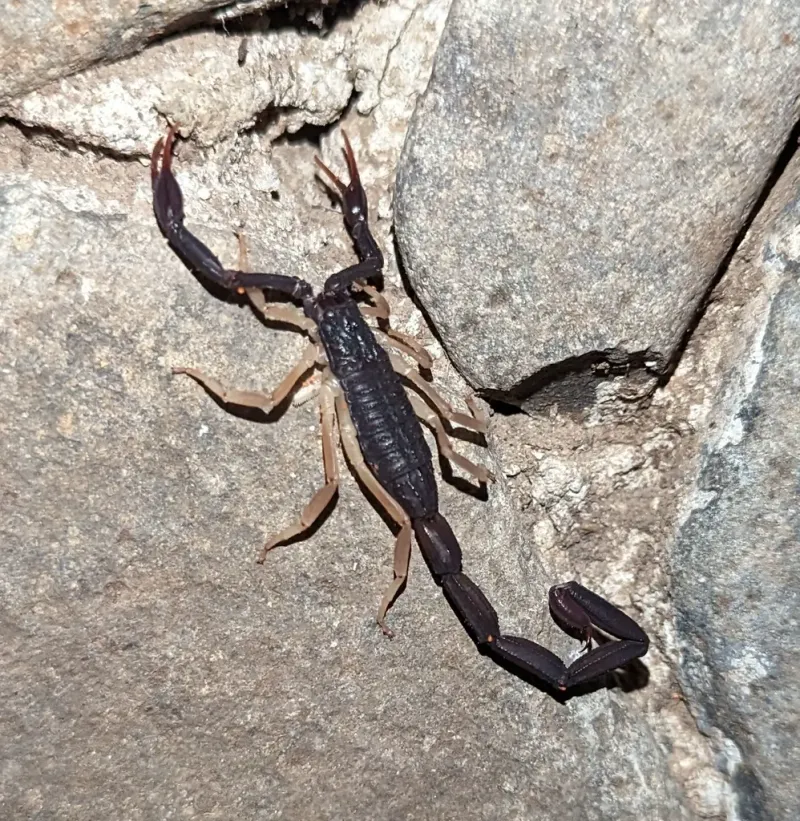
Loose bark makes an excellent daytime hiding place for a nighttime hunter. The Florida bark scorpion uses sheltered cracks around wood, debris, and buildings, particularly in South Florida.
Its slender pincers and long, jointed tail give it a very different outline from a spider. The stinger sits at the tail’s tip, ready to defend the animal if it becomes trapped against a hand or foot.
Despite its alarming appearance, this is not the Arizona bark scorpion known for especially dangerous stings. Florida scorpion stings usually cause local pain and swelling, though serious reactions remain possible.
Keep firewood organized and raised off the ground on a sturdy rack. Leave room to inspect around the stack, and examine individual pieces before carrying them indoors.
For fall projects, shake out gloves and check shoes left on porches or in sheds. Never slide bare fingers beneath loose bark.
If a sting occurs, wash the area and apply a cool compress. Contact Poison Control for advice, especially for a child, and seek emergency help for breathing trouble or widespread symptoms.
4. Florida Blue Centipede
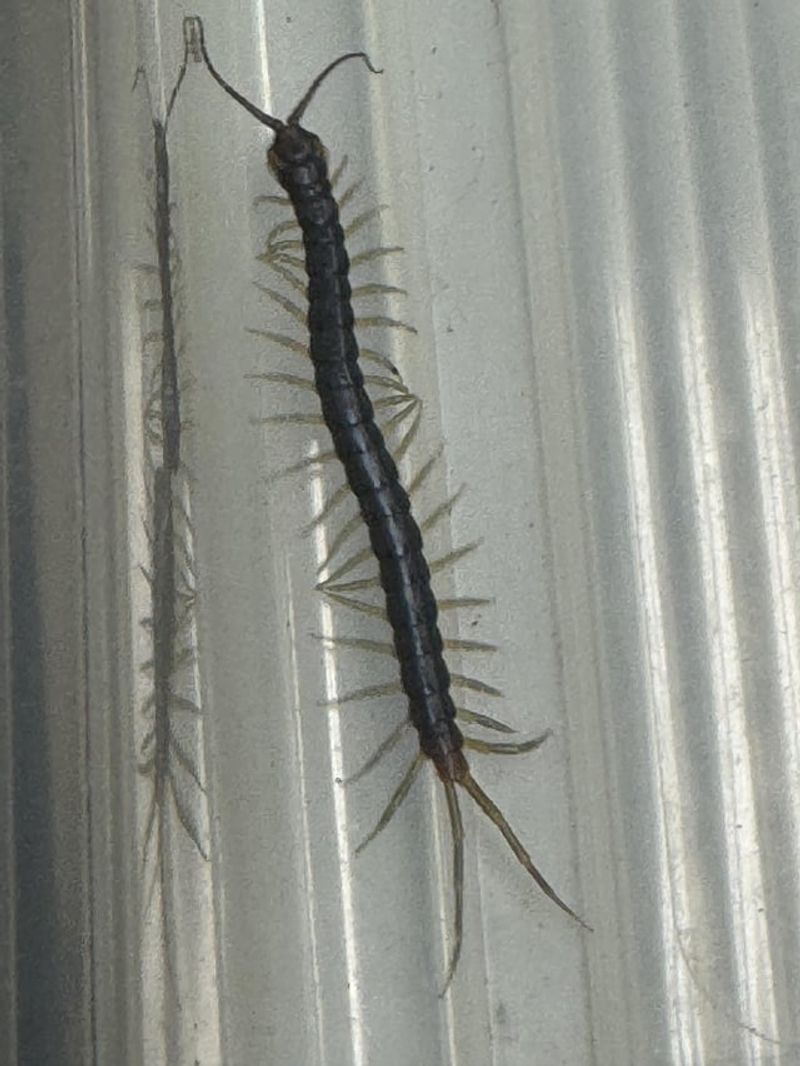
Watch for a fast-moving ribbon of legs when a damp pot finally comes off the ground. The Florida blue centipede, Scolopendra viridis, is one of the venomous hunters that can shelter beneath containers, logs, and yard debris.
Its common name is not a perfect color guide because individuals vary in appearance. A flattened body and one pair of legs per body segment help separate centipedes from the slower, rounder millipedes gardeners also encounter.
Centipedes use modified front appendages to inject venom into prey. They eat other small animals, so their presence does not mean something is chewing your plants.
A defensive bite can cause sharp pain, redness, and swelling. Rather than trying to grab one, step back and allow it an escape route away from your hands and feet.
For a practical fix, store unused pots on a shelf instead of leaving them nested against damp soil. Keep drainage clear and remove wet cardboard from work areas.
Wash a bite and use a cool compress while getting medical advice. Severe swelling, breathing trouble, or symptoms beyond the bite area need urgent attention.
5. Dusky Pygmy Rattlesnake
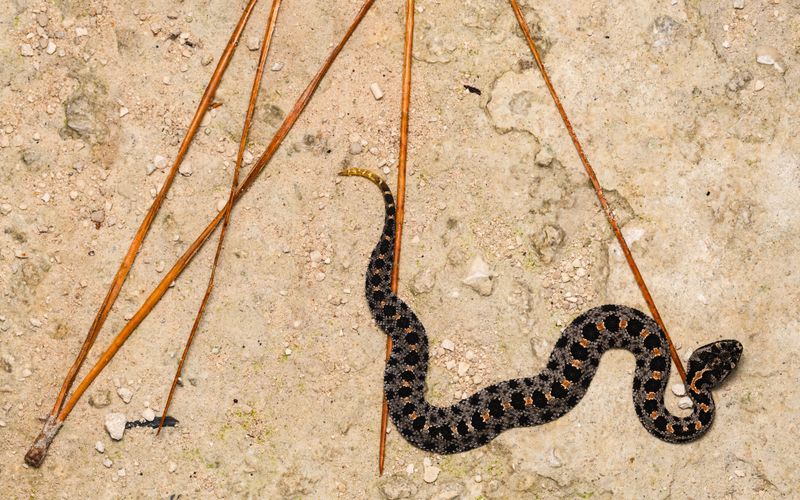
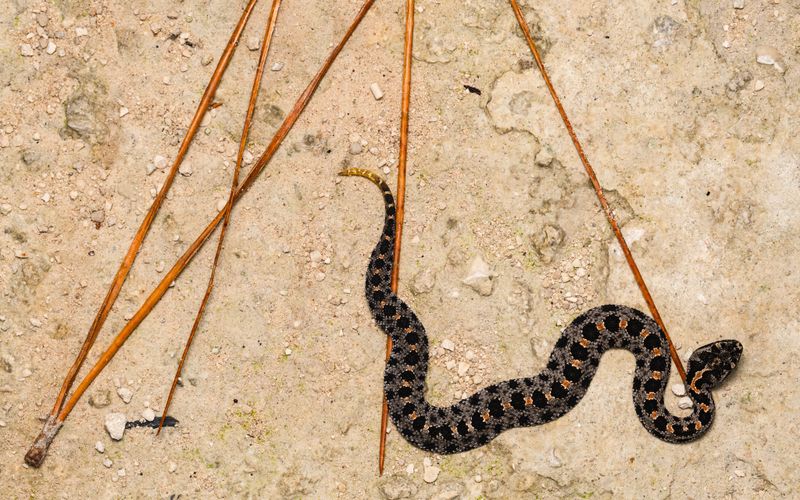
A warning rattle is not something you can count on hearing. The dusky pygmy rattlesnake has such a small rattle that its sound may be faint or easily lost beneath ordinary yard noise.
Found throughout Florida, this small, stout snake blends into leaves, pine needles, and sandy ground. Dark spots and a sometimes-visible rusty stripe help break up its outline near brush and woodpiles.
Rather than routinely occupying flowerpots, it may shelter beside stored materials or beneath debris near suitable habitat. Yards bordering wooded areas, wetlands, or overgrown lots deserve particular care during cleanup.
Its small size does not make a bite harmless. Give any unidentified snake plenty of room, keep pets back, and never attempt to move it with a rake, broom, or shovel.
Use a clear path to approach your wood storage and look at the ground before kneeling. Closed shoes and long pants add protection but do not make close contact safe.
If bitten, move away from the snake and call 911 immediately. Do not apply ice or a tourniquet, cut the wound, or try to suck out venom.
6. Florida Cottonmouth
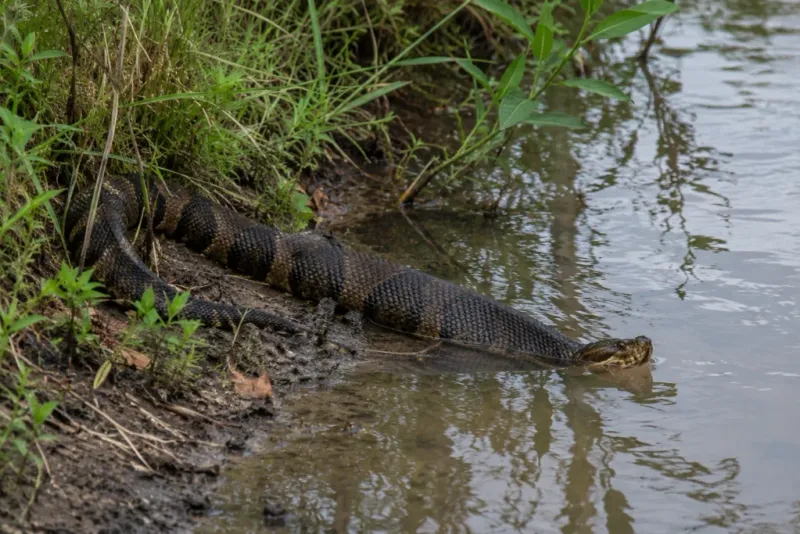
Living beside a pond or drainage ditch changes what might visit your woodpile. Florida cottonmouths favor wetland habitats, but they can also travel over land and use sheltered spots near water.
A damp pile of storm branches or lumber can offer cover along that route. They are not typical residents beneath every patio pot, so proximity to wetlands matters more than the mere presence of containers.
Adults are heavy-bodied and often dark, while younger snakes can show stronger patterns. Harmless watersnakes are frequently mistaken for cottonmouths, and head shape alone is not a reliable identification method.
If you find a snake during cleanup, stop moving material and back away. A cottonmouth may display its pale mouth when threatened, but you should never approach or provoke one to check.
Keep pond-side work areas visible, remove scattered debris, and avoid stepping over logs without seeing the other side. Do not try to catch or kill a snake, since close contact greatly increases bite risk.
Any suspected cottonmouth bite is a medical emergency. Call 911, limit movement, and remove rings or other tight items before swelling develops.
7. Eastern Coral Snake
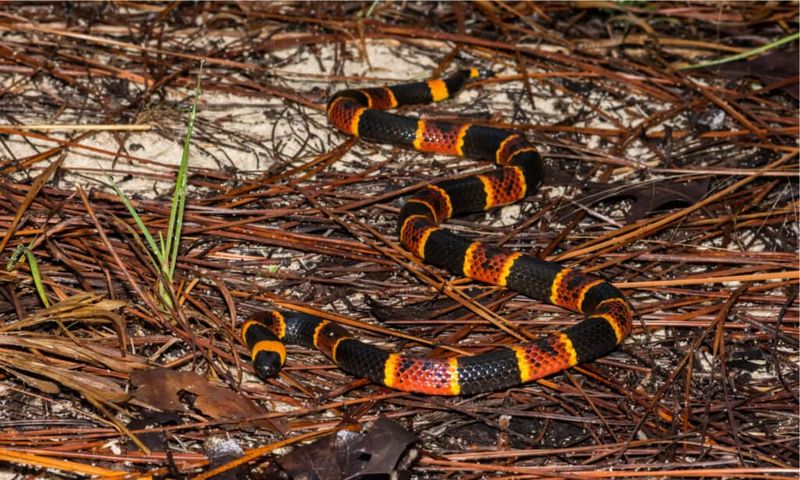
Bright rings can disappear surprisingly well beneath leaves and rotten wood. The eastern coral snake spends much of its time hidden, making an accidental encounter during digging or debris removal more likely than a casual sighting on open lawn.
Florida gardens near wooded habitat can offer the loose soil and cover it uses. It may turn up beneath logs or other objects, although finding one is far from an everyday gardening event.
Its red, yellow, and black bands are memorable, but color rhymes are not a safe way to decide whether any snake can be handled. Leave identification to a qualified expert working from a safely taken photograph.
Coral snakes are secretive, yet their venom can cause life-threatening effects. A bite may initially cause little pain or swelling, so a mild-looking wound does not mean the danger has passed.
Never pick up a small, colorful snake or assume it cannot bite effectively. Keep children away and let the animal leave without interference.
After a suspected coral snake bite, call 911 immediately rather than waiting for symptoms. For routine fall cleanup, the best habit is simple: look first and keep hands out of hidden spaces.