
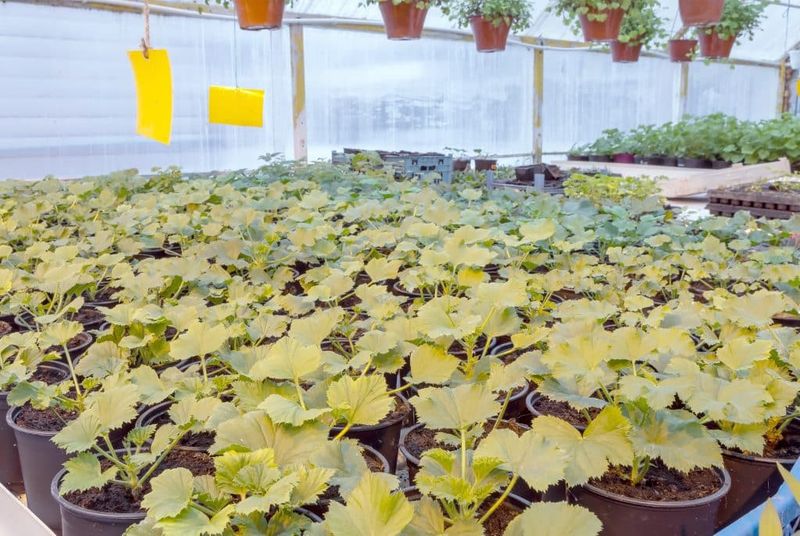
A few yellow leaves on a geranium can make any gardener worry. As fall nights cool off, the question gets bigger: is the plant thirsty, soggy, sick, or just adjusting?
Yellow is only one clue, and it can point in several directions. A few quick checks can help you sort out what is going on before you change anything.
Yellowing is a clue, not an exact diagnosis
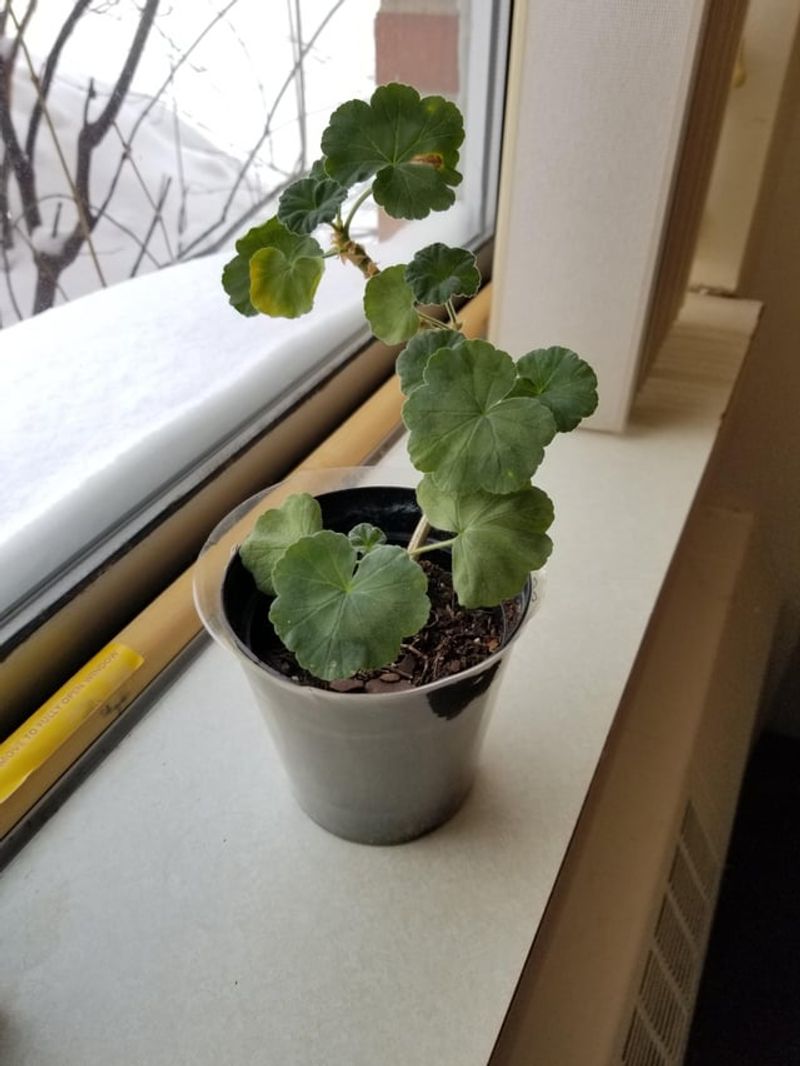
Yellow leaves tell you a geranium is stressed, but they will not name the cause by color alone. Dry soil, soggy roots, low light, pests, disease, and nutrient trouble can all look similar, as University of Maryland Extension explains for yellowing foliage in general.
Sometimes there is no problem at all. An occasional older leaf near the bottom may yellow and drop as part of normal aging, and one leaf rarely calls for action.
The pattern across the whole plant matters more than any single leaf.
It also helps to know which plant you have. Most garden-center geraniums are tender Pelargonium, while hardy Geranium is a different genus, as UC IPM points out.
Overwintering advice here is for the tender kind.
In warm climates, UF/IFAS notes that Pelargonium geraniums can be used nearly year-round. Bringing them indoors makes sense when cold threatens or when you simply want to save a favorite plant.
It is not a required fall chore across the South.
Check the plant’s recent conditions
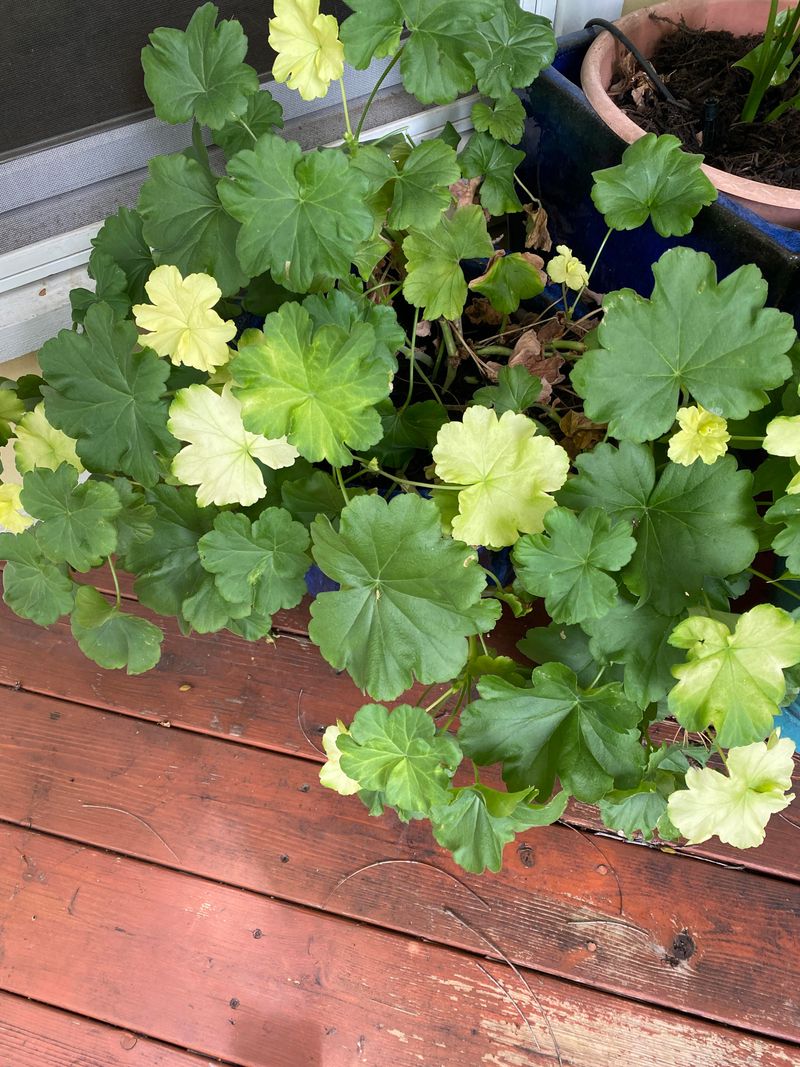
Before you reach for the watering can or fertilizer, work through a short checklist. Poke a finger into the soil to see whether it is dry, damp, or soggy.
Then look at the pot to confirm water can actually drain out the bottom.
Next, think back over the last couple of weeks. A cold snap, a move to a shadier spot, or a trip from the patio to the house can all shift how a geranium looks.
Extension guidance such as Iowa State Extension’s houseplant advice lists watering, light, and environmental change among the common causes.
Finally, flip leaves over and check both surfaces. Look for spots, bumps, webbing, tiny insects, or stem discoloration.
Each finding narrows the list of suspects, but none of them proves a cause on its own. Write down what you see, because the combination of clues is what points you toward a sensible next step.
Lower leaves can yellow in too little or too much water
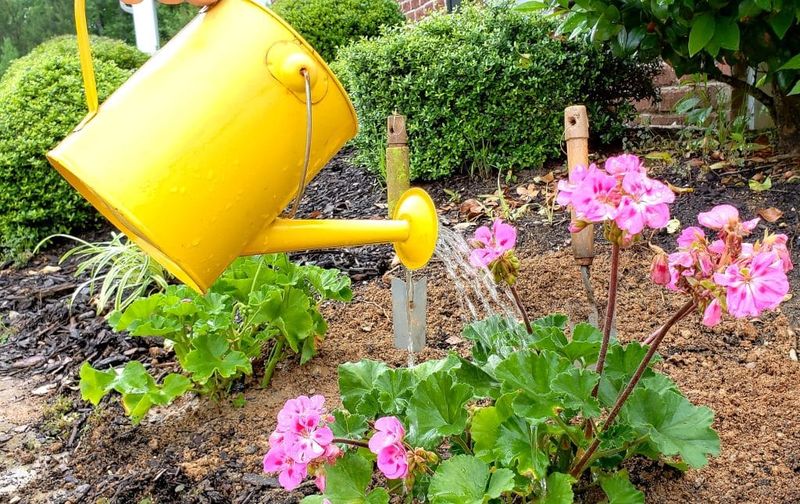
Here is the tricky part: a thirsty geranium and a waterlogged one can show the same yellow lower leaves. UF/IFAS notes that geraniums allowed to get too dry may lose yellow lower leaves, while excess moisture and poor drainage can damage roots and cause yellowing too.
Clemson Extension describes similar water-related problems.
That is why yellow alone should never trigger more water or less water. Feel the soil first.
A pot that is bone dry and light is a different situation from one that stays heavy and wet for days.
For indoor plants, UMN Extension suggests waiting if soil feels moist and cool and watering when it is dry to the touch. Make sure excess water can escape.
Light, temperature, and humidity change how fast pots dry, so a fixed calendar rarely fits.
If roots look soft or the soil never dries, drainage is the likelier concern.
A move indoors can trigger leaf drop
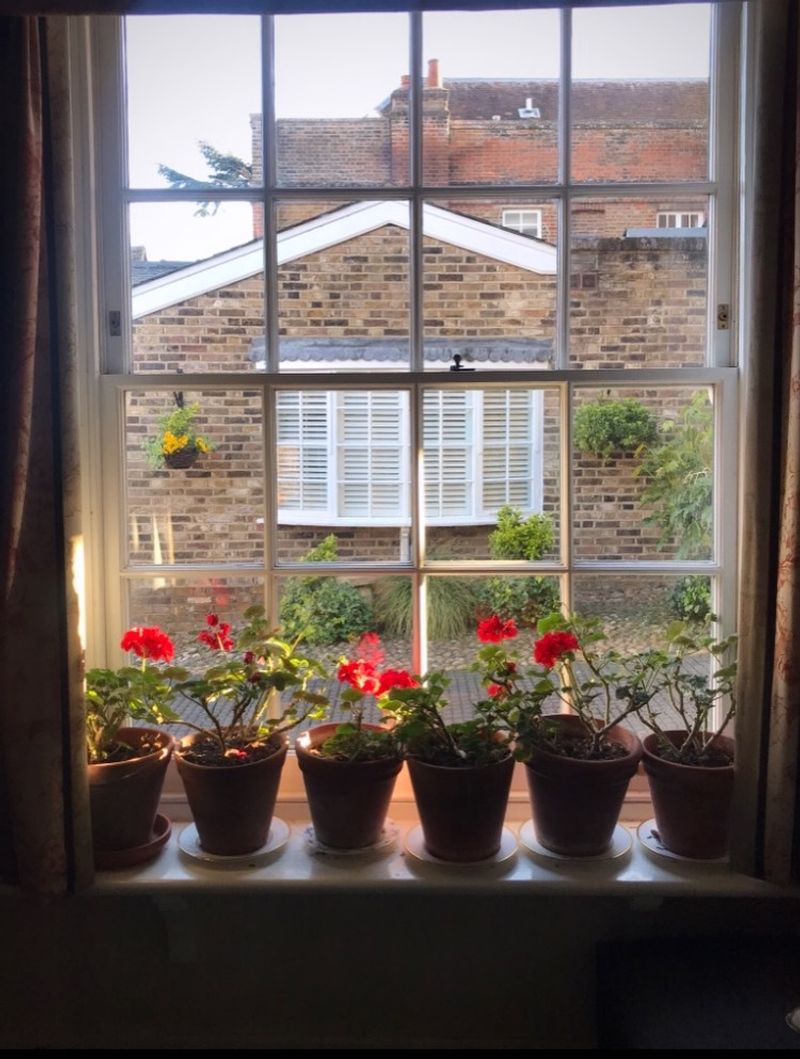
Moving a geranium from a bright porch to a living room is a big change for the plant. Some leaf drop afterward is a possible response to different light and surroundings.
It does not prove the plant is dying, and it is not a sign that fertilizer is needed.
Light is the biggest factor. UMN Extension says geraniums need bright light indoors, and weaker light can lead to weak, leggy growth.
A sunny window is a better bet than a dim corner.
If you choose to overwinter, keep two methods separate. Bright indoor growing uses a range of about 60 to 65°F, while cool dormant storage is a different approach at about 45 to 50°F.
Those numbers are not interchangeable.
Whether to bring plants in at all depends on your local cold risk. Clemson Extension advises moving them before frost if you are overwintering, and UF/IFAS shows many warm-climate plants can stay outside.
Yellow spots with blisters may point to edema
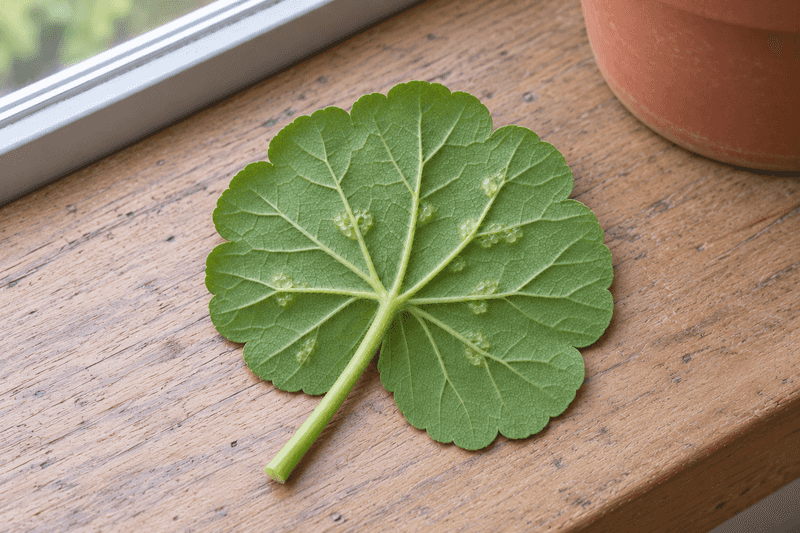
Small yellow spots on top, paired with watery blisters underneath, tell a particular story. Those blisters can later turn brown and corky.
This pattern fits edema, a noninfectious water-imbalance problem, according to Penn State Extension.
Edema is favored by moist soil combined with cool, humid, low-light conditions, which can describe a cloudy stretch in late fall. It does not spread from plant to plant, so there is no need to panic about neighbors.
Helpful steps often include improving drainage, giving plants more air circulation, and avoiding overwatering during cool, cloudy weather. These changes may help prevent new damage, though existing blisters usually will not heal.
Keep in mind that similar symptoms can resemble disease or mite injury. UConn Extension covers this disorder in other plants too.
Check both sides of the leaf before deciding, rather than assuming.
Inspect for pests before bringing plants indoors
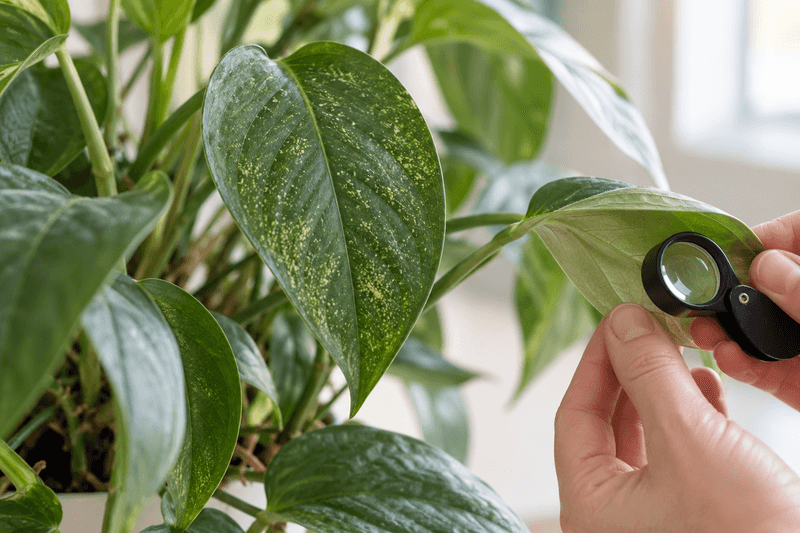
A quick inspection at the porch door can save you trouble later. Tiny pests hitchhike indoors easily, and warm rooms can help them multiply.
Brush the foliage lightly. Whiteflies may flutter up when disturbed and can go along with slight yellowing, as UMN Extension notes in its geranium guidance.
Mites are harder to spot. They can cause mottled or bleached foliage, and heavier infestations may leave fine webbing.
UGA Extension also covers pests and diseases of geraniums.
A hand lens helps, and so does checking leaf undersides and stem joints. The goal at this stage is identification, not spraying.
Knowing what you actually have makes it easier to choose a response, and it keeps you from treating a problem that is really about water or light.
A wedge-shaped lesion needs a different response
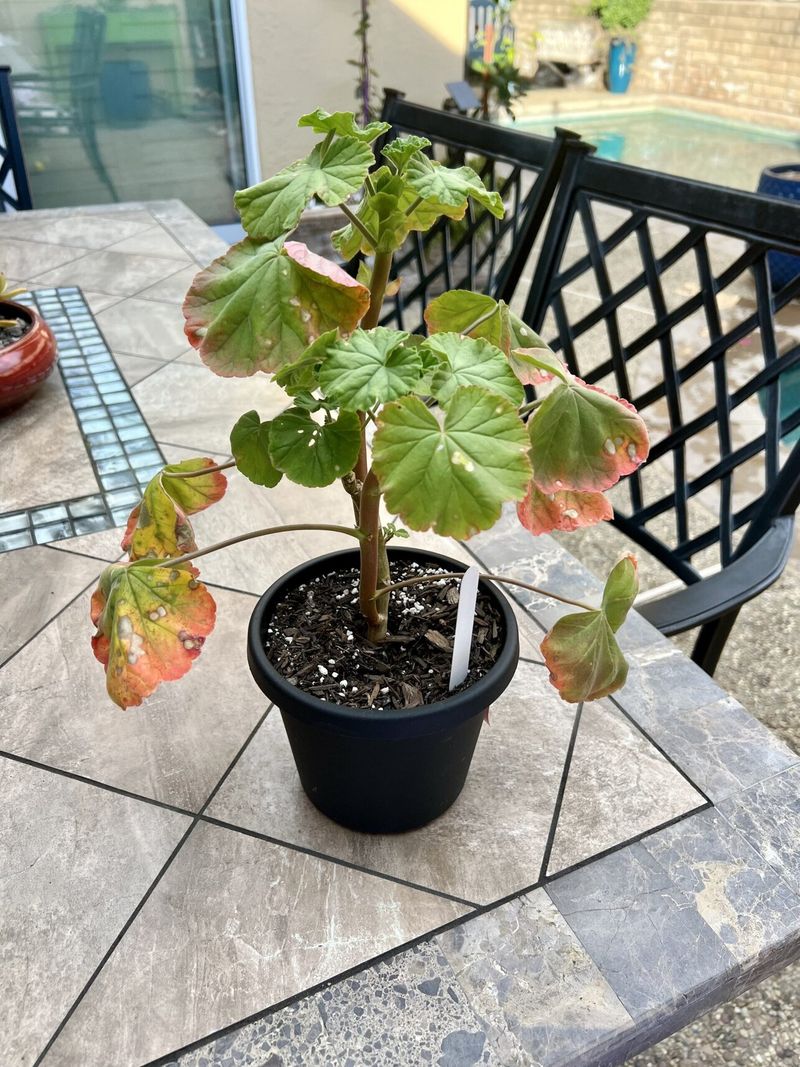
Most yellowing is gradual and fairly even. A yellow or tan wedge pointing inward from the leaf edge looks different, and it deserves more attention.
If that wedge shows up alongside wilting or brown to black stem discoloration, bacterial blight becomes a real concern. That pattern is more worrying than ordinary acclimation or watering stress.
According to Cornell Greenhouse Horticulture, suspected cases may need laboratory diagnosis, and infested plants should be destroyed. Routine watering changes or fertilizer will not cure it.
If you suspect this, keep the plant away from your others and contact your local county extension office about testing. Wash your hands and tools afterward.
It can feel hard to give up a plant, but protecting the rest of your collection is usually the wiser move.
Nutrient patterns are clues, not prescriptions
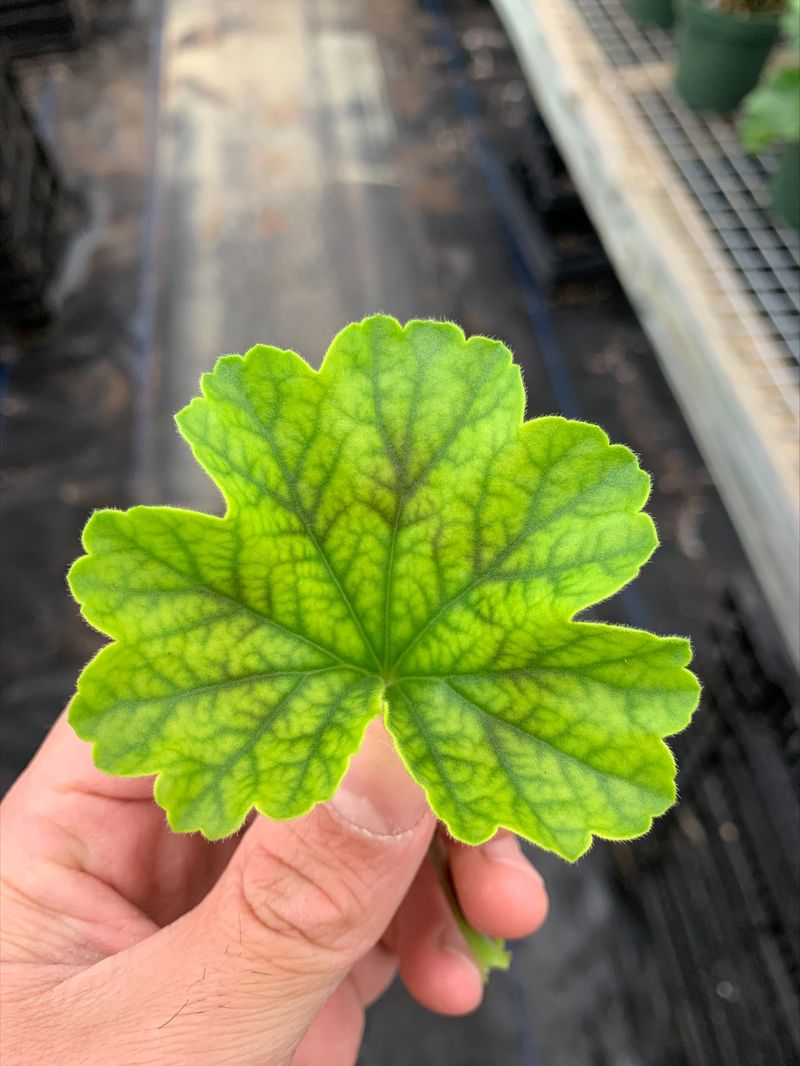
Fertilizer is tempting when leaves turn yellow, but looks can fool you. Nutrient clues exist, yet they are hard to confirm at home.
UMass Extension describes nitrogen deficiency in geraniums as stunting with pale lower leaves. Magnesium deficiency may show up as yellowing between veins or along the margins of older leaves.
Geranium types differ in their nutrient problems, as the UMass growing guide notes. Water stress, root damage, and other issues can look much the same.
For that reason, skip the automatic fertilizer or Epsom salt treatment. Rule out soil moisture, drainage, light, and pests first.
If you still suspect a nutrient issue, a soil or tissue test through your county extension office gives stronger evidence than leaf color.
Choose the next check before changing care
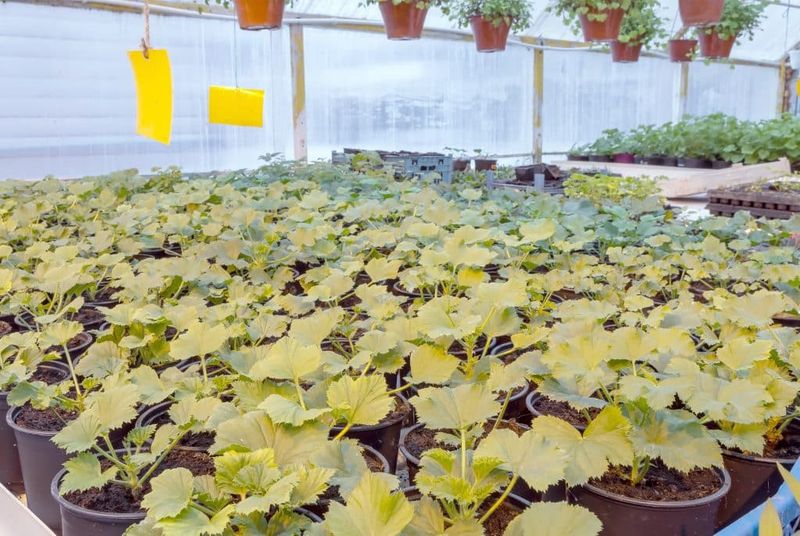
Start with the soil and drainage, since water trouble is a common culprit, as UF/IFAS notes. Then think about recent changes in light or location, and look for distinctive spots or pest evidence.
If you see disease-like symptoms, such as a wedge or dark stems, seek further diagnosis. Otherwise, act on clues that add up, not on color alone.
UGA Extension offers more on houseplant troubles.
One older leaf dropping now and then is usually just a geranium being a geranium.