
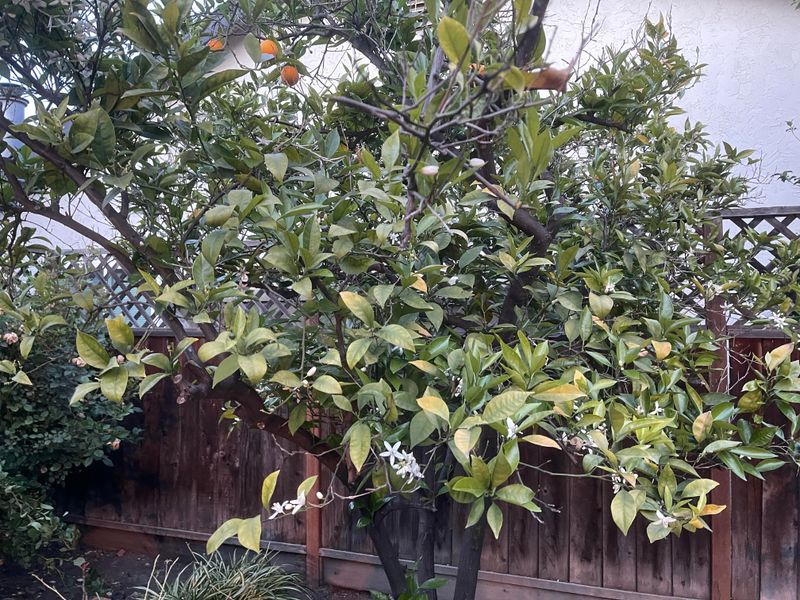
A yellow leaf on your lemon or orange tree can make you reach for the fertilizer bag right away. In California, though, those leaves show up just as cool, wet weather settles in, and the cause is not always a hungry tree.
Leaves and fruit do hold useful hints, but they work best as clues to check, not proof. Here is how to read them, and what to rule out before you feed.
Read the pattern, not just the color
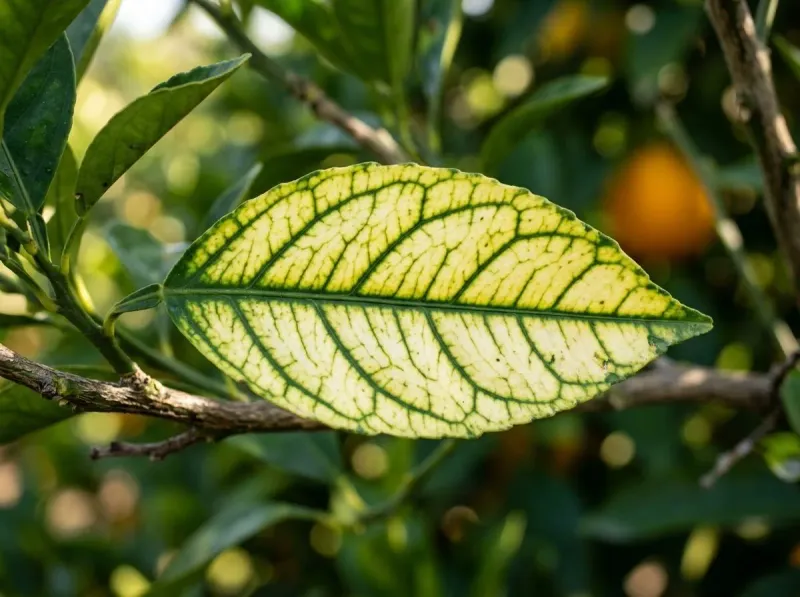
Picture a citrus branch with a few yellow leaves. Before deciding anything, look closer at which leaves are affected.
Are they the older ones near the base of a twig, or the newest growth at the tip? Leaf age is one of the first things to note, because different problems tend to show up in different places.
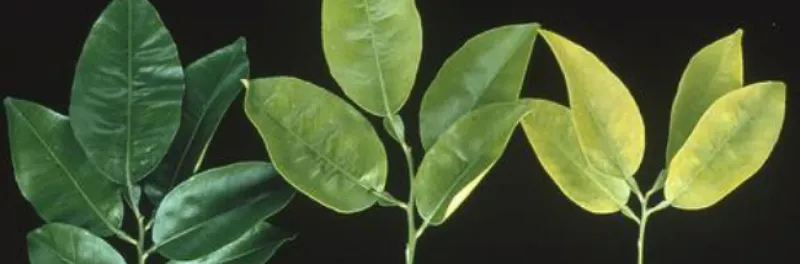
Next, study the pattern of color. Some leaves turn pale or yellow all over.
Others stay green along the veins while the tissue between them fades. UC Cooperative Extension guidance on yellowing citrus leaves uses these age and pattern differences to narrow the list of possible causes.
Then step back and look at the whole tree. Is the yellowing scattered across the canopy, or stuck to one branch or one side?
A tree that looks even all around points toward something general, such as soil conditions or nutrition. A single troubled sector raises different questions.
Keep in mind that these observations only narrow the field. UC Master Gardeners of San Luis Obispo County point out that yellow citrus leaves have many possible causes, including watering problems, so color alone cannot name the culprit.
Jot down what you see, or snap a few photos with dates. Notes on leaf age, pattern, and location make it far easier to compare changes over several weeks, and they give a local nursery or Master Gardener helpline something concrete to work with.
Older, pale leaves can point to nitrogen
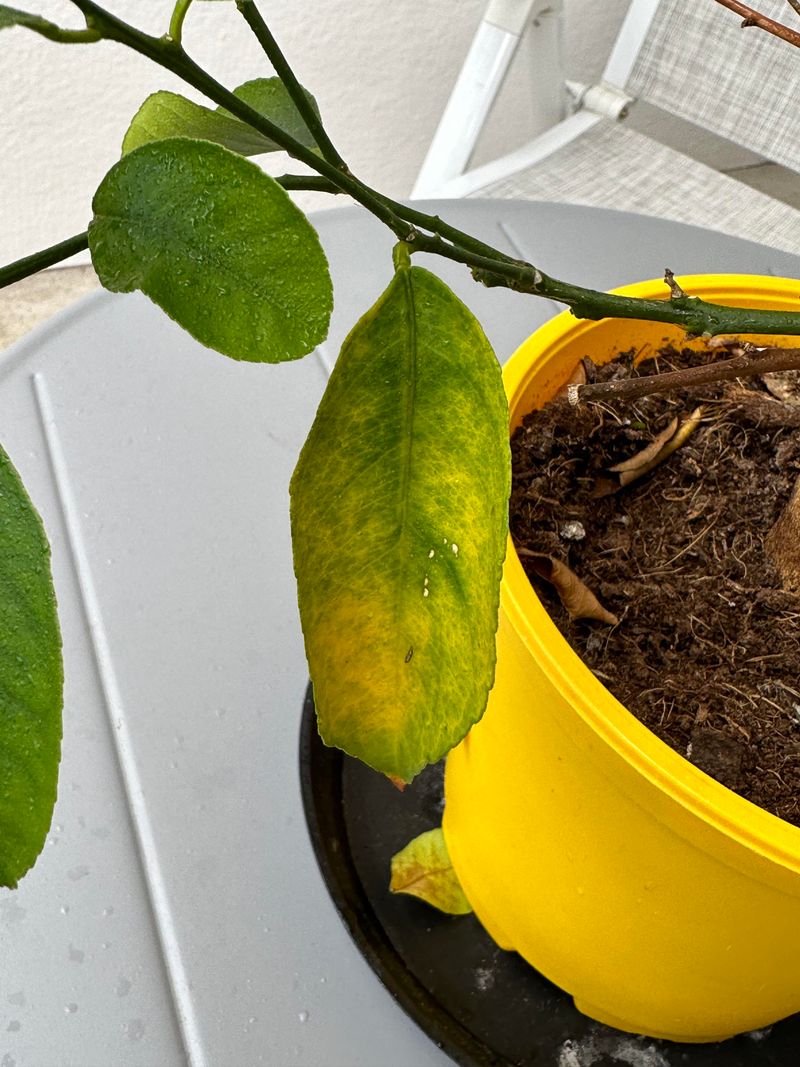
Nitrogen is the nutrient citrus trees use in the largest amounts, so it is often the first suspect when a tree looks tired. A tree short on nitrogen may grow more slowly than usual and produce smaller leaves.
The foliage can look pale green instead of the deep glossy green you expect.
Where the paleness appears matters. According to the California Department of Food and Agriculture’s citrus fertilization guidelines, symptoms of nitrogen deficiency often show up first on older leaves.
Lemon leaves may also develop irregular yellow areas rather than a clean, even fade.
Fruit can offer a second hint. Trees low on nitrogen may set fewer fruit, and the fruit may end up smaller.
That sounds like a tidy match, but it is only a possibility.
None of these signs proves a shortage on its own. Slow growth, small leaves, and pale color can also come from other stresses, and two problems can show up at once.
Think of this pattern as a reason to keep investigating, not a reason to buy fertilizer today.
If your tree fits this description, write it down and move on to the next checks in this article. Timing for any feeding comes later, and it depends on the season far more than on a single yellow leaf.
Yellowing between green veins has several possible causes
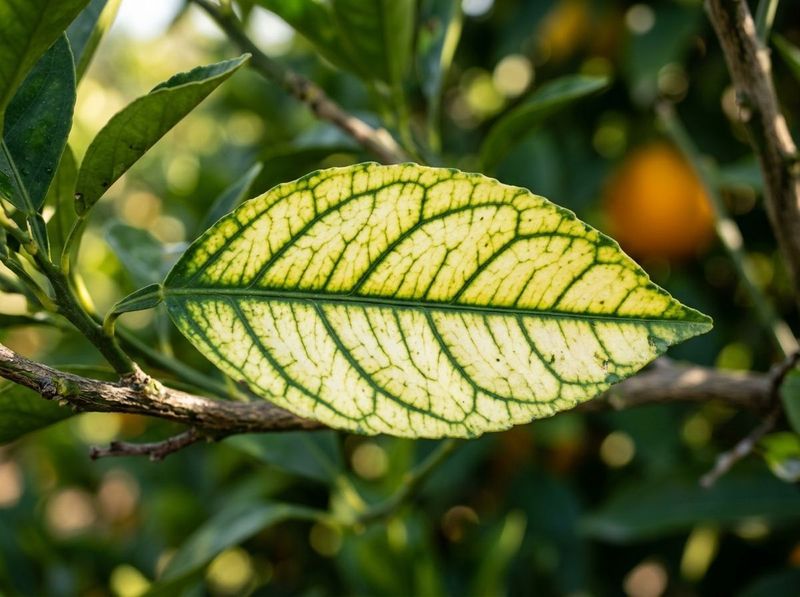
Some leaves look like a green net laid over a yellow sheet. The veins stay green while the tissue between them fades.
When this appears on young, newer leaves, it often gets labeled as iron deficiency, but that label is too quick.
Citrus experts at UC Cooperative Extension describe interveinal yellowing on new growth as a pattern that can involve iron, zinc, or manganese. Compare that with older foliage that turns broadly pale, which fits the nitrogen picture from the previous section better.
Nutrition is not the only explanation either. UC Master Gardeners in San Luis Obispo County list non-nutritional causes of yellow citrus leaves too, and a tree can show more than one problem at once.
Because the symptoms overlap, guessing is risky. Spraying a micronutrient on a hunch may miss the real issue, and the margin between too little and too much can be narrow.
The UC Master Gardeners of Placer County citrus guide specifically warns against applying boron without test evidence.
A better move is to photograph the leaves, note which ones are affected, and ask a local UC Master Gardener or nursery about testing. Skip catch-all citrus products and micronutrient sprays until you know what you are treating.
Check soil moisture and drainage before adding fertilizer
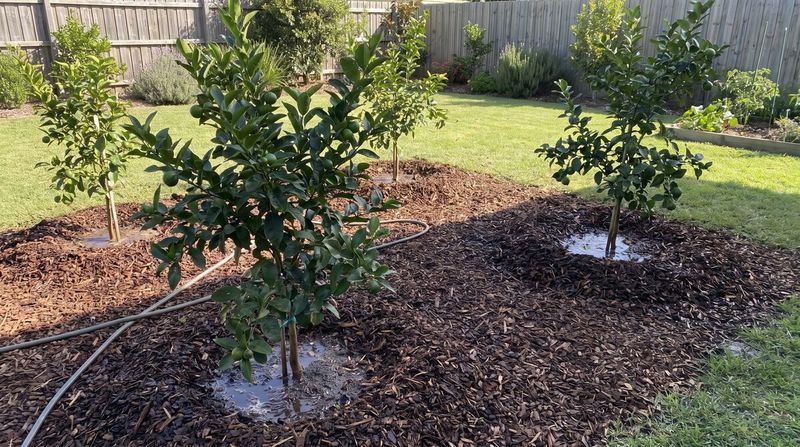
Soil is the quiet suspect behind many yellow leaves. Push a trowel or your finger several inches down near the drip line and feel what is there.
Soggy, heavy soil tells a very different story than dry, crumbly soil.
UC Master Gardeners in San Luis Obispo County identify persistently wet soil as a common cause of yellowing. Roots that sit in water do not work well, so they cannot deliver nutrients to the leaves, even when plenty of nutrients are in the ground.
Drought can produce yellowing too. A dry-stressed tree may have leaves that curl and feel leathery.
Since both extremes lead to yellow foliage, checking the soil is the quickest way to tell which direction you are leaning.
Look at drainage as well. Water that pools around the trunk after rain, a tree planted in a low spot, or a sprinkler that soaks the root crown can all keep roots too wet.
Winter in California brings extra risk, which is why UC guidance on winter yellowing and leaf drop in citrus is worth a read.
If you find a water or drainage problem, fixing it may help more than any fertilizer. Adjust irrigation, pull mulch back from the trunk, and improve how water leaves the area.
Then watch how the tree responds before reaching for nutrients.
Fruit changes can signal more than hunger
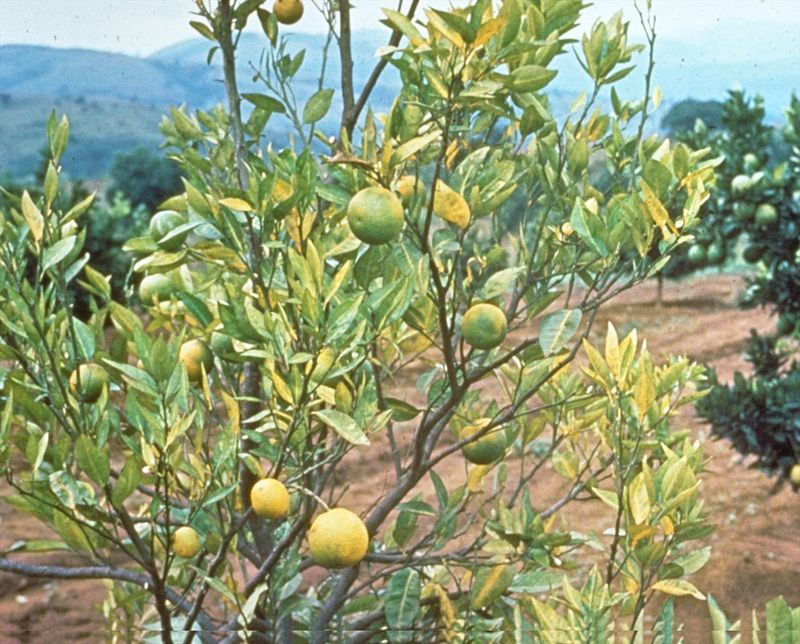
Fruit gives the tree’s story a second chapter, though it can be misleading. Nitrogen deficiency may reduce how much fruit a tree sets or how big it grows, as noted in the CDFA citrus fertilization guidelines.
Still, small fruit alone does not prove a deficiency, and it is not a reason to fertilize.
Plenty of things affect fruit size, including water, crop load, and the age of the tree. Treat small fruit as one clue among several rather than the deciding one.
One pattern deserves extra attention. CDFA lists warning signs of huanglongbing, also called HLB or citrus greening, that include uneven, blotchy yellowing, symptoms on a single branch or canopy sector, and small, lopsided, poorly colored fruit.
You can read more in the CDFA HLB pest profile.
Appearance cannot confirm HLB. Symptoms alone are not enough, and laboratory testing is used to identify the disease.
Your tree may have a much simpler problem, but the combination is worth taking seriously because HLB is a major threat to California citrus.
If your tree matches that pattern, do not fertilize in hopes of a fix. Call the CDFA pest hotline at 1-800-491-1899 and describe what you see.
Leave removal or treatment decisions to the officials who can test the tree.
Winter yellowing does not set the nitrogen schedule
Here is the timing answer many readers want. Yellow leaves in winter are not an automatic cue to add nitrogen.
Cold, wet soil slows root activity, which limits how much the tree can take up even when nutrients are present.
According to UC guidance on winter yellowing and leaf drop in citrus, this can improve as soil warms and dries. Adding nitrogen during that stretch may not touch the real cause.
For mature trees, UC IPM’s fertilizing citrus guide gives a general nitrogen schedule: an application in January or February before bloom, with possible additions in May and June. It also warns that late-season nitrogen can delay fruit coloring, affect fruit quality, and cause rough rind.
Treat that as a general guide, not a universal calendar. Tree age, size, whether it grows in a container, and local conditions all matter.
A foothills guide from UC Master Gardeners of Placer County suggests waiting until heavy rains taper and finishing nitrogen by late July or early August.
Fall advice is not identical everywhere. UC IPM mentions that some organic fertilizers, such as manure or blood meal, could be applied in fall under the canopy.
That is a conditional note about certain products, not a blanket reason to feed before winter storms.
Whatever you use, follow the product directions and avoid overfertilizing, since too much can push tender new growth that is vulnerable to cold.
Choose the next step from the evidence
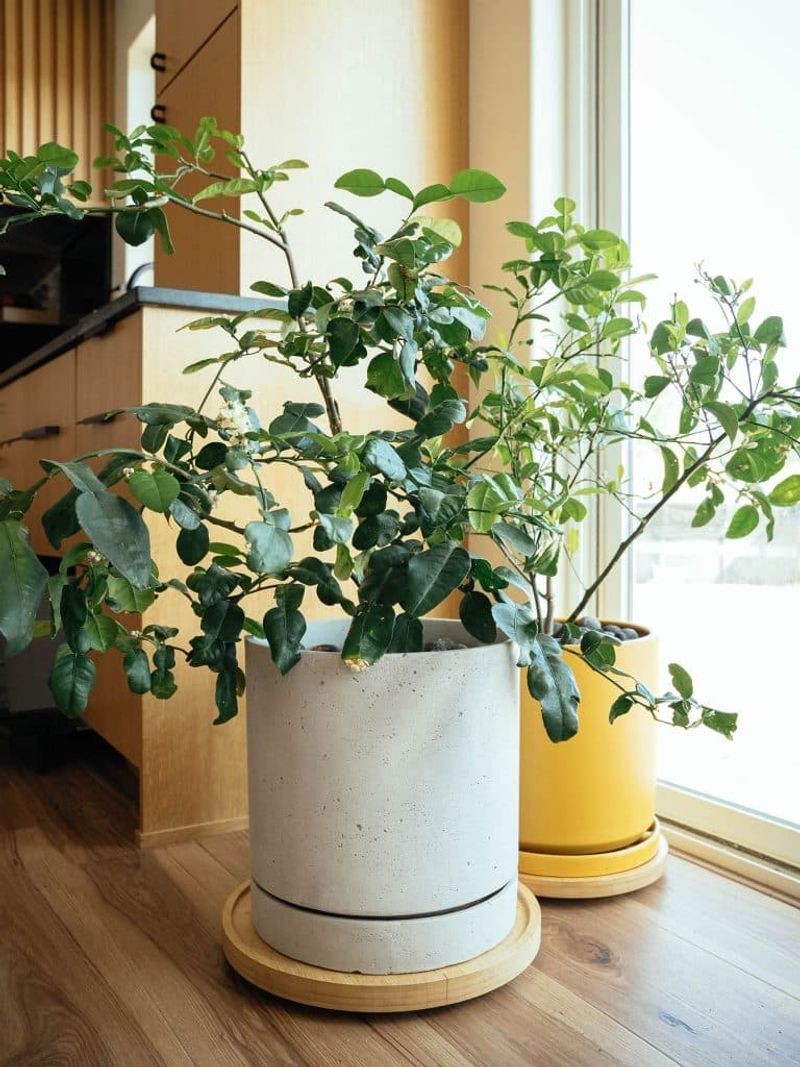
Start with the leaves: note their age, color pattern, and where on the tree they appear. Then check soil moisture and drainage, since too much or too little water can mimic hunger.
Look over the canopy and fruit for the HLB warning signs described by CDFA, and call 1-800-491-1899 if something fits.
If nothing else explains the symptoms, read the product label and compare it with local timing from UC IPM before feeding. A guide from UC Master Gardeners can help you keep sorting through possible causes.
A yellow leaf is a question, not an answer, and the tree usually rewards the gardener who investigates first.