
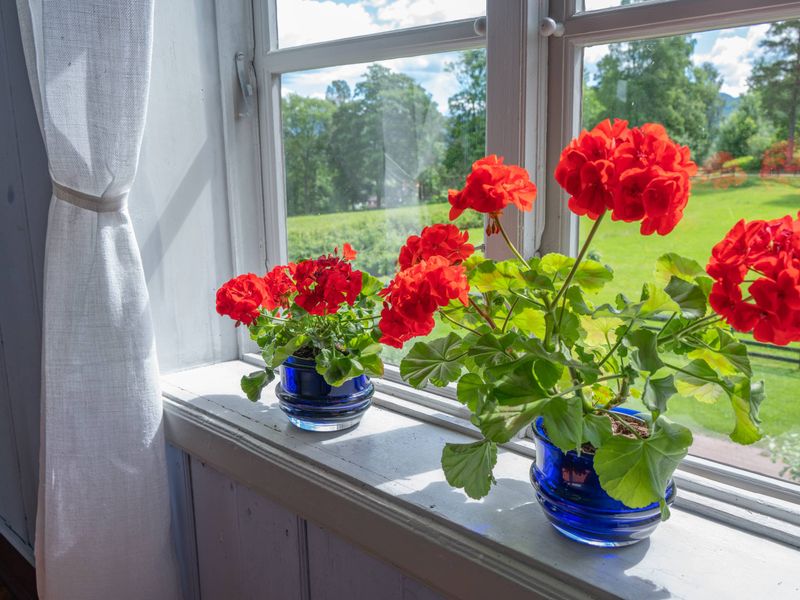
Few things sting like watching a favorite geranium turn to mush after the first frost. With a little planning, you can move it inside and keep it growing until spring.
The routine is simple, but results depend on your plant and your home. Here is how to give your geraniums a fair shot at making it through winter.
Know Which Geranium You’re Saving
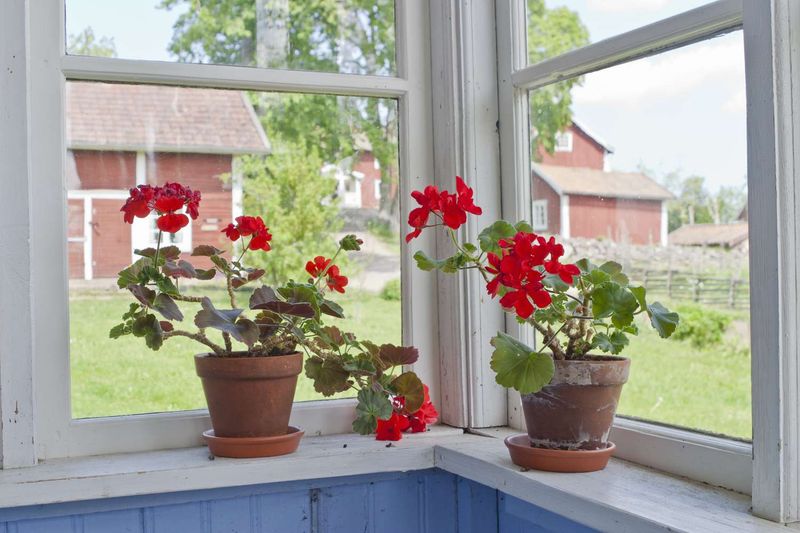
Most geraniums sold for pots and beds are really Pelargonium, a tender plant that cannot take freezing weather. Hardy true Geranium, sometimes called cranesbill, is a different genus with different winter needs.
As the RHS explains, the two are easy to mix up, so check your plant tag if you are unsure.
This guide focuses on the main routine: lifting or moving a healthy plant into a pot and keeping it actively growing indoors. That approach gives you a living plant to enjoy and watch all winter.
There is another option. You can store plants bare-root in a cool, dormant state, and Illinois Extension lists it as a choice.
The catch is that the RHS calls it the least reliable method, best for tougher, woody varieties. For most gardeners, a potted plant by a bright window is the better bet.
Move It Before Frost, Then Inspect It
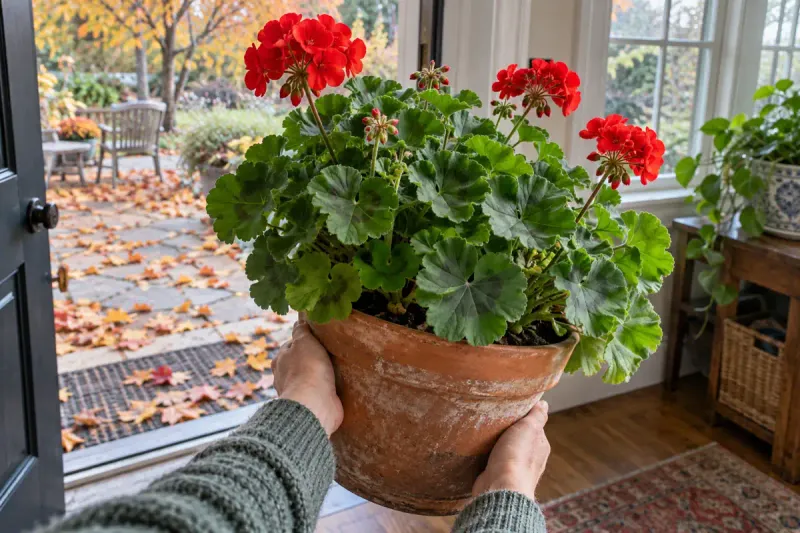
Timing matters more than any calendar date. Watch your local forecast and move plants before frost is expected, whether you garden in the Texas Panhandle or the Florida Panhandle.
Container plants can simply be carried inside, while bed-grown plants should be dug up and potted first, as Illinois Extension describes.
Pick a healthy plant. A sickly one rarely improves indoors, so save your effort for the strongest ones.
Look over the leaves (tops and undersides), stems, and soil for insects or signs of disease. Snip off damaged material and rinse the plant with water if needed.
Then keep it apart from your other houseplants for several weeks, a step Penn State Extension recommends to catch pests you missed.
If you do spot pests, identify them first. Only use a product labeled for both your plant and that pest, and follow the label directions.
Pot and Prune for Indoor Life
A bed-grown geranium needs a pot with drainage holes and fresh, loose potting mix. Pick a container that fits the roots without swallowing them, and let water run freely out the bottom.
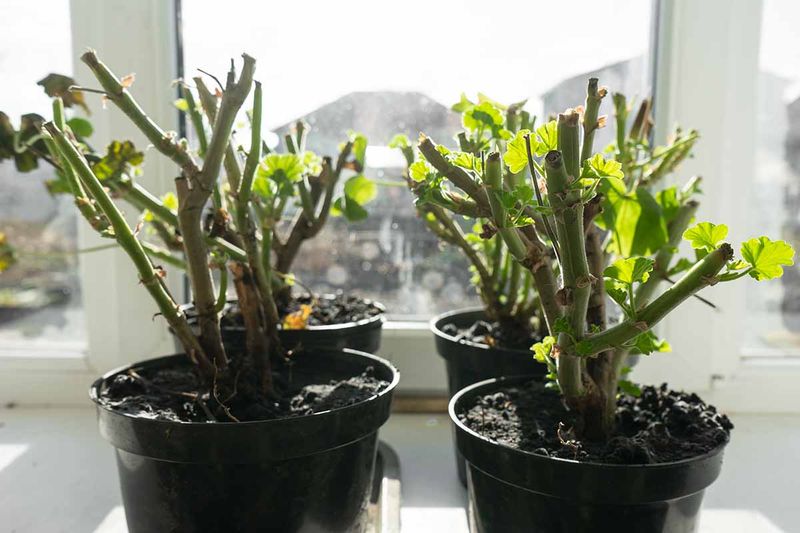
Pruning at potting time is optional. Illinois Extension suggests cutting the plant back by one-third to one-half, which makes it easier to manage indoors.
A different trim comes later. If your plant gets tall or lanky by late winter, Iowa State Extension suggests a spring cutback of one-half to two-thirds.
Think of these as separate tools for separate moments, not a required two-step schedule. A compact plant may never need the second cut, and you can skip the first if you prefer to leave it alone.
Give It Bright Light and Moderate Temperatures
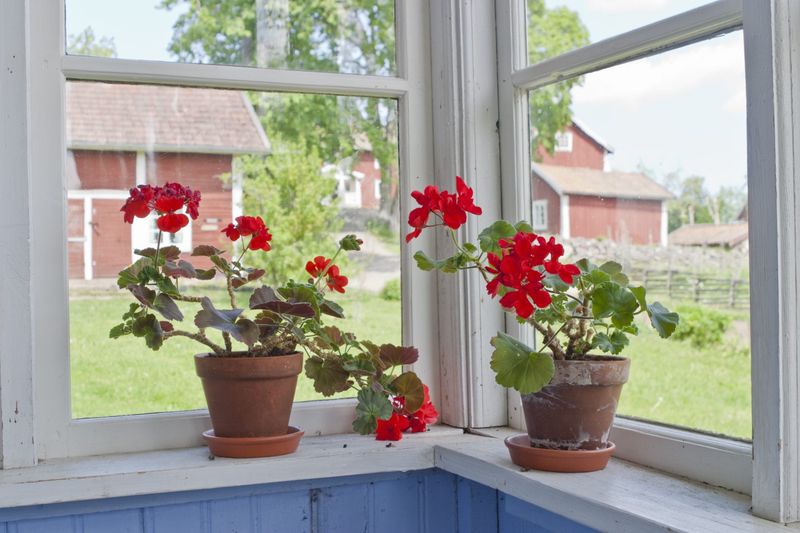
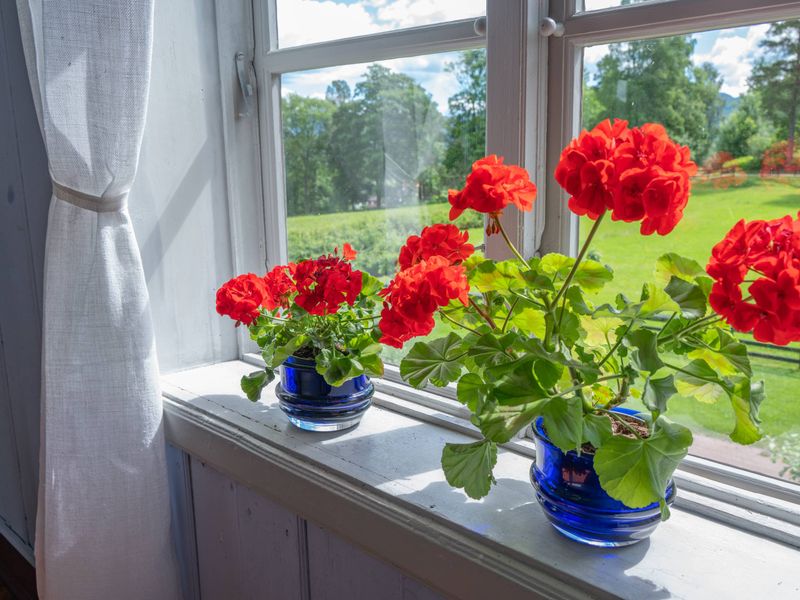
Light is the make-or-break factor. Set the pot at your brightest, sunniest window, or add a grow light if your windows fall short.
For temperature, the guidance is a range, not a rule. Illinois Extension suggests about 65°F by day.
Iowa State gives 65 to 70°F days with slightly cooler nights.
Southern homes often run warmer than that, especially with the heat on or in a sunroom. Warmth paired with weak light tends to produce stretched, floppy growth with wide gaps between leaves.
If your plant looks pale and leggy, move it closer to the glass, add light, or find a cooler spot. Turn the pot every week or so so all sides get sun.
Water When the Potting Mix Feels Dry
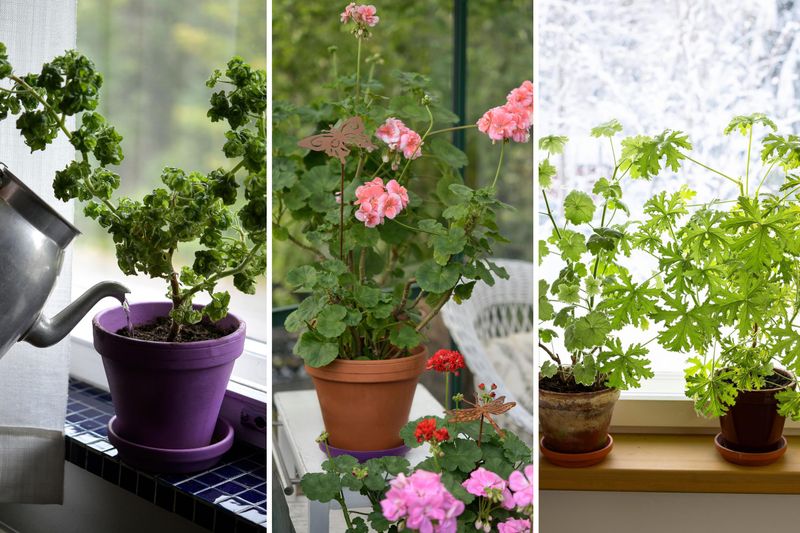
Forget the weekly schedule. Push a finger into the mix and water only when it feels dry to the touch, as Iowa State advises.
UMN Extension gives the same hands-on advice.
When you do water, soak the mix and let the extra drain out the bottom. Empty any saucer so the roots are not left sitting in water.
How fast the mix dries depends on your home. A sunny, warm room dries a pot faster than a cool, dim one, and clay pots dry faster than plastic.
Check every few days at first until you learn your plant’s rhythm.
Soggy mix is a bigger risk than a slightly dry pot, so when in doubt, wait a day and check again.
Set Realistic Expectations for Spring Blooms
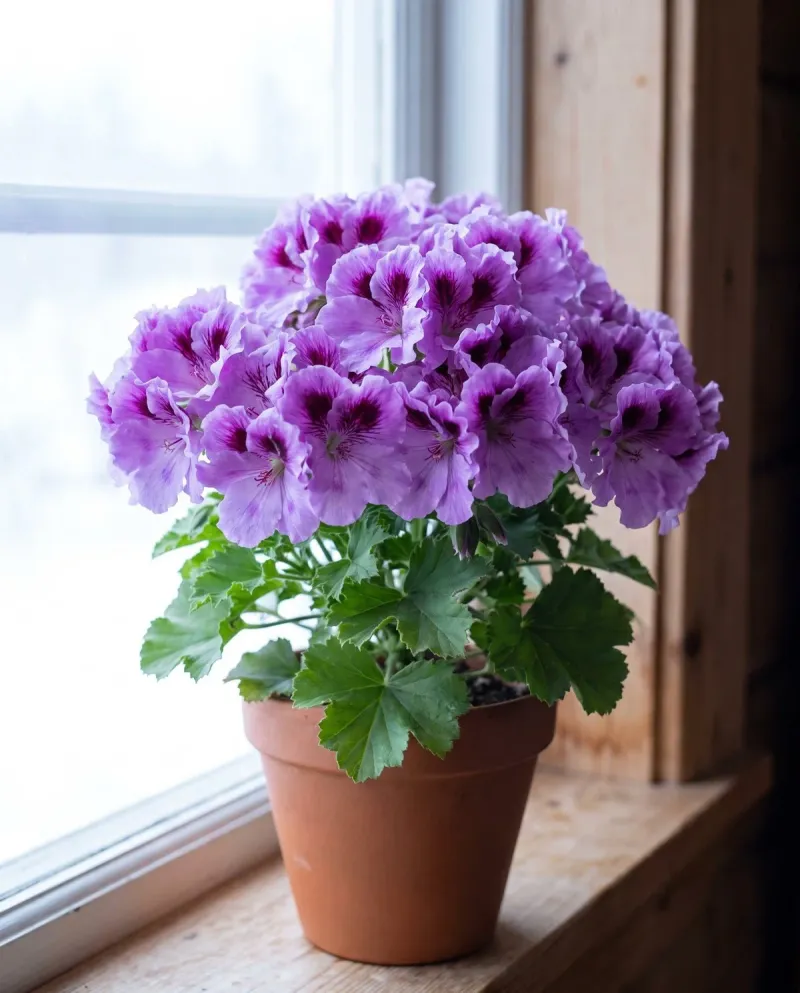
Plenty of bedding geraniums keep growing and may even flower indoors, but nothing is certain. UMN Extension notes that poor light can weaken growth and flowering.
A plant that sulks or drops leaves in winter is common, and it may still recover in spring.
Martha Washington (regal) geraniums are a special case. Iowa State says they need cool nights of 50 to 60°F to form flowers.
A warm home can keep one alive without reliably triggering blooms.
Some stored or cut-back plants also lose leaves or show dieback, which Illinois Extension mentions for dormant storage. Judge success by a living, healthy plant first, and treat blooms as a bonus.
Take Cuttings as a Backup
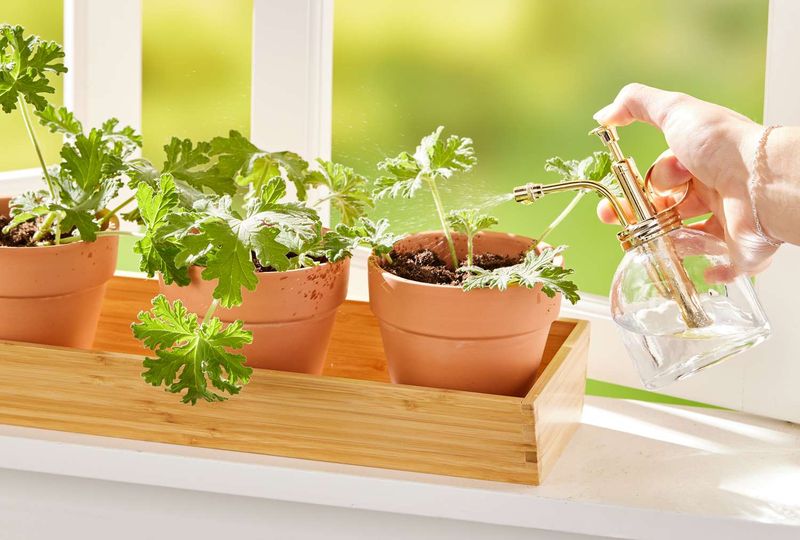
Even a well-cared-for plant can fail, so root a few cuttings as insurance. Choose healthy shoot tips about 3 to 4 inches long, and use clean shears.
Strip the lower leaves, then push each cutting into a pot of light, well-draining mix. Place the pots in bright light indoors and keep the mix lightly moist, not wet.
Illinois Extension estimates rooting can take about 4 to 8 weeks. Treat that as a rough guide, since some cuttings rot or never take.
Make several cuttings from a favorite so a few failures do not leave you empty-handed. If the parent plant makes it through winter, you will have extras to share.
If not, the cuttings may become your replacements.
Return It Outdoors Gradually After Frost Risk Passes
Wait until frost risk has passed where you live. Texas and Florida are too large for one date, so rely on your local forecast.
UF/IFAS shows the range: bedding geraniums can go out in south and central Florida from roughly October to March, while north and western Florida should wait until spring frost danger is over.
Then harden the plant off, as the RHS recommends. Start with a few hours in shade, then lengthen the time and add more sun over a week or two.
Bring pots back inside if a late cold snap appears. Spring heat and strong sun can also scorch indoor-grown leaves that have not adjusted yet.
Some plants bounce back with flowers, and some just stay green. Either way, you gave them a chance.