
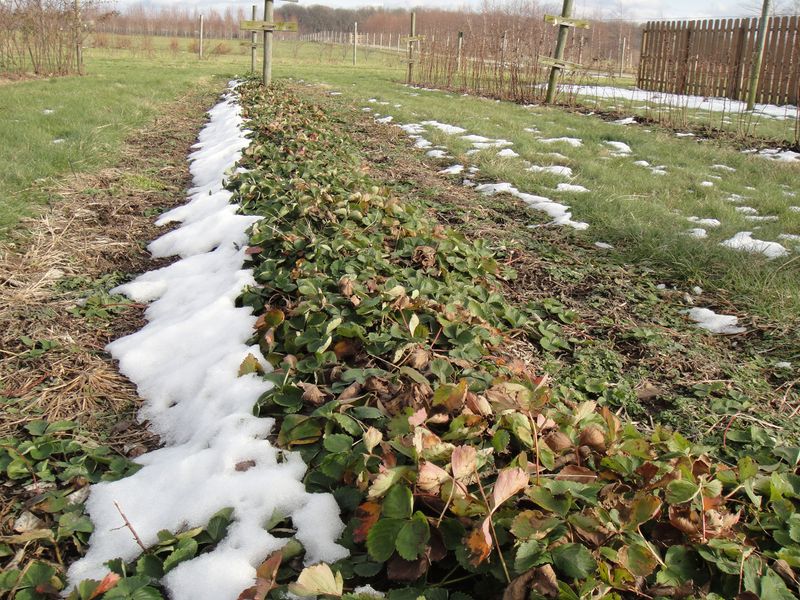
Seeing your strawberry bed look thin and bare in late fall can make you worry that the plants will not survive. The truth is more hopeful, and it depends on where you live and how your bed is set up.
A few quick checks can tell you whether straw is worth the effort or whether another step makes more sense. Sorting this out now can save you time, money, and a lot of guesswork before spring.
Bare plants do not automatically lose their crowns
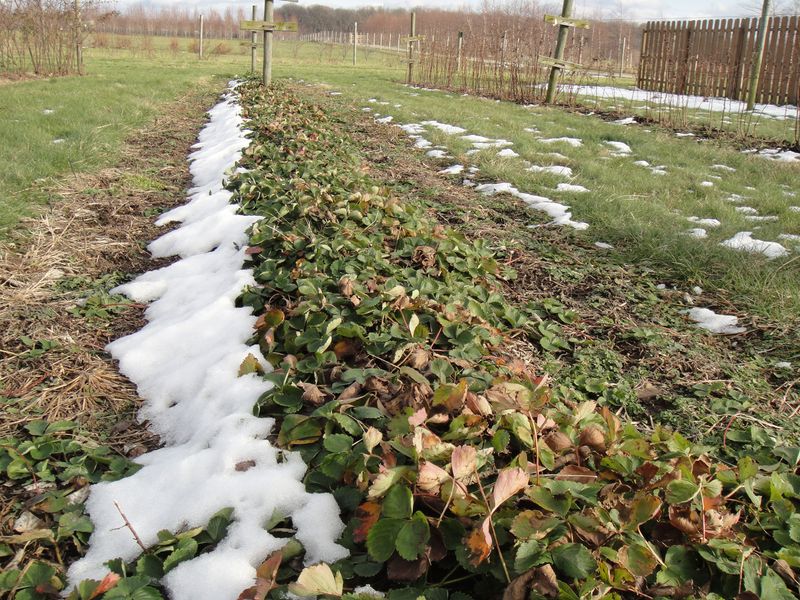
Walk out to a bare strawberry bed in November and it is easy to picture the worst. Still, an uncovered planting is not automatically doomed.
Winter injury depends mostly on how cold it gets and on whether the plants have slowed down and adjusted to cooler weather.
According to the Southern Regional Strawberry Plasticulture Production Guide, buds inside fully dormant crowns in the Southeast are listed as hardy to about 10°F. Emerging growth and flowers can be hurt at much warmer temperatures.
So the plant part matters as much as the thermometer.
Straw can help under some conditions, especially for established beds facing severe cold or drying winds. It is not a rule for every garden, though.
The better question is what kind of bed you have and what threat it actually faces, and the next sections walk you through answering that.
Crowns and blossoms face different freeze risks
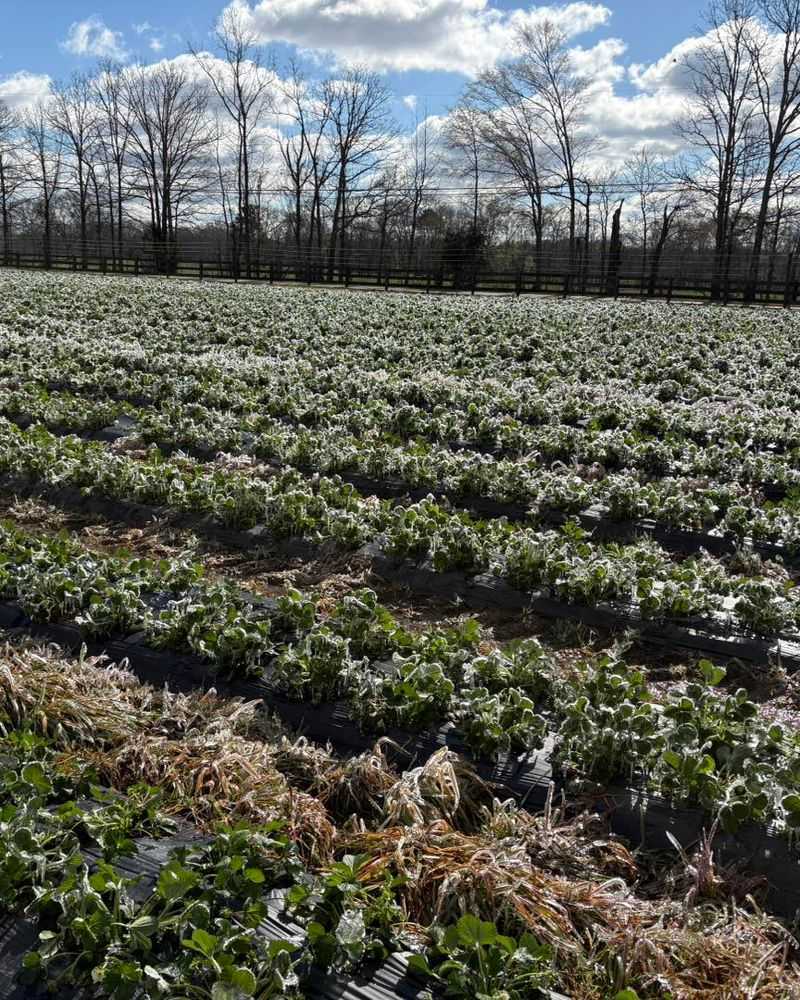
A crown is the short, woody base of the plant where new leaves and flower buds start. In winter, those buds sit tucked inside it, and a dormant crown can handle far colder weather than open flowers can.
NC State’s guide lists dormant crown buds as hardy to about 10°F, while open blossoms may be damaged around 28 to 30°F.
Florida guidance, from UF/IFAS, points the same way. Acclimated leaves and crowns usually avoid permanent damage unless temperatures drop into the low 20s, while flowers and fruit are damaged below 32°F.
Picture a light frost on a March morning. It can blacken blossoms without harming the crown underneath.
A long, severe cold spell in midwinter is a different threat altogether. These numbers are regional guidance, and plant stage and acclimation can shift them, so treat them as reference points rather than Southern cutoffs.
First decide whether your bed is meant to return
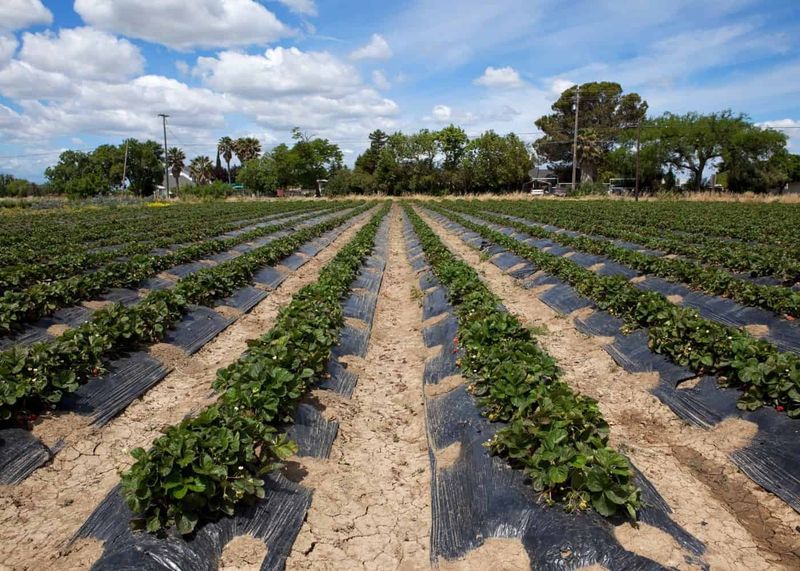
Before reaching for a bale of straw, figure out what your bed is supposed to do. In Florida, home strawberries are generally grown as an annual crop, according to UF/IFAS.
They are planted in fall, harvested in the cool season, and often fade in summer heat.
Georgia gardeners have options. UGA Extension describes perennial matted rows as well as a fall-planted annual hill system, where fall planting and spring harvest are standard.
Some disease-free plantings may be carried over, but they are not necessarily managed like matted rows.
Texas cold-risk numbers, such as injury from extended temperatures below 10°F, come from a Texas A&M AgriLife commercial production guide. Treat that as commercial context, not a home mulching plan.
Advice for a perennial bed does not automatically fit an annual planting.
Use dormancy and local cues, not just the first forecast
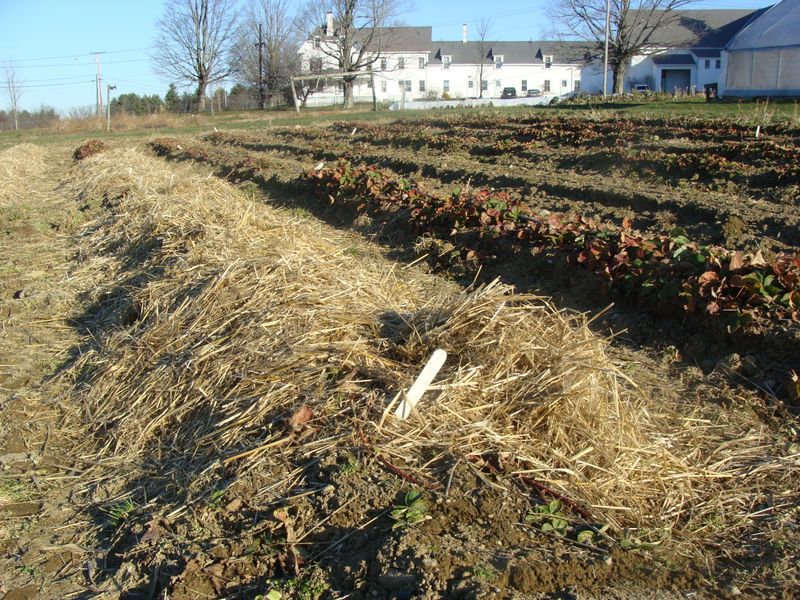
“Before the freeze” sounds clear, but it is too vague to guide you. A light frost one night and a deep, lasting cold snap are very different events.
Mulching too early can also be a problem, which is why gardeners look to plant dormancy and local cues instead of the first forecast.
Dormancy means growth has slowed and the plant has adjusted to cold. Acclimation is that gradual hardening.
Both change how much cold a plant can take, as the NC State guide shows with its stage-based temperature limits.
Regional examples show how much timing varies. Oklahoma State suggests mulching after several hard frosts.
Minnesota Extension waits until plants are dormant and soil stays at or below 40°F. Those are their numbers for their climates.
Do not copy Minnesota’s threshold or depth onto a Florida, Georgia, or Texas bed.
Use straw selectively on established perennial beds
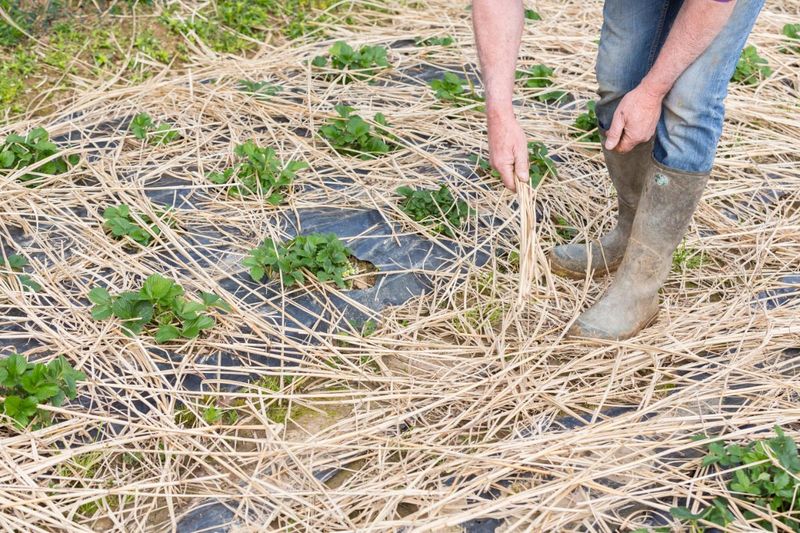
If you keep a perennial bed, winter mulch may help dormant plants through severe cold, drying wind, and repeated freezing and thawing. Oklahoma State describes loosely applied straw, 3 to 4 inches deep, after several hard frosts.
That is regional guidance for Oklahoma, not a Southern schedule.
Georgia’s approach looks different. UGA Extension recommends 1 to 2 inches of pine straw in late winter, before growth begins, for matted rows.
Then you rake most of it off the plant tops. The goal there is keeping berries clean, not building a deep fall blanket.
So the scope of each tip matters. Straw can be a useful tool in the right bed, but a mild-winter garden may not need a thick layer at all.
Check your local extension office for timing that fits your area.
A later flower freeze calls for a different response
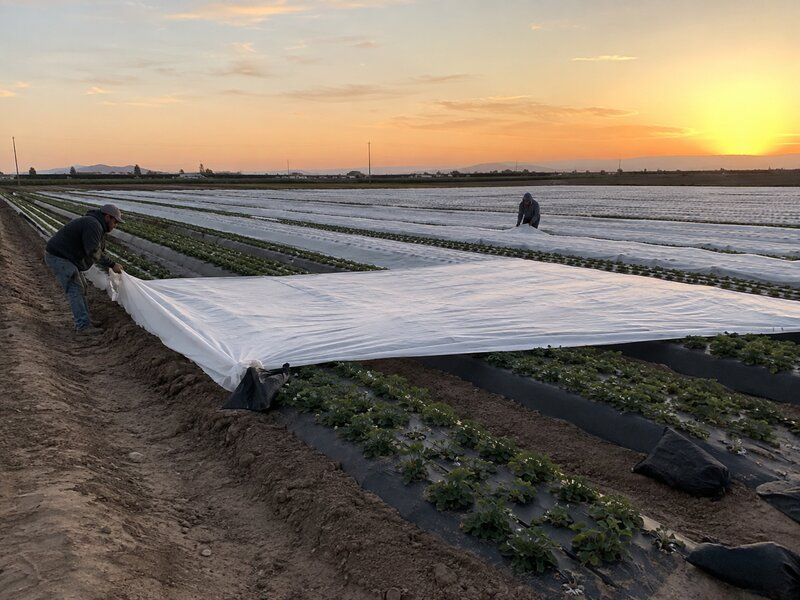
Spring brings a separate job. Once flowers open, they are the most exposed part of the plant.
Florida guidance from UF/IFAS says to cover plants with sheets, blankets, or frost cloth in the afternoon before a freeze is expected.
The reason is simple. According to the NC State guide, open blossoms may be damaged around 28 to 30°F, while buds inside dormant crowns tolerate much colder temperatures.
A winter straw layer will not stand in for a timely flower cover. When blooms are open and a freeze is coming, put the cover on that afternoon and take it off once temperatures rise.
Match the winter step to the bed you actually grow
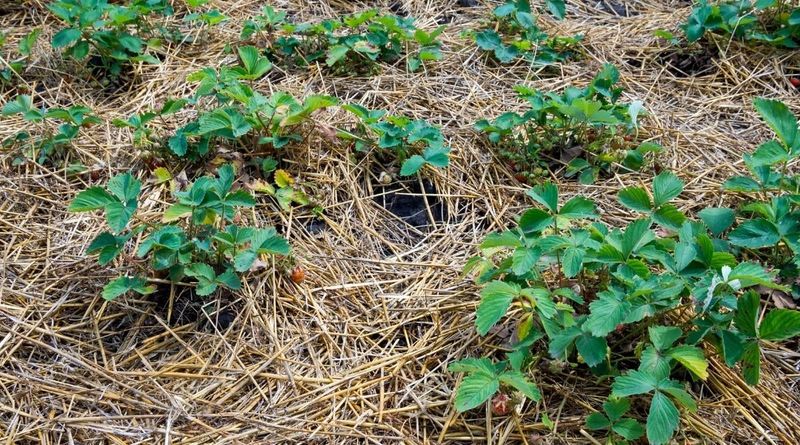
Start by naming your bed: annual or perennial. Then think about your local cold and where the plants are in their cycle.
Follow a regional recommendation, such as UF/IFAS for Florida or UGA for Georgia, rather than mulching only because a freeze shows up in the forecast.
Protection may reduce injury, but it cannot promise a bigger harvest. UGA Extension notes that disease and nematode problems can cut yield and fruit size, and variety and weather play roles too.
A bare bed is a question to answer, not an emergency.