
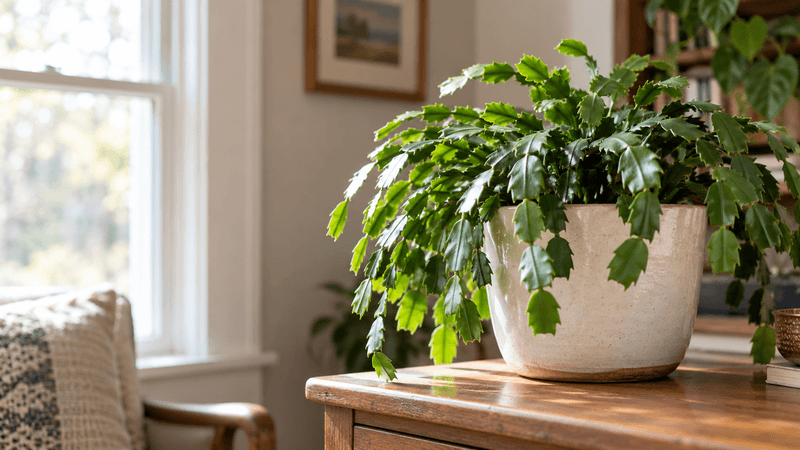
It is late October, and your holiday cactus is still just green segments with no sign of buds. Before you worry, there is one simple thing to check that many gardeners miss.
It takes about a minute, costs nothing, and could give the plant the long nights it needs. It will not promise Christmas flowers, but it is a smart place to start.
Is a room light breaking the dark?
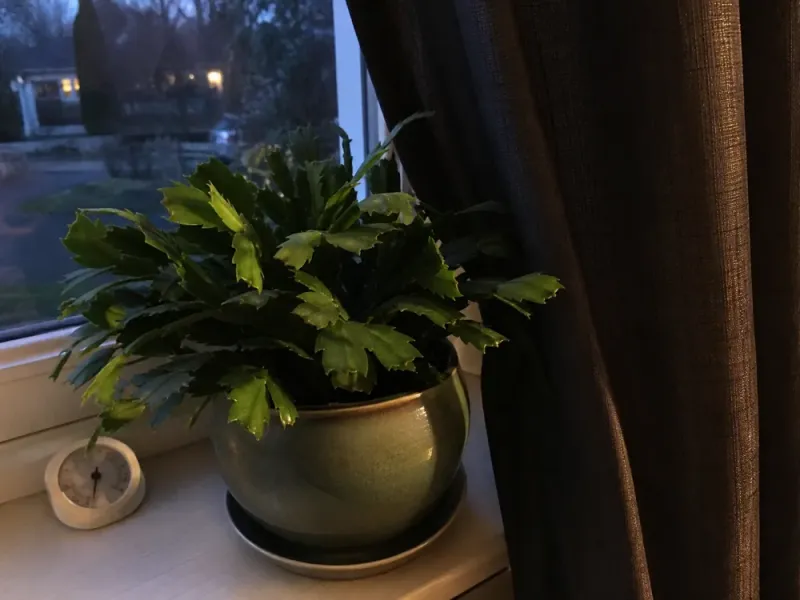
Walk past your cactus after dark tonight and look closely. Does a lamp, kitchen light, hallway fixture, or TV glow reach it?
Even ordinary room lighting can interrupt the long nights that holiday cacti use as a cue to form buds.
If light does reach the plant, give it a new routine. Keep it in bright, indirect light during the day, then offer uninterrupted darkness at night.
A spare room, a closet shelf, or a spot far from evening lights can work well. University of Minnesota Extension describes complete darkness as part of the bud-setting routine, and Iowa State Extension points to the same long-night cue.
Skip the temptation to flip a light on just to check the plant. A short peek may seem harmless, but this plant is reacting to the night, so steady darkness gives it the best chance.
Long nights trigger buds, but October leaves little margin
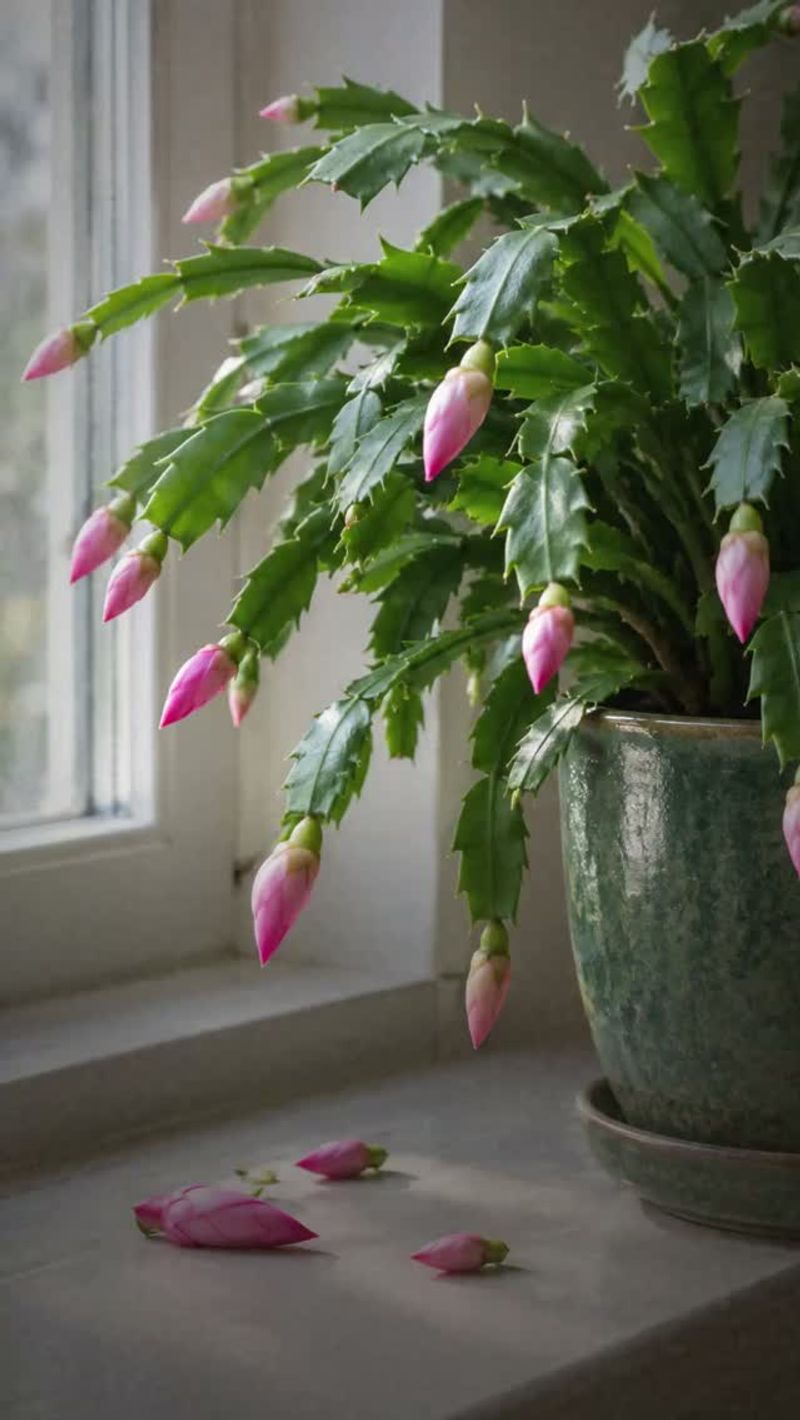
Holiday cacti form buds in response to long, uninterrupted nights, and the process takes weeks. Sources do not agree on one exact number.
Minnesota Extension recommends at least 12 hours of darkness nightly at night temperatures around 60 to 65°F, usually for about six weeks.
Iowa State gives a longer range of 14 to 16 hours for most cultivars, though it notes some may respond to 12. Your plant may fall anywhere in that spread, so treat the numbers as guides instead of strict rules.
Timing is the tricky part. UF/IFAS gives an example schedule that begins treatment around October 14 for full bloom around December 23.
Starting in late October is not automatically too late, and it may still encourage buds. It just leaves less room, so a full Christmas display cannot be promised.
Temperature matters, but there is no single magic number
Darkness is only one part of the picture. Night temperature also shapes how the plant responds, and the guidance changes depending on the source.
Minnesota Extension says plants kept near 55°F at night may bloom in five to six weeks, sometimes regardless of day length. At 60 to 65°F, it recommends at least 12 hours of darkness.
Above 65°F, it says blooming is unlikely. Iowa State separately warns that temperatures above 70°F can prevent flowering.
Those are different recommendations, not one cutoff.
For Florida and Texas readers, a warm house may be part of the problem, but cold is not the answer either. UF/IFAS cautions that temperatures below 50°F can damage the plant.
Rather than parking it outside for a cool night, pick a comfortable indoor spot away from vents and drafts.
Steady care protects developing buds
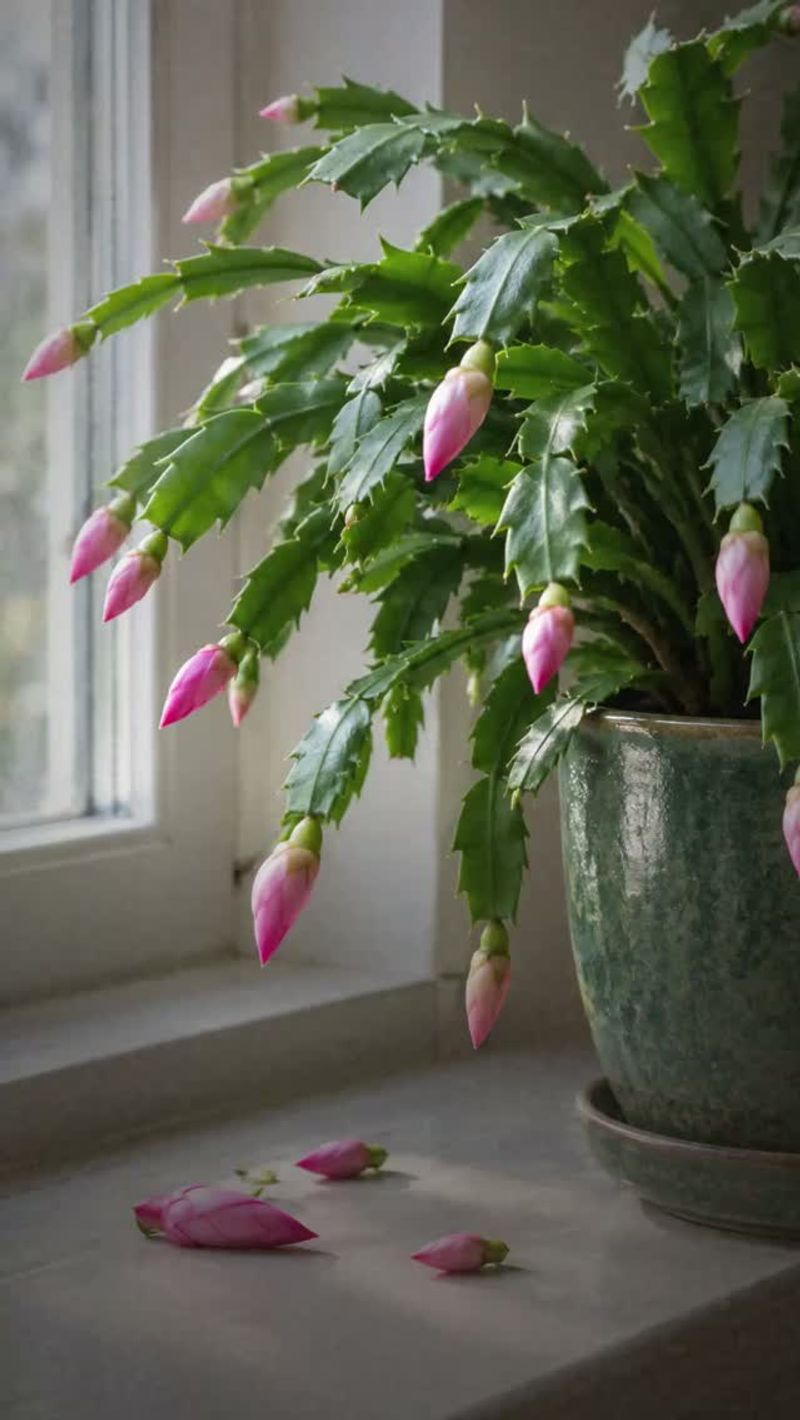
Once buds start, the goal is calm, steady conditions. Drafts and sudden swings in temperature, humidity, light, or watering can contribute to bud drop.
Moving the pot often or placing it near a heating vent or a leaky door can cause trouble.
Watering should stay moderate. Keep the mix from turning soggy, and do not let it get excessively dry either.
UF/IFAS guidance and Minnesota Extension both stress even care during this stage.
You may hear that holding back water pushes the plant to bloom. Oklahoma State Extension says research has not supported that rumor.
South Dakota State Extension reminds growers this is not a desert plant, so skip the dry-down. Even with steady care, some buds may still drop.
Check which holiday cactus you have
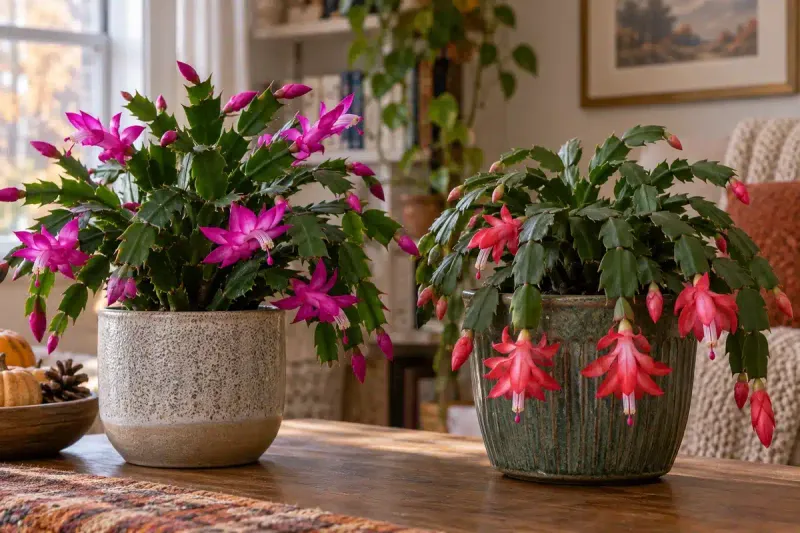
The plant on your shelf may not be a true Christmas cactus. Many sold under that name are Thanksgiving cacti or hybrids, and their typical bloom windows can differ.
A plant that seems late may simply be on its own schedule.
Look at the flat stem segments. Iowa State Extension explains that Thanksgiving cactus segments usually have pointed teeth and commonly bloom earlier, while true Christmas cactus segments have more scalloped edges.
Also keep perspective. No buds in late October does not prove the plant is unhealthy, and night light is not always the only cause.
Minnesota Extension notes that temperature, plant condition, and cultivar all play a part. If the leaves look plump and green, you are likely in decent shape.
Set a realistic goal for this season
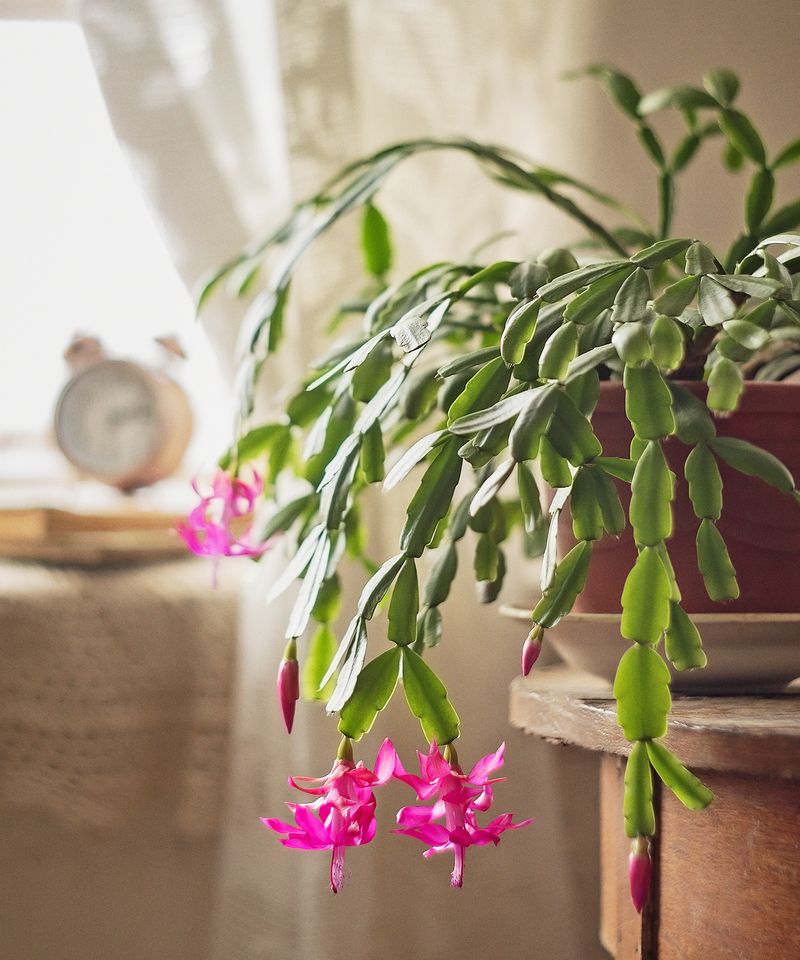
Here is the plan in short: check for night light, offer suitable darkness and temperature, and keep watering and placement steady. Starting now may encourage buds, and many gardeners find that worth trying.
Just do not count on Christmas flowers. UF/IFAS shows that a full display can take around ten weeks, and Iowa State notes cultivars respond differently.
A late bloom in January would still be a good reward for patient care.