
Nothing ruins a sunny California afternoon faster than fishing soggy leaves out of the pool before you can swim. The trouble is that many popular shade trees and flowering shrubs drop debris all summer, clogging skimmers and staining plaster.
The good news is that plenty of water-wise plants stay tidy, handle reflected heat, and still make your backyard feel like a resort. Here are ten smart picks that keep the green around your pool and the mess out of it.
1. Agave attenuata (Foxtail Agave)
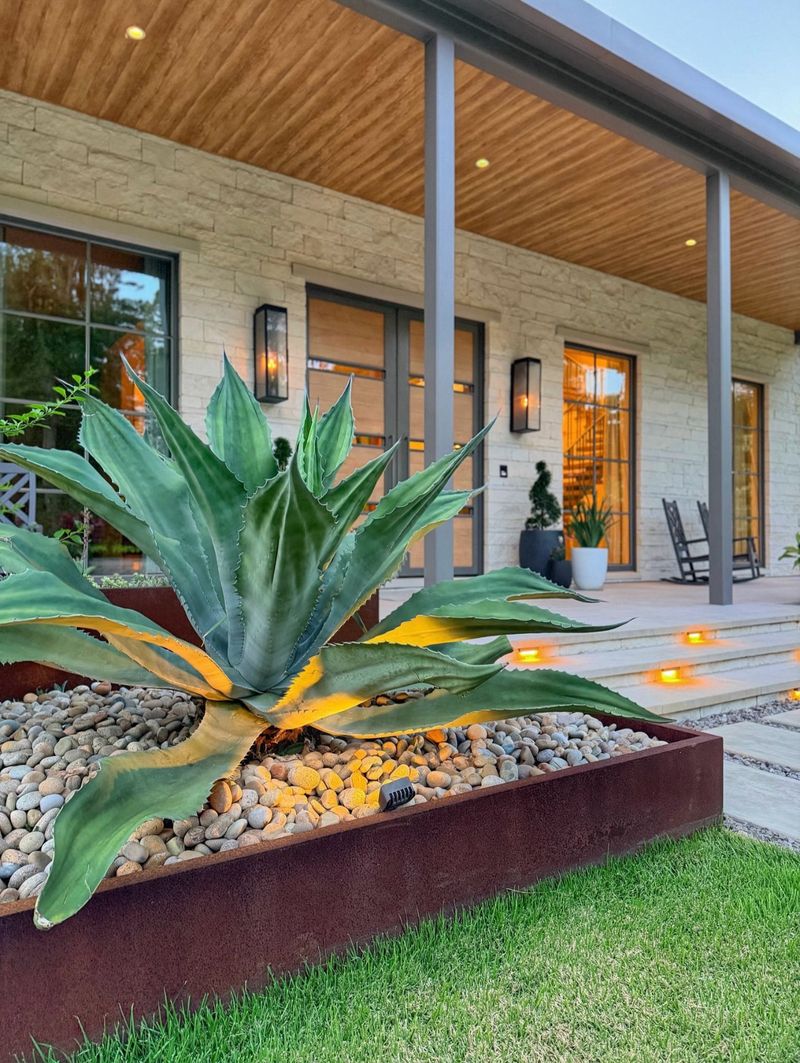
Picture a giant succulent rose made of soft, spineless leaves. Foxtail agave gives you that bold tropical look without a single sharp tip to snag a swimmer’s leg.
Because it holds its leaves for years, there is almost nothing to blow into the water. Old lower leaves dry slowly and can be snipped off a few times a year with clean shears.
It grows best in coastal and mild inland gardens, since hard frost can scar the foliage. Give it well-drained soil and deep, occasional watering, and it can thrive on very little irrigation once established.
2. Dwarf Mat Rush (Lomandra)
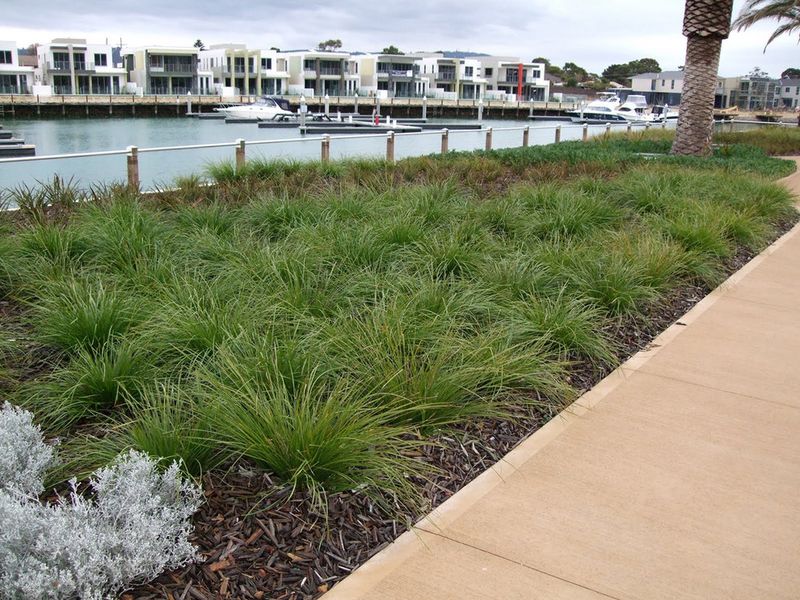
Ornamental grasses usually shed fluffy seed heads that end up floating in the skimmer. Lomandra breaks that rule, which is why landscape designers across California lean on it so heavily.
Varieties like ‘Breeze’ form dense, evergreen clumps of narrow leaves that stay put. The small flowers are tucked low in the foliage, so they rarely drift.
It handles chlorine splash, reflected heat from pavers, and summer drought with surprising grace. Cut it back hard every few years if it looks tired, and it will flush out fresh and green again.
3. Bird of Paradise (Strelitzia reginae)
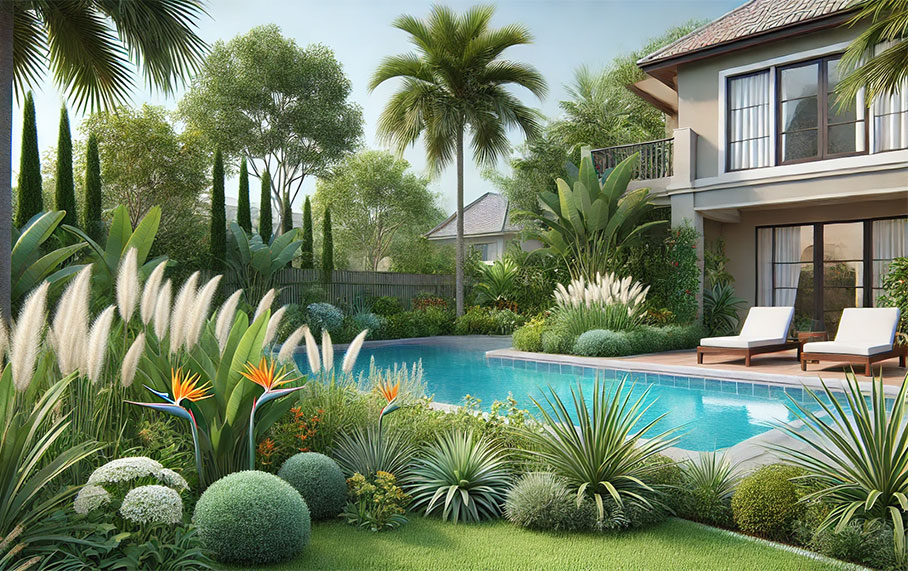
Few plants say Southern California like the bird of paradise, the official flower of Los Angeles. Its orange-and-blue blooms look like birds perched mid-flight above stiff, paddle-shaped leaves.
Those leaves are thick and long-lasting, so the plant does not rain debris onto your deck. Spent blooms simply hang on the stalk until you cut them off.
Plant it a few feet back from the coping so you can tidy it easily. Moderate water through summer keeps the flowers coming, though established clumps can tolerate dry spells better than you might expect.
4. Blue Chalksticks (Senecio mandraliscae)
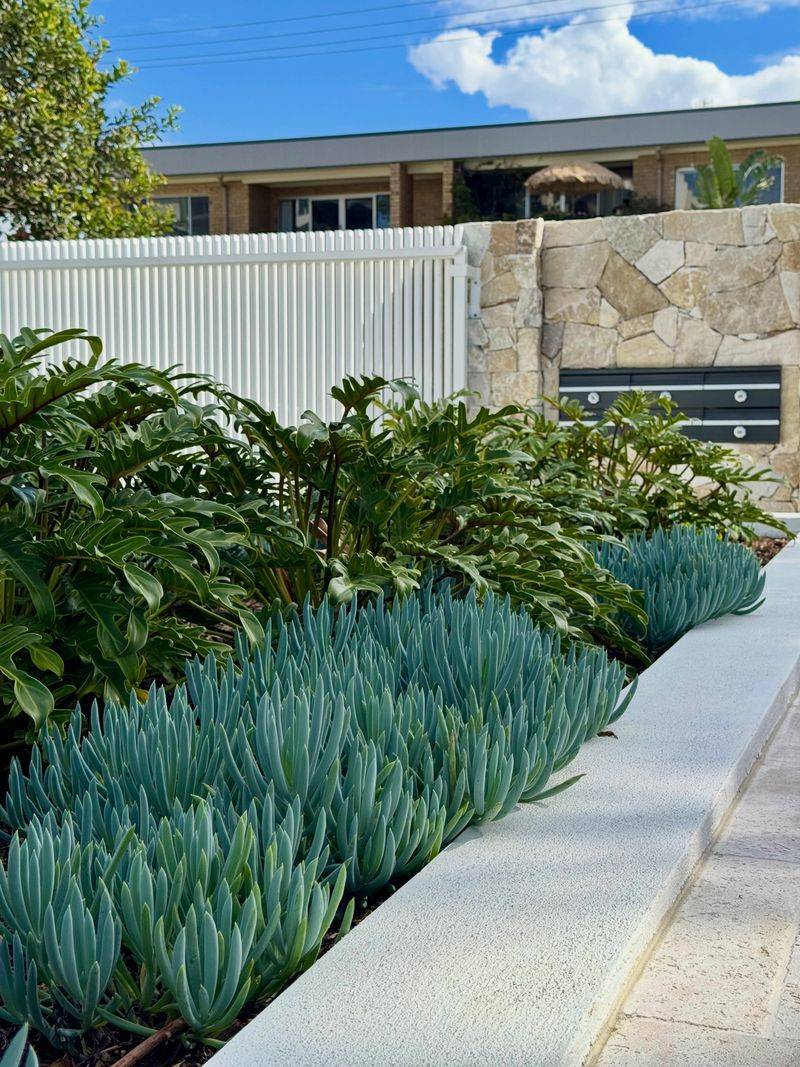
Want a cool, watery color right next to the pool without adding more water? Blue chalksticks spread into a low carpet of chalky, finger-shaped leaves that echo the pool’s tint.
The succulent foliage stays plump and attached, making it a clean groundcover for the strip between deck and fence. It also stays short, so it will not block sightlines when you are watching kids swim.
Full sun and fast-draining soil suit it best. In many California yards, a deep soak every couple of weeks in summer may be all it needs.
5. New Zealand Flax (Phormium)
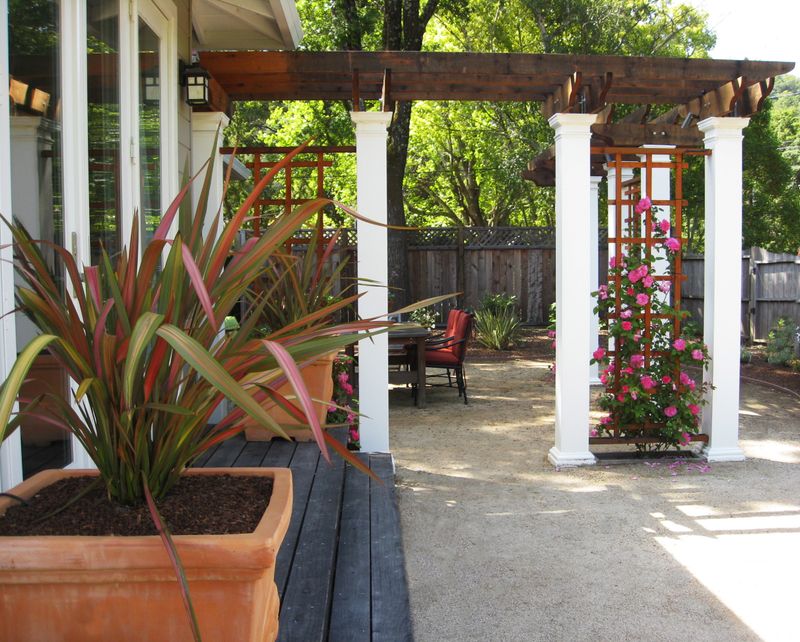
Sword-shaped leaves in bronze, burgundy, coral, and lime make phormium a living paint box. A single clump can anchor a corner of the pool deck like a sculpture.
Its leaves are tough and fibrous, and they cling to the plant rather than dropping. The only cleanup is cutting out an occasional brown blade at the base.
Coastal gardens love it most, while hot inland valleys may call for a bit of afternoon shade. Skip it if you have very tight space, since some varieties stretch five feet wide.
6. Mexican Fence Post Cactus
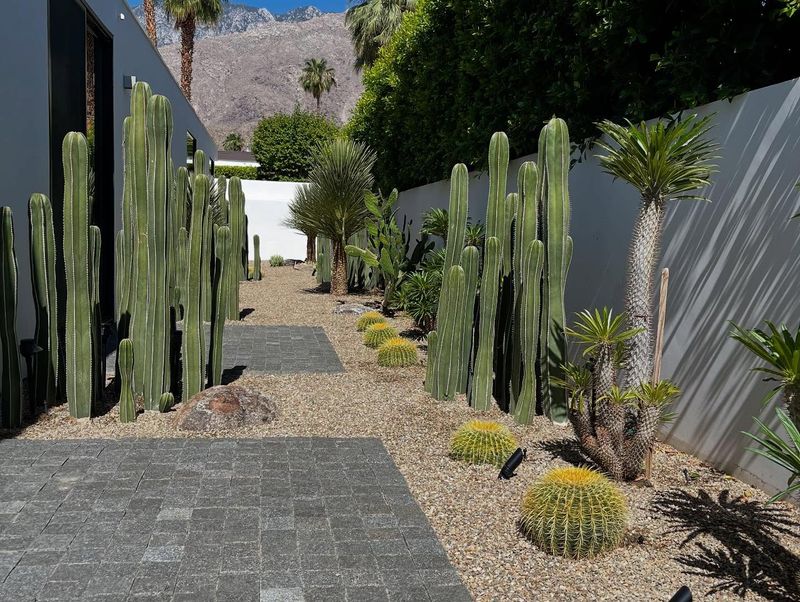
Desert-modern backyards in Palm Springs often use this cactus as a living privacy screen. Tall green columns rise in neat rows with zero leaves to lose.
That makes it about as low-litter as a plant can get. It also needs little to no summer water once rooted, which matters in towns with strict irrigation limits.
Keep it a safe distance from walkways and lounge chairs, because the spines are real. Planted along a back wall, it frames the pool beautifully and lets the water be the star.
7. Dwarf Olive (Olea ‘Little Ollie’)
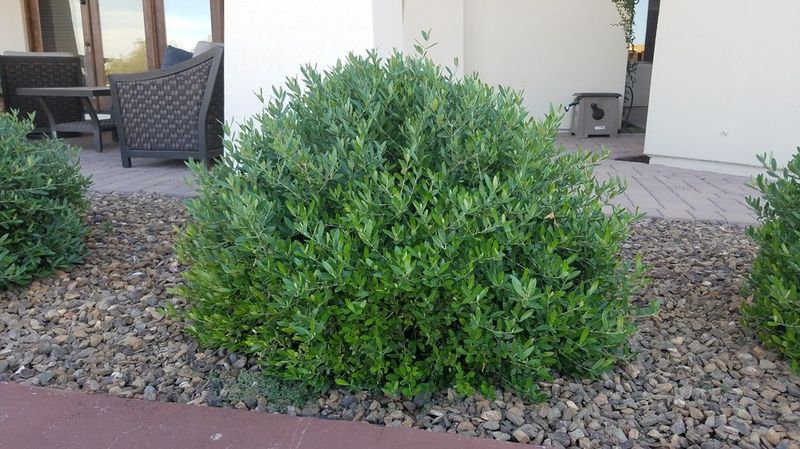
Full-size olive trees are gorgeous, but their fruit and leaves can make a pool look like a salad. ‘Little Ollie’ is the fruitless, shrub-sized answer.
It forms a tight, silvery mound that rarely sheds noticeable litter. Many homeowners shape it into a low hedge that gives Mediterranean style without the mess.
It handles heat, wind, and drought once established. That makes it a strong pick for inland valleys where summers push past 100 degrees.
8. Cleveland Sage
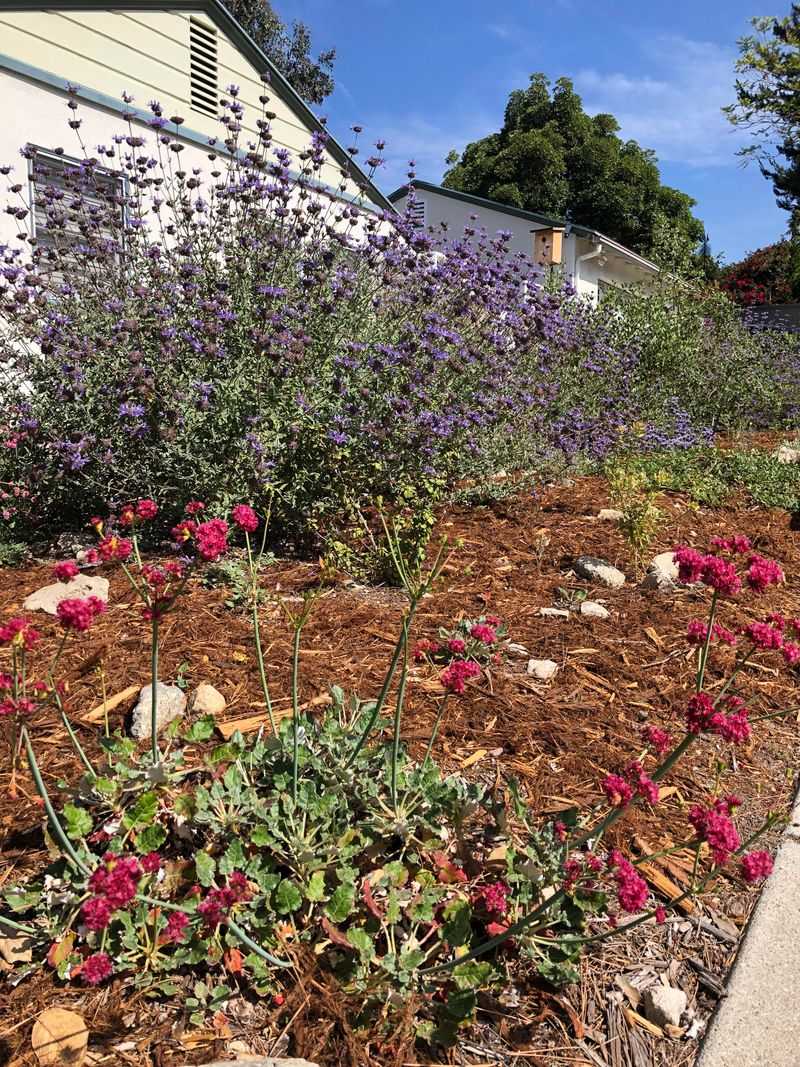
If you want something native that helps bees and hummingbirds, Cleveland sage earns a spot. Its purple flower whorls smell wonderful on a warm evening.
Leaf drop is light, though it is a shrub, so plant it a few feet back from the water rather than at the edge. That buffer also keeps pollinators enjoying the blooms instead of bumping into swimmers.
It wants sun, lean soil, and very little summer water. Overwatering it is the most common mistake, so let it go fairly dry once established.
9. Aloe ‘Blue Elf’
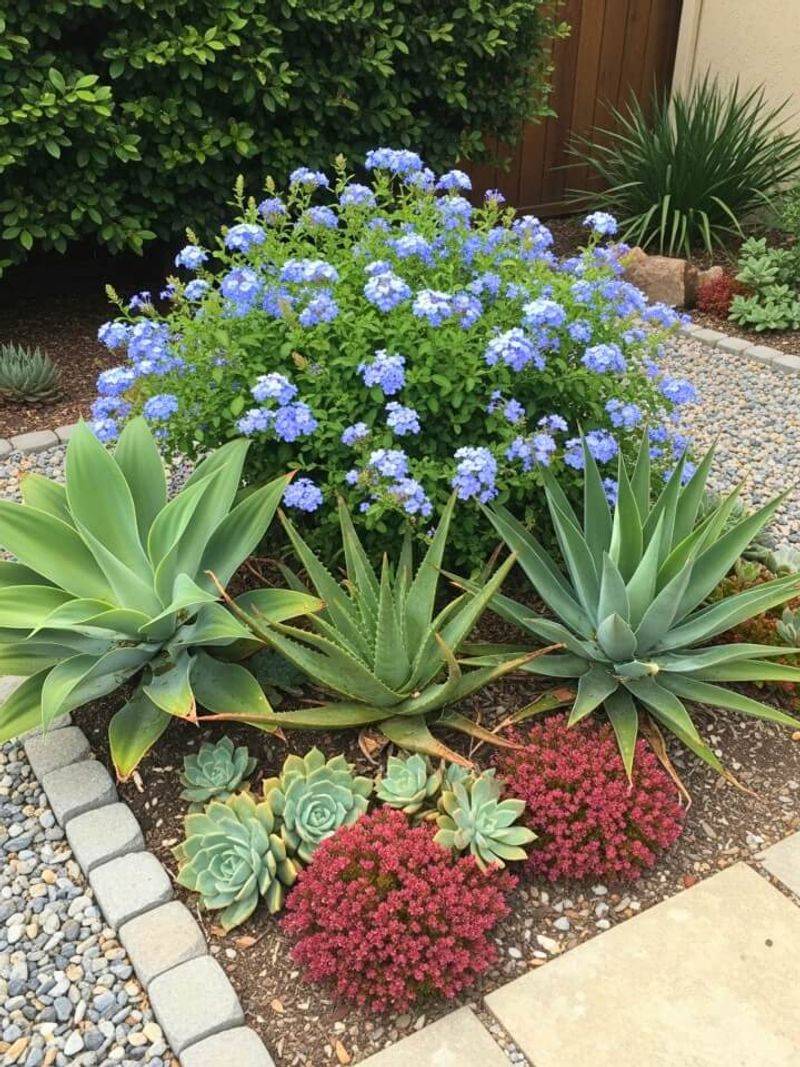
Here is a plant that blooms when the rest of the yard is resting. Each winter, ‘Blue Elf’ sends up bright orange spikes that hummingbirds visit eagerly.
The compact blue-gray clumps stay under two feet tall and hold their leaves tight. Cut the flower stalks after they fade, and the bed looks crisp again.
Little Blue Elf works well in containers on the deck, too. It shrugs off heat and needs only occasional water during dry months.
10. Mediterranean Fan Palm
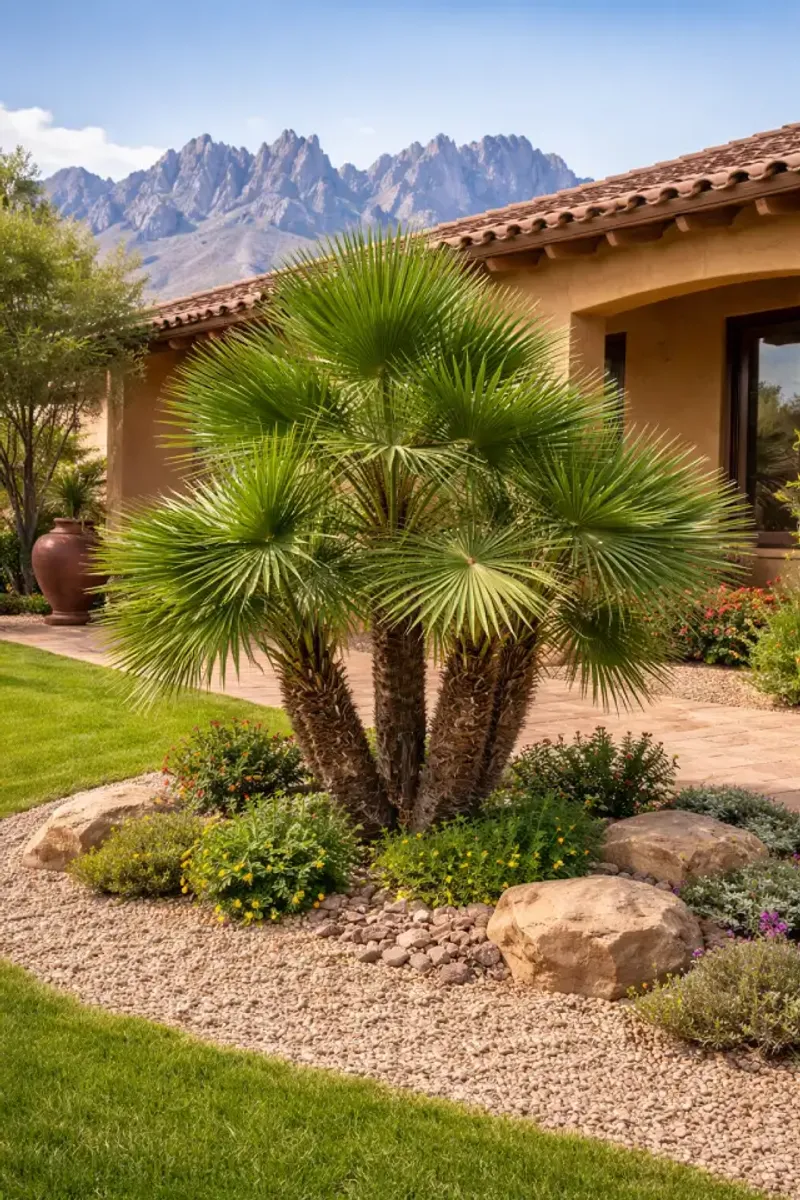
Craving palm-tree shade without towering fronds crashing into the deep end? The Mediterranean fan palm stays shrub-like and slow, often topping out around ten to fifteen feet.
Its stiff fans hang on for a long time, and you can remove old ones on your own schedule. That keeps surprise drops into the pool to a minimum.
It handles both coastal fog and inland heat, plus light frost better than many palms. Watch the spiny leaf stems when trimming, and place it where no one will brush past it barefoot.