
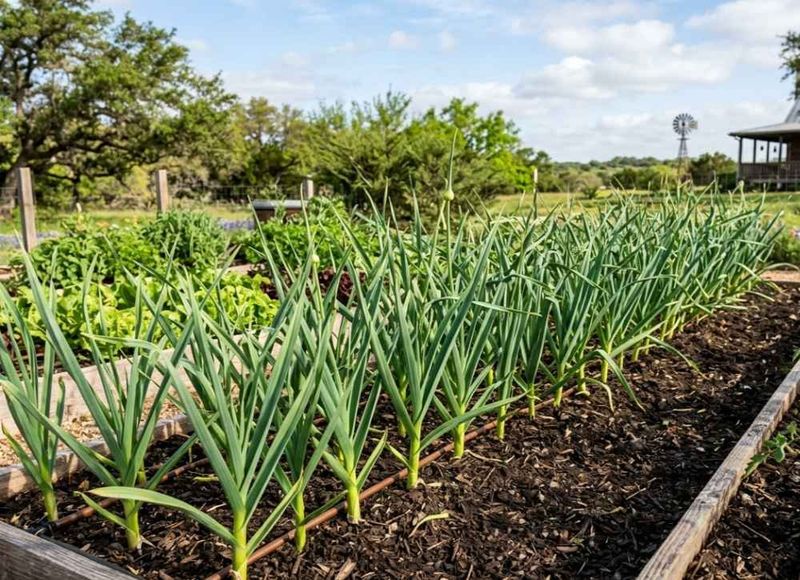
Garlic braids look great hanging in a kitchen, but not every garlic plant gives you stalks that bend nicely. In Central Texas, warm winters and a long, uneven spring make the choice of garlic matter more than most gardeners expect.
Picking the right type, planting it well, and watching the plants instead of the calendar can set you up for a good harvest. Here is how to sort through the options and what to do after the cloves go in the ground.
Which garlic fits a Central Texas garden?
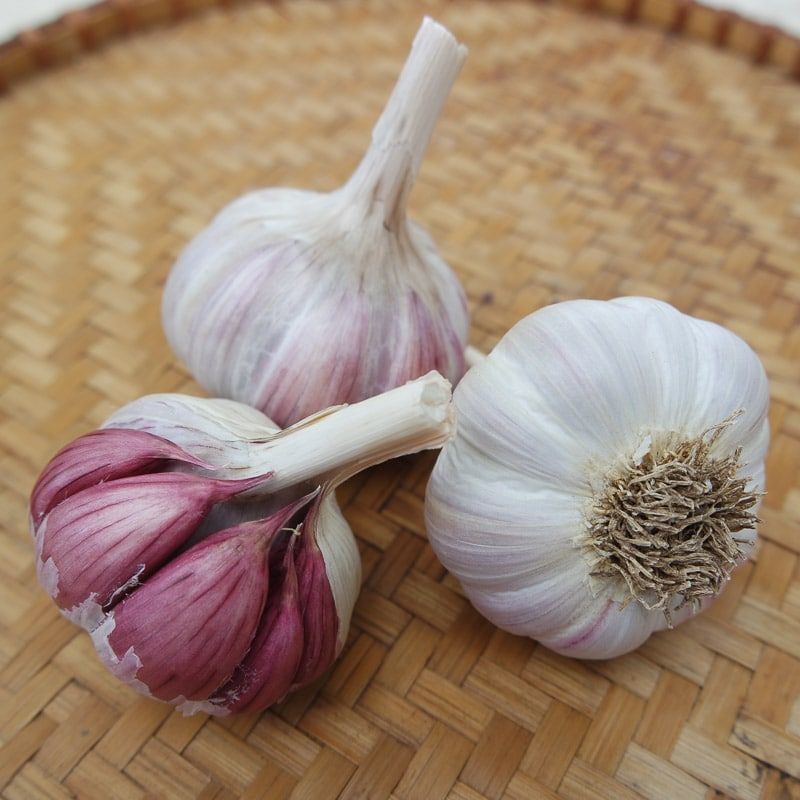
Start with two separate questions: what grows well here, and what braids easily? Texas A&M AgriLife’s Central Texas vegetable variety list includes both Creole Red and Lorz Italian, each with an estimated 8 to 9 months to maturity.
That makes them locally supported candidates, not a ranking and not a promise of big bulbs.
Local gardeners add another clue. A Bell County Master Gardener article says softneck garlic tolerates the area’s warm winters and names Lorz Italian and Thermadrone as varieties that perform well locally.
Warm winters matter because many garlic types from colder regions are grown with long stretches of cold in mind, and Central Texas does not always deliver that.
Notice what these sources are: variety listings and local experience. They are not side-by-side trials showing one variety beating another for bulb size in Central Texas.
So treat them as a shortlist and not a winner’s podium.
If braiding is your priority, you have a second filter to apply. Regional fit gets you a garlic that should grow in your yard, and stalk traits decide how pleasant it will be to braid.
The next section covers why those two things are not the same.
Braiding depends on stalk traits, not just a variety name
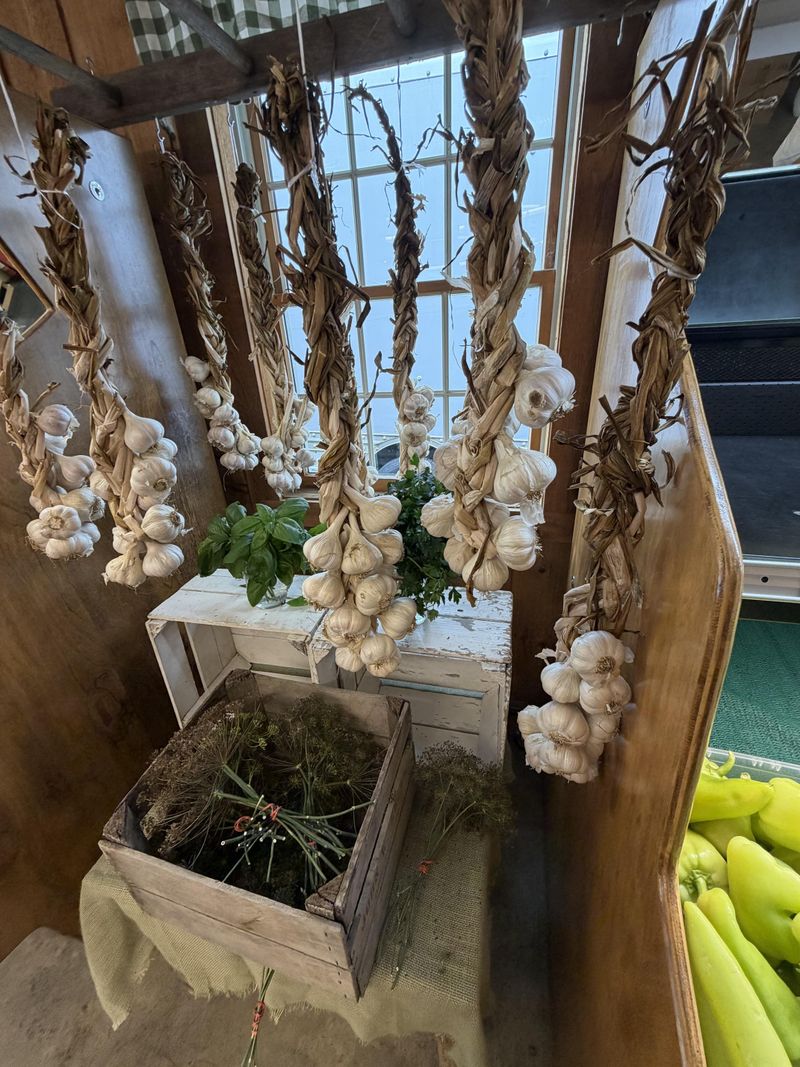
Flexible stalks are what make a braid possible. UGA Extension describes softneck stalks as less stiff and thick than hardneck stalks, which is why softneck is the more supportable pick when easy braiding is the goal.
Lorz Italian, a softneck candidate, fits that picture better than most.
Stalk flexibility is a separate matter from bulb size. Garlic type influences things like stalk formation, braiding ease, and storage, but it does not alone decide whether you pull large heads or small ones.
Clove size, spacing, moisture, and soil all get a vote too.
Then there is the name Creole, which causes real confusion. Penn State Extension lists Creole among hardneck examples, while LSU AgCenter guidance discusses Creole separately from other southern garlic types.
Naming and classification vary, so Creole does not automatically mean softneck.
Before you order, ask the supplier whether the stock is softneck, whether it forms a hard central stem, and how the bulbs have braided for other growers. A seed garlic listing that answers those questions is worth more than a catchy variety name.
Plant in the local fall window
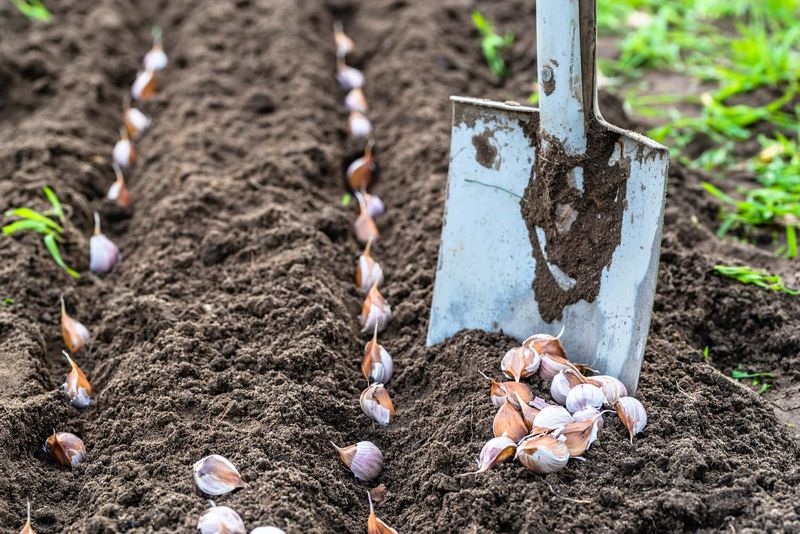
Mark mid-October through early December on your calendar. That is the Central Texas window given in the Bell County Master Gardener article, and other Central Texas guidance likewise calls mid-October ideal while allowing planting into early December.
That means getting cloves in before November is perfectly fine, since it sits inside the window. It is just not a deadline.
If life, weather, or a late seed order pushes you to mid-November or the first week of December, you are still planting at a recommended time.
One caution: a planting window does not set your harvest date. Garlic planted on the same day can mature at different times depending on the variety, the winter, and how fast spring warms the soil.
Once you have picked your date, the choices that follow matter more than a week or two either way. Which cloves you plant, how deep they go, and how much room they get all shape how the bulbs develop, so the next sections take those one at a time.
Plant large, healthy cloves at a sensible depth
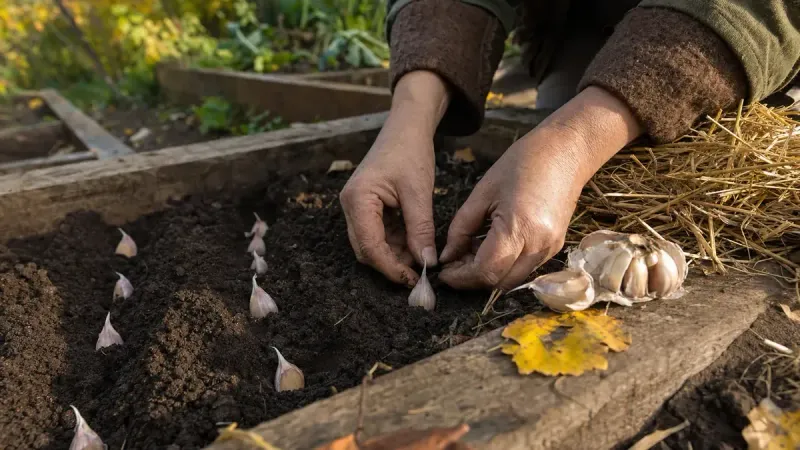
Break apart sound, firm bulbs shortly before planting and set aside the biggest, healthiest cloves for the garden. UGA Extension says larger planted cloves yield larger mature bulbs.
Save the small or damaged cloves for the kitchen.
Place each clove pointed-end up, with the flat root end facing down. A clove set upside down can still grow, but it wastes energy turning around and may emerge late.
For depth, local guidance is fairly modest. The Texas A&M garlic guide gives about 1 inch, and Bexar County guidance gives 1 to 2 inches.
UGA’s broader range runs 1 to 3 inches.
You may come across an instruction to plant 4 to 6 inches deep, including in one Central Texas article. That is much deeper than the Texas A&M and Bexar County numbers, so do not treat it as standard advice.
Sources differ a little, and soil matters. A good starting point is 1 to 2 inches, toward the shallower end in heavy clay and slightly deeper in loose, fast-draining soil.
Manage spacing and moisture as bulbs develop
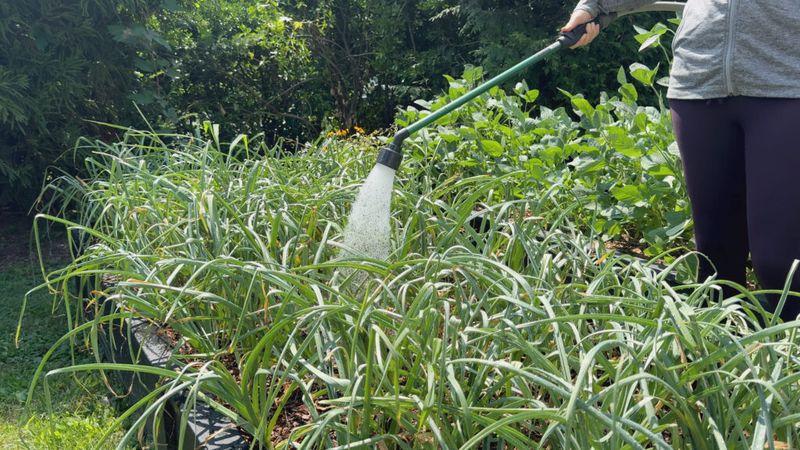
Variety cannot do all the work, which is where crowding and thirst come in. Bexar County guidance says tighter spacing can raise total yield but reduces the size of individual bulbs.
If you want bigger heads for braiding, give each plant some elbow room instead of packing the bed.
Water is the other lever. UGA Extension notes that water stress during clove development can contribute to small cloves.
It recommends well-drained soil and roughly 1 inch of water per week as a general guide.
Treat that inch as a reference point, not a rule. After a soaking Texas rain you can skip a watering, and in a dry, windy spring sandy beds may need more.
Stick a finger a couple of inches into the soil and water when it feels dry.
As the tops begin to dry and maturity approaches, stop watering so the bulbs can finish and wrappers can set. Soggy soil late in the season invites rot and makes curing harder.
None of this guarantees large bulbs. Good spacing and steady moisture simply remove two common reasons for small ones.
Judge maturity, cure the bulbs, and prepare to braid
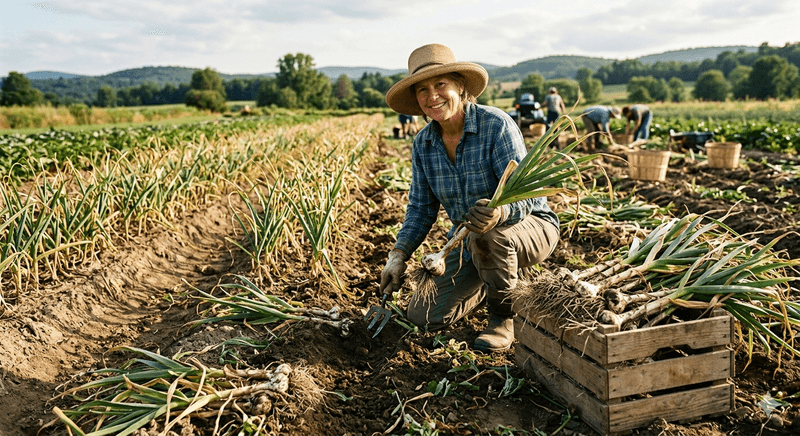
Forget a fixed date and watch the leaves. Bexar County guidance says Texas garlic matures in June, while the Central Texas Master Gardener article says growth may stop around May, June, or July as soil warms.
The Texas A&M list’s 8 to 9 month estimates point the same way: June is possible, not promised.
UGA Extension advises harvesting when about one-third to one-half of the leaves have turned brown. For braids, pull the plants while the tops are partly brown but still pliable, because fully dry stalks snap.
Cure the bulbs in a shaded, well-ventilated spot, such as a covered porch or garage with a fan. Skip direct sun, which can scald them.
Do not braid fresh garlic without good air circulation, since trapped moisture can invite mold.
Once the necks and wrappers feel dry, braid and hang the garlic where air moves freely.
Your decision rule is simple: choose a locally supported candidate like Lorz Italian, confirm the stock’s braiding traits, and handle bulb size and harvest timing as things to manage. The leaves will tell you when it is time.