
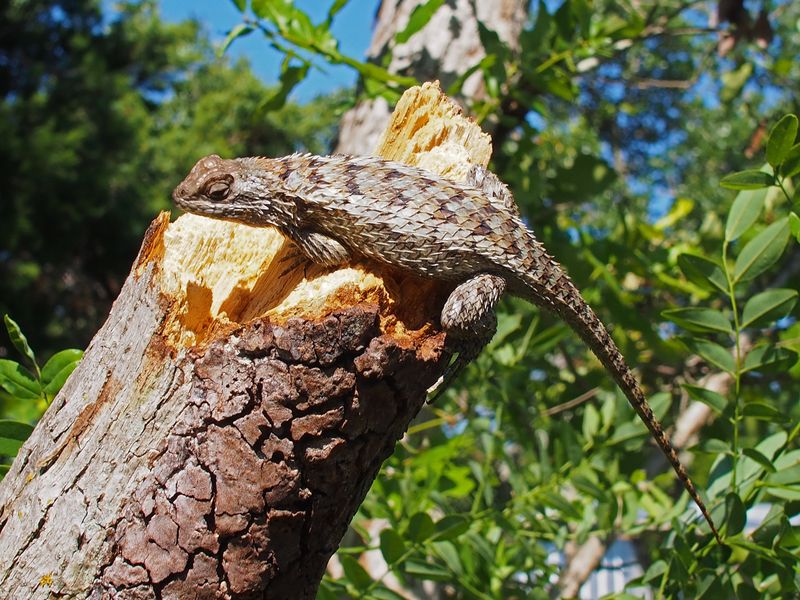
You step outside on a warm October afternoon and spot a rough-scaled lizard clinging to a fence post. Is it supposed to be out this late?
For many Texas yards, the answer is simpler than you might think. Here is what that sighting can tell you, what it cannot, and how to help the lizard when the weather turns.
Is a late-October sighting unusual?
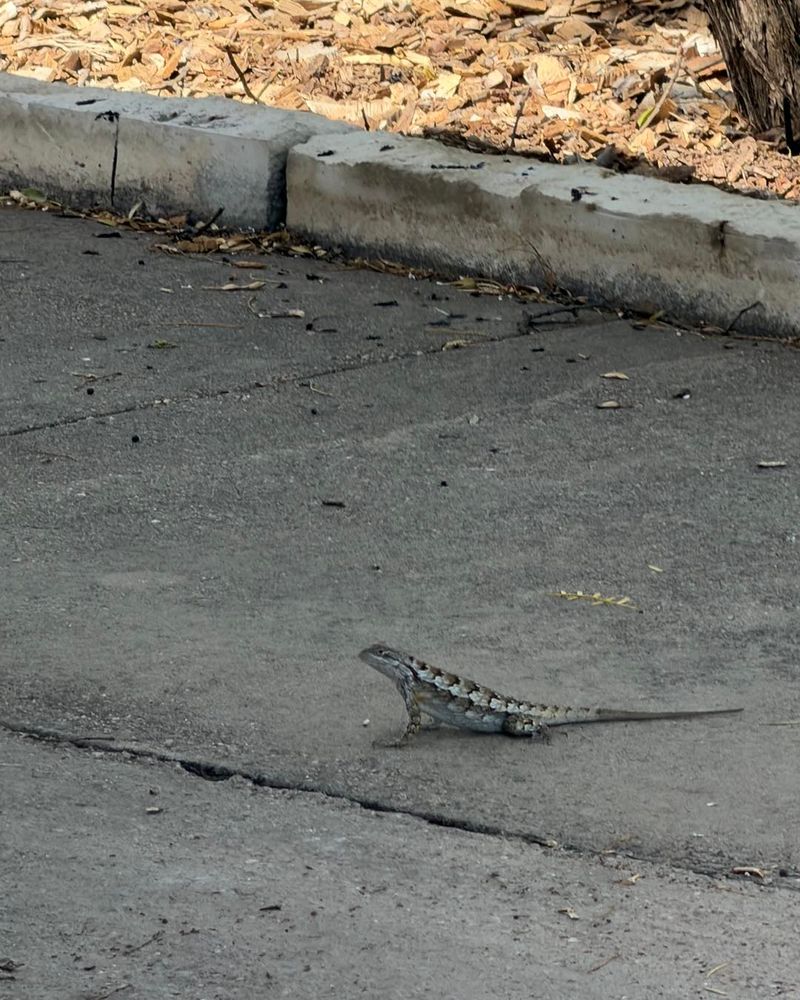
Sunny fall afternoons in Texas can feel a lot like summer, and lizards notice. A Texas spiny lizard is active during the day, and how busy it is depends on temperature.
When a warm spell arrives, it can show up to bask and look for food, even in late October.
So a sighting like this fits normal behavior. It does not mean the lizard is sick, lost, or in trouble.
Texas Parks & Wildlife Magazine describes these lizards as daytime animals that spend winter under leaf litter or in soil, so cooler weather does bring a change.
When that change happens depends on local conditions. Texas is a big state, and the lizard lives only in parts of it, mostly central and eastern Texas and south into northeastern Mexico, according to Animal Diversity Web.
A yard near Austin may see different weather than one near Tyler or the Gulf Coast.
No calendar date or temperature tells you when every lizard will stop appearing. Some will vanish after the first cool snap, and others may turn up again on the next sunny afternoon.
Think of each sighting as a snapshot of that day’s weather, not a signal that something is off in your yard.
If you want to track it, jot down dates and weather in a notebook. After a season or two, you will have a good picture of how the lizards in your own yard handle fall.
Sunlit surfaces help explain where you see them
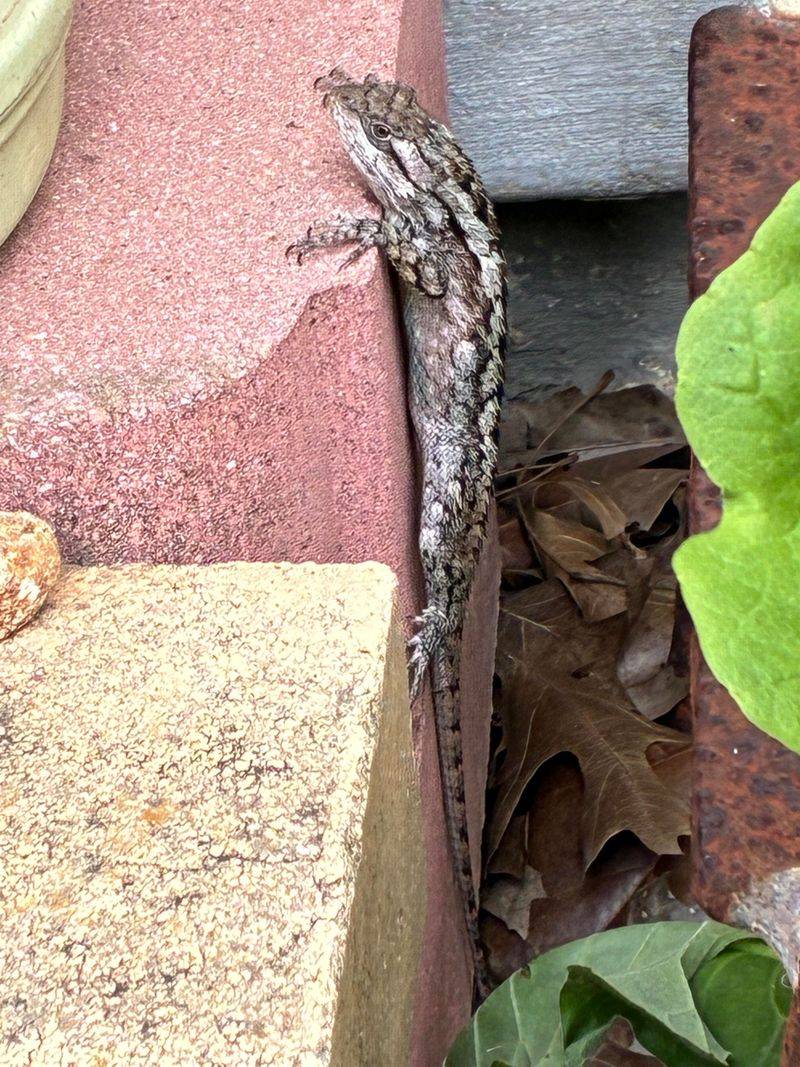
Reptiles warm up from outside sources, so a sunny perch is basically a charging station. That is why you tend to spot spiny lizards on tree trunks, fence rails, rocks, and the sunny side of a house.
Texas Parks & Wildlife Magazine notes that they favor trees and other upright surfaces, including oaks, mesquites, fences, and buildings.
Picture a mesquite trunk catching the last warm light at four o’clock. A lizard on it can soak up heat, watch for insects, and still dart into bark crevices if something looms.
A brick wall or a cedar fence offers much the same setup.
Not every sighting has the same cause, though. One lizard may be basking, another hunting, and another simply crossing to a new spot.
Seeing one on your fence does not guarantee it lives there or will return tomorrow.
If you want to know what draws them, watch where the sun hits first in the morning and where it lingers in the afternoon. Those spots, especially near wood, stone, or bark, are the likeliest places for a sighting.
You do not need to change anything. Simply noticing the pattern is enough.
What does one lizard say about your yard?
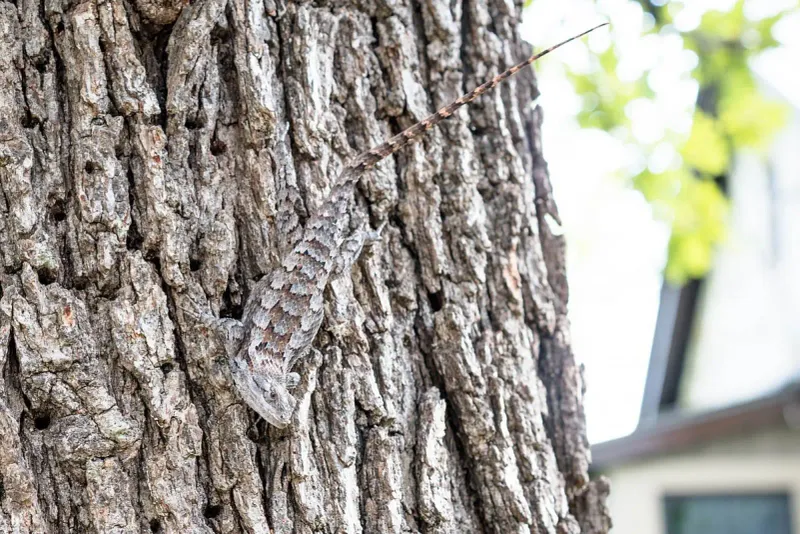
A lizard on your fence is a small clue, not a report card. Its presence suggests your yard has at least one thing it can use, such as a warm place to bask, a spot to hide, or insects to eat.
The University of Texas at Austin Biodiversity Center highlights this species as a familiar backyard neighbor.
That is where the inference stops. One sighting cannot prove your yard is broadly healthy.
Lizards can turn up in yards with plenty of problems, and a yard with healthy soil and native plants might not have one at all.
Range matters too. Animal Diversity Web places the species in central and eastern Texas and south into northeastern Mexico, so a missing lizard may just mean you live outside its range.
A practical way to use the clue is to look around where you spotted it. Is there a sunny trunk, a woodpile, or a patch of leaves nearby?
Knowing which feature it likes helps you protect that feature when you tidy up.
Their diet offers a modest ecosystem benefit
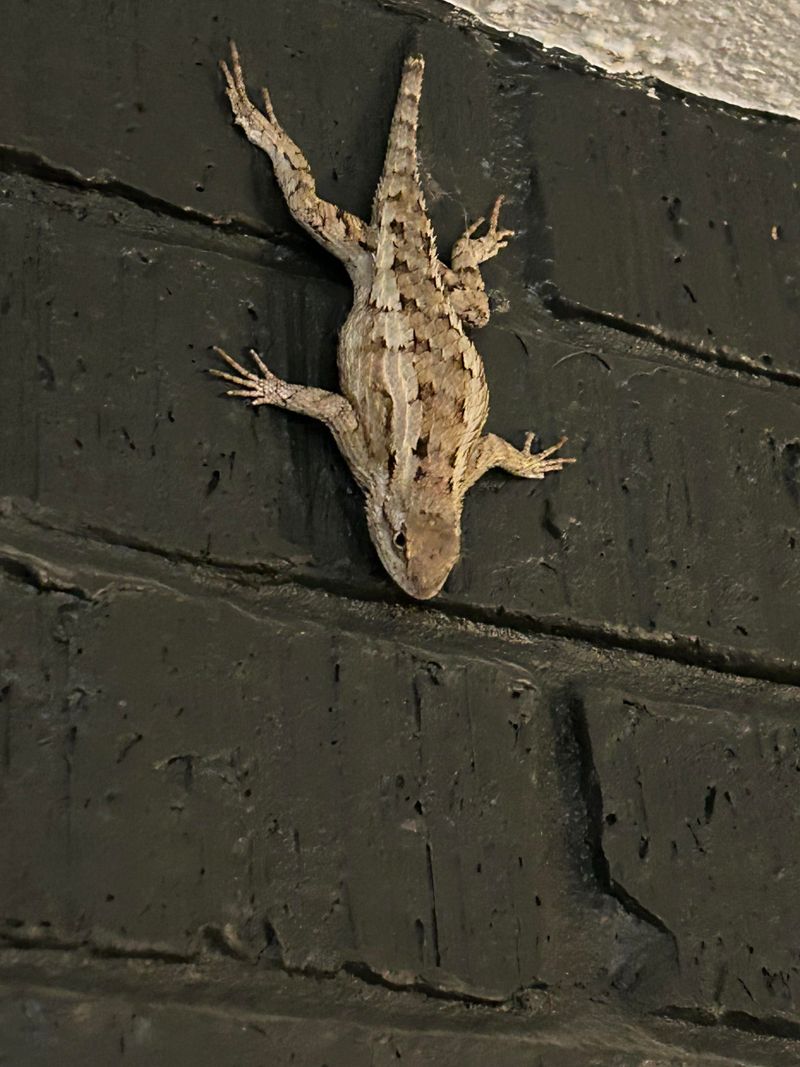
Spiny lizards are hunters of small things. According to Animal Diversity Web, they eat insects such as grasshoppers and beetles, along with other invertebrates.
A lizard may sit still on a trunk, then snap forward to grab a passing bug.
By eating those animals, the lizard is one link in the local food web. Insects feed lizards, and lizards in turn can become meals for birds, snakes, and other predators.
That is a real if modest role in a yard’s ecosystem.
It is wise to keep expectations realistic. Nothing in the research shows that a spiny lizard will control mosquitoes, ticks, or any particular garden pest, or noticeably shrink their numbers in a typical yard.
One lizard eats only so many bugs a day, and it picks what is handy.
So treat it as a welcome bonus rather than a pest plan. If aphids are chewing your tomatoes or chinch bugs are browning your lawn, you still need your usual tactics.
The lizard just adds a bit of natural activity to the mix.
Using fewer broad-spectrum insecticides can also leave more prey around for wildlife like this, which is an easy habit to adopt.
A quieter yard can preserve shelter
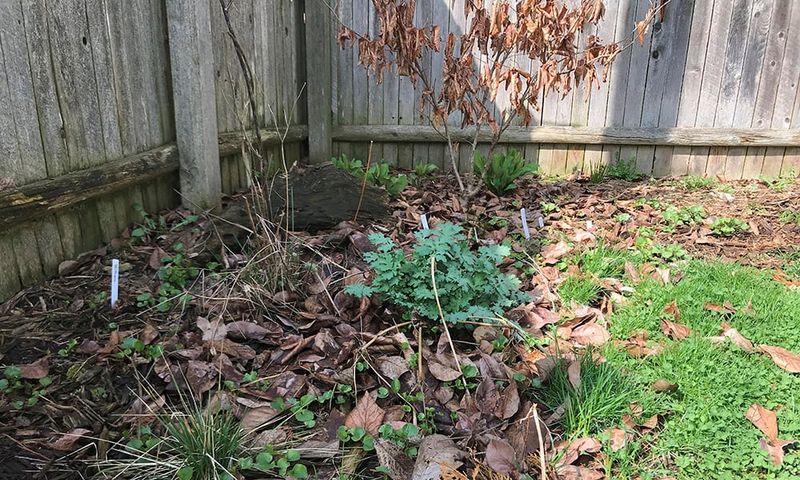
As weather cools, you will likely see fewer lizards on fences and trunks. Activity drops, and they retreat to shelter.
Texas Parks & Wildlife Magazine reports that they spend winter under leaf litter or in soil. Timing and behavior can vary from one lizard and one yard to the next.
The lizards are often not gone, only out of sight, as the Rio Grande Valley chapter of Texas Master Naturalist points out. That makes fall cleanup a good moment to think before you rake.
A sensible approach is to leave some secluded leaf litter in place, such as under shrubs or along a back fence, rather than clearing every bed. A log tucked beneath shrubs adds natural cover.
This is general wildlife-friendly advice, not a tested prescription for any one lizard.
The USDA Natural Resources Conservation Service backyard wildlife guidance for Texas likewise recommends sunny basking areas, shaded retreats, and shelter like leaves, logs, or stones.
You can still have a tidy yard. Clean up walkways, patios, and the lawn, and save the leafy corner for wildlife.
Then avoid digging or turning that spot over until the weather has warmed well into spring.
The safest response is to leave it alone
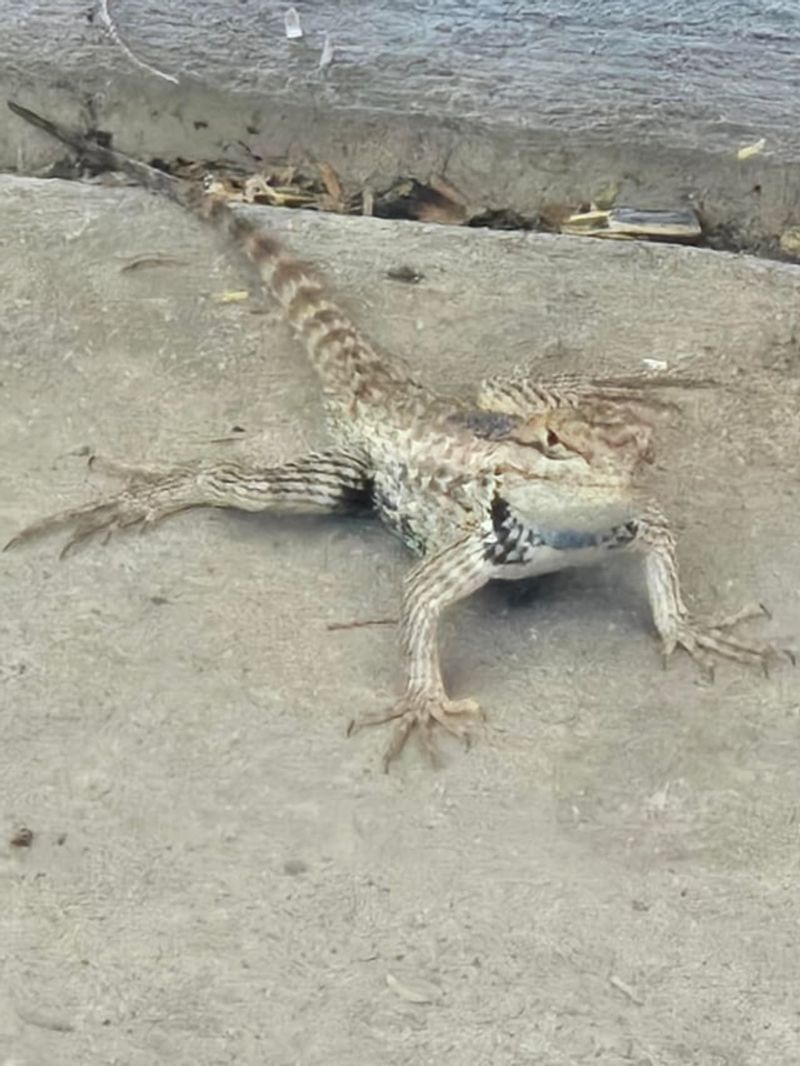
When you spot a lizard on a warm October day, the best move is to watch it and walk on. It is not stranded and does not need a rescue.
Picking one up can stress it and may earn you a bite, and a lizard that feels threatened may drop its tail, which Texas Parks & Wildlife describes as an escape tactic.
Texas Master Naturalists also note that some lizards may bite when captured, so their guidance favors leaving them be.
Skip the idea of bringing a healthy wild lizard indoors for winter or feeding it. The CDC advises against catching wild reptiles to keep as pets.
If you have children, show them how to enjoy the lizard from a few feet away. Keep dogs and cats back too.
A lizard sunning itself in late October is simply making the most of a good day.