
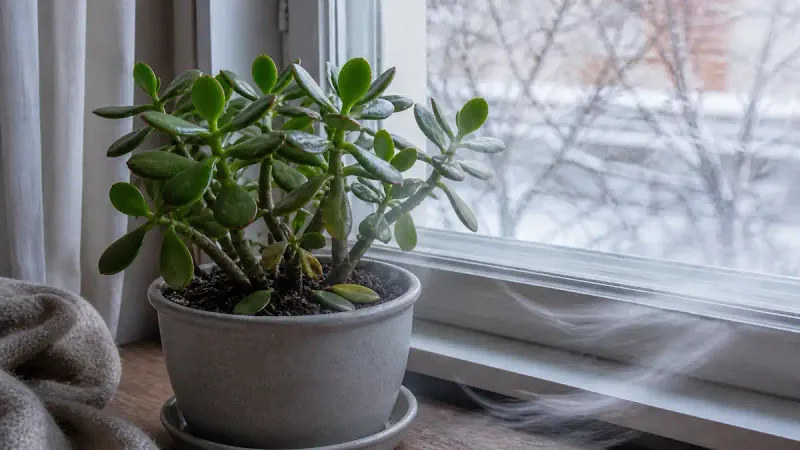
A jade plant that starts dropping leaves as the weather cools can leave you wondering what went wrong. Fall changes the light, the temperature, and how fast your plant uses water, all at the same time.
Age can play a part too, but leaf drop alone will not tell you the cause. Here is how to look at the plant, the soil, and the roots so you can make calm, careful changes.
A fall move indoors can unsettle a jade plant
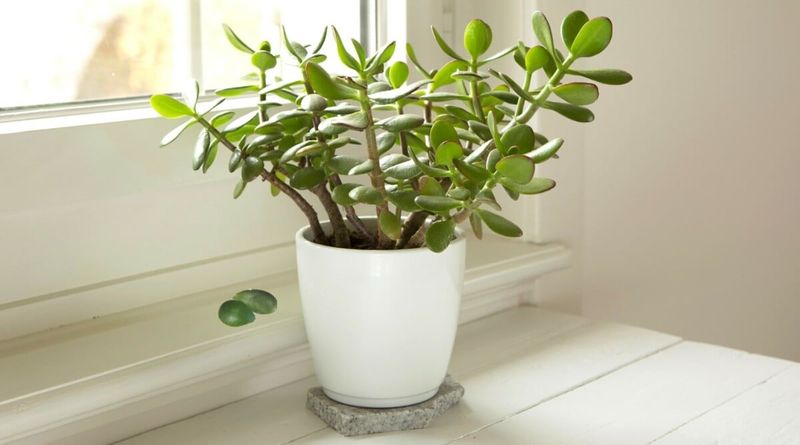
Many Southern gardeners park their jade plants on the porch or patio all summer, then bring them inside before the first cool snap. Iowa State Extension explains that houseplants moved indoors in fall may drop leaves while they adjust to less favorable indoor conditions, and that adjustment can take one to two months.
So it is worth asking whether your plant came inside recently. A recent move may explain some of the loss, but it may not be the only cause.
Light, watering, and temperature can all be off at once.
Before you change anything, look at those three things one at a time. Moving the pot, repotting it, and changing the watering all in one week makes it hard to know what helped.
Penn State Extension recommends bringing plants in before frost and giving them time to adapt to indoor light. Pick the clearest mismatch, fix that first, and keep the rest of the routine steady.
Check how much light the plant gets now
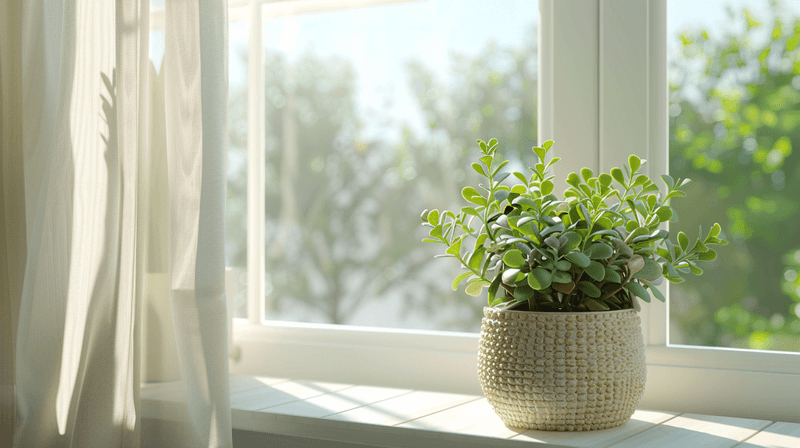
Shorter fall days and a dimmer indoor spot can cut the light your jade plant gets by a lot. A corner that worked in summer outdoors may be much darker than the patio was.
Wisconsin Extension notes that jade does best with about four or more hours of direct sun, though it can get by in bright indirect light. Look for the brightest window you have, often one facing south or west, and check how long the sun actually reaches the plant.
If you decide to give it more light, go slowly. A sudden jump from a dim room to strong direct sun can scorch the leaves.
Move the plant closer to the window in steps over a week or two, or start with a few hours of sun and add more.
Watch the plant as you go. Leaves that stay plump and firm with steady color are a good sign that the new spot is working.
Water according to the soil, not the calendar
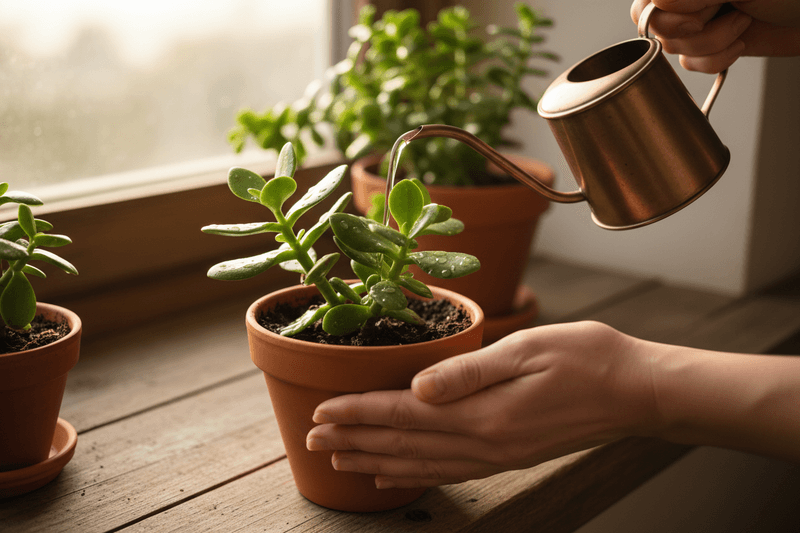
As days shorten and rooms cool, a jade plant grows more slowly and generally needs less water. NC State Extension and other university sources recommend letting the soil dry between waterings.
A summer routine can easily become too much in October.
There is no single schedule that fits every home. Pot size, soil mix, drainage, light, and room conditions all change how fast the soil dries, so poke a finger into the soil and check before you water.
A gritty, well-draining mix and a pot with holes help, and the saucer should be emptied so roots are not sitting in water.
Less water does not mean no water. Prolonged dryness can also cause leaf drop, as Clemson Extension points out.
When the soil has dried out, water thoroughly and let the excess drain away.
Read the leaves, soil, and roots together
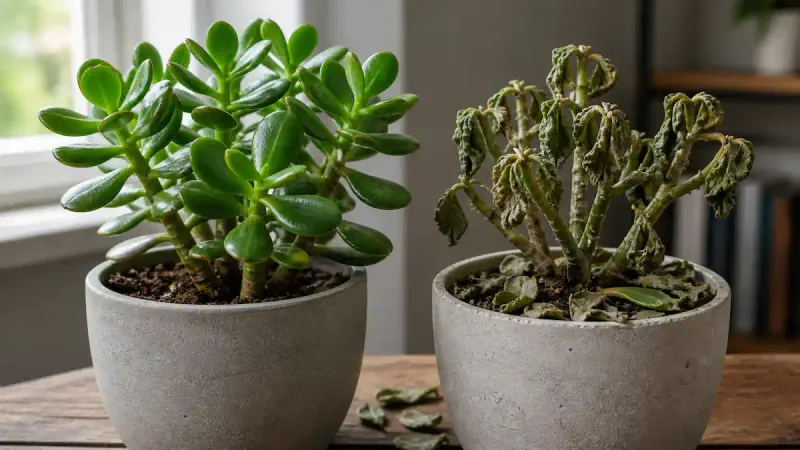
Dropped leaves are a clue, not a diagnosis. Both too much and too little water can cause them, so the rest of the plant has to tell the story.
Soft or mushy leaves, soil that stays soggy, soft stems, and brown or soft roots are warning signs consistent with excess moisture or root problems, as described by South Dakota State University Extension. Shriveled leaves and very dry soil may point to too little water instead.
Start by checking the soil with your finger, then confirm that water drains freely from the pot. Guidance on watering container houseplants from Virginia Tech stresses checking moisture rather than watering by habit.
If the soil stays soggy, slide the plant out and look at the roots. Healthy roots are generally firm, while UF/IFAS notes that overwatering can look like disease.
Trim away soft roots and repot into fresh, drier mix if needed.
Protect jade from drafts and cold glass
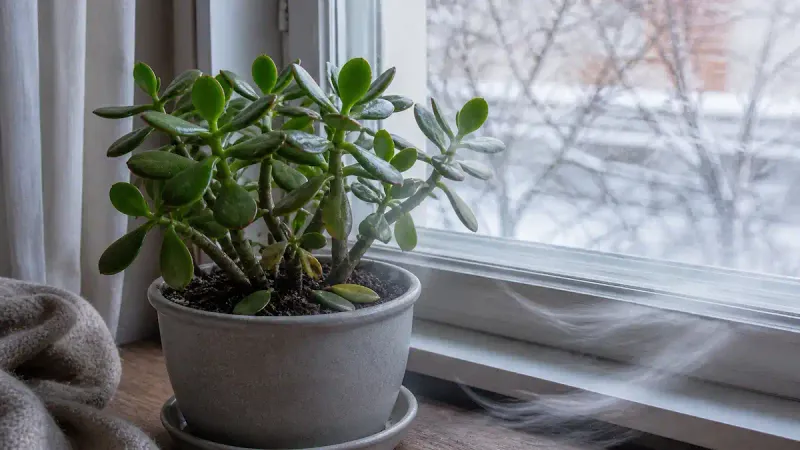
Jade is a tender plant, and Southern fall nights can swing from mild to chilly fast. Clemson Extension recommends protecting it from winter drafts and keeping leaves from touching cold windowpanes.
Its preferred range is 65 to 75°F by day and 50 to 55°F at night, which is guidance rather than a guarantee against leaf drop.
Freezing conditions can kill the plant, according to Wisconsin Extension, so bring outdoor jade inside before frost, as Penn State Extension advises.
Check where the pot sits. Pull it back from cold glass at night and away from door gaps.
Direct hot air from a vent can change conditions around the plant or dry the pot faster, so check the soil more often there. Heating has not been shown to be a common cause of jade leaf drop by itself, so treat it as one thing to look at.
Some lower-leaf loss comes with age
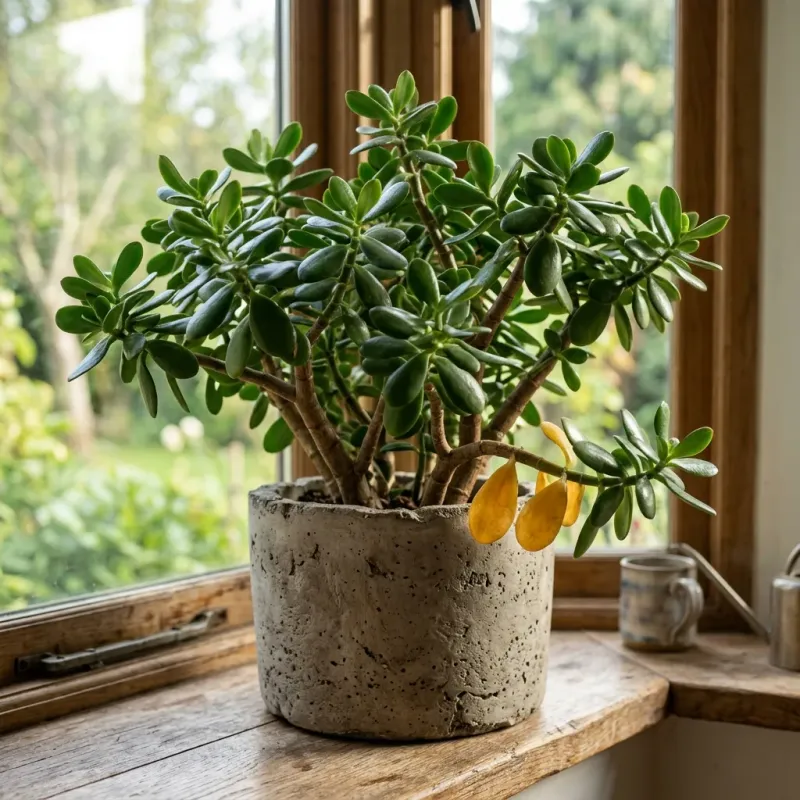
Age does matter. The New York Botanical Garden notes that jade plants naturally lose some of their lower leaves as they mature and form a more prominent, tree-like trunk.
Those leaves do not grow back.
The pattern is a clue. Slow loss of a few older leaves at the bottom, while the upper growth stays plump and green, fits normal aging.
Sudden or widespread shedding, or leaves dropping from all over the plant, is a reason to check light, watering, and temperature.
The two can happen together. A mature plant may shed old bottom leaves while also reacting to a fall move or a change in watering, as Iowa State Extension describes for plants adjusting indoors.
So the pattern points you in a direction, but it does not prove the cause.
Restore steady care and give the plant time
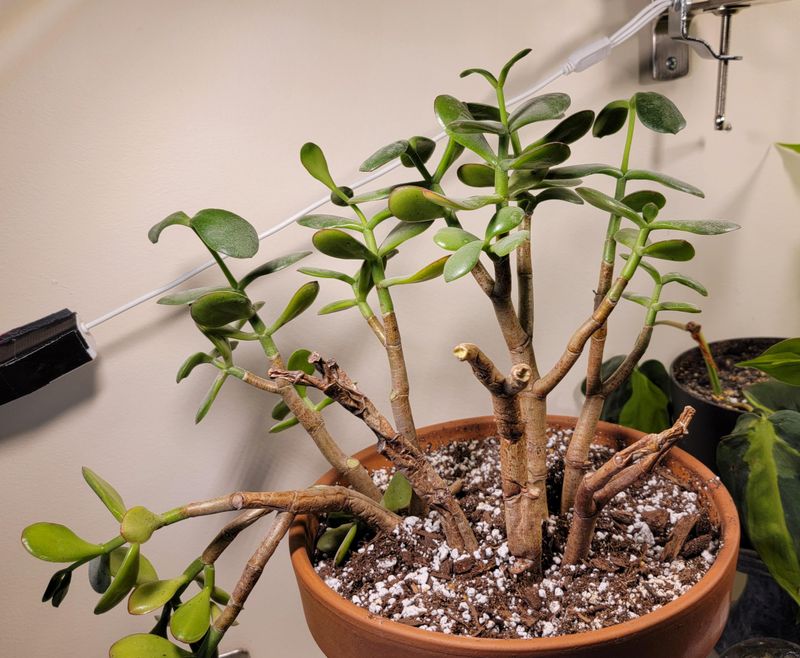
Start with what changed recently, then fix the clearest mismatch in light, watering, or temperature. Keep care steady afterward and watch the plant for a few weeks before adjusting again.
Patience matters. The New York Botanical Garden says leaves lost for reasons other than aging may be replaced slowly along bare limbs once conditions improve.
Not every bare stretch will refill, and adjustment after a move can take a month or two.
A jade plant rewards steady habits more than rescue attempts.