
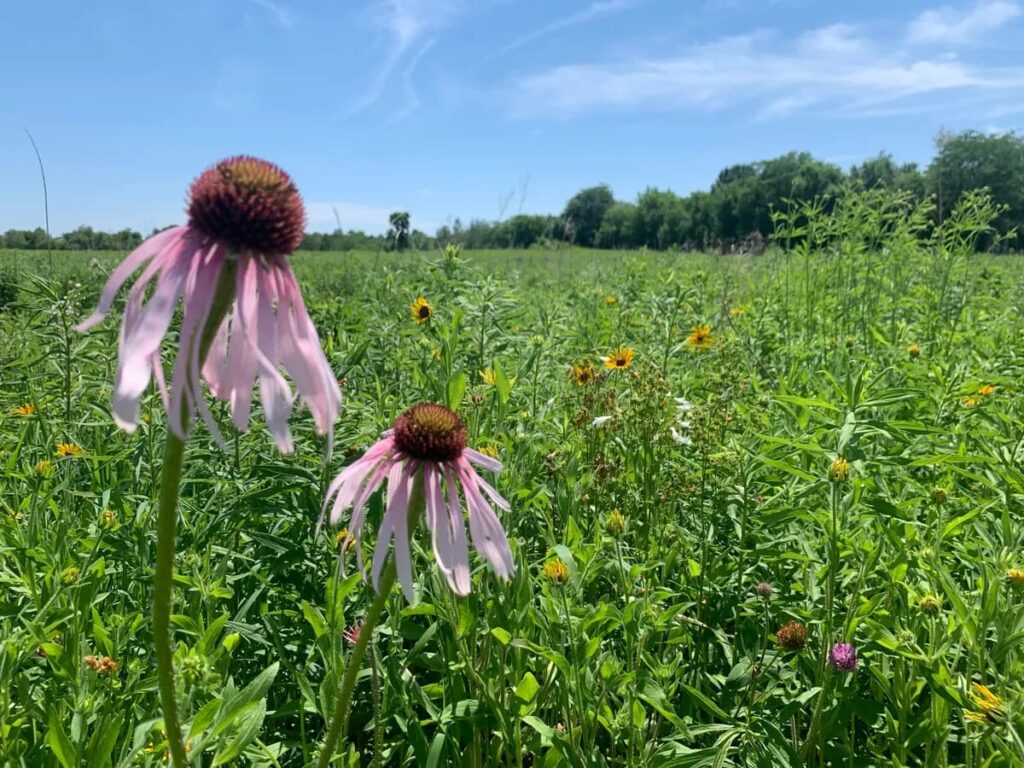
A west-facing yard in Texas takes the hardest hit of the day, when the sun drops low and blasts heat straight at your beds from about 2 p.m. until sunset. Many popular nursery plants wilt, scorch, or quit by July in that spot.
The good news is that a group of tough natives and adapted plants actually likes those conditions. Here are ten that can handle triple-digit afternoons, water restrictions, and rocky Texas soil while still looking good.
1. Texas Sage (Cenizo)
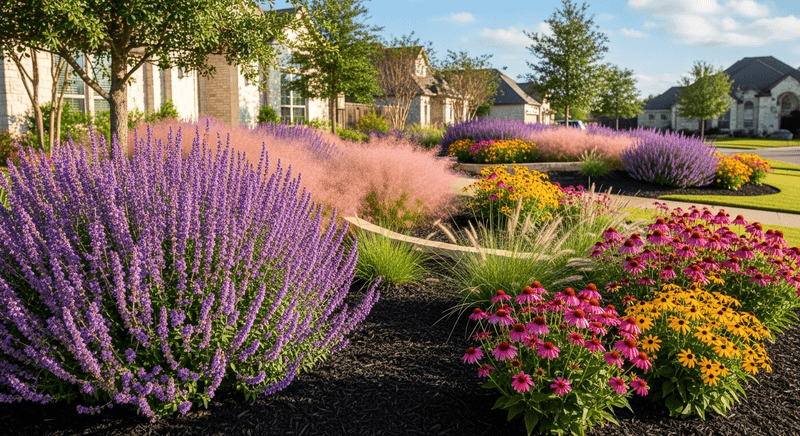
Ranchers used to joke that cenizo could forecast rain, and they were half right. The silver shrub often bursts into purple bloom right after a summer shower or a spike in humidity, which is why many Texans call it the barometer bush.
Those fuzzy gray leaves are the secret to its toughness. They reflect harsh light and help the plant hold moisture, so it shrugs off a west wall that radiates heat well into the evening.
Give it full sun and soil that drains fast, and then mostly leave it alone. Overwatering and heavy pruning are the two things most likely to hurt it, so skip the shearing into boxes and let it keep its natural, loose shape.
2. Blackfoot Daisy
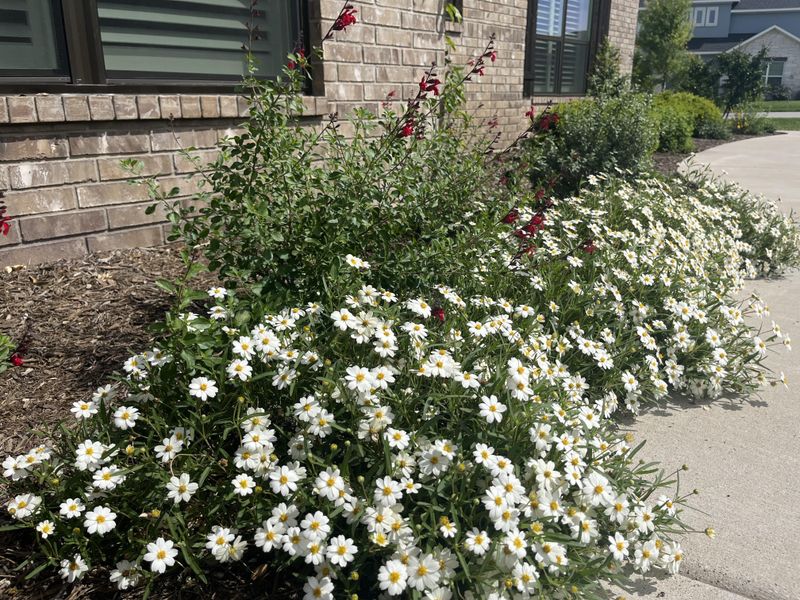
Small does not mean fragile. Blackfoot daisy grows only about a foot tall, yet it handles reflected heat from driveways and sidewalks that would cook most bedding plants.
The honey-scented white flowers show up from spring through fall, and the mounds stay neat without much help. It loves limestone, gravel, and poor soil, which makes it a natural fit for Hill Country and West Texas yards.
The catch is drainage. Plant it in a raised spot or among rocks, water sparingly once it settles in, and it may reward you for several seasons with almost no fuss.
3. Flame Acanthus
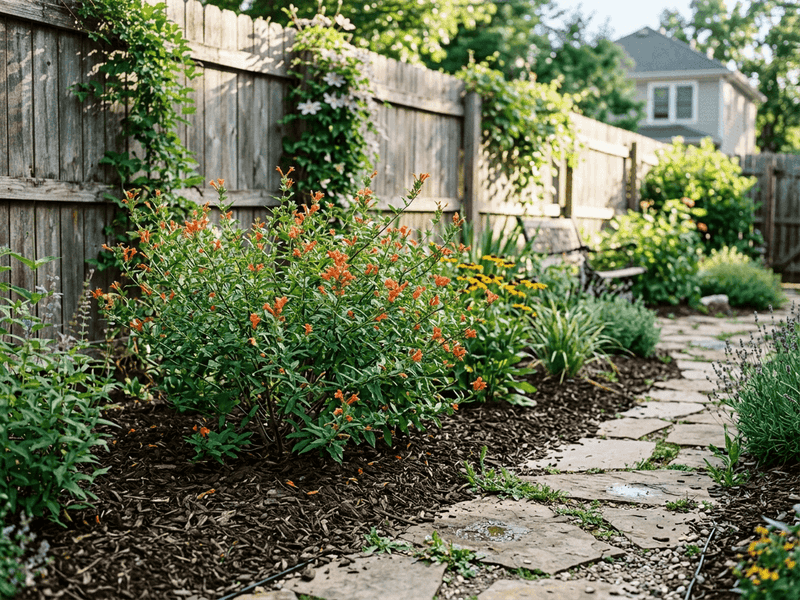
Picture a hummingbird zipping through your yard at 5 p.m. in August, right when the heat feels unbearable. Flame acanthus is often the plant that brings that scene to life.
Native to Texas and northern Mexico, it covers itself in skinny orange-red tubes from midsummer until frost. Hummingbirds and butterflies treat it like a fuel station during migration.
It grows three to five feet tall and handles drought once rooted. In late winter, cut it back hard to encourage fresh growth and a fuller bloom display the next summer.
4. Red Yucca
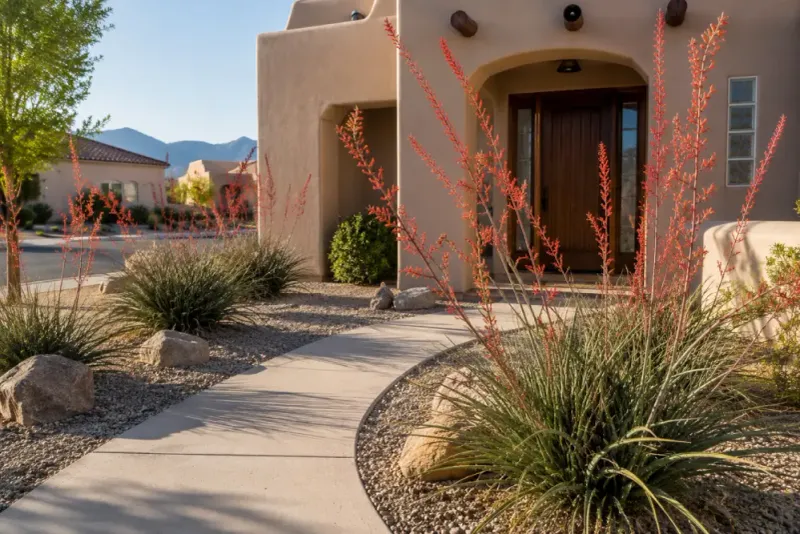
Funny thing about red yucca: it is not actually a yucca. It belongs to the Hesperaloe genus, though it does share that tough, grassy desert look.
The arching leaves stay soft at the tips, so there are no painful spines near walkways. From spring into fall, tall stalks of coral flowers rise several feet above the clump, and hummingbirds visit them steadily.
Once established, it can get by on very little water. It is a smart pick for hot corners near the street where hoses barely reach.
5. Lantana
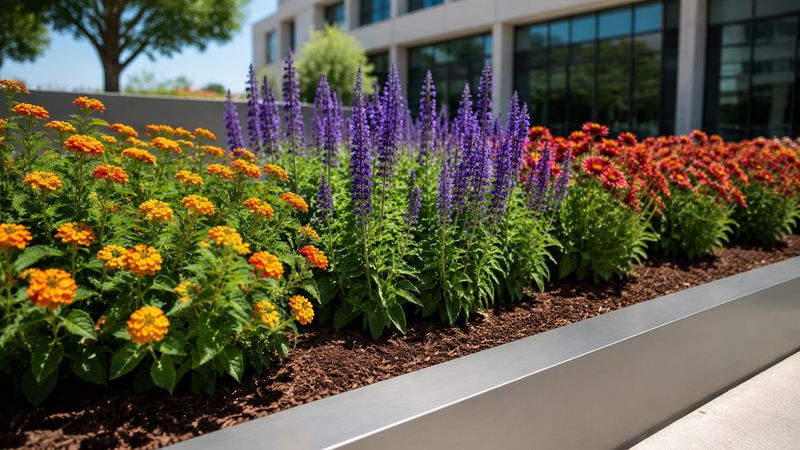
Ask almost any Texas gardener which plant never quits in summer, and lantana will come up fast. It seems to bloom harder the hotter it gets.
Native Texas lantana and its many hybrids flower in orange, yellow, pink, and purple clusters from spring until the first freeze. Butterflies flock to them, and deer usually leave the plants alone because of the strong-smelling leaves.
Plant it where it gets at least six hours of sun, and the west side is ideal. Keep in mind that the berries and leaves can be toxic to pets and kids, so place it thoughtfully.
6. Mexican Feathergrass
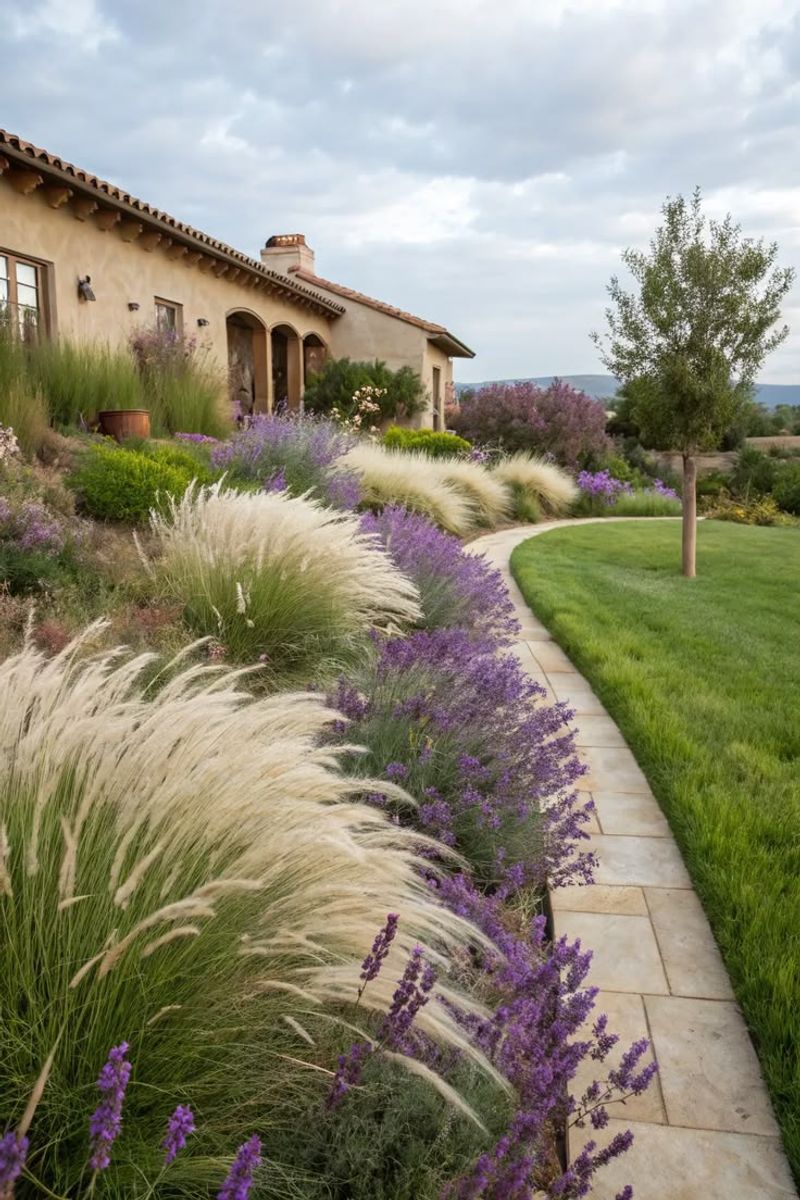
Late-day sun turns Mexican feathergrass into something special. When light hits it from behind, the fine strands glow gold and ripple with every breeze.
It forms soft, fountain-shaped clumps about two feet tall and stays happy in dry, rocky ground. That makes it a great filler between tougher shrubs in a west-facing bed.
One honest warning: it can reseed freely, especially in watered beds. Trim seed heads in early summer if you want to keep it in check.
7. Esperanza (Yellow Bells)
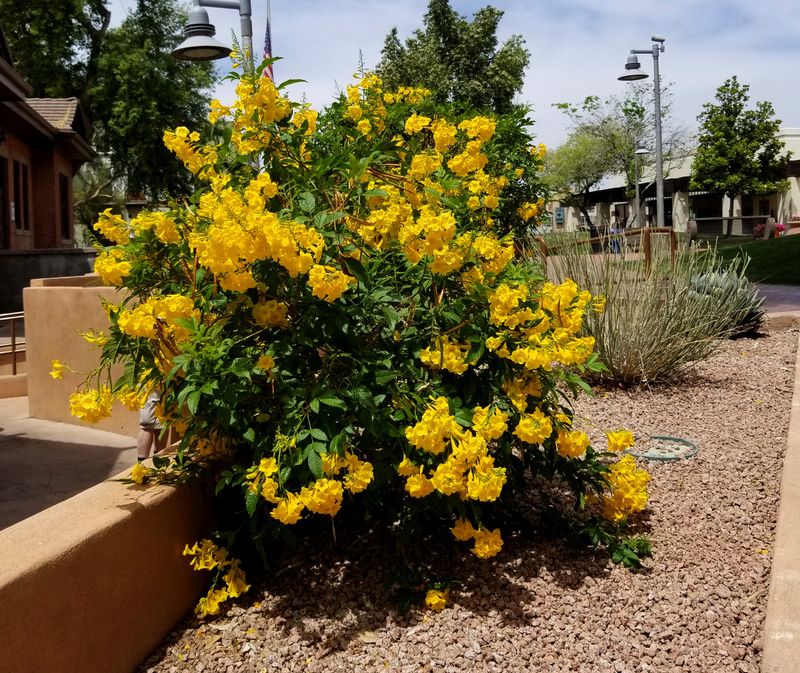
Esperanza means hope in Spanish, and the name fits. While other shrubs sulk in July, this one keeps pushing out clusters of bright yellow trumpet flowers.
It handles intense heat and reflected light from patios and walls with ease. Bees and hummingbirds visit often, and the glossy green leaves stay fresh-looking through the worst of summer.
In colder parts of North Texas it may die back in winter, but it usually returns from the roots in spring. Mulch the base well to help protect it.
8. Autumn Sage (Salvia greggii)
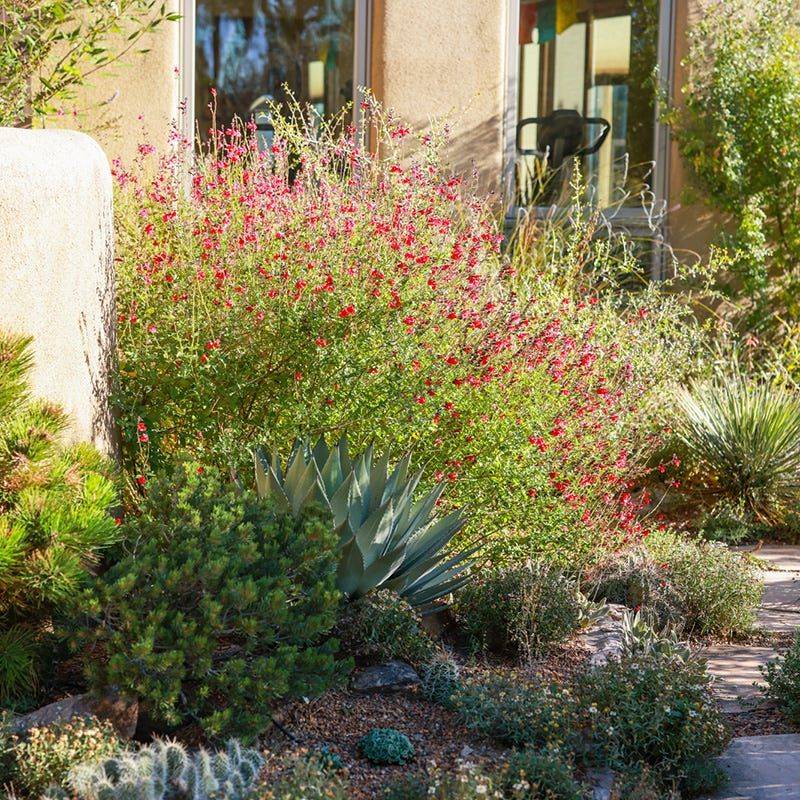
Here is a plant that blooms on and off for most of the year in much of Texas. Autumn sage gets its name from a strong fall show, but it flowers in spring and summer too.
The small, aromatic leaves hold up well to heat and drought, and deer tend to skip them. Colors range from classic red to pink, coral, purple, and white, so it is easy to match your house.
Give it a light trim after each bloom flush to keep it tidy. Good drainage keeps it healthy for years.
9. Desert Willow
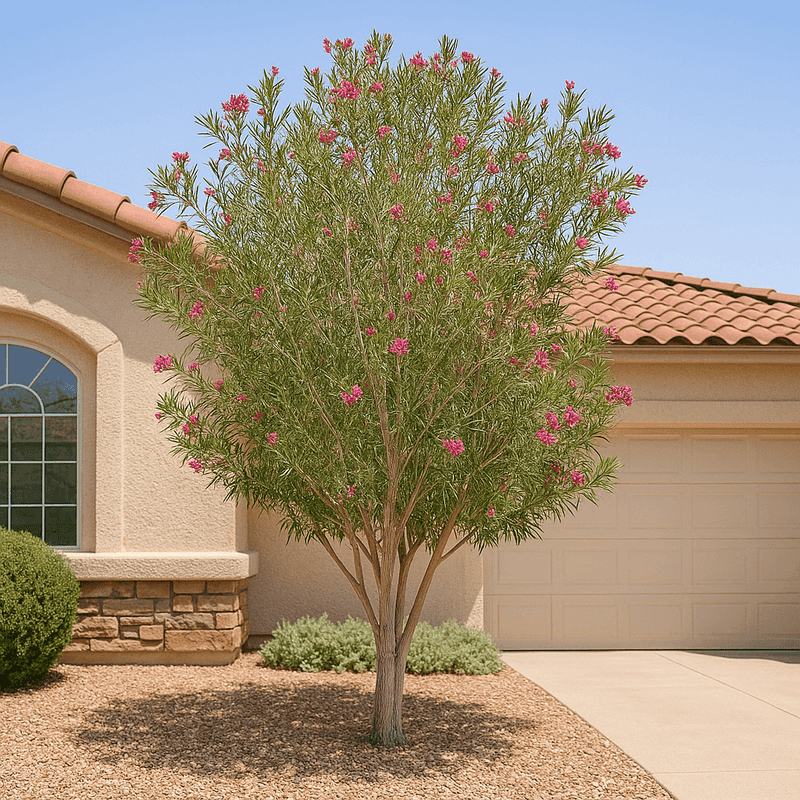
Shade on the west side can lower the heat hitting your windows, and desert willow offers it without demanding much water. It is a small native tree, usually 15 to 25 feet tall, with narrow leaves and a graceful shape.
From late spring through summer it produces orchid-like flowers in pink, purple, or white. Hummingbirds and bees love them.
Plant it where it gets full sun and soil that drains. It drops its leaves in winter, letting warm sunlight reach the house when you actually want it.
10. Purple Coneflower
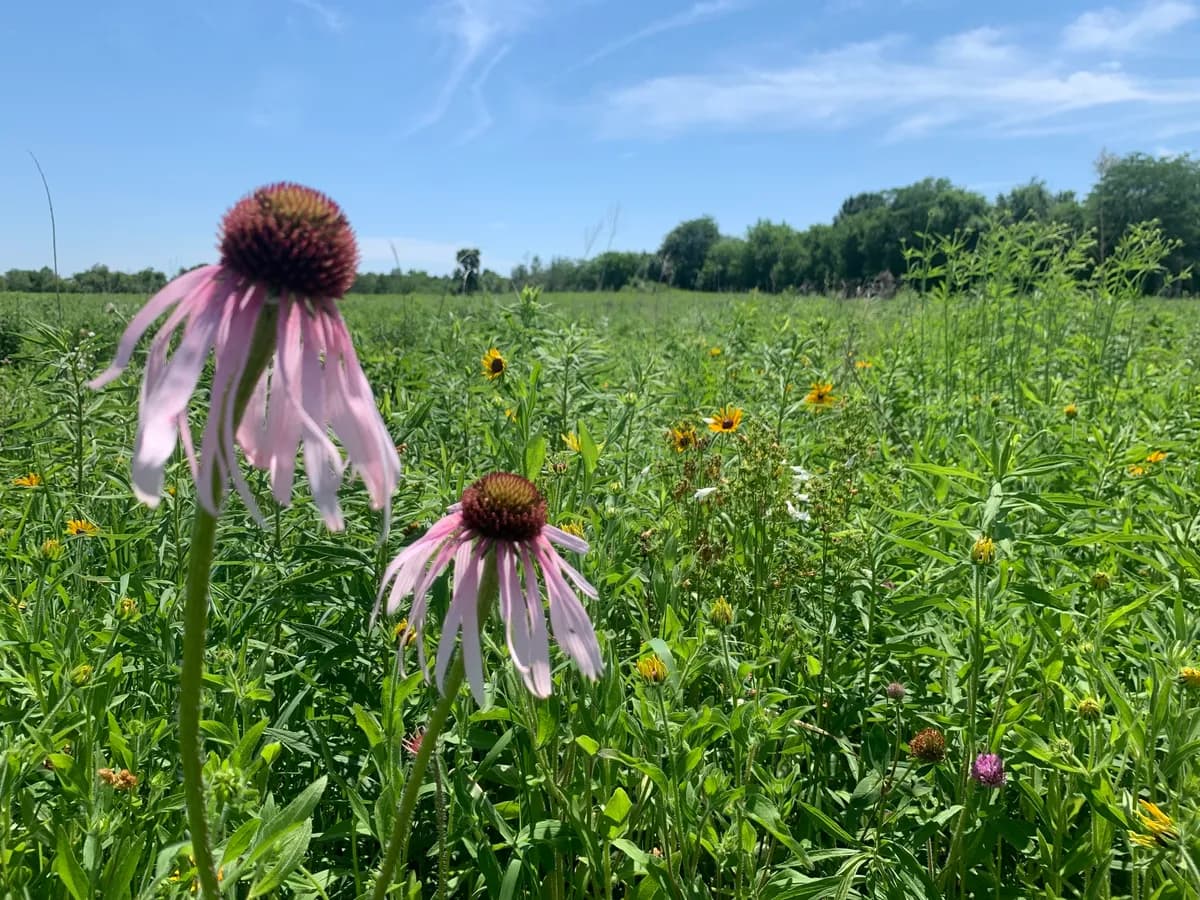
Monarchs passing through Texas often stop at coneflowers, and that alone earns this classic a spot on the list. The pink-purple petals and spiky orange centers look cheerful even on a 102-degree afternoon.
Purple coneflower is native to parts of Texas and handles heat well, though in the hottest, driest spots it may appreciate a deep soak during long dry spells.
Leave the seed heads standing in fall. Goldfinches and other birds will pick through them, turning your hot west bed into a small wildlife stop.