
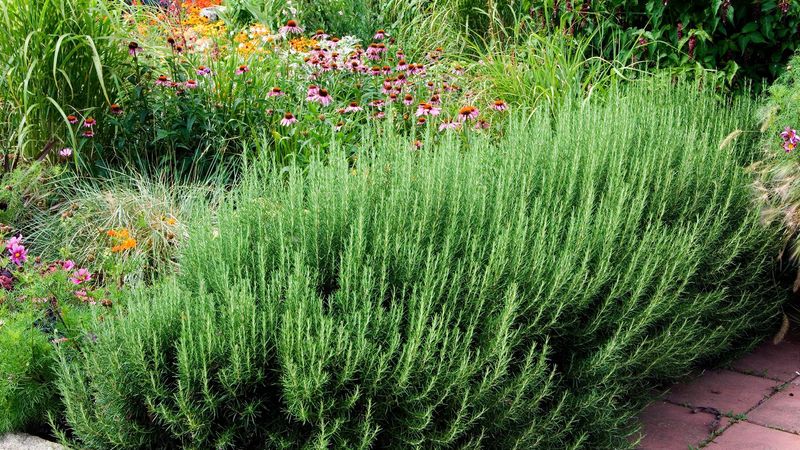
Fall beds and porch pots in North Carolina often default to mums, but there is another plant worth a look. Rosemary is an evergreen herb with leaves you can snip for the kitchen.
It comes with a catch, though, because its winter survival depends on where and how you plant it. Here is a realistic plan for deciding whether rosemary earns a spot in your yard.
Rosemary offers evergreen foliage and edible leaves
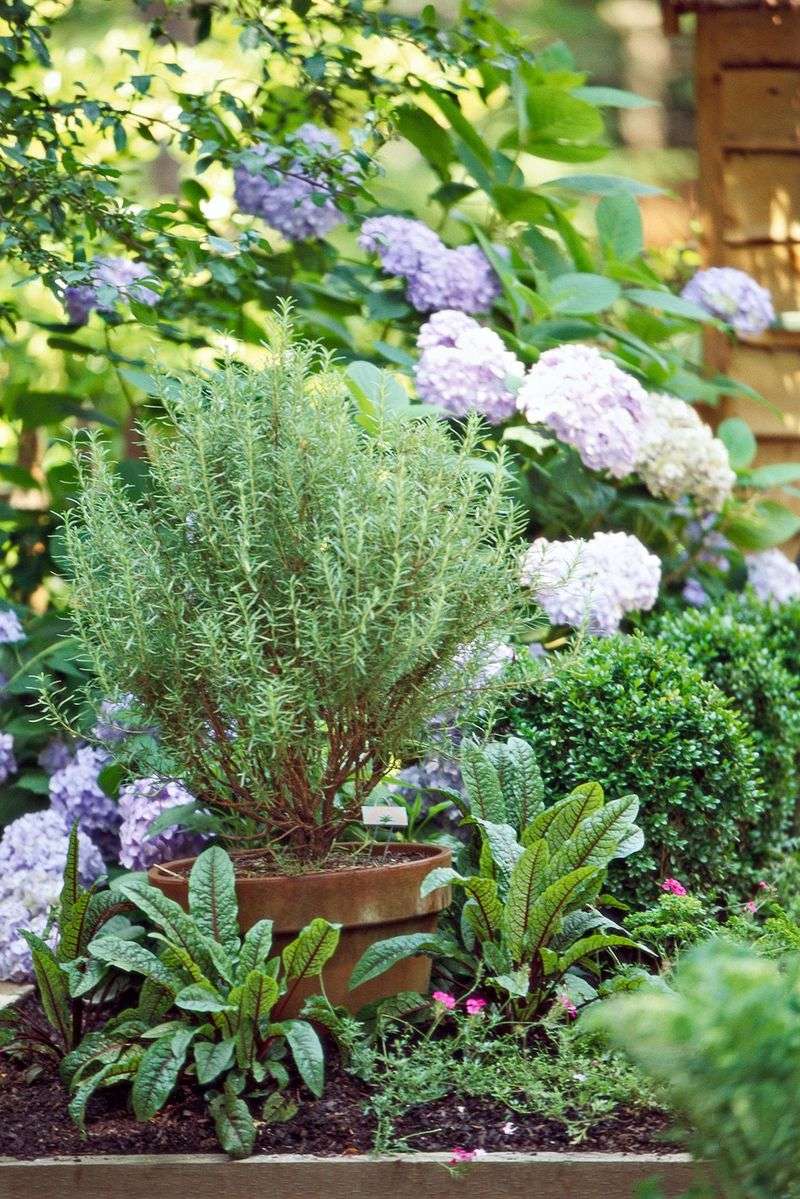
Picture a shrub that looks good in November and also ends up in your roast chicken. That is the appeal of rosemary (Salvia rosmarinus).
NC State’s Plant Toolbox describes it as an evergreen shrub with year-round foliage, and it works in containers, borders, and other sunny garden settings.
The leaves are narrow, aromatic, and edible. You can snip a few sprigs for potatoes, bread, or grilled meats without wrecking the plant’s shape.
Small flowers may show up too, which gives pollinators a snack.
Rosemary also brings structure. Mums bloom in a burst and then fade, but rosemary holds a woody, shrubby form that can anchor a bed or frame a porch pot.
For a front walk or a kitchen-door planting, that mix of looks and flavor is a real payoff.
Keep the benefits in perspective, though. Evergreen leaves describe how the plant looks when it is alive, not how well it handles a hard freeze.
Foliage that stays on the stems does not prove the roots will make it through a North Carolina winter.
Think of rosemary as an option with its own strengths: edible leaves, ornamental structure, and a preference for sun. The next sections cover where it can go wrong, so you can plant it with open eyes.
Garden mums can return with proper care

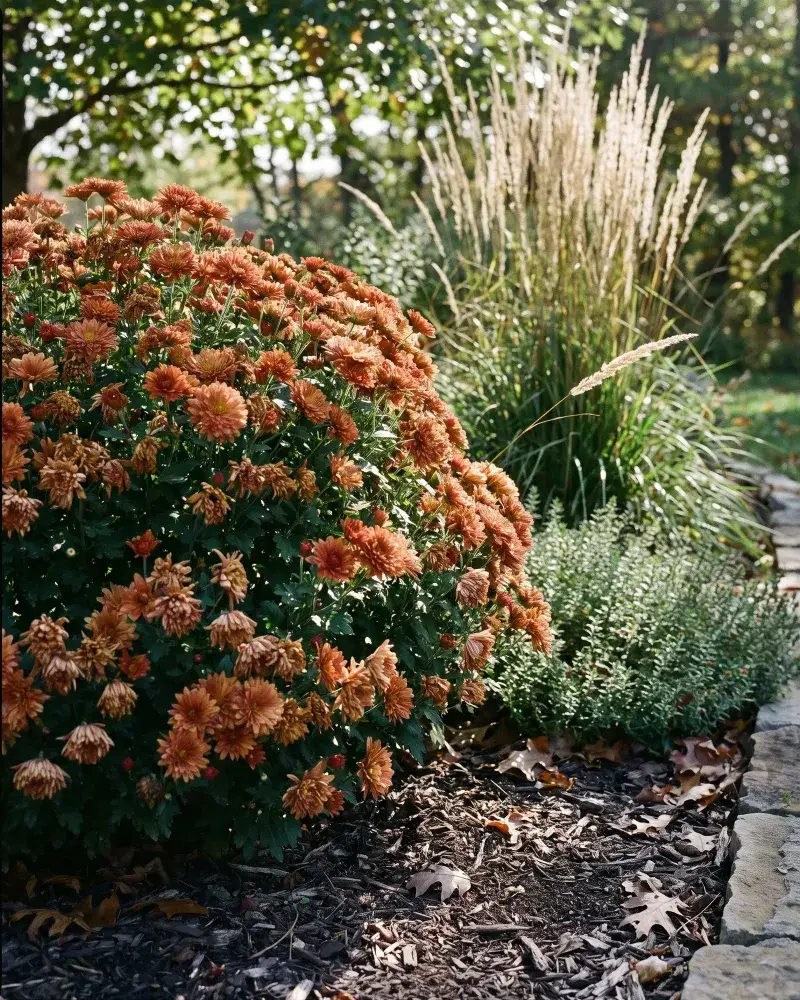
Many people treat mums as a disposable fall decoration, but that is not the full story. North Carolina Cooperative Extension in Onslow County describes garden mums as perennials in our area that may come back for years when they are cared for properly.
The key words are garden mums. This guidance is about the type sold for landscape planting, so do not assume every potted fall display will behave the same way.
Some mums get tossed after the season, and some get a second life, depending on type and care.
Extension recommends a sunny, well-drained site. Mums sitting in soggy ground tend to struggle, so pick a spot where water does not pool after rain.
Timing matters too. For containerized mums, the guidance is to plant them in the ground in early to mid-November, before frost.
That is later than many people expect, so a pot on the porch may need to wait for its move into the bed.
Finally, add mulch. A layer over the planting area is part of the recommended care.
This sets a fair comparison. Mums can reward patience and good siting with repeat blooms.
Rosemary offers something different, which we will sort out next.
Rosemary’s winter survival depends on location
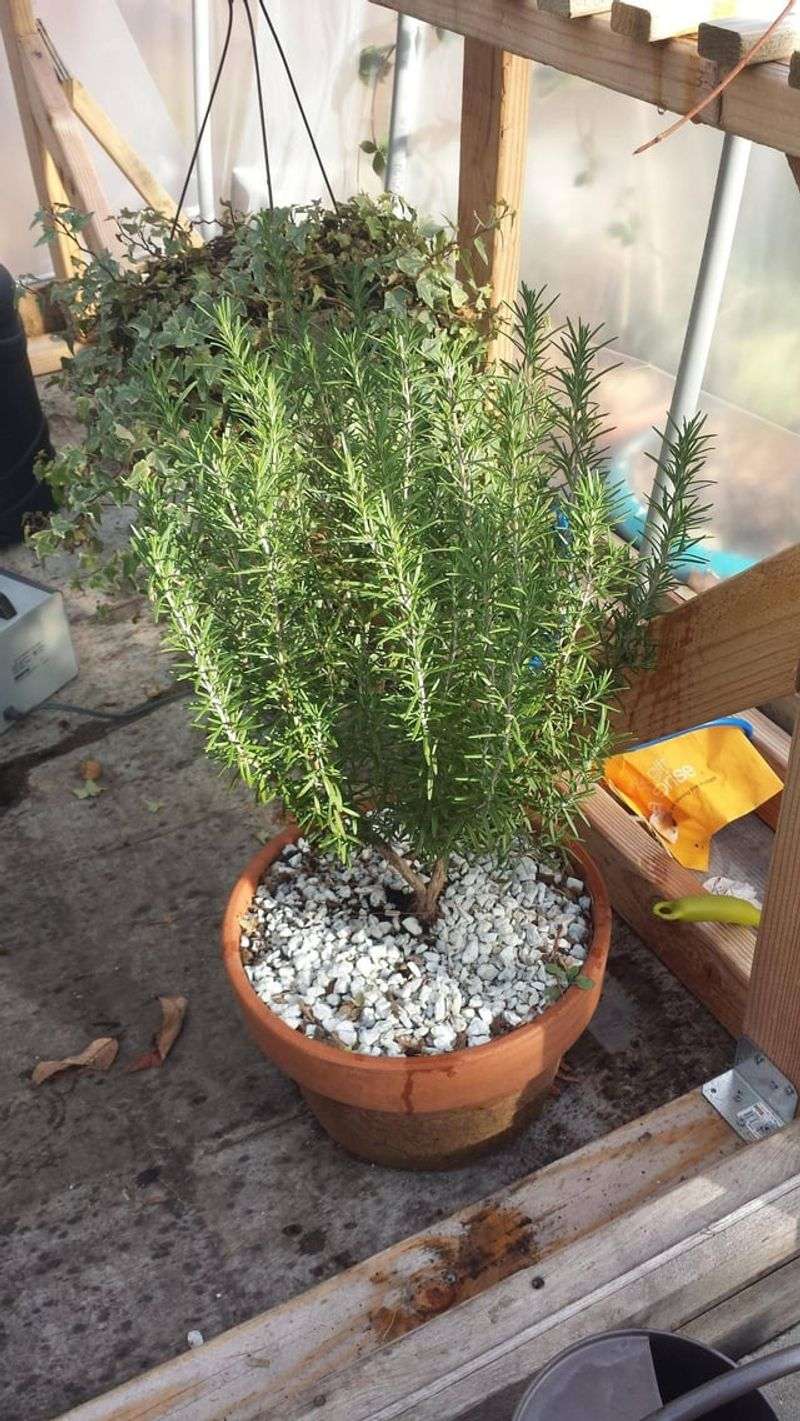
Ask five North Carolina gardeners about rosemary in winter and you may get five different stories. NC State’s herb winterizing guide lists rosemary as normally hardy in the Piedmont and Coastal Plain.
The same guide also calls it a tender perennial that is not reliably winter-hardy.
Those two statements fit together once you look at the map. A plant can be listed as normally hardy in a region and still be lost in a bad winter.
The word normally leaves room for harsh years.
Conditions vary a lot across the state. NC State’s nursery winter guidance notes that western North Carolina is generally colder than the Piedmont and Coastal Plain.
It also points out that elevation, slope, air drainage, and nearby water all affect local temperatures.
So your own yard matters. A spot at the bottom of a slope, where cold air settles, can be harsher than a bed near a sunny south-facing wall.
Mountain gardeners should be especially cautious, since rosemary is not on the normally hardy list for that region.
A light frost does not tell you how the plant will handle a severe or prolonged freeze. The guide recommends protection for vulnerable plants, so watch the forecast and be ready to act.
Treat each winter as a test, not a promise.
Choose a sunny site with sharp drainage
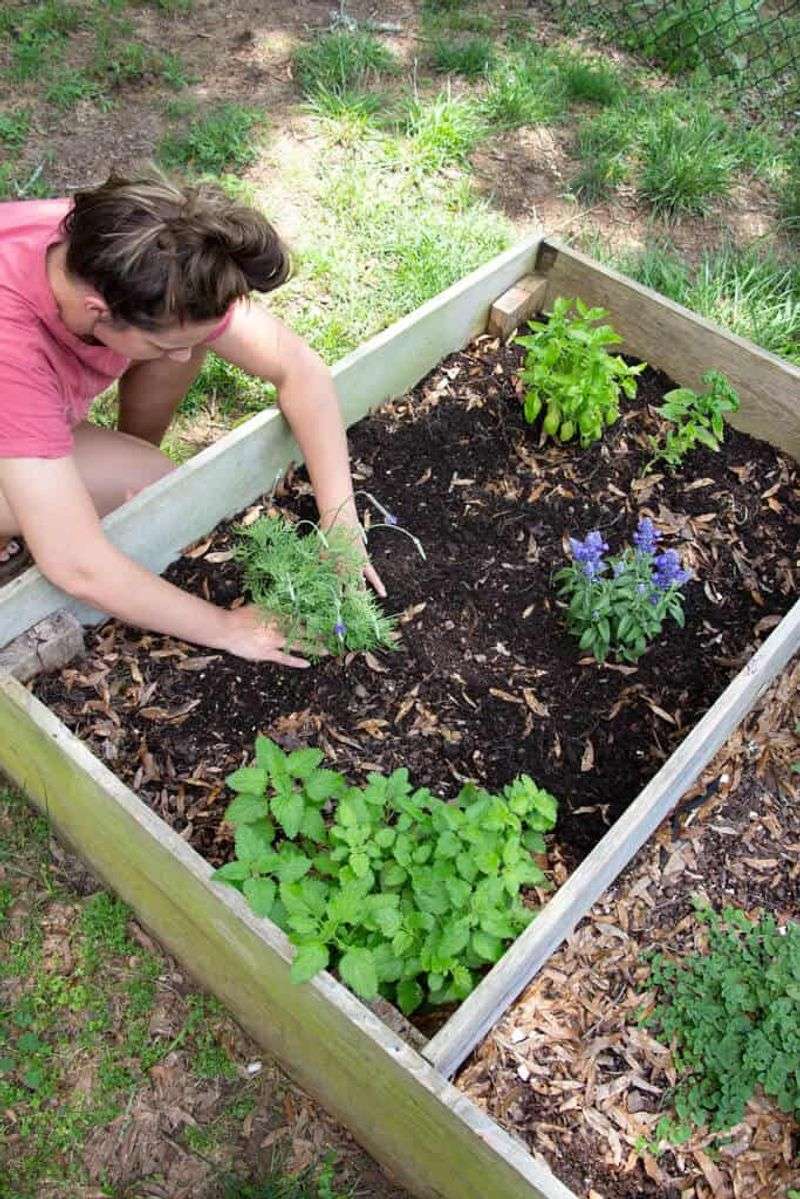
Where you plant rosemary may matter more than which plant you buy. Give it full sun and soil that drains sharply, meaning water moves through quickly instead of sitting around the roots.
NC State’s winterizing guide warns that excessively wet soil can reduce rosemary’s winter hardiness. In other words, a heavy, soggy bed can make a cold snap more damaging.
The guide suggests good drainage, including raised beds where appropriate.
Many North Carolina yards have dense clay, especially in the Piedmont. If yours holds water after a rain, a raised bed is one option to consider.
It is a tool for drainage, not a requirement and not a guarantee of survival.
Watering habits count too. NC State’s Plant Toolbox notes that overwatering commonly causes rosemary to decline or die and flags root rot as a problem.
Many gardeners assume more water is kinder, but with rosemary it often backfires.
A simple test: after a heavy rain, check the planting spot a few hours later. If water is still standing, pick a different place or improve the drainage first.
A bed that dries out between rains is a better fit.
Do not use extra watering as a freeze strategy, either. Dry-leaning roots in drained soil are the goal.
Above-ground pots expose roots to more cold
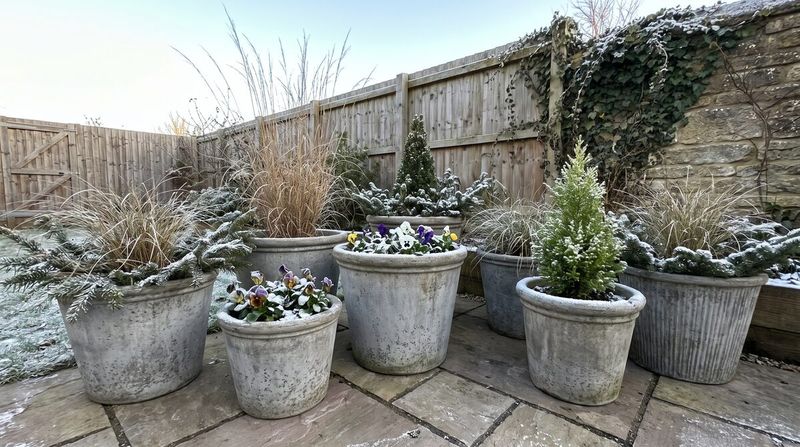
A rosemary in a pretty pot by the front door looks great, and it also carries more risk. Ground soil acts like a blanket for roots.
A pot sitting above the ground does not get that benefit.
NC State’s guidance on preparing nursery plants for winter says plants in above-ground containers do not receive the soil’s insulation and can be less hardy than the same plants growing in the ground. Cold can reach the roots from the sides and the bottom of the container.
That means a rosemary rated as normally hardy in your region may still be more vulnerable on a porch than in a bed. A pot on an open deck, fully exposed to wind, faces more cold than one tucked in a sheltered corner.
Account for that added exposure when you pick a container and a location. Think about how much cold the roots will face and whether you are willing to lose the plant in a hard winter.
Treat potted rosemary as a seasonal gamble rather than a sure thing.
Do not assume that bringing it indoors solves everything. NC State’s plant profile notes that overwintering rosemary indoors can be difficult.
Whichever way you go, set modest expectations and enjoy the leaves while you have them.
Common sage offers a different hardiness profile
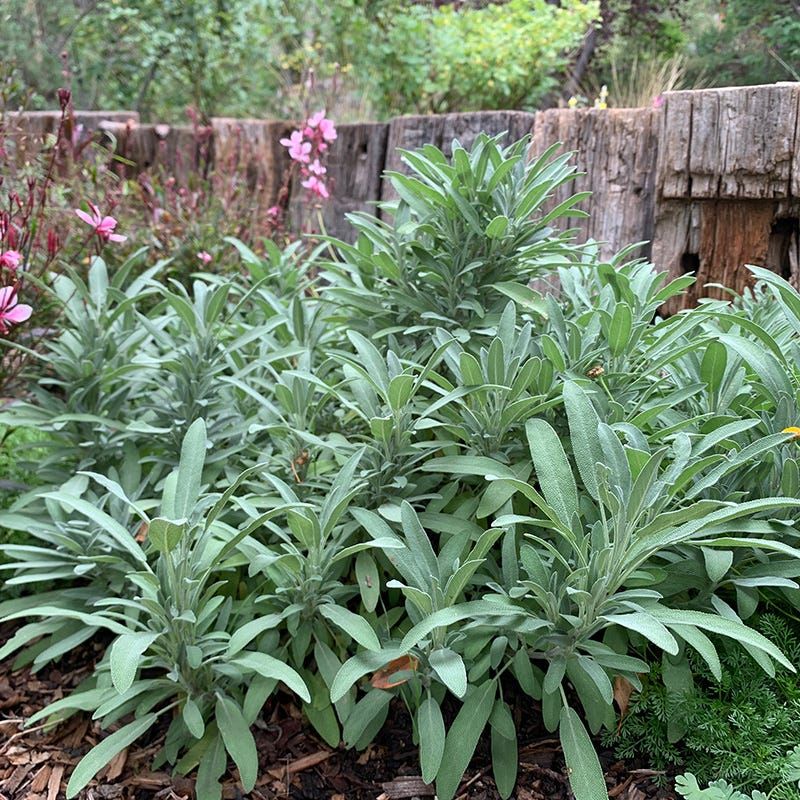
If listed winter hardiness is your top concern, common sage (Salvia officinalis) deserves a look. NC State’s winterizing guide lists it as normally hardy in the Mountains, Piedmont, and Coastal Plain.
That covers more of the state than rosemary’s listing does.
For a mountain gardener, that difference could be the deciding factor. Sage is a culinary herb with soft, textured leaves, and its NC State plant profile gives the basics on how it grows.
Here is the trade-off. The sources do not show that sage offers the same year-round evergreen look or ornamental form that rosemary does.
So if you want that sculpted, shrubby presence in winter, sage may not deliver it.
Think of it as a different job description. Rosemary is the choice for evergreen structure when your site and winter allow it.
Sage is a herb to consider when the hardiness listing matters more than appearance.
As with any plant, normally hardy is not a guarantee. A harsh winter, a cold pocket, or a soggy bed can still cause losses.
Pick the herb that matches your region and your priorities, and keep the drainage advice in mind either way.
Choose rosemary for its benefits, not a promise
Rosemary suits gardeners who want evergreen structure and leaves for the kitchen, as described in NC State’s plant profile. Its winter survival depends on your region, your microclimate, and the winter you get, per NC State’s winterizing guide.
It is less certain still in an exposed pot.
Garden mums, meanwhile, may return with proper care. Plant both if you like, and judge each by its own payoff.
One cold night will tell you more about your yard than any plant tag.