
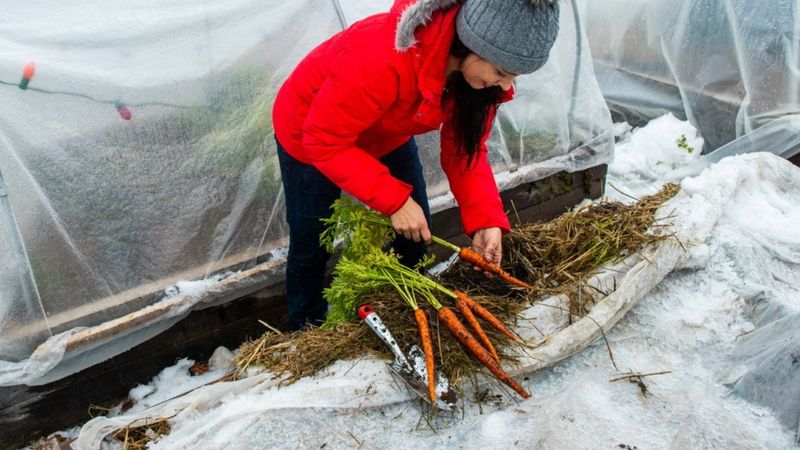
Pulling a crisp carrot from the cold garden in winter feels like a small victory. Plenty of gardeners swear that waiting makes carrots sweeter, and a blanket of straw sounds like the perfect helper.
The real story is a bit more careful than that. Here is what research shows, and how Southern gardeners can decide if a mulched winter bed makes sense for them.
Cold may affect sweetness, but it is not a weekly countdown
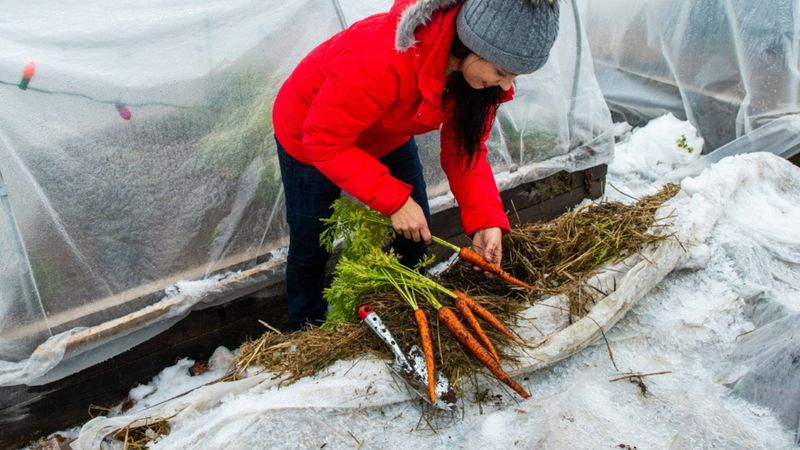
Cold and carrot sweetness are linked, but the link is narrower than the popular saying. In a study of selected high-starch carrots, roots stored at about 36°F lost starch and gained sucrose, and taste testers found them sweeter than freshly harvested roots.
Notice what that study did not test. The carrots were already harvested and sitting in cold storage.
They were not growing in a garden bed under straw. Carrots are also generally low in starch, so the starch-to-sugar story applies mainly to certain varieties that carry more of it.
Later harvest can help in some years. A multi-year study found sugars tended to rise as harvest was delayed.
But in one season, severe frost injury came with lower sugar and lower dry matter.
So there is no reliable week-by-week sweetness meter. Variety, weather, and frost damage all change the outcome, and waiting longer can sometimes backfire.
Mulch can protect the bed, but research has not shown it sweetens carrots
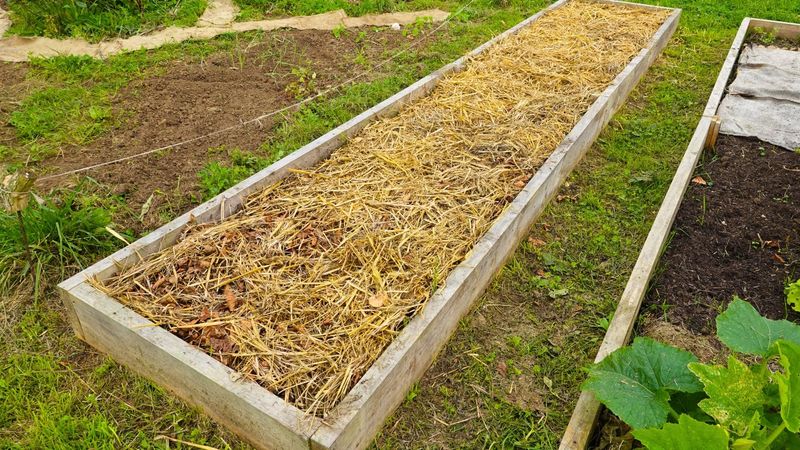
Straw earns its place in a winter carrot bed for practical reasons. UF/IFAS guidance on mulching describes mulch as a way to keep soil and roots warmer in winter.
That insulation can help a bed stay workable.
Maryland Extension adds that fall-planted carrots can be harvested through winter when covered with straw or shredded leaves before the ground freezes. The benefit there is access, not flavor.
None of the cited guidance presents mulch as a sweetness treatment. Research has not shown that straw triggers sugar buildup, so treat any sweeter taste as a possible bonus rather than something the mulch delivers.
Mulch also has limits. If the soil freezes hard, digging gets difficult no matter what covers it.
A straw layer may soften a cold spell, but it is not a guarantee for every winter.
Winter timing depends on where you garden
Florida and Texas do not share one carrot calendar. UF/IFAS lists planting windows of August through March for North and Central Florida, and September through March for South Florida.
Texas differs by region. Texas A&M AgriLife Extension says South Texas gardeners can plant from July through February, with carrots grown all winter in many areas.
For other parts of the state it recommends planting in August for fall.
Read those windows as a guide for fall and winter growing in specific areas. They do not promise that every bed can sit harvestable all winter.
Before you plan on a winter pantry, check your own region’s window, then think about your average winter lows and whether your soil ever freezes. A Gulf Coast bed and a North Texas bed may need very different plans.
Cover the bed before the ground freezes
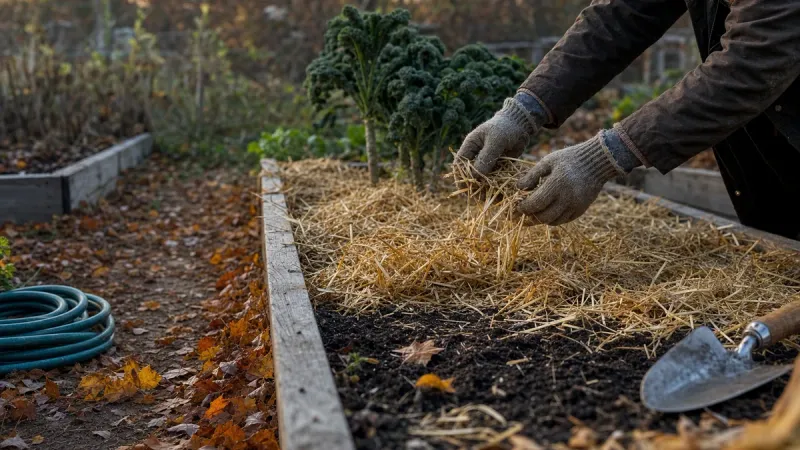
Timing matters more than anything else with mulch. Maryland Extension advises applying straw or shredded leaves before the ground freezes if you want to keep the bed harvestable through winter.
Once the soil is frozen solid, the chance to insulate it has passed.
In much of the South, that moment may come late or not at all. If your winters rarely freeze the soil, you may not need a heavy cover, and mulch can simply help moderate soil temperature and moisture, as UF/IFAS notes.
The sources reviewed do not give a set mulch depth, so avoid chasing a magic number. Use enough to cover the soil surface and the root shoulders, watch how your bed responds, and adjust.
Think of the cover as protection, not a flavor booster. Check the forecast, and spread it ahead of your first hard freeze.
Harvest roots at size, before frozen soil stops the work
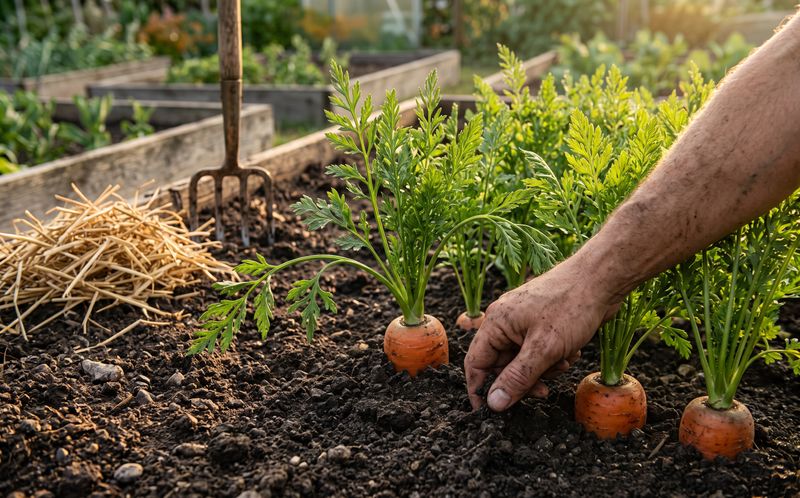
Let the carrot, not the calendar, tell you when to dig. Maryland Extension suggests harvesting when roots reach the suitable size for the variety.
Check your seed packet for days to maturity and expected root size.
Carrot tops tolerate less cold than roots do, so ragged or browned foliage does not always mean the roots are ruined. But that is no license to ignore repeated freezes or root injury.
Frozen ground can make digging impractical, so pull a few test carrots before a hard freeze arrives.
When you harvest, skip the tug-of-war. UC IPM guidance points to loosening the soil first.
A hand fork or trowel breaks roots less often than yanking on the leaves.
Harvest in batches if you like, taking what you need and leaving the rest, but keep an eye on size and soil conditions rather than waiting for a sweetness boost that may not come.
Watch for overmature roots and straw-associated rodent risk
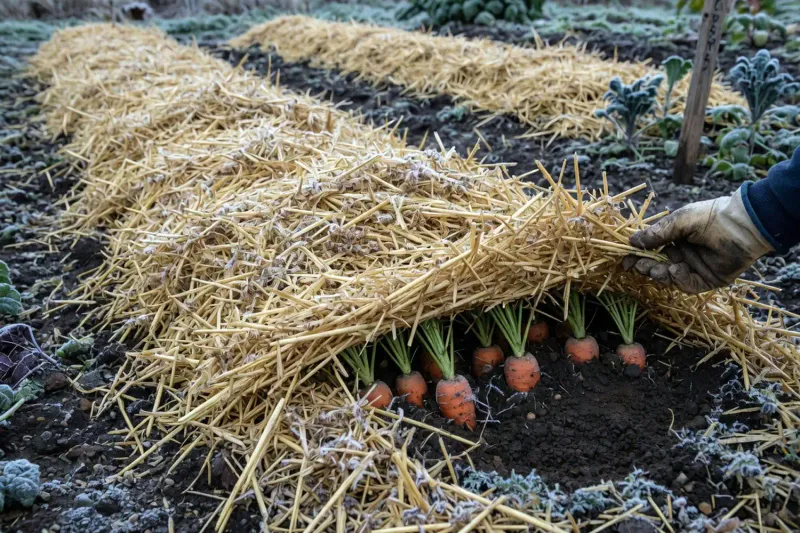
Leaving carrots in the ground has a cost. UC IPM warns that roots left too long can turn tough or crack, and UF/IFAS says carrots grown past their prime can become woody.
A tough core is a sign you waited too long.
Straw can bring another tradeoff. Virginia Cooperative Extension cautions that straw can attract rodents, and UC IPM notes that voles eat carrots and other root vegetables.
That does not mean damage is certain. Use clean straw, check the bed now and then for tunnels or gnawed roots, and harvest promptly if you spot trouble.
A quick test dig every week or two tells you whether roots are still tender and whether anything has been feeding below the mulch.
Treat a mulched bed as a harvest window, not a sweetness guarantee
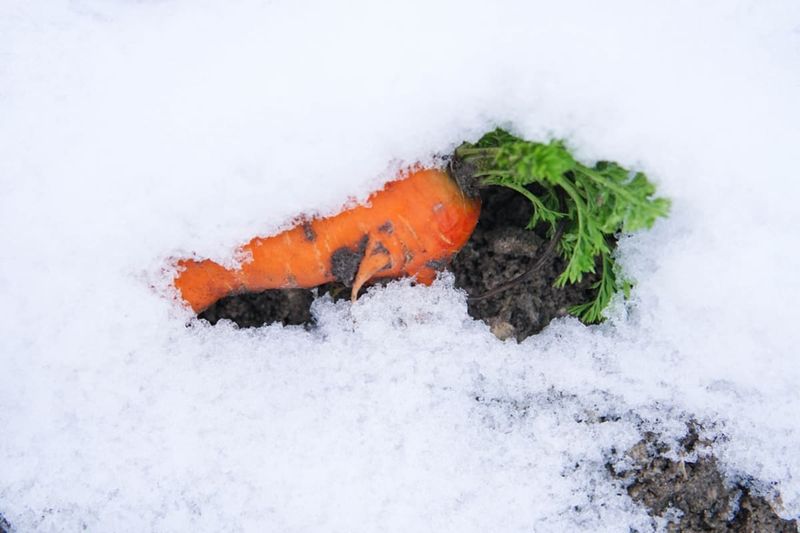
Here is the simple rule: plant within your region’s window, mulch before a hard freeze if your soil freezes, and dig by root maturity. Maryland Extension supports covered carrots as a winter harvest option in suitable conditions.
Sweetness is a maybe. The cold-storage result from selected high-starch carrots does not prove that straw or each extra week improves flavor in your garden.
A mulched bed is a pantry with a closing time, so use it while the roots are at their best.