
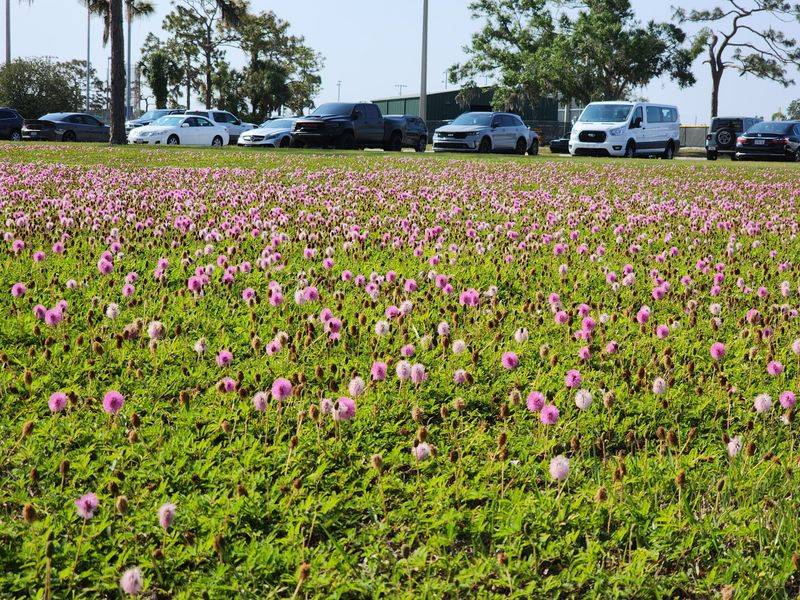
Florida lawns take a lot of water, mowing, and money. Two native groundcovers, sunshine mimosa and frogfruit, can replace some turf in the right spot.
They are different plants with different strengths. Before you plant either one in a yard your neighbors can see, you also need to know what Florida law says and what your HOA may still require.
Two Florida-native groundcovers to consider
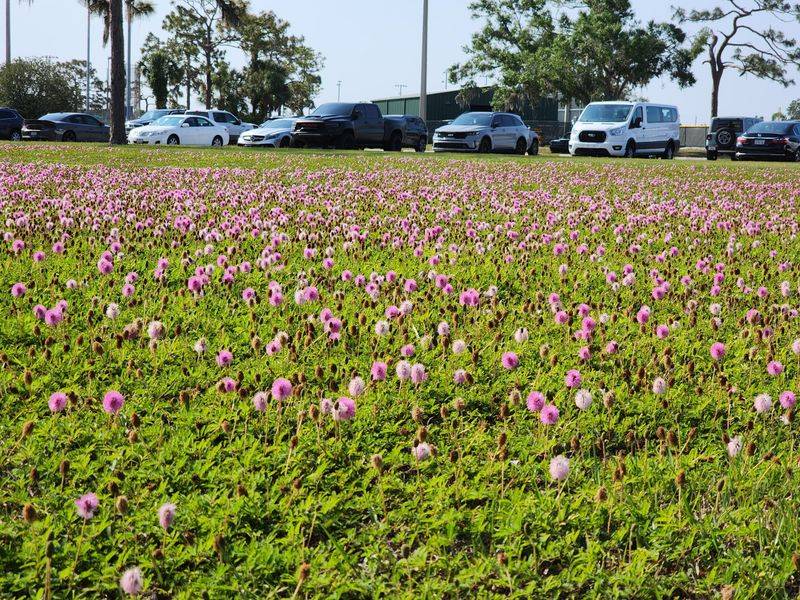
Sunshine mimosa (Mimosa strigillosa) and frogfruit (Phyla nodiflora) often show up in the same conversations about Florida lawn alternatives. They are not the same plant, though, and they do not behave the same way.
Treating them as one groundcover leads to poor planting choices.
UF/IFAS describes sunshine mimosa as a low, fast-spreading Florida native with pink flowers that attract butterflies. UF/IFAS also lists frogfruit as a native that forms spreading mats and hosts several butterfly species.
Each can work as a lawn alternative or as a companion planted alongside turf, with trade-offs that the next sections cover.
The goal here is not to claim that every Florida yard should switch. The better question is whether one of these plants fits a particular patch of your yard.
A sunny side strip that nobody walks across is a very different case from a path the kids run along every afternoon.
Native status also does not settle the question. A native plant in the wrong spot, or one that is poorly maintained, can look ragged and cause headaches.
Matching the plant to the site comes first, and checking your community rules comes before any shovel goes in the ground.
Sunshine mimosa brings flowers and drought tolerance, with limits
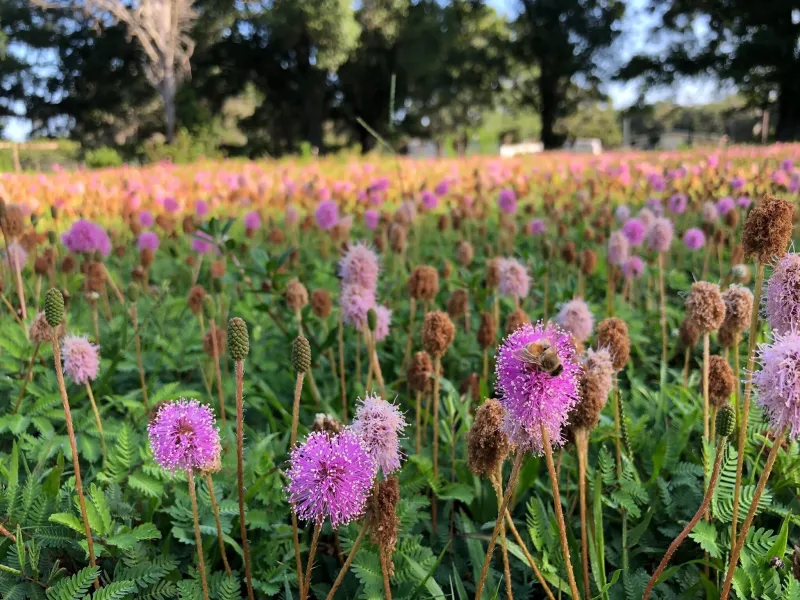
Few groundcovers announce themselves like sunshine mimosa. It grows low and spreads quickly, and it produces fuzzy pink flowers that butterflies visit.
According to UF/IFAS, it also serves as a larval host plant, so it does more for wildlife than plain turf.
Once established, sunshine mimosa is drought tolerant. UF/IFAS summarizes a study in which it showed greater drought tolerance and lower irrigation needs than turf-only lawns.
That comparison covers sunshine mimosa against turf-only lawns, so it is no promise of a specific drop in your water bill. New plantings still need regular watering while the roots settle in.
The limits matter just as much. Sunshine mimosa tolerates light traffic, which means an occasional walk across it, not a daily play zone.
It is also not evergreen, so expect it to lose leaves and look thin in cooler months.
It spreads fast, and it can wander into places you did not plan for, such as beds, edges, or a neighbor’s lawn. You can mow or prune it to keep it in bounds.
Plan for that bit of upkeep, and think about edging or a clear boundary before planting. If you want a tidy, evergreen look all year, this plant may disappoint you.
Frogfruit tolerates varied moisture but has traffic limits
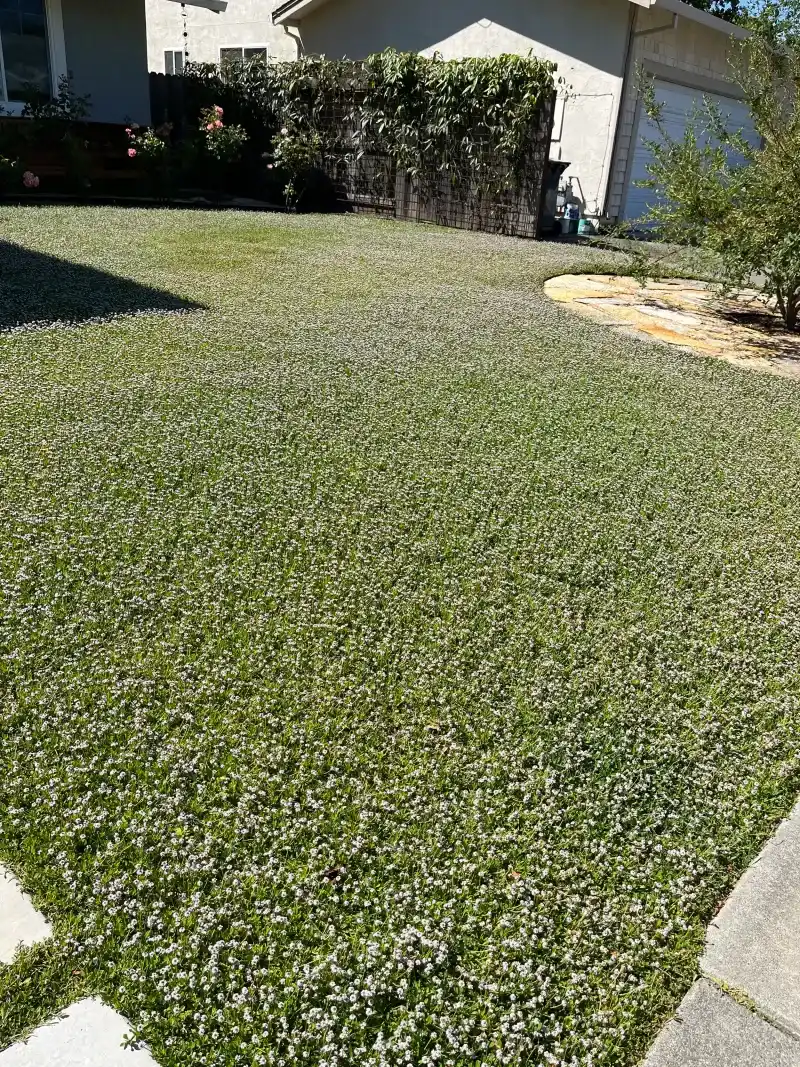
Frogfruit grows as a spreading mat, covering ground with small leaves and tiny flowers. UF/IFAS notes that it flowers from roughly May through October and hosts several butterfly species.
It grows in full sun or partial shade, and it handles both dry and moist conditions, which helps in yards with uneven drainage.
Maintenance is simple but not zero. UF/IFAS recommends mowing occasionally at 4 inches or higher.
Frogfruit may go dormant in winter or during drought, and freezes can damage it, so the mat may look brown or thin for a while before it recovers.
Traffic is where readers should read carefully. UF/IFAS says frogfruit can persist under frequent traffic.
A UF/IFAS Orange County alternative-lawn fact sheet cautions that it cannot withstand heavy foot traffic.
Putting those together, surviving regular steps is not the same as thriving under constant use. Skip it for play areas, dog runs, and main walking routes unless a local Extension professional confirms it for your site.
A side yard corner or a patch near a mailbox is a more realistic home for it. Like any spreader, it can creep past its boundary, so keep an eye on the edges.
Match the groundcover to the site and its use
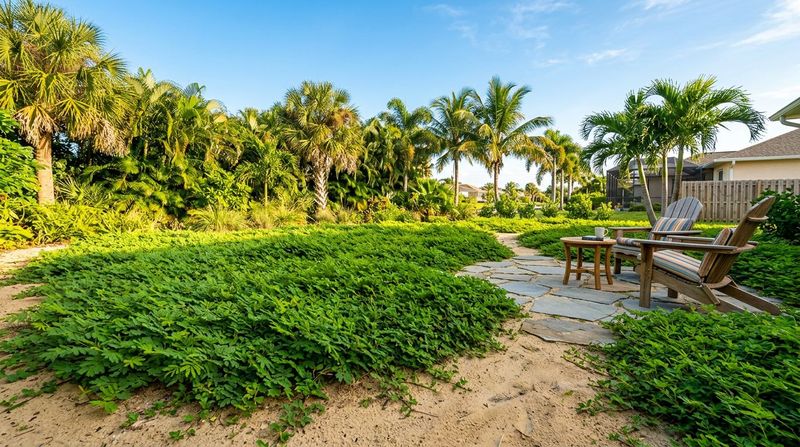
Walk the spot you have in mind before choosing a plant. Start with light.
Frogfruit grows in full sun or partial shade, according to UF/IFAS, while sunshine mimosa is described as a sun-loving plant.
Next, think about moisture. Frogfruit has broader stated tolerance for dry or moist conditions.
Sunshine mimosa is known for drought tolerance once it is established. A low, damp corner and a dry, sandy slope may call for different answers.
Then count the footsteps. Sunshine mimosa handles light traffic.
Frogfruit can persist under frequent traffic but is cautioned against for heavy use. Neither one is a good fit for a play area or a main walking route, so keep turf or hardscape there.
Finally, consider how the yard will look through the year. Sunshine mimosa loses leaves in cool weather, and frogfruit may go dormant in winter or drought and can suffer freeze damage.
Ask yourself whether you can live with a thin or brown stretch for part of the year, and whether you can contain the spread with edging, mowing, or pruning.
If your honest answers point to a quiet, sunny, edge-of-yard spot, either plant may be worth a trial patch. If the answers point to a busy, shaded, or very formal area, another choice may suit you better.
Florida-Friendly landscaping is not native-only

Many people assume Florida-Friendly Landscaping means ripping out the lawn and planting only natives. That is not how Florida law defines it.
Under Florida Statutes section 373.185, the approach centers on putting the right plant in the right place and following sound practices.
Those practices include watering efficiently, fertilizing appropriately, attracting wildlife, and maintaining the landscape properly. The idea is a yard that suits its own site conditions, such as sandy soil, sun exposure, and rainfall patterns, instead of one that needs constant correction.
Native plants can help with these goals. Sunshine mimosa and frogfruit both offer flowers for butterflies and can cope with Florida conditions once they are settled in.
But being native does not make a design Florida-Friendly on its own. A native groundcover planted in deep shade, soggy ground, or a high-traffic path may fail and look worse than the lawn it replaced.
The reverse also holds. Suitable non-native plants and turf can fit Florida-Friendly principles when they match the site and are cared for well.
A well-maintained patch of turf in a busy play area may be the most Florida-Friendly choice there.
So neither groundcover is required, and neither is automatically ideal. Think of them as options in a toolbox.
The best yard often mixes turf, groundcovers, shrubs, and mulch, each placed where it earns its spot.
Florida law protects Florida-Friendly landscaping, not every planting plan
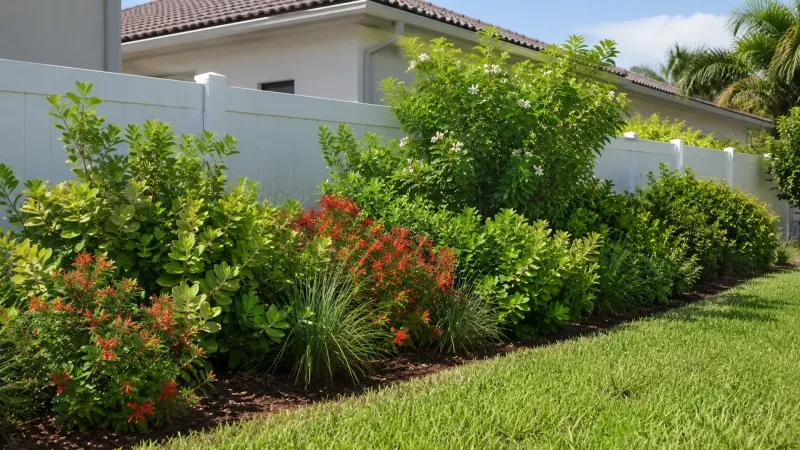
Florida Statutes section 720.3075 says HOA governing documents may not prohibit a homeowner from implementing Florida-Friendly Landscaping. That is a real protection, and it is worth knowing about.
It is also narrower than many people assume.
The protection applies to Florida-Friendly Landscaping, not to native plants as a category. A native planting that is poorly sited or poorly maintained does not automatically qualify.
The law also does not make every design compliant, and it does not cancel an HOA’s review process.
According to UF/IFAS Extension in Hillsborough County, an HOA may require advance review. It may also set reasonable design parameters, such as edging, plant lists, or limits on groundcover area.
UF/IFAS also notes there is no state agency enforcing Florida-Friendly Landscaping, and disputes are handled between the homeowner and the HOA.
That means the law is a starting point, not a reason to plant first and sort it out later. UF/IFAS advises getting any required approval before work begins.
If you receive a letter or face a disagreement, how a specific covenant applies to your yard is a legal question. Neither this article nor a general plant guide can settle it.
A Florida attorney who handles community association matters can review your documents and your situation.
Prepare a plan that explains the proposed landscape

Start with paperwork, not plants. Read your governing documents and find the approval process for landscape changes.
Note who reviews requests, what forms are needed, and how long decisions usually take.
If review is required, put together a simple plan. UF/IFAS publication EP513 suggests the plan name the plants and show their locations and quantities.
It should also mark groundcover and turf areas, describe site conditions like sun and moisture, and include photos of the intended look.
A short written explanation can round it out. Describe how the design fits the neighborhood and which Florida-Friendly principles it follows, such as efficient watering and proper maintenance.
Mention the benefits of the plants, like butterfly habitat. You might also say how you will keep sunshine mimosa or frogfruit from spreading past its boundary.
A clear plan can help the reviewers understand what you are proposing. It does not promise an easier review or guarantee approval, and the board may still ask for changes.
UF/IFAS Extension in Hillsborough County notes that rules such as edging or limits on groundcover area can be part of the process.
Wait for any required approval before you plant. A small trial patch in the right spot, approved first, teaches you more than a whole front yard of guesswork.